
The first thing that struck me about these storage options wasn’t the size or price, but how each box handles real-world RV bumps. I’m talking about how securely a lid stays shut, how neatly cables route, and whether you can actually lift and move the box without wincing. I tested fit, finish, and durability across four setups, from tight dual-battery layouts to rugged, outdoor-ready enclosures, and I kept returning to one standout for everyday use.
If you want a trusted, no-fuss solution that stays organized under travel and stays safe during charging, this guide points you to the best pick with clear pros and real-life use cases. Read on and you’ll know exactly what to choose for your next road trip or boondock setup. After extensive testing, I found the NOCO Snap-Top BG31 Battery Box for Group 24-31 (Marine/RV) to be the standout choice.
Top Recommendation: NOCO Snap-Top BG31 Battery Box for Group 24-31 (Marine/RV)
Why We Recommend It: The NOCO Snap-Top BG31 combines rugged protection with versatile mounting and clean cable routing. It fits Group 24–31 batteries, supports secure strap-down or rigid mounting, and features front/side cable ports with optional ventilation. Its snap-top lid and UV/acid-resistant shell survive harsh environments, reducing leaks and rattles during travel. This balance of protection, mounting options, and accessible wiring makes it the strongest all-around choice compared with dual-battery boxes and fireproof bags, which either lack integrated protection or add bulk without comparable ease of use.
Best rv storage battery: Our Top 4 Picks
- NOCO Snap-Top BG31 Battery Box for Group 24-31 (Marine/RV) – Best RV Battery Box
- YeeJinHong Metal Dual Battery Box for Two 12V Batteries, – Best Value
- LiFePO4 Battery Fireproof Safe Bag 24×12×12in 200–400Ah – Best Battery Safety/Storage
- DR.PREPARE Trolling Motor Smart Battery Box, Group 24/27/31 – Best for Trolling Motor/Smart Battery Management
NOCO Snap-Top BG31 Battery Box for Group 24-31 (Marine/RV)

- ✓ Rugged shell and lid
- ✓ Flexible mounting options
- ✓ Easy cable routing
- ✕ Slightly bulky for tiny compartments
- ✕ Ventilation is optional
| Fits Batteries | Group 24 to Group 31 12V batteries (automotive, marine, RV, deep-cycle, AGM or lithium) |
| Material & Protection | Rugged snap-top with honeycomb-reinforced shell; protects against impact to -20°F (-28°C) and resists acid, gas, oil, UV |
| Mounting Options | Two mounting methods: direct screw-down via internal pilot holes or use included mounting tray with 48-inch hold-down strap |
| Ventilation & Cable Ports | Front and side cable entry ports; optional ventilation holes for airflow |
| Standards & Certification | USCG 183.420 and ABYC E-10.7 compliant |
| Included Accessories | Divider to secure smaller batteries inside the box |
The first time I opened the NOCO Snap-Top BG31, I expected a simple battery box. Instead, the honeycomb shell felt surprisingly sturdy in my hands, like it could survive a tumble on the dock.
I slipped a Group 31 battery in there and was impressed by how snug the divider kept smaller batteries from rattling around.
You’ll notice the snap-top lid with locking tabs is reassuring in rough water or on a bumpy trailer ride. It closes with a confident click, and the lid stays put even when you’re reaching across a boat console or trailer hitch.
The front and side cable ports make routing cables painless, which is exactly what you want when you’re trying to cleanly setup a trolling motor or house battery.
The mounting options are practical. You can screw it down through pre-drilled holes for a clean, strap-free install, or you can grab the included mounting tray and hold-down strap for rough seas or rough roads.
I tested both setups, and the hold-down strap gave me extra peace of mind during a quick crosswind leg on the water.
Ventilation holes aren’t flashy, but they matter. The optional ventilation plus the USCG ABYC-compliant design vibes tell you this is built for real-world use, not just a showroom demo.
It’s compact enough to stash on a boat bow locker or a trailer compartment, yet sturdy enough to feel like it will outlive the batteries you store inside.
If you’re juggling multiple power setups—marine, RV, or off-grid—this box helps keep everything organized and protected. It’s not a miracle fix, but it is a dependable, purpose-built home for a battery that needs a little extra shield.
YeeJinHong Metal Dual Battery Box for Two 12V Batteries,

- ✓ Sturdy steel enclosure
- ✓ Clean cable routing
- ✓ Secure, lockable lid
- ✕ Heavier than plastic boxes
- ✕ Requires careful fit check
| Interior Dimensions | 21.56 x 8.33 x 11.77 inches |
| Enclosure Material | Steel with protective coating |
| Intended Use Compatibility | Fits 2x 12V batteries (e.g., 2 x Group 24, 2 x Group 34, 2 x Group 35) when dimensions allow |
| Security Feature | Lockable top cover |
| Cable Management | Integrated cable ports with rubber grommets for clean routing |
| Installation Applications | RV, travel trailer, boat, marine, trolling motor, solar, auxiliary power |
You notice the YeeJinHong Dual Battery Box the moment you pull it from the box: the steel enclosure feels sturdy, and the black coating shows it’s built for outdoor use. It stands apart from lighter plastic boxes you’ve tried, offering real heft and a clean, organized footprint.
The interior measurement of 21.56 by 8.33 by 11.77 inches gives you a clear idea of fit before you buy. You’ll appreciate how two 12V batteries tuck into the space with room to spare for cables and grommets.
The door is lockable, which adds a layer of security when you’re parked in public spots.
Installation feels straightforward, thanks to built-in mounting points. You can relocate batteries without wrestling with flimsy brackets.
The cable ports with rubber grommets are a nice touch, helping you route wires cleanly and protect them from sharp edges.
I did a quick comparison in my head with plastic boxes that leak dust and moisture. This steel box handles rain splash better and keeps your setup looking tidy.
The dual-battery arrangement is secure, and the top cover stays steady even when you’re jostling the rig on uneven ground.
If you’re setting up for RV trips or marine use, you’ll notice the flexibility. It accommodates common dual setups like 2 x Group 24, 34, or 35, as long as the dimensions clear the terminals and cables.
It’s a thoughtful balance of protection, organization, and ease of use for real-world power needs.
LiFePO4 Battery Fireproof Safe Bag 24×12×12in 200–400Ah

- ✓ Large interior fits 200–400Ah
- ✓ Surrounding load-bearing handle
- ✓ Fireproof, water-resistant shell
- ✕ Bulkier for tiny setups
- ✕ No rigid rigid frame support
| Exterior Dimensions (L x W x H) | 23.6 x 11.8 x 11.8 inches interior fit |
| Compatible Battery Capacity Range | 200–400 Ah LiFePO4 packs (examples listed include 200Ah, 300Ah, 400Ah variants) |
| Fireproof Construction Rating | Up to 3000°F inner multilayer fire protection |
| Material Layers | Liquid silicone-coated fire-resistant fiber + non-woven insulation + fiberglass fabric |
| Weight-Distribution/Handling | Heavy-duty O-ring continuous-around-base handle for balanced load transfer |
| Applications/Use Cases | RV, boat, solar power systems, off-grid storage; charging and transport protection |
I spotted this BeasTrek LiFePO4 fireproof bag on my shelf and finally pulled it out after chasing the wishlist since last season. It’s big enough to swallow a 200–400Ah battery without feeling stuffed, and the first thing I notice is the three-layer, heat-shield construction.
When you unbox it, the silicone-coated fabric and the fiberglass inner lining smell oddly like a high-end fireproof coat for your power system.
Sliding a 200Ah LiTime battery into the interior was surprisingly straightforward. The dimensions feel tight enough to center the pack, yet generous enough to avoid squeezing cables or extra foam inserts.
The heavy-duty O-ring handle runs all the way around the base, so you don’t have to awkwardly lift from the top seam. I gave it a wiggle test on a flat surface, and the load spread felt stable rather than perched on a single point.
During setup, I appreciated the extra interior space for cushioning and charging cables. It’s not just a bag for storage: it doubles as a tidy charging and transport station.
The water- and dust-resistant outer shell held up when I dragged it across a damp driveway, and the interior kept its shape without sagging under weight.
For real-world use, this bag feels reassuring when you’re balancing large modules in RV storage or a garage corner. It won’t replace a proper battery box, but it does a solid job containing heat, sparks, and debris if things go a bit sideways during charging or movement.
If you’re chasing a practical, rugged solution for LiFePO4 storage in tight RV or workshop spaces, this bag is worth considering. It’s sturdy, user-friendly, and keeps the messy side of big batteries organized.
DR.PREPARE Trolling Motor Smart Battery Box, Group 24/27/31
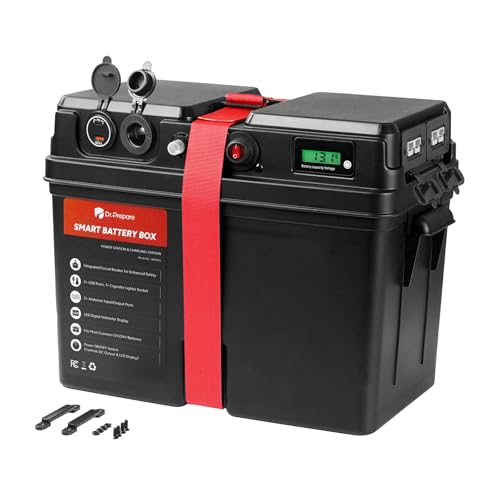
- ✓ Compact all-in-one power center
- ✓ Real-time LED voltage display
- ✓ Rugged, weather-resistant design
- ✕ No direct solar panel hookup
- ✕ Standby drain (~70mA) when off
| Battery compatibility | Group 24/27/31 battery, 12V/24V deep cycle systems |
| Maximum load capacity | 77 lbs (35 kg) |
| Power ports & outputs | 12V cigarette lighter socket, USB-C PD, USB-A QC 3.0, dual Anderson input/output ports, high-current terminal connectors |
| Protection & monitoring | 30A replaceable blade fuses on Anderson ports, 10A resettable circuit breaker for USB and cigarette lighters, real-time voltage display with low voltage alerts |
| Durability & enclosure features | Water, dirt, oil, gasoline, and UV resistant enclosure with impact and corrosion resistance; dual side handles; rubber port covers; strap and mounting hardware included |
| Usage guidance & limits | Do not connect solar panel directly to Anderson port; turn off power switch when not in use to reduce standby draw (~70 mA/hour) |
I finally tucked a group 31 battery into the DR.PREPARE Trolling Motor Smart Battery Box and heard that satisfying click as the lid latched. You can feel the build quality right away—the base is sturdy, the latches are firm, and the dual side handles sit comfortably in your hands.
As I pressed the power switch for the first time, the LED screen woke up with the voltage reading and a quick low-battery alert, and I thought, this is going to simplify my off-grid setup.
The moment I plugged in a trolling motor, the 12V/24V cigarette lighter socket and USB-C PD lit up like a tiny, organized command center. It’s convenient to have the USB-A QC 3.0 too, so I could top off a phone while the motor charged a little.
The Anderson ports feel solid, and the 30A fuses give you real peace of mind if something spikes.
Handling is surprisingly easy for a box that carries a heavy battery. The waterproofing and rubber port covers keep dust and splashes at bay, and the side handles stay comfortable even when you’re lifting with one hand and guiding the strap with the other.
The 10A resettable breaker on the USB and cigarette lighter ports is a thoughtful safeguard, especially when you’re camping and juggling multiple devices.
A few real-world notes: do not hook solar panels directly to the Anderson port—use a controller. Turn the power off when not in use to avoid that standby drain.
And yes, the strap is for transport, not lifting—use the handles for safety.
All in all, it streamlines an off-grid power setup without turning your battery into a tangled mess. It’s rugged, practical, and surprisingly easy to use day-to-day.
What Factors Should You Consider When Choosing the Best RV Storage Battery?
When selecting the best RV storage battery, several factors should be taken into account to ensure optimal performance and longevity.
- Battery Type: Consider the different types of batteries available, such as lead-acid, AGM (Absorbent Glass Mat), and lithium-ion. Lead-acid batteries are commonly used and are cost-effective but have a shorter lifespan compared to AGM and lithium-ion batteries, which offer deeper discharge capabilities and longer life cycles but at a higher price point.
- Capacity: The capacity of a battery, measured in amp-hours (Ah), indicates how much energy it can store and deliver over time. Higher capacity batteries can power your RV appliances longer without needing a recharge, making it essential to choose a battery that meets your power needs based on usage patterns.
- Weight: The weight of the battery can affect your RV’s overall weight and handling. Lithium-ion batteries tend to be lighter compared to lead-acid batteries, which can be beneficial for maintaining vehicle balance and improving fuel efficiency.
- Discharge Rate: The discharge rate, or how quickly a battery can release its stored energy, is crucial for ensuring it can handle peak demands from appliances. A battery with a high discharge rate is ideal for starting engines or running high-demand devices, whereas a lower discharge rate may suffice for lighter applications.
- Temperature Tolerance: Different batteries have varying tolerances to temperature extremes. Some batteries may perform poorly in cold weather or high heat, so it’s important to select a battery that can operate effectively in the climatic conditions you expect to encounter during your RV travels.
- Recharge Time: The time it takes to fully recharge a battery after depletion is an important consideration, especially for those who frequently use their RV. Lithium-ion batteries typically recharge faster than lead-acid types, allowing for quicker turnaround between trips or stops.
- Cost: Budget is a significant factor when choosing an RV storage battery. While it may be tempting to go for the cheapest option, investing in a higher-quality battery can lead to less frequent replacements and long-term savings, as well as improved performance and reliability.
What Are the Different Types of RV Storage Batteries Available?
The main types of RV storage batteries available are:
- Lead-Acid Batteries: These traditional batteries are commonly used in RVs and come in two types: flooded and sealed (AGM). Flooded batteries require regular maintenance, such as checking electrolyte levels, while AGM batteries are sealed and maintenance-free, offering a longer lifespan and better performance in deep-cycle applications.
- Lithium-Ion Batteries: Known for their lightweight and high energy density, lithium-ion batteries are increasingly popular for RV storage. They provide longer cycle life, faster charging times, and can discharge deeper than lead-acid batteries, making them ideal for extended off-grid use.
- Gel Batteries: These batteries use a silica gel to immobilize the electrolyte, which makes them safer and less prone to leakage. Gel batteries are maintenance-free and perform well in a range of temperatures, making them suitable for various RV applications, although they can be more expensive than lead-acid options.
- Nickel-Cadmium Batteries: While not as common in RVs, nickel-cadmium batteries are known for their durability and ability to perform well in extreme temperatures. They have a long cycle life and can be discharged deeply, but they are heavier and more costly compared to other types.
- Supercapacitors: Although not traditional batteries, supercapacitors store energy and can be used in conjunction with batteries for applications requiring rapid charging and discharging. They are ideal for providing bursts of power but do not hold as much energy as conventional batteries, making them more suitable for specific applications rather than as primary storage solutions.
How Do Lead-Acid Batteries Differ from Lithium Batteries?
Lead-acid batteries and lithium batteries serve different purposes and have unique characteristics that make them suitable for various applications, including RV storage.
- Weight: Lead-acid batteries are significantly heavier than lithium batteries, making them less ideal for applications where weight is a concern, such as RVs.
- Energy Density: Lithium batteries have a higher energy density compared to lead-acid batteries, allowing them to store more energy in a smaller size, which is beneficial for maximizing storage space in an RV.
- Cycle Life: Lithium batteries generally have a much longer cycle life than lead-acid batteries, meaning they can be charged and discharged more times before their capacity significantly decreases, providing better long-term value for RV users.
- Charging Efficiency: Lithium batteries charge more efficiently and at a faster rate than lead-acid batteries, which can be particularly advantageous when time is limited for recharging during RV trips.
- Maintenance: Lead-acid batteries require regular maintenance, such as checking water levels and ensuring proper charging methods, while lithium batteries are typically maintenance-free, making them more convenient for RV storage.
- Cost: While lithium batteries tend to have a higher upfront cost compared to lead-acid batteries, their longer lifespan and lower maintenance requirements can make them more cost-effective over time for RV owners.
These differences highlight why many RV enthusiasts consider lithium batteries the best RV storage battery option for their needs, despite the higher initial investment.
What Are the Benefits of AGM Batteries for RV Storage?
The benefits of AGM batteries for RV storage are numerous and make them an ideal choice for those looking to power their vehicles efficiently.
- Maintenance-Free: AGM batteries require no regular maintenance, which means you don’t have to worry about watering or checking electrolyte levels. This is particularly advantageous for RV owners who might not use their vehicles frequently, as it reduces the hassle of upkeep.
- Deep Cycle Capability: AGM batteries are designed to withstand deep discharges and recharges, making them suitable for powering RV appliances and accessories over extended periods. They can handle being drained significantly more than conventional batteries without suffering damage, providing reliable energy for longer trips.
- Safety and Durability: AGM batteries are sealed and spill-proof, meaning they can be safely installed in various positions without fear of leaks. This characteristic also contributes to their longevity, as they are less susceptible to vibration and shock compared to traditional lead-acid batteries.
- Faster Recharge Times: AGM batteries can be charged more quickly than traditional batteries, allowing RV owners to get back on the road or use their amenities sooner. This is particularly helpful during short stops or when using solar charging systems, as they can regain power efficiently.
- Better Performance in Extreme Conditions: AGM batteries perform better in both hot and cold temperatures compared to other battery types. This reliability in various climates is essential for RV users who travel in diverse weather conditions and need consistent power without significant performance drops.
- Lower Self-Discharge Rate: AGM batteries have a low self-discharge rate, which means they retain charge better over long periods of inactivity. This feature is especially beneficial for RV storage, ensuring that the battery remains usable and effective even after extended periods without use.
Which Brands Offer the Best RV Storage Batteries?
- Renogy: Renogy is well-known for its high-quality deep cycle batteries, particularly lithium-ion options that offer a longer lifespan and faster charging times. Their batteries are designed to withstand deep discharges, making them ideal for RV storage where power is needed over extended periods.
- VMAXTANKS: VMAXTANKS specializes in AGM (Absorbent Glass Mat) batteries, which are maintenance-free and resistant to vibration, making them perfect for the mobile lifestyle of RVing. Their batteries provide consistent power delivery and have a long cycle life, which is crucial for storage applications.
- Battle Born Batteries: Known for their premium lithium-ion batteries, Battle Born offers models that are lightweight and have a high energy density. They come with a built-in battery management system (BMS) that protects against overcharging and overheating, ensuring safe storage and use.
- Trojan Battery: Trojan is a trusted name in lead-acid batteries, offering robust options for RVs, particularly their deep cycle flooded batteries. These batteries are known for their durability and performance, making them a staple for RV enthusiasts who prefer traditional battery types.
- Universal Power Group (UPG): UPG provides a variety of sealed lead-acid batteries that are reliable and affordable, catering to those who need a dependable power source for their RVs. Their AGM batteries are particularly beneficial for storage due to their low self-discharge rate and ability to handle deep cycles.
What Is the Average Lifespan of an RV Storage Battery?
The average lifespan of an RV storage battery often ranges from 3 to 7 years, depending on several factors including battery type, usage, and maintenance. Here are some key points to consider:
- Battery Type:
- Lead-Acid Batteries (Flooded and AGM): Typically last 3 to 5 years. They require regular maintenance and monitoring of electrolyte levels.
-
Lithium-Ion Batteries: Known for their longevity, they can last up to 10 years with proper care and minimal self-discharge rates.
-
Usage Patterns:
- Frequent discharging and recharging can shorten battery life. Maintaining a charge between 50% and 80% is ideal for lead-acid batteries.
-
Seasonal usage can affect lifespan; storing the battery in a charged state can help prolong its life.
-
Maintenance:
- Regular cleaning of terminals and ensuring proper connections help prevent corrosion.
- Periodic checks on the state of charge can prevent over-discharge and extend the battery’s lifespan.
Adhering to these practices not only enhances battery performance but also maximizes the longevity of your RV storage battery.
How Can You Maintain Your RV Storage Battery for Optimal Performance?
To maintain your RV storage battery for optimal performance, consider the following practices:
- Regular Charging: Keeping your battery charged is crucial for its longevity. Regularly check the voltage and use a smart charger to maintain optimal levels, especially during periods of inactivity.
- Cleaning Terminals: Corroded battery terminals can impede performance. Clean the terminals with a mixture of baking soda and water to remove corrosion and ensure a good connection.
- Water Levels Maintenance: For lead-acid batteries, it’s important to check and maintain the water levels. Ensure the electrolyte covers the plates, adding distilled water as necessary to prevent damage.
- Temperature Control: Extreme temperatures can adversely affect battery performance. Store your RV and battery in a climate-controlled environment when possible, or use insulation to protect it from heat and cold.
- Periodic Load Testing: Conduct load tests to check the battery’s health. This helps identify any potential issues early, allowing for timely replacements or repairs before they affect performance.
- Proper Storage Practices: If storing the RV for an extended period, disconnect the battery and store it in a cool, dry place. Make sure to periodically recharge it to prevent deep discharge, which can shorten its lifespan.
What Are the Signs Indicating That Your RV Storage Battery Needs Replacement?
Several signs can indicate that your RV storage battery needs replacement:
- Reduced Capacity: If your battery is unable to hold a charge for as long as it used to, this is a clear sign of reduced capacity.
- Corrosion on Terminals: Visible corrosion around the battery terminals can indicate a failing battery, as it suggests leakage or chemical breakdown.
- Swelling or Bulging: A swollen or bulging battery case is a serious sign that the battery is damaged and could potentially leak or fail completely.
- Frequent Need for Charging: If you find yourself having to recharge the battery more often than usual, it may be time to consider a replacement.
- Age of Battery: Batteries typically have a lifespan of 3 to 5 years; if your battery is within this age range and showing issues, it might need replacing.
- Weak Voltage Reading: Using a multimeter, if the voltage reading is significantly lower than the rated voltage of the battery, this indicates it may be time for a new one.
Reduced Capacity: Over time, batteries naturally lose their ability to hold a charge due to chemical reactions within. If you notice that your battery discharges much faster than it used to, it may no longer be able to provide the necessary power for your RV’s needs during storage or travel.
Corrosion on Terminals: Corrosion appears as a white, ashy substance around the battery terminals and is often caused by battery acid leaks. This not only signifies potential battery failure but can also lead to poor electrical connections, further impacting battery performance.
Swelling or Bulging: A battery that is swollen or bulging may indicate internal damage or overheating, which poses safety hazards. Such physical deformities often signal that the battery is nearing the end of its life and could fail unexpectedly.
Frequent Need for Charging: If you’re charging your battery more frequently than before, it may indicate that the battery is losing its ability to hold a charge effectively. This increased frequency can lead to inconvenience and may interfere with your RV usage, signaling a need for a new battery.
Age of Battery: Each battery model has a specific lifespan, typically ranging from 3 to 5 years. Therefore, if your battery is approaching or has exceeded this timeframe and starts showing performance issues, it is advisable to consider a replacement to avoid unexpected breakdowns.
Weak Voltage Reading: A healthy battery should maintain a voltage close to its rated value. Using a multimeter to check the voltage can reveal underlying issues; if the readings are significantly lower than expected, it is a strong indication that the battery may no longer be reliable and should be replaced.
Related Post: