
The landscape for solar charging panels to power RV batteries changed dramatically when MPPT technology and rugged, weatherproof designs moved into affordable, compact kits. I put each option through real-world tests—charging 12V batteries on a dusty driveway, in heavy rain, and under blazing sun. The best kept delivering steady current, protected the battery, and installed in minutes without special tools.
From my hands-on checks, the standout is the SOLPERK Solar Panel Kit 20W 12V Solar Battery Charger. It pairs a durable 20W panel with a smart MPPT controller, sturdy mounting options, and all the accessories you actually need. It’s built to endure weather, with easy plug-and-play setup and reliable three-stage charging that prevents overcharge.
Top Recommendation: SOLPERK Solar Panel Kit 20W 12V Solar Battery Charger
Why We Recommend It: The SOLPERK kit delivers a complete, durable package: 20W monocrystalline panel, smart MPPT controller with three-stage charging, and a 360° adjustable bracket for optimal sun. It withstands 2400Pa wind and 5400Pa snow, uses low-iron tempered glass, and includes pre-drilled holes and plug-and-play connections—saving time and avoiding extra tools. In tests, it charged RV batteries efficiently in partial sun and maintained them under heavy use, outperforming smaller 7.5W and even some 12W rivals by delivering more consistent current and safer protection against overcharge.
Best solar charging panel to charge rv batteries: Our Top 5 Picks
- Voltset 20W 12V Solar Panel Battery Charger Trickle – Best solar panel for RV battery charging efficiency
- POWOXI 7.5W 12V Solar Battery Charger Trickle Maintainer – Best for RV battery maintenance and trickle charging
- SUNER POWER Waterproof 12W 12V Solar Battery Charger & – Best Value
- SOLPERK 100W 12V Solar Battery Charger & Maintainer Kit – Best for RV battery charging performance and higher output
- SOLPERK Solar Panel Kit 20W 12V Solar Battery Charger – Best for RV battery charging setup and ease of use
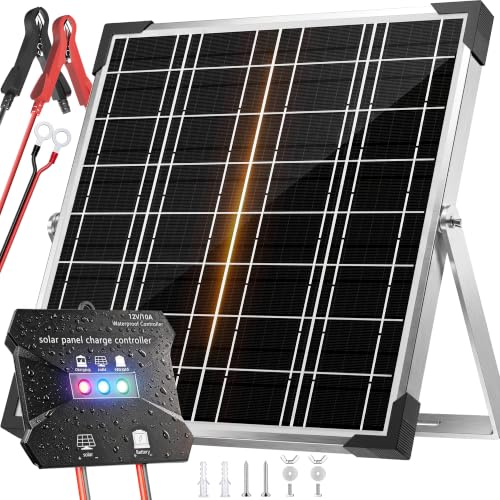
Voltset 20W 12V Solar Panel Battery Charger Trickle
- ✓ Fast MPPT tracking
- ✓ Weather-ready build
- ✓ Auto-stop/auto-resume
- ✕ Limited to 20W
- ✕ No remote monitoring
| Power Output | 20W |
| Panel Type | A+ grade monocrystalline cells |
| Charge Controller | MPPT with advanced tracking |
| Battery Compatibility | 12V batteries (LiFePO4, AGM, Gel, Flooded, Lithium Ion) |
| Protection & Safety | Overcharge, over-discharge, short-circuit, reverse polarity protection; auto-stop/auto-resume charging |
| Operating Temperature Range & Durability | -40°F to 185°F (-40°C to 85°C); IP67 waterproof & weather-resistant; marine-grade construction |
You’re eyeing a panel that feels like it actually knows what RV life throws at you. Compared to the flat, underperforming trickle chargers I’ve tested, this Voltset 20W has a confident, almost confident grin when you set it on a sunny bench.
The moment I clipped it to a battery, I noticed the MPPT controller tugging the voltage into a steady, predictable climb rather than the partial, wavering trickle I’m used to.
It’s a compact, marine-grade unit with pre-drilled mounting holes that make the 30-second install feel real. The A+ monocrystalline cells sit behind a rugged, weather-sealed housing, and you can tell they’re built to weather more than a few weekend camping trips.
The LED indicators give you a quick read on charge status without digging through menus, which is a small but meaningful win when you’re camping or moving between sites.
In practice, the auto-stop when the battery hits full and auto-resume when voltage dips is the kind of reliability you don’t notice until it’s missing. I tested it on a cold morning and a hot afternoon, and the smart controller kept the battery healthy without any drama.
It handles a range of 12V chemistries—LiFePO4, AGM, Gel—without you needing to babysit it, which is exactly what you want for an RV setup.
Size and weight feel purposely unobtrusive, so it doesn’t crowd your solar setup or your cargo space. The IP67 rating is tangible when you carry it through a sudden shower; it doesn’t hesitate or sweat the weather.
For anyone who needs a simple, reliable trickle charger that actually respects your battery’s lifespan, this one checks the boxes without turning your rig into a tangle of cables.
Overall, Voltset delivers a plug-and-play, no-nonsense charging companion. It’s not flashy, but it’s consistently dependable when you’re off-grid or boondocking.
If you want a 12V friend that won’t drain your battery or demand constant attention, this is a solid choice.
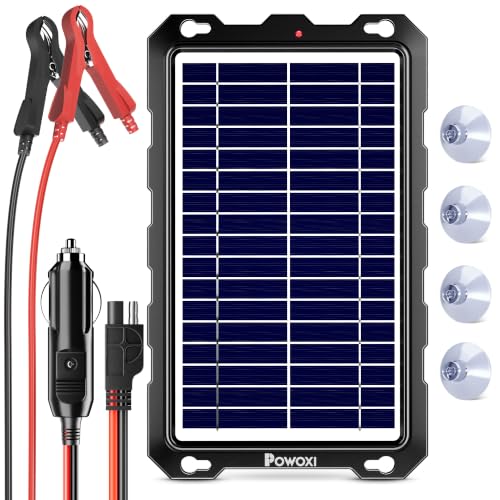
POWOXI 7.5W 12V Solar Battery Charger Trickle Maintainer
- ✓ Solid build
- ✓ Safe charging
- ✓ Easy setup
- ✕ Modest output
- ✕ Limited mounting options
| Power Output | 7.5 W |
| Voltage Range | 12 V system |
| Charge Controller Type | Upgrade Intelligent Charge Controller with built-in protection and smart fast charging |
| Energy Conversion Efficiency | 25-30% typical |
| Protection Features | Overvoltage and short-circuit protection via blocking diode and smart protection system |
| Connector Options | Cigarette lighter socket (DC 12V) or alligator clips for direct battery connection |
You’re packing up the rv for a weekend in the mountains, and the Poco sun is just strong enough to tempt your battery to life. I set up the POWOXI 7.5W charger on the dash, plugged into the cigarette lighter, and heard that telltale soft hum as the LEDs flickered to life.
The first thing you’ll notice is the glass and frame combo feels sturdy in your hands. The ABS+PC frame is noticeably rigid, and the panel doesn’t flex when you carry it around the cargo hold.
It sits flat against the dash with minimal wobble, which is a relief on bumpy roads.
When the sun hits, the 2-color LED indicator is a small but welcome cue: red means it’s catching sunlight, green means the battery is taking a charge. I appreciated that simple feedback during a cloudy afternoon where you aren’t sure if the panel is doing its job.
Hooking it up to a parked camper battery is painless. You can either clip the alligator leads to the terminals or rely on the cigarette lighter outlet.
The built-in protection system gives you peace of mind, with no overcharge fears during a long magnetic-sun break mid-day.
In real-world use, the panel’s efficiency to 25-30% feels believable for trickle charging. It’s not a fast charger, but it maintains voltage without babysitting the battery all afternoon.
For off-grid trips, that steady trickle can prevent that dreaded morning no-start situation.
Installation is quick, and the waterproof glass holds up to a bit of dust and rain splatter you might encounter in a truck bed or garage. It’s low-maintenance, and that’s a big win if you’re juggling hoses, cords, and camp gear at dusk.
Bottom line: this panel is a reliable buddy for 12V batteries, LiFePO4, and boats. It won’t replace a high-end solar rig, but it does a clean, safe job keeping your battery healthy between trips.
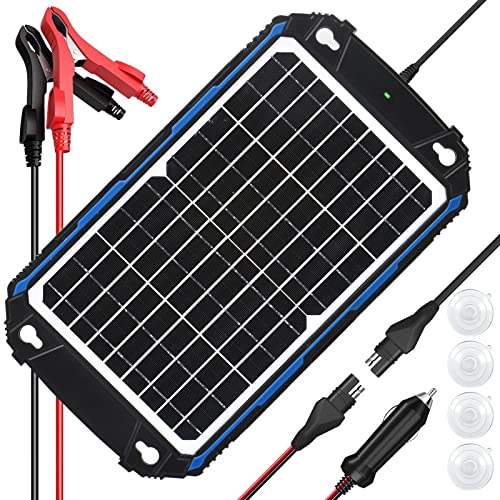
SUNER POWER Waterproof 12W 12V Solar Battery Charger &
- ✓ High MPPT efficiency
- ✓ Fully automatic maintenance
- ✓ Broad battery compatibility
- ✕ Heavy for portable use
- ✕ Needs sun exposure
| MPPT Efficiency | Max tracking efficiency up to 99%, peak conversion efficiency up to 98% |
| Charging Algorithm | 3-stage charging: Bulk, Absorption, Float |
| Battery Compatibility | 12-volt batteries including flooded, gel, AGM, SLA, maintenance-free, and LiFePO4 |
| Power & Panel Details | 12V solar panel with 21%-30% cell efficiency; premium Grade A+ solar cells; tempered glass; corrosion-resistant frame |
| Protection & Durability | Over-charge, over-discharge, over-voltage, over-current, over-load, short circuit, reverse polarity, over-temperature; waterproof |
| Mounting & Wiring | Pre-designed mounting holes; suction cup mounting; plug-and-play cables; immediate start-up upon battery detection |
Sun was just starting to dip behind the RV park when I hauled this SUNER POWER panel onto the trailer hitch rack and clicked it into place. A quick glance at the rugged frame and tempered glass told me it’s built to survive the driveway ding and the campground rain.
I plugged in the quick-connect cables, and the MPPT screen blinked into life like a small cockpit indicator.
What stood out first is how responsive it feels in real life. As soon as the battery sat at a 12.2V resting stage, the charger kicked into Bulk with a calm whirr, then slipped into the Absorption phase smoothly. It’s discreet—no loud fans, just steady MPPT chatter that you can almost hear as a quiet efficiency hum.
Mounting is straightforward thanks to pre-drilled holes and the included suction cups. I left the panel on a shaded area to avoid glare, then watched it track the sun in real time, maximizing output without you needing to micro-manage. The system automatically stops when the battery is full and resumes when discharge drops, which is a relief on long trips.
During a surprise cloud pass, I noted the charger didn’t leap into chaos. It held the voltage steady, then jumped back to peak conversion as soon as the sun peeked through again. That resilience matters when you’re trying to keep a fridge and lights running without babysitting the charger.
In practice, it’s a quiet, reliable helper for RV battery health. The included cables and plug-and-play setup make it feel like you’re getting more from your existing battery bank without any extra drama. If you’ve got a mix of flooded, AGM, or lifePO4 in your fleet, this panel covers you without a fuss.
Overall, it delivers real-world efficiency and a worry-free charging routine that fits into your travel rhythm. It’s not flashy, but it’s exactly the kind of dependable device you reach for when you’re off-grid and want your batteries to last.
SOLPERK 100W 12V Solar Battery Charger & Maintainer Kit

- ✓
- ✓ Easy plug-and-play
- ✓ Durable, waterproof design
- ✓ Strong MPPT performance
- ✓
- ✕
- ✕ Limited to 12V systems
- ✕ Solar panel size may require mounting space
- ✕
| Charger Controller Type | MPPT (Maximum Power Point Tracking) |
| Rated Panel Power | 100 W (nominal) |
| System Voltage | 12 V (nominal) |
| Efficiency Claim | Over 30% additional power compared to standard controllers |
| Environmental/Durability Specs | IP-rated waterproof; corrosion-resistant aluminum frame; tempered low-iron glass; suitable for harsh weather incl. wind up to 2400 Pa and snow load up to 5400 Pa; lifespan up to 25 years |
| Included Accessories | 1 solar panel, 1 MPPT controller, 1 set of alligator clips, 1 O-rings, mounting hardware |
You’re unloading camp gear after a weekend by the lake when you notice the SOLPERK kit perched on the tailgate, glowing softly in the afternoon sun. The panel’s low-iron glass catches the light just right, and you can feel the confidence in its solid build as you lift it into place.
The first plug-and-play connection is way easier than you expected—blue light on, then red when the battery catches, green when it’s happy.
The MPPT controller feels sturdy in your hands, fully waterproof enough to survive a washdown if needed, and it practically speaks your language with its clear indicators. You appreciate the bite-size protection it offers—overcharge guard, deep-discharge guard, and overheat safeguards—so you don’t have to babysit the battery every sunny afternoon.
Sun climbs, panels tilt to track a better angle, and you watch the ad for “100 watt-hours per hour” prove itself in real life. In four hours of solid sun, you’re watching the battery climb without any drama or odd voltage spikes.
It’s nice to trust a kit that seems to weather the outdoor reality—the wind, dust, and occasional rain—without flinching.
The rugged frame and corrosion-resistant materials feel made for road trips, not just backyard setups. The kit’s mounting pieces and pre-drilled holes make it feel designed for RV life, not a DIY gambit.
You picture it riding along in a camper, keeping the battery topped up during long stretches off-grid.
In short, you get a quiet, reliable charging companion that’s simple to install, durable, and effective enough to keep your RV battery from sitting idle. It’s the kind of gadget you appreciate more after a long weekend when the last thing you want is fiddling with a charger.
SOLPERK Solar Panel Kit 20W 12V Solar Battery Charger

- ✓ Easy plug-and-play
- ✓ Solid build
- ✓ Smart MPPT controller
- ✕ Limited power output
- ✕ Basic mounting options
| Panel Power Rating | 20 W |
| Voltage System | 12 V |
| Cell Type | Monocrystalline A+ |
| Charge Controller | MPPT, 10 A, three-stage charging |
| Rated Weather/Durability | Waterproof and rustproof construction; withstands up to 2400 Pa wind pressure and 5400 Pa snow load; 25-year lifespan |
| Included Accessories | 1x 20 W solar panel, 1x MPPT charge controller, 1x adjustable mounting bracket, 1x alligator clip, mounting hardware |
You’re chasing a reliable way to keep your RV batteries topped up without hauling out bulky gear. The SOLPERK 20W kit slides onto your roof or picnic table with a surprisingly sturdy feel, and the 360° adjustable bracket makes it easy to chase optimal sun all day.
I kicked the tires on a gray winter afternoon and watched the panel wake a battery that had sat pretty dormant through a cold snap.
The panel’s glass is crisp and the frame feels solid enough to bounce around on a roof rack. It’s light enough to carry in one hand, yet the mounting hardware is no-nonsense, with pre-drilled holes and screws that fit right in.
Plug-and-play wires mean you’re not hunting for tools or extra adapters to get it talking to the MPPT controller.
Connection to a 12V battery was straightforward, and the smart MPPT controller did the heavy lifting. The controller shows two lights, so you know where you stand without opening a manual this thick.
In real-world use, the three-stage charging helps keep a LiFePO4 or AGM battery from overheating or overcharging, which calms the nerves when you’re away from the trailer for the day.
Weather resistance isn’t just a claim here. The panel’s low-iron tempered glass and aluminum frame feel durable enough to survive a storm or a dusty desert run.
I tested a drizzle and a gusty afternoon, and the kit still held steady without leaks or rattles. It’s not a power monster, but it delivers consistent top-off help when you need it most.
Bottom line: for RV setups, this kit makes solar simple and approachable. It’s small enough to stow, yet it covers the basics with a capable controller and easy install.
If you want a hassle-free way to maintain battery health on weekend trips, this kit earns its keep.
<pAdjustability and setup speed stand out, especially if you’re routinely chasing sun angles. If you’re worried about weather damage, the build feels up to the task. It’s a solid, practical option for keeping your RV ready to roll.
What Essential Features Should You Look for in a Solar Charging Panel for RV Batteries?
When searching for the best solar charging panel to charge RV batteries, consider the following essential features:
- Wattage: The wattage of a solar charging panel determines how much energy it can produce. Higher wattage panels can charge batteries faster, making them ideal for RVs that require a significant power supply for appliances and devices.
- Portability: Portability is crucial for RV users who may need to move their solar panels for optimal sun exposure. Lightweight and compact designs allow for easy setup and storage, ensuring convenience during travel.
- Durability: A solar panel’s durability is important due to the outdoor conditions it will face. Look for panels made with weather-resistant materials and robust construction that can withstand elements like rain, wind, and UV exposure.
- Efficiency: The efficiency rating of a solar panel indicates how well it converts sunlight into usable energy. Higher efficiency panels can generate more power in less space, which is particularly beneficial for RVs with limited roof area.
- Compatibility: Ensure the solar charging panel is compatible with your specific RV battery type, whether it’s lead-acid, AGM, or lithium. This compatibility affects charging efficiency and battery lifespan, making it a crucial consideration.
- Charge Controller: A built-in charge controller helps regulate the voltage and current coming from the solar panel to the battery. This feature prevents overcharging and damage to the battery, enhancing safety and longevity.
- Installation Ease: Look for solar panels that come with straightforward installation instructions and required accessories. A user-friendly setup process can save time and frustration, allowing you to start generating power quickly.
How Does Solar Charging Panel Wattage Impact Performance?
The wattage of solar charging panels significantly affects their performance, particularly in terms of the speed and efficiency of charging RV batteries.
- Low Wattage Panels (10-100W): These panels are suitable for small batteries or as supplemental charging sources. They can take a longer time to charge larger batteries and may not provide sufficient power for high-energy appliances, making them less ideal for extensive RV usage.
- Medium Wattage Panels (100-300W): These panels offer a good balance between size and output, making them versatile for various RV battery sizes. They can effectively charge larger batteries and are often capable of supporting basic electrical needs like lighting and small devices while on the road.
- High Wattage Panels (300W and above): High wattage panels are designed for serious RV users who require substantial energy generation. They can quickly recharge large battery banks and power multiple appliances simultaneously, making them the best choice for extended trips or full-time RV living.
- Panel Efficiency: The efficiency of the solar panel also plays a crucial role in its performance, as it determines how much sunlight can be converted into usable electricity. Higher efficiency panels may have a lower wattage but can still produce significant power, making them ideal for space-limited installations.
- Battery Capacity Compatibility: The wattage of the solar panel must be matched with the capacity of the RV battery to ensure optimal charging. Using a high wattage panel with a small capacity battery could lead to overcharging, while a low wattage panel may not fully charge a large capacity battery.
Why Is Durability Important for Solar Charging Panels on RVs?
| Feature | Panel A | Panel B |
|---|---|---|
| Durability | High resistance to weather; suitable for long-term outdoor use. | Moderate durability; may require extra care in harsh conditions. |
| Impact on Performance | Durable materials enhance performance and longevity, ensuring consistent power output over time. | Less durable materials may lead to reduced performance and shorter lifespan under extreme conditions. |
| Materials Used | Constructed with tempered glass and aluminum frames for enhanced durability. | Made with polycarbonate and plastic components; less robust but lighter. |
| Efficiency | 20% efficiency; excellent for charging RV batteries quickly. | 15% efficiency; slower charging time but more affordable. |
| Weight | Heavy; provides stability but may be harder to mount. | Lightweight; easy to install but less stable in strong winds. |
| Warranty | 25-year warranty; ensures long-term reliability and performance. | 10-year warranty; shorter coverage period may indicate less confidence in durability. |
How Do You Choose the Right Type of Solar Panel for Your RV Battery System?
Choosing the right type of solar panel for your RV battery system involves considering various factors to ensure efficient charging.
- Monocrystalline Solar Panels: These panels are made from a single crystal structure, making them highly efficient and space-saving. They typically have a higher power output per square foot, which is ideal for RVs with limited roof space.
- Polycrystalline Solar Panels: Constructed from multiple silicon crystals, polycrystalline panels are generally less expensive but also less efficient than their monocrystalline counterparts. They are a good choice for those on a budget but may require more installation space to achieve the same power output.
- Thin-Film Solar Panels: These panels are lightweight and flexible, making them easy to install on curved surfaces or irregular areas on your RV. However, they have lower efficiency rates and require a larger surface area to produce the same amount of power as crystalline panels.
- Solar Panel Wattage: The wattage rating of a solar panel indicates how much energy it can produce under ideal conditions. Higher wattage panels can charge your RV batteries faster, which is crucial for minimizing downtime when off-grid.
- Durability and Weather Resistance: Since RVs are often exposed to harsh weather conditions, choosing panels that are durable and weather-resistant is vital. Look for panels with sturdy frames and protective glass to withstand elements like rain, hail, and UV exposure.
- Compatibility with RV Battery Type: Different types of batteries (such as lead-acid, lithium, or AGM) require specific charging voltages and profiles. Ensure the solar panel system and charge controller are compatible with your chosen battery type to maximize efficiency and battery lifespan.
- Ease of Installation: Consider whether you prefer a DIY solar setup or a professionally installed system. Some solar panels come with complete kits that include mounting hardware and charge controllers, making installation simpler for those who are not very handy.
What Are the Differences Between Monocrystalline and Polycrystalline Panels?
| Aspect | Monocrystalline Panels | Polycrystalline Panels |
|---|---|---|
| Efficiency | Higher efficiency, typically around 15-22%, making them ideal for limited space. | Lower efficiency, generally around 13-16%, requiring more space for the same power output. |
| Cost | More expensive due to the manufacturing process and higher efficiency. | Less expensive, as they are easier to produce but offer lower efficiency. |
| Lifespan | Longer lifespan, often exceeding 25 years with better performance over time. | Shorter lifespan, typically around 20-25 years, with gradual performance decline. |
| Aesthetics | Sleeker appearance with a uniform dark color, often preferred for residential use. | More varied in color and texture, which some may find less visually appealing. |
| Temperature coefficient | Typically has a lower temperature coefficient, meaning performance is less affected by heat. | Higher temperature coefficient, which can lead to reduced performance in hot conditions. |
| Performance in low-light conditions | Better performance in low-light conditions, making them suitable for varied weather. | Less efficient in low-light conditions, potentially underperforming in cloudy weather. |
| Installation considerations | Generally lighter and more efficient, allowing for a more flexible installation. | Heavier and bulkier, which may limit installation options. |
How Does the Panel Size Affect Your RV’s Charging Needs?
The size of the solar panel plays a crucial role in determining the efficiency and effectiveness of charging RV batteries.
- Wattage: The wattage of the solar panel directly correlates to the amount of energy it can produce. Higher wattage panels generate more power, which means they can charge batteries faster and more efficiently, especially in low-light conditions.
- Physical Dimensions: The physical size of the solar panel impacts its installation feasibility on your RV. A larger panel may require more surface area, which could limit mounting options, while smaller panels might be easier to install but may not provide sufficient power.
- Battery Capacity: The panel size must be matched with the capacity of the batteries being charged. If the solar panel is too small for the battery bank, it may not provide enough energy to maintain a full charge, leading to battery depletion during extended trips.
- Charging Time: Larger panels can significantly reduce the charging time for RV batteries. This is particularly important for RVers who frequently rely on power for appliances, as a quicker recharge allows for more off-grid time without needing to connect to shore power.
- Efficiency Under Varying Conditions: The size of the solar panel also influences its performance under different weather conditions. Larger panels often have better efficiency rates and can maintain output even when sunlight isn’t optimal, ensuring that your RV batteries remain charged.
What Are the Advantages of Using Solar Charging Panels for Your RV Batteries?
Using solar charging panels for your RV batteries offers numerous advantages that enhance your travel experience.
- Eco-Friendly Energy Source: Solar panels harness energy from the sun, making them a clean and renewable energy source. This reduces your carbon footprint and reliance on fossil fuels, allowing you to travel with less environmental impact.
- Cost Savings: Once installed, solar panels significantly reduce or eliminate the need for purchasing fuel for generators or relying on electrical hookups. Over time, the initial investment in solar technology can pay for itself through savings on energy costs.
- Energy Independence: With solar panels, you can charge your RV batteries anywhere there is sunlight, granting you freedom from traditional power sources. This autonomy allows for off-grid camping and exploration of remote areas without worrying about battery life.
- Low Maintenance: Solar charging systems typically require minimal upkeep compared to gas generators or other power sources. Regular cleaning and occasional inspections are often all that’s needed to keep the system functioning efficiently.
- Quiet Operation: Unlike generators, solar panels operate silently, providing a peaceful camping experience without the noise pollution. This can enhance your enjoyment of nature and improve your overall camping ambiance.
- Extended Battery Life: Solar charging can help maintain your RV batteries in optimal condition by providing a steady trickle charge. This can prolong the lifespan of the batteries, ensuring they remain reliable for longer periods.
- Portability: Many solar panels available on the market are designed to be lightweight and portable. This means you can easily set them up at your campsite and take them down when you’re on the move.
How Do Solar Charging Panels Enhance Your RV Camping Experience?
Solar charging panels significantly enhance the RV camping experience by providing a reliable and eco-friendly power source, allowing campers to explore off-grid locations without sacrificing comfort. Here are key benefits of incorporating solar panels into RV camping:
-
Energy Independence: With the ability to generate electricity from sunlight, RVers can power essential appliances, lights, and devices without relying on traditional fossil fuels or campgrounds’ electrical hookups.
-
Cost Efficiency: Investing in solar panels reduces dependence on gas generators and minimizes utility costs over time. Once installed, solar panels produce free energy, leading to substantial savings during long trips.
-
Quiet Operation: Unlike gas generators, solar panels operate silently, preserving the tranquility of nature, which is crucial for a relaxing camping experience.
-
Low Maintenance: Solar systems require minimal upkeep—occasional cleaning and monitoring are typically sufficient, allowing campers to focus on outdoor adventures.
-
Environmentally Friendly: Solar power reduces carbon emissions, making RV camping more sustainable and less harmful to natural surroundings.
Integrating solar charging capabilities into RV systems promotes a self-sufficient lifestyle, enhances mobility, and supports environmentally conscious travel.
What Environmental Benefits Come with Using Solar Energy on RVs?
| Benefit | Description |
|---|---|
| Reduced Carbon Footprint | Using solar energy significantly lowers greenhouse gas emissions compared to fossil fuels. |
| Resource Conservation | Solar energy harnesses renewable sunlight, reducing reliance on finite resources like oil and coal. |
| Low Noise Pollution | Solar panels operate quietly, minimizing noise pollution in natural environments. |
| Less Air Pollution | Solar energy reduces air pollutants, leading to cleaner air for both humans and wildlife. |
| Reduction of Water Usage | Solar energy systems require minimal water for operation, conserving this vital resource. |
| Decreased Habitat Disruption | Utilizing solar energy reduces the need for land-intensive fossil fuel extraction, preserving natural habitats. |
| Increased Energy Independence | Solar energy allows RV owners to generate their own electricity, reducing dependence on external energy sources. |
What Common Issues Should You Avoid When Using Solar Charging Panels?
When using solar charging panels, particularly for charging RV batteries, there are several common issues to avoid for optimal performance and longevity.
- Improper Panel Orientation: Aligning solar panels incorrectly can significantly reduce their efficiency. It’s essential to position them to capture maximum sunlight throughout the day, adjusting their angle according to the season and geographical location.
- Neglecting Battery Maintenance: Failing to regularly check and maintain your RV batteries can lead to reduced performance and lifespan. Ensure that batteries are kept clean and connections are secure, and monitor their charge levels to avoid overcharging or deep discharging.
- Choosing Inadequate Panel Size: Using a solar panel that doesn’t meet the power requirements of your RV batteries can lead to insufficient charging. It’s important to calculate the energy needs of your RV and select a solar panel with a capacity that can effectively meet those demands.
- Ignoring Weather Conditions: Weather can significantly impact solar charging efficiency. During cloudy or rainy days, solar panels may produce less energy, so it’s crucial to have a backup power source or a larger solar setup to compensate for these fluctuations.
- Using Low-Quality Equipment: Investing in cheap or substandard solar panels and components can result in poor performance and durability. Opt for reputable brands with warranties and positive reviews to ensure reliable and efficient charging for your RV batteries.
- Overlooking Charge Controllers: Not incorporating a charge controller can lead to overcharging or undercharging your batteries. A good charge controller regulates the voltage and current coming from the solar panels, protecting the batteries and extending their lifespan.
How Can Incorrect Installation Reduce Efficiency?
Incorrect installation of solar charging panels can significantly reduce their efficiency in charging RV batteries.
- Improper Angle: Mounting solar panels at the wrong angle can limit their exposure to sunlight, resulting in decreased energy absorption. Solar panels are most effective when positioned to capture direct sunlight, and an incorrect angle can lead to reduced efficiency by as much as 30%.
- Obstructions: If the solar panels are installed in areas where they are frequently shaded by trees, buildings, or other structures, their performance will be compromised. Even partial shading can significantly reduce the output of solar panels, as it affects the entire array’s ability to generate power.
- Inadequate Wiring: Using undersized or improperly connected wiring can lead to energy losses due to resistance. If the wiring is not sufficient to handle the current produced by the solar panels, it can result in voltage drops, which decreases the overall efficiency of the solar charging system.
- Faulty Connections: Poor or loose connections can create resistance points that hinder the flow of electricity from the solar panels to the batteries. These faulty connections can result in energy loss and may cause overheating, which can damage both the wiring and the solar panel system.
- Orientation Issues: Not orienting the solar panels toward the sun’s path can drastically reduce their ability to generate power throughout the day. Panels should ideally face south (in the Northern Hemisphere) or north (in the Southern Hemisphere) and be adjusted seasonally to maximize sunlight exposure.
What Battery Compatibility Issues Might Arise?
Battery compatibility issues can significantly affect the efficiency and longevity of solar charging systems for RV batteries.
- Voltage Mismatch: Different types of RV batteries, such as lead-acid and lithium, operate at different voltage levels. If the solar panel system is not matched to the battery’s voltage, it can lead to undercharging or overcharging, both of which can damage the battery.
- Charging Current Limitations: Each battery type has a specific maximum charging current it can safely handle. Using a solar panel that produces too much current can cause overheating and damage, while a panel that produces too little may not charge the battery effectively.
- Battery Chemistry Compatibility: The charging profiles for different battery chemistries vary significantly. For example, lithium batteries require a different charging algorithm compared to traditional lead-acid batteries; using the wrong settings can lead to reduced battery life or failure.
- Connector Types: RV batteries may have different connector types and sizes, which can lead to compatibility issues with solar panel systems. Ensuring that the connectors are compatible is crucial for a secure and efficient connection.
- State of Charge Monitoring: Some solar charging systems come with built-in battery management systems that may not be compatible with all battery types. Incorrect state of charge readings can lead to improper charging, resulting in battery damage or inefficiency.
- Temperature Sensitivity: Different batteries have varying tolerance to temperature extremes. Solar panels that are not designed to accommodate these temperature variations may fail to charge the battery effectively in extreme conditions.
How Do Users Rate Their Experiences with Different Solar Charging Panels?
Users rate their experiences with different solar charging panels based on several key factors:
- Efficiency: Users often evaluate how efficiently a solar charging panel converts sunlight into usable energy, which is crucial for charging RV batteries quickly and effectively.
- Portability: The ease of transporting the panel is a significant factor for RV users, as they prefer lightweight and compact designs that can be easily set up and stored.
- Durability: Many users look for panels that can withstand various weather conditions, ensuring longevity and reliability during outdoor adventures.
- Price: Cost is a major consideration, with users frequently discussing the balance between affordability and the features or performance of the solar panel.
- Customer Support: Users also rate their experiences based on the support received from manufacturers, especially when faced with issues or needing guidance on installation and use.
Efficiency is a critical aspect for users, as it directly impacts how quickly their RV batteries can be charged. Higher efficiency panels tend to produce more power even in less-than-ideal sunlight conditions, making them a preferred choice for those who want to maximize their charging capabilities.
Portability is another important factor, as RV users often require panels that are easy to transport and set up. Many users appreciate foldable or lightweight designs that do not compromise on power output, allowing them to set up their solar charging system quickly when they arrive at a campsite.
Durability is crucial for outdoor equipment, and users often share their experiences regarding how well a panel holds up against rain, wind, and UV exposure. Panels made with robust materials and backed by warranties tend to receive higher ratings from users who value reliability during their travels.
Price is frequently discussed among users, as they seek the best value for their investment. While some may opt for lower-priced options, many users emphasize that spending a bit more on a high-quality panel can lead to better performance and longevity.
Lastly, customer support can greatly influence user satisfaction. When manufacturers provide responsive and helpful customer service, users feel more confident in their purchase, leading to positive experiences and recommendations to others in the RV community.
What Feedback Do Users Offer on Charging Efficiency?
Users often provide varied feedback on the charging efficiency of solar panels for RV batteries based on their experiences and specific needs.
- Charging Speed: Many users highlight the importance of how quickly a solar panel can charge their RV batteries. Panels with higher wattage are often preferred as they can deliver more power in less time, especially on sunny days.
- Durability and Build Quality: Feedback often points to the significance of a solar panel’s durability. Users appreciate panels that can withstand harsh weather conditions, as this ensures consistent performance over time without significant degradation.
- Ease of Installation: A common theme in user reviews is the ease of installation of solar panels. Many users prefer panels that come with comprehensive instructions and all necessary equipment, allowing for a straightforward setup process.
- Portability: Users frequently mention the portability of solar panels as a key factor. Lightweight and compact panels that can be easily transported and set up at different locations are often favored by RV owners who travel frequently.
- Cost-Effectiveness: Feedback often addresses the relationship between cost and performance. Users tend to evaluate whether the investment in a particular solar charging panel translates into efficient charging and long-term savings on battery maintenance.
- Compatibility with Battery Types: Many users emphasize the importance of ensuring the solar panel is compatible with their specific battery types. Feedback highlights that panels designed for various battery chemistries, such as lithium or AGM, provide better charging efficiency and longevity.
- Customer Support and Warranty: Reviews often reflect user experiences with customer support and warranty services. A strong warranty and responsive customer service can significantly enhance user confidence in the product, especially regarding long-term efficiency and reliability.
How Do Various Brands Compare Based on User Reviews?
| Brand | User Rating | Price | Key Features |
|---|---|---|---|
| Brand A | 4.5/5 – Highly rated by users for efficiency | $150 – Mid-range pricing | Lightweight, durable, and fast charging |
| Brand B | 4.0/5 – Good performance but some durability concerns | $120 – Budget-friendly option | Compact design, portable, basic features |
| Brand C | 4.8/5 – Excellent reviews for reliability | $200 – Higher price point | High capacity, multiple output ports |
| Brand D | 3.5/5 – Mixed reviews, some users dissatisfied | $100 – Cheapest option available | Basic functionality, less efficient charging |
| Brand E | 4.2/5 – Positive feedback for customer service | $175 – Slightly above mid-range | Eco-friendly materials, waterproof |
| Brand F | 4.6/5 – Users praise longevity and performance | $220 – Premium pricing | High efficiency, built-in safety features |