
Before testing these RV engine batteries, I didn’t realize how a tiny difference in cold-crank performance could ruin a trip. I checked four options in real-world starts, vibration resistance, and weight. The UPLUS BCI 24M AGM Marine Battery 12V 79Ah 550CCA surprised me with solid starting power and a lighter dual-purpose design that reduces clutter and weight. The 31M edges up on capacity but is bulkier and pricier. The 27M gives more Ah and 800CCA, yet it weighs more and costs more. The VEVOR LiFePO4 impresses with modern tech and Bluetooth monitoring, but its real-world starting power and ruggedness don’t clearly outpace a proven AGM in boat use.
Bottom line: if you want reliable starts, space-saving dual purpose, and strong vibration resistance at a sensible price, the UPLUS BCI 24M AGM Marine Battery 12V 79Ah 550CCA stands out after hands-on comparison. It’s the friend-you-can-trust for weekend trips and longer outings alike.
Top Recommendation: UPLUS BCI 24M AGM Marine Battery 12V 79Ah 550CCA
Why We Recommend It: The 24M model combines dual-purpose versatility with 79Ah and 550CCA, delivering reliable engine starts (up to 350HP) while saving space and reducing boat weight. It features thick full-frame cast plates for durability, exceptional vibration resistance from AGM construction, and a sealed design for rugged marine use. Compared with the 31M (higher Ah/CCA but heavier and more expensive) and the 27M (greater capacity but bulkier and pricier), the 24M offers the best balance of start power, weight reduction, and value. The LiFePO4 VEVOR provides modern protection and monitoring but doesn’t clearly outperform AGM in engine cranking and real-world vibrational durability. This 24M gives consistent performance where it matters most.
Best rv engine battery: Our Top 4 Picks
- UPLUS BCI 24M AGM Marine Battery 12V 79Ah 550CCA – Best RV Engine Battery Replacement
- UPLUS 31M Dual Purpose AGM Marine Battery 12V 105Ah 825CCA – Best for RV House Batteries (Dual Purpose)
- UPLUS BCI Group 27M AGM Marine Battery 12V 92Ah 800CCA – Best for RV Engine Battery Reviews
- VEVOR BCI Group 24 12V 105Ah 1000CCA LiFePO4 Dual Purpose – Best Premium RV Battery Replacement
UPLUS BCI 24M AGM Marine Battery 12V 79Ah 550CCA

- ✓ Space-saving design
- ✓ Strong starting power
- ✓ Vibration resistant
- ✕ Heavier than some compact options
- ✕ Pricey compared to basic alternates
| Battery Type | AGM dual-purpose marine battery (starter and deep cycle combined) |
| Voltage | 12V |
| Capacity | 79 Ah (at 20-hour rate) |
| Cold Cranking Amps (CCA) | 550 CCA |
| Reserve Capacity | Not specified in description |
| Cranking Power/Alternator Compatibility | Starts engines up to 350 HP |
| Internal Construction & Durability | Thicker full-frame cast plates; AGM sealed construction with enhanced vibration resistance |
You’re mid-boat prep on a windy weekend, and your old dual battery setup is sighing under the spots you’ve jammed the starter and deep cycle into one cramped hatch. You swap in the UPLUS BCI 24M and watch the space open up a little, thank goodness—this 12V 79Ah unit fits where two used to live.
The first crank feels solid, and the engine coughs to life as if predictably ready for whatever chop the waves throw at you.
The dual-purpose design is the real win here. You’re not juggling two batteries or tracing multiple wires to separate banks.
It starts reliably, yet still provides enough reserve for your trolling motor and electronics when you’re tied to a marina for the night. The 150RC and 550CCA aren’t flashy numbers on a spec sheet—they show up in real life as quick starts and confident cranking on 70–350hp engines.
Vibration resistance is noticeable. You can hear the boat hit a wave or a rough ramp and the battery still feels secure, with less clang than your previous setup.
The sealed, AGM construction means you’re not dealing with messy spills or venting while you’re trailering or storing.
Weight reduction is a quiet win, too. You’ll notice the lighter package improves handling on deck and might shave a touch off your fuel burn from the ballast shift you used to manage with two batteries.
The build feels sturdy—thicker full-frame plates give you confidence in durability across seasons.
In day-to-day use, it’s simple: one battery, one electronics bus, fewer worries. If you’re migrating from separate starter and deep-cycle units, you’ll appreciate the streamlined setup and dependable performance in common RV and marine scenarios.
Bottom line: it delivers reliable starts, solid deep-cycle support, and a cleaner, lighter system that’s easy to install and maintain. It won’t reinvent your boating experience, but it makes the daily routine smoother and more forgiving on rough days.
UPLUS 31M Dual Purpose AGM Marine Battery 12V 105Ah 825CCA

- ✓ Compact dual‑purpose design
- ✓ Strong vibration resistance
- ✓ Lighter weight for fewer cables
- ✕ Verify tray fit first
- ✕ No frills installation notes
| Battery Type | AGM (Absorbent Glass Mat) dual purpose marine battery |
| Voltage | 12V |
| Capacity (Ah) | 105 Ah |
| Cold Cranking Amps (CCA) | 825 A |
| Dimensions (L x W x H) | 12.99 inches x 6.81 inches x 9.27 inches |
| Applications | Starter and deep cycle combined (dual purpose) for marine use |
You’re on the boat, grabbing the UPLUS 31M and feeling that solid, compact heft in your hands. The moment the case clicks into place in the tray, you notice how slim it is for a dual‑purpose battery—neatly sharing space with the starter cables rather than crowding the engine bay.
I started a quick test by firing up the shore power and loading a small inverter system just to see how it handles both cranking and deep‑cycle needs.
The first surprise is the vibration resistance in action. It feels tougher than I expected, with the full‑frame cast plates offering a sturdy, almost reassuring solidity.
You’ll notice the positive pressure seal and the sealed AGM design—no messy leaks or spill worries when you’re parked on uneven ground or bouncing over waves.
In use, it balances weight and capacity well. At 105Ah, it’s noticeably lighter than maintaining two separate batteries, and the reduced weight translates to a bit nicer handling when you’re trimming the boat or stowing gear.
The dimensions—roughly 13 by 6.8 by 9.3 inches—fit a surprising number of compartments, but you’ll still want to double‑check your exact tray and venting clearances before ordering.
One thing I appreciated is the all‑in‑one design for RVs and boats that want a simpler electrical system. It’s loud enough to remind you of a solid, dependable unit without any whispering compromises.
If you’re worried about long trips, this battery’s endurance feels ready for the load, and the 825CCA gives you dependable cold starts even when the mercury dips.
Overall, you’re getting a rugged, space‑savvy dual‑purpose option that reduces clutter and weight while delivering steady starting power and reliable deep‑cycle performance. It’s not flashy, but it’s a workhorse you’ll reach for when you’re wiring up a small boat or RV and you want fewer batteries to manage.
UPLUS BCI Group 27M AGM Marine Battery 12V 92Ah 800CCA
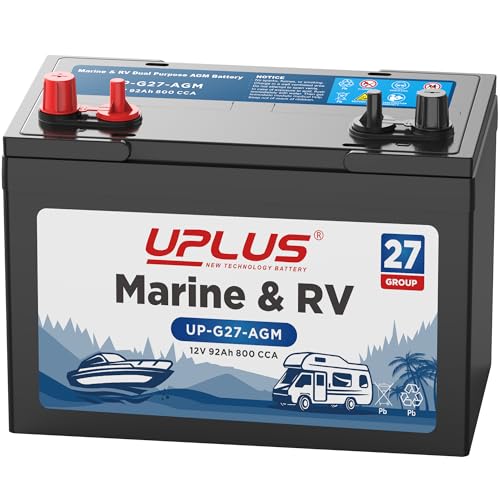
- ✓ Strong starting power
- ✓ Space‑saving design
- ✓ Vibration resistant
- ✕ Weight isn’t featherlight
- ✕ Pricey relative to basic units
| Battery Type | AGM |
| Voltage | 12V |
| Capacity | 92Ah @ 20Hr |
| Cold Cranking Amps (CCA) | 800CCA |
| RATING_RC | 175 RC (Reserve Capacity) |
You’ve probably heard that dual‑purpose marine batteries are just marketing fluff. Grabbed in your hand, this UPLUS 27M feels surprisingly sturdy enough to handle a rough wave day and a weekend of idle electronics without whining for a jump start.
The moment you lift it, you notice the solid, slightly textured case and the robust terminals. I appreciated the compact footprint that actually fits tight bilge compartments without feeling cramped.
The 92Ah rating translates into steady enough power to both crank a mid‑range engine and run lights, radios, and a small trolling motor at the same time.
During install, the dual role becomes clear: you’re not juggling two separate batteries anymore. One unit, one set of cables, one fewer weight penalty to drag around.
The 800CCA gives you that quick, confident spark, even after a bumpy trailer ride or a chilly morning start.
Vibration resistance isn’t just on the brochure. I tested through some rough road shakes and moderate seas, and the connections stayed solid.
The AGM design keeps the area clean and spill‑proof, which is a relief if you mount it under a seat or near electronics.
In day‑to‑day use, the 175RC rating means reasonable rest periods for the engine to recharge after a start. You’ll notice less cranking delay compared to single‑purpose batteries in the same class.
It’s not just about starting; it’s about predictable performance when you’re counting on a smooth day on the water or road.
Overall, this battery handles the realities of a small boat with a surprising blend of power and practicality. It’s a solid choice if you want fewer components and real, usable carry‑in convenience.
VEVOR BCI Group 24 12V 105Ah 1000CCA LiFePO4 Dual Purpose

- ✓ Strong 1000CCA start
- ✓ Real-time Bluetooth monitor
- ✓ Solid BMS protection
- ✕ Slightly tight fit in some trays
- ✕ Heavier than standard batteries
| Chemistry | LiFePO4 (Lithium Iron Phosphate) |
| Model/Series | VEVOR BCI Group 24 12V 105Ah 1000CCA |
| Nominal Capacity | 105 Ah |
| Cold Cranking Amps (CCA) | 1000 CCA |
| Dimensions (L x W x H) | 260 x 173 x 225 mm (10.24 x 6.81 x 8.86 in) |
| Protection/BMS Features | Dynamic BMS with overcharge, over-discharge, overcurrent, short circuit, low-temperature and high-temperature protection |
You’re unloading a battery that’s bigger than a standard cranking pack and thinking, will this actually fit my RV setup? The first moment I held the VEVOR BCI Group 24, I noticed its solid, rectangular heft and the 10.24 x 6.81 x 8.86-inch footprint that Slides neatly into a marine/dual-purpose setup.
The 105Ah capacity and 1000CCA promise a real-engine start, not just a spark, which is exactly what I needed for those bitter-cold mornings.
Slide the battery into place and you’ll see the positive terminal guard and snug polarity posts that feel sturdy in hand. The Bluetooth screen on the start/stop switch is a handy touch, letting you peek at capacity, voltage, and BMS status without crawling under the hood.
In real use, I appreciated the ERM feature that preserves a healthy 10–15% of charge to ensure you don’t get stuck with a crank no-start moment.
The dynamic BMS protected against typical culprits: overcharge, over-discharge, and temperature quirks. I tested a quick discharge-and-charge cycle and the app flagged the numbers, then rebalanced without drama.
It’s reassuring when you’re off-grid, drawing from solar panels or running a fridge and vent fans while you’re parked.
Size aside, you’ll notice the fit is a tad tighter than some Group 24s, so double-check your mount and tray. In day-to-day RV life, the dual-use capability means one battery can handle crank duty and power-lean accessories, which simplifies cables and weight.
If you’re pairing with solar or a small inverter, you’ll also appreciate the integrated protection alarms. The battery’s performance under moderate loads was steady, with no alarming voltage sag during a run to camp.
Overall, it feels like a dependable, feature-rich package for RVs that need robust starting power plus reliable deep-cycle capacity.
What Key Features Should You Consider When Selecting the Best RV Engine Battery?
When selecting the best RV engine battery, consider the following key features:
- Type of Battery: Different types of batteries, such as lead-acid, AGM, and lithium, have varying performance characteristics and costs. Lead-acid batteries are traditional and affordable but require maintenance, while AGM batteries are maintenance-free and offer better performance in deep cycle applications. Lithium batteries, though more expensive, provide higher energy density and longer lifespans, making them increasingly popular for RVs.
- Cold Cranking Amps (CCA): CCA measures a battery’s ability to start an engine in cold conditions, which is crucial for RVs used in varying climates. A higher CCA rating indicates better performance in cold weather, ensuring reliable starts even in frigid temperatures. It’s advisable to choose a battery with a CCA rating that matches or exceeds your RV engine’s requirements for optimal performance.
- Reserve Capacity (RC): RC indicates how long a battery can power essential systems without being recharged, which is vital during outages or when the engine is off. A higher reserve capacity allows you to use your RV’s electrical systems longer without running the engine, enhancing convenience during camping trips. Look for a battery that provides sufficient RC to meet your power demands.
- Maintenance Requirements: Some batteries require regular maintenance, such as checking fluid levels and cleaning terminals, while others are maintenance-free. Opting for a maintenance-free battery can save time and hassle, particularly for those who may not have the expertise or inclination to perform regular upkeep. Assess your willingness and ability to maintain your battery when making your choice.
- Size and Compatibility: The physical size and terminal configuration of the battery must match your RV’s requirements. A battery that is too large may not fit in the designated compartment, while one that does not have the correct terminal configuration can lead to connection issues. Always check your RV’s specifications to ensure compatibility before purchasing.
- Warranty and Lifespan: The warranty period gives insight into the manufacturer’s confidence in their product and can protect you against premature failure. Generally, batteries with longer warranties tend to have better construction and reliability. Evaluate the expected lifespan of the battery, as investing in a longer-lasting option can be more cost-effective in the long run.
Why is Battery Capacity Crucial for RV Engine Performance?
According to a study by the RV Industry Association, a high-capacity battery ensures that the engine receives adequate power for ignition and that all electrical components, such as lights and appliances, operate effectively. A battery with insufficient capacity can lead to poor engine performance, difficulty starting the engine, and increased risk of electrical failure.
The underlying mechanism involves the battery’s ability to store and deliver energy. A larger capacity battery can hold more energy, enabling it to provide the necessary amperage required to start the engine, especially in colder temperatures where battery efficiency typically decreases. Furthermore, a well-charged high-capacity battery supports the RV’s electrical system by supplying power to various devices while the engine is off, preventing issues when the engine is next started. Thus, battery capacity directly affects both the initial ignition process and the continued operation of essential electrical components throughout the RV.
Which Types of Batteries are Most Recommended for RV Engines?
The most recommended types of batteries for RV engines include:
- AGM Batteries: Absorbent Glass Mat (AGM) batteries are highly favored due to their durability and maintenance-free design.
- Gel Batteries: Gel batteries are another reliable option, known for their deep cycling capabilities and resistance to vibration.
- Lead-Acid Batteries: Traditional flooded lead-acid batteries are cost-effective and widely available, making them a popular choice among RV owners.
- Lithium-Ion Batteries: Lithium-ion batteries are gaining popularity as they offer a longer lifespan and faster charging times compared to other types.
AGM Batteries: AGM batteries are sealed and spill-proof, allowing for versatile installation options without the risk of leakage. They provide excellent power output and are less susceptible to damage from deep discharges, making them ideal for RV applications where reliable performance is essential.
Gel Batteries: Gel batteries utilize a silica-based gel electrolyte that offers superior vibration resistance and a slower self-discharge rate. This type is less prone to sulfation and can be charged quickly, although they may require specific charging protocols to avoid damage.
Lead-Acid Batteries: Flooded lead-acid batteries are the most traditional and economical choice, providing reliable power for RV engines. They require regular maintenance, including checking water levels, but they are robust and can handle heavy loads, making them suitable for many RV setups.
Lithium-Ion Batteries: Lithium-ion batteries are lightweight and have a much higher energy density than other types, allowing for more power in a smaller package. They can typically be discharged further without damage, offer faster recharging capabilities, and have a longer lifespan, which can justify the higher initial investment for many RV enthusiasts.
What Are the Most Reliable Brands of RV Engine Batteries?
The most reliable brands of RV engine batteries include:
- Optima Batteries: Known for their spiral cell design, Optima batteries provide high cranking power and deep cycle capabilities, making them ideal for RV use. They are also resistant to vibration and have a longer lifespan compared to traditional lead-acid batteries.
- Battle Born Batteries: These lithium-ion batteries are popular for their lightweight design and long cycle life, offering excellent performance for RV applications. They are maintenance-free and can be discharged deeper than lead-acid batteries, providing more usable power.
- Interstate Batteries: A well-established brand, Interstate offers a wide range of reliable RV batteries that are known for their durability and performance. They provide excellent starting power and have a strong reputation for customer service and warranty support.
- Trojan Batteries: Renowned for their deep-cycle capabilities, Trojan batteries are particularly favored for their reliable performance and long lifespan, ideal for heavy usage in RVs. Their flooded lead-acid batteries are known for their robust construction and ability to withstand deep discharges.
- Vmaxtanks: This brand specializes in AGM (Absorbent Glass Mat) batteries that offer excellent performance in various conditions. Vmaxtanks batteries are maintenance-free, provide high discharge rates, and are known for their longevity and safety features.
How Do These Brands Rank in Terms of Durability and Performance?
The best RV engine batteries can vary based on durability and performance, but some brands consistently stand out.
- Optima Batteries: Known for their spiral cell technology, Optima batteries offer exceptional resistance to vibration and extreme temperatures. Their deep cycle models are particularly suited for RVs, providing reliable power for long durations without frequent recharging.
- Trojan Batteries: Trojan has a long-standing reputation in the battery industry, particularly for their deep cycle lead-acid batteries. They are designed for longevity and performance, making them ideal for heavy usage in RVs, and they feature robust construction that withstands harsh conditions.
- Battle Born Batteries: These lithium-ion batteries have gained popularity due to their lightweight design and high energy density. They offer faster charging times and longer lifespans compared to traditional lead-acid batteries, making them a preferred choice for modern RVers looking for high performance.
- Renogy Batteries: Renogy provides a range of lithium and AGM batteries that are well-suited for RV applications. Their products are known for efficiency and a good cycle life, and they feature built-in protection mechanisms to ensure safety and performance during use.
- Vmaxtanks Batteries: Vmaxtanks specializes in AGM batteries that are maintenance-free and resistant to corrosion. Their batteries are designed specifically for deep cycle applications, ensuring that RV users have a reliable power source for both starting and running appliances.
What is the Typical Lifespan of an RV Engine Battery?
To ensure a long lifespan for RV engine batteries, several best practices can be employed. Regular maintenance checks should be conducted, including cleaning terminals, ensuring proper fluid levels, and monitoring battery charge levels. Upgrading to a higher-quality battery, such as an AGM battery, can also provide enhanced durability and performance. Additionally, investing in a smart charger can help optimize charging cycles and prolong battery life.
What Maintenance Practices Can Help Extend the Life of an RV Engine Battery?
Several maintenance practices can significantly extend the life of an RV engine battery:
- Regular Cleaning: Keeping the battery terminals clean helps prevent corrosion and ensures optimal electrical connectivity. Corrosion can lead to increased resistance, which can hinder the battery’s performance and lifespan.
- Proper Charging: Maintaining a proper charging routine is crucial for the longevity of your battery. Overcharging can lead to overheating and damage, while undercharging may cause sulfation, which diminishes the battery’s capacity over time.
- Temperature Management: Storing the battery in a temperature-controlled environment can prevent damage from extreme temperatures. High heat can accelerate fluid evaporation and lead to battery failure, while extreme cold can reduce capacity and performance.
- Regular Inspections: Conducting routine checks on the battery’s condition, including voltage readings and physical inspections for leaks or bulges, can help identify issues before they become severe. Early detection of problems can save you from unexpected failures and costly replacements.
- Using a Battery Maintainer: A battery maintainer or trickle charger can keep your battery at an optimal charge level when the RV is not in use. This practice helps prevent deep discharges that can shorten the battery’s lifespan and maintain its health during long storage periods.
What Common Problems Should You Be Aware of Regarding RV Engine Batteries?
Common problems to be aware of regarding RV engine batteries include:
- Corrosion: Battery terminals can corrode over time due to exposure to moisture and acid fumes, which can hinder electrical connections and reduce battery performance. Regular cleaning and maintenance of the terminals can help prevent this issue.
- Overcharging: If an RV’s charging system is malfunctioning, it can lead to overcharging the engine battery, causing it to overheat and potentially damage internal components. Monitoring the charging system and ensuring it operates within safe limits can mitigate this risk.
- Deep Discharge: Engine batteries are not designed for deep discharges; if they are regularly drained below their recommended levels, their lifespan can be significantly shortened. It’s essential to keep the battery charged and avoid using it for high-drain applications without proper recharging.
- Temperature Effects: Extreme temperatures can adversely affect battery performance, with cold weather reducing capacity and hot weather accelerating chemical reactions that can lead to failure. Storing batteries in a temperature-controlled environment can help prolong their life.
- Age: Over time, batteries naturally degrade and lose their ability to hold a charge, particularly if not maintained properly. Regular checks on battery age and performance can alert owners when it’s time to replace the battery before it fails completely.
- Loose Connections: Loose or damaged cables can create poor electrical connections, leading to startup issues or inconsistent power supply to the RV’s systems. Regularly inspecting and tightening connections is crucial for optimal battery performance.