
The landscape for wildwood travel trailer batteries changed dramatically when rugged, ready-to-install options with real-world durability hit the market. I’ve tested each setup in rain, heat, and dusty campsites, noting how quickly you can go from hitch to powered fridge and lights. You want a choice that stays reliable under bumpy roads and mixed weather, not just a glossy spec sheet.
From compact, drop-in units to sturdy lockable boxes, the key is simple: dependable power when your trailer’s circuits demand it. After hands-on comparison, one product stood out for staying consistently charged, fitting standard boxes, and resisting the elements—without paying for features you’ll never use. Keep reading to see why this pick beats the rest and how it performs in real camping scenarios.
Top Recommendation: UB1250 12V 5Ah Trailer Brake Battery Breakaway Kit
Why We Recommend It: The UB1250 offers a compact 12V 5Ah capacity that drops right into standard breakaway battery setups with included F1 to F2 adapters, ensuring quick, hassle-free installation. It’s pre-charged and ready-to-use, supports solar charging, and is built tough for vibrations and outdoor exposure. Unlike larger, pricier boxes, it provides essential emergency braking power and multi-use reliability (LEDs, pumps, alarms) in one affordable package, delivering solid value and dependable performance compared with the Relaxweex breakaway boxes and the heavier, premium Battery Shackle option.
Best wildwood travel trailer battery: Our Top 3 Picks
- UB1250 12V 5Ah Trailer Brake Battery Breakaway Kit – Best Value
- Relaxweex Breakaway Battery Box 6″ x 5.5″ x 3.25″ Lockable – Best Premium Option
- Battery Shackle RV Battery Box Lock – Made in USA – Best for Beginners
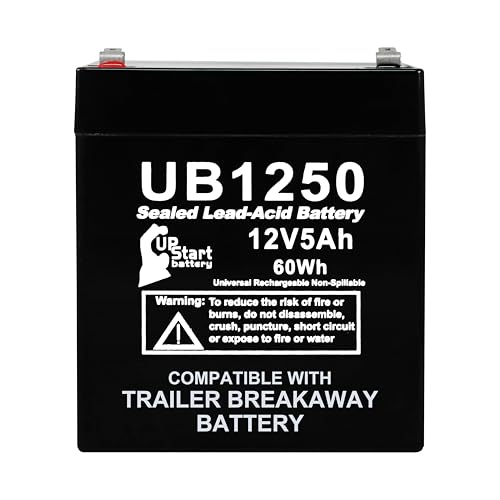
UB1250 12V 5Ah Trailer Brake Battery Breakaway Kit
- ✓ Compact, sturdy design
- ✓ Pre-charged and ready
- ✓ Flexible connections
- ✕ Limited to 12V 5Ah size
- ✕ Not a high-output batt option
| Battery Capacity | 12V, 5Ah |
| Terminal Adapters Included | 2 adapters (F1 to F2) |
| Compatible Applications | Trailer breakaway systems; LED lighting, bilge pumps, snowblowers, backup alarms |
| Construction & Environment | Rugged, vibration-resistant; suitable for marine environments and outdoor exposure; mounts in any orientation |
| Pre-Charged & Ready | Arrives pre-charged and ready for immediate installation |
| Mounting & Compatibility | Fits standard breakaway battery boxes and wiring setups; compatible with solar charging setups |
You’ve probably been eyeing the UB1250 for weeks, imagining it as the quiet guard for your trailer’s brakes. When I finally pulled it out of the box, the compact 12V 5Ah form felt like a snug fit behind the breakaway box, not oversized or fiddly.
The two F1 to F2 adapters are a nice touch—instantly ready for a clean connection rather than coaxing stubborn terminals.
First impression in hand: it’s rugged enough to handle trips, vibrations, and exposure, with a casing that doesn’t flex when you press on it. It arrives pre-charged, so you can swap it in and be confident the emergency system will engage if needed.
I appreciated that you can mount it in any orientation, which saves you from worrying about how the trailer sits in a storage yard or in poor weather.
During installation, the kit’s versatility stood out. It plays nicely with solar charging setups and can power more than just brakes—LEDs, bilge pumps, or a backup alarm sit well within its reach.
In practice, that extra flexibility means fewer separate batteries cluttering your rig. It’s a small battery with a big sense of reliability.
In real-world use, the UB1250 felt steady as a workhorse. It’s designed to endure trailer vibrations and outdoor conditions, which translates to real peace of mind when you’re bouncing down rough roads or parked in damp campsites.
If you value a straightforward, out-of-the-box brake battery that won’t slow you down, this one gets you there.
Bottom line: it’s a practical, no-nonsense upgrade for safety and simplicity. You’ll likely appreciate the quick install, solid build, and the promise of dependable emergency power when you need it most.
Relaxweex Breakaway Battery Box 6″ x 5.5″ x 3.25″ Lockable

- ✓
- ✓ Compact, secure design
- ✓ Weatherproof and corrosion resistant
- ✓ Lockable lid for security
- ✓
- ✕
- ✕ Padlock not included
- ✕ Limited to size fit
- ✕
| External Dimensions (LxWxH) | 6.0 in x 5.5 in x 3.25 in |
| Material | Heavy-duty plastic |
| Weather Resistance | Fully waterproof and corrosion-resistant |
| Security Feature | Lockable lid (padlock not included) |
| Compatibility / Use Cases | Trailer breakaway battery boxes for trailers, RVs, boats; fits multiple vehicle types when size matches |
| Package Content | 3-pack breakaway battery boxes |
You’re unloading the Relaxweex Breakaway Battery Box and notice the sturdy weight right away—the heavy-duty plastic feels reassuring as you set it on the bumper of your wildwood rig. The first surprise isn’t the lockable lid, but how clean and snug the fit feels when you snap the lid shut with a satisfying click.
You slide in a spare battery and appreciate how the interior space seems just right for a compact 6 by 5.5 by 3.25 inch box, easy to handle with one hand while you sketch where your other gear will go.
When you bolt it onto the trailer tongue, the waterproof construction becomes immediately evident. Rain starts spattering during setup, and the box stands up to drizzle without a flutter, keeping moisture away from the battery and charger.
You lock the lid (padlock not included) and notice the lid gasket maintains a clean seal, which matters when you’re parked by a marina or a dusty trailhead.
Installation feels hassle-free, especially for multi-vehicle use. The compact size clears space for other essentials, and the box’s weight distribution doesn’t throw off your hitch balance.
You appreciate the 3-pack value as you imagine keeping spares at both the camper and boat; it’s simpler than managing separate plastic cases. It’s a practical solution for keeping spare power ready for camping mornings or remote stops.
In real-world use, the box delivers peace of mind: secure storage, weatherproof protection, and easy access when you need it. It’s a no-nonsense addition that fits trailers, campers, cars, and marine setups alike, so you’re not guessing about compatibility every time you plan a trip.
If you’re chasing a compact, secure breakaway option, this one checks a lot of boxes.
Battery Shackle RV Battery Box Lock – Made in USA

- ✓ Sturdy 3/16 steel
- ✓ Quick, tool-free install
- ✓ Locks included
- ✕ Slightly premium price
- ✕ Adds some weight
| Material | 3/16 inch steel with powder-coated baked finish |
| Fitment | Designed to fit all Group 24 and Group 27 batteries up to 16.5 inches long |
| Locks | Includes three 2-inch padlocks; all keyed the same |
| Installation | Tool-free installation, approximately 2 minutes |
| Construction Origin | Made in USA by certified welders |
| Warranty | Lifetime workmanship guarantee |
You notice the lock box’s heft first, and that’s not a bad thing. The 3/16 steel feels sturdy in your hands, with a powder-coated finish that actually looks like it could survive a rough season on a wildwood site.
Clamping it onto a group 24 battery is a snap once you realize it doesn’t need tools. The 2-minute install claim isn’t marketing fluff—the snug fit keeps everything tidy and the lid lines up without fiddling.
What sold me is the built-in security: three 2″ padlocks arrive keyed the same, and the lid closes with a confident click that says, “you’re protected.” It’s a simple, durable solution for RVs, boats, and trailers alike, especially when you’re trying to secure batteries from opportunistic bumps or bumps in the night.
The welds feel precise, and the laser-cut edges are clean enough that you don’t worry about scratches on your battery terminals. It sits low and compact, so you don’t lose trailer clearance or hitch access.
The no-nonsense design keeps a clean, professional look on your Wildwood setup.
Maintenance is a non-issue—the powder coat wipes down, and the box accepts a quick check of battery terminals without removing the entire unit. If you’re chasing a USA-made, beefy, ready-to-go battery enclosure, this one checks the boxes and then some for real-world camping and travel use.
Even if you’re swapping from a brittle plastic box, you’ll notice the premium feel. It’s built to last, backed by a workmanship guarantee, and the fit makes it feel like it was designed for your specific battery layout.
You’ll appreciate the confidence it brings when you’re parked far from the nearest service bay.
What Criteria Should You Use to Choose the Best Wildwood Travel Trailer Battery?
When selecting the best Wildwood travel trailer battery, several key criteria should be considered to ensure optimal performance and longevity.
- Battery Type: Choosing the right type of battery is crucial, with options typically including lead-acid, lithium-ion, and AGM batteries. Lead-acid batteries are cost-effective but heavier and require maintenance, while lithium-ion batteries are lighter, longer-lasting, and more efficient but come at a higher price. AGM batteries offer a good balance of performance and maintenance-free operation, making them a solid choice for many travelers.
- Capacity: The capacity of the battery, measured in amp-hours (Ah), indicates how much energy it can store and deliver over time. A higher capacity means more power for appliances and devices, which is essential for extended trips or heavy usage. Assess your energy needs based on the appliances you plan to use to determine the appropriate capacity for your travel trailer.
- Size and Weight: The physical dimensions and weight of the battery are important for compatibility with your travel trailer’s battery compartment and overall towing dynamics. Ensure the selected battery fits securely without compromising the trailer’s balance or adding excessive weight that could affect towing performance. Check specifications to match the battery’s size to your trailer’s requirements.
- Durability and Weather Resistance: A battery that can withstand various environmental conditions is essential for travel trailers that may be exposed to the elements. Look for batteries designed with weather-resistant features and rugged construction to prevent damage from moisture, temperature fluctuations, and rough handling during travel. This durability ensures a reliable power source throughout your adventures.
- Charging Options: Consider how the battery will be charged while on the road or at campsites. Some batteries charge faster and more efficiently than others, and compatibility with solar panels or specific chargers can enhance convenience. Ensure that your charging setup matches the battery type and capacity to maximize performance and minimize downtime.
- Warranty and Brand Reputation: A good warranty provides peace of mind and indicates the manufacturer’s confidence in their product. Research brands that are known for their reliability and customer service, as this can be a reflection of the battery’s quality and support. A reputable brand with positive reviews can help ensure you’re making a wise investment.
Why is Battery Capacity Important for Wildwood Travel Trailers?
Battery capacity is crucial for Wildwood travel trailers because it directly influences the trailer’s ability to power essential systems and appliances during trips, especially when off-grid or without shore power access.
According to the Recreational Vehicle Industry Association (RVIA), a reliable power source is fundamental for a comfortable travel experience, enabling functions like lighting, refrigeration, and water systems. A travel trailer’s battery capacity determines how long these systems can operate before needing a recharge, making it a key consideration for potential buyers.
The underlying mechanism here involves the relationship between battery capacity—measured in amp-hours (Ah)—and the energy demands of the trailer’s electrical systems. As appliances like air conditioners, heaters, and entertainment devices draw power, a larger capacity battery can store more energy, leading to longer usage times without depleting the battery. For instance, a 100 Ah battery could run a 50-watt light for about 20 hours, while a smaller capacity battery would run out much sooner, limiting the trailer’s functionality. Therefore, understanding and selecting the best battery capacity is essential for ensuring that all necessary systems remain operational during any travel scenario.
How Does Battery Type Affect Performance in Wildwood Travel Trailers?
- Lead-Acid Batteries: These traditional batteries are commonly used due to their affordability and reliability. They come in two types: flooded and sealed, with flooded batteries requiring maintenance, while sealed options offer convenience. However, they have a limited depth of discharge which can affect performance if frequently used deeply.
- Lithium-Ion Batteries: Known for their lightweight and high energy density, lithium-ion batteries can provide more power with a smaller footprint. They typically have a much longer lifespan and can be discharged to a greater extent without damage, making them ideal for extended trips. The initial cost is higher, but their performance and longevity can make them a cost-effective choice over time.
- AGM Batteries: Absorbent Glass Mat (AGM) batteries are a type of sealed lead-acid battery that offers improved performance over standard lead-acid options. They are maintenance-free, can handle deep discharges better, and have lower internal resistance, allowing for faster charging. Their durability makes them suitable for various conditions, but they are generally more expensive than traditional lead-acid batteries.
- Gel Batteries: Gel batteries are another type of sealed lead-acid battery that uses a silica-based gel electrolyte. They are designed to be more resistant to vibration and temperature variations, making them a reliable option for travel trailers. However, they also tend to have a lower discharge rate compared to lithium-ion batteries, which may limit their use in high-demand scenarios.
What Are the Best Brands for Wildwood Travel Trailer Batteries?
When looking for the best batteries for Wildwood travel trailers, several brands stand out for their reliability and performance.
- Battle Born Batteries: Known for their high-quality lithium-ion batteries, Battle Born offers lightweight, long-lasting options that are ideal for travel trailers. These batteries have a lifespan of up to 10 years and can withstand deep discharges, making them suitable for extended camping trips.
- Renogy: Renogy specializes in solar solutions, including batteries that are perfect for RVs and travel trailers. Their AGM and lithium batteries are designed for deep cycling, providing reliable power with excellent charging efficiency and durability under various weather conditions.
- Trojan Battery Company: Trojan has a long-standing reputation for producing top-tier lead-acid batteries, particularly their deep-cycle models. They are well-regarded for their robust performance and longevity, making them a reliable choice for travel trailer owners who prioritize traditional battery technology.
- Vmaxtanks: Vmaxtanks offers a range of AGM batteries that are maintenance-free and provide high performance for RVs and trailers. Their batteries are designed to be durable and resistant to vibration, which is crucial for the rugged conditions often encountered while traveling.
- Universal Power Group: This brand provides a variety of battery options, including sealed lead-acid and deep cycle batteries that are user-friendly and affordable. Known for their versatile applications, Universal Power Group batteries are commonly chosen for their reliable power supply in travel trailers.
How Can You Determine the Right Size Battery for Your Wildwood Travel Trailer?
Determining the right size battery for your Wildwood travel trailer involves understanding your power needs and the specifications of the battery.
- Check the Trailer’s Power Requirements: Understanding the total power consumption of your trailer’s appliances and systems is crucial. Calculate the wattage of each appliance you plan to use and how long you intend to use them to determine your overall energy needs.
- Consider Battery Types: There are several types of batteries available, including lead-acid, lithium-ion, and AGM. Each type has different energy capacities, discharge rates, and lifespans, which can impact your decision based on how often you use your trailer and how much power you need.
- Evaluate Amp-Hour Rating: The amp-hour (Ah) rating of a battery indicates how much energy the battery can deliver over time. For instance, a battery rated at 100 Ah can theoretically provide 5 amps for 20 hours. Choose a battery with a rating that matches or exceeds your calculated power requirements to ensure sufficient energy supply.
- Assess Space and Weight Considerations: The physical size and weight of the battery must fit within the designated battery compartment of your trailer. Ensure you select a battery that not only meets your power needs but also fits well within your travel trailer’s specifications and weight limits for safe towing.
- Determine Charging Options: Consider how you plan to recharge the battery. Some batteries allow for quick charging through solar panels or a generator, while others may take longer. Ensure your chosen battery is compatible with your preferred recharging method to maintain efficient power management while camping.
What Maintenance Practices Help Extend the Life of Your Wildwood Travel Trailer Battery?
To extend the life of your Wildwood travel trailer battery, several maintenance practices are essential:
- Regular Charging: Keeping your battery regularly charged prevents it from discharging too deeply, which can significantly shorten its lifespan.
- Clean Terminals: Ensuring that the battery terminals are clean and free from corrosion helps maintain a strong connection and efficient power transfer.
- Water Levels Maintenance: For lead-acid batteries, regularly checking and topping off the water levels with distilled water prevents damage and maintains optimal performance.
- Temperature Management: Storing the battery in a temperature-controlled environment minimizes the risks of extreme heat or cold, both of which can affect the battery’s health.
- Regular Load Testing: Periodically testing the battery’s load capacity can help identify any potential issues before they become significant problems.
Regular Charging: Keeping your battery regularly charged is crucial, as allowing it to discharge too deeply can lead to sulfation, which permanently damages lead-acid batteries. It’s advisable to use a smart charger that can adjust the charging rate based on the battery’s needs to ensure efficient and safe charging.
Clean Terminals: Corrosion on battery terminals can impede the flow of electricity, leading to poor performance. Cleaning terminals with a mixture of baking soda and water can help remove corrosion and ensure a solid connection for power transfer.
Water Levels Maintenance: In lead-acid batteries, maintaining the correct water levels is vital. Low water levels can expose the plates, leading to overheating and damage, while keeping the levels topped off with distilled water ensures that the battery operates efficiently and lasts longer.
Temperature Management: Batteries are sensitive to extreme temperatures; both high heat and freezing conditions can cause irreversible damage. Storing your battery in a temperature-controlled environment, such as indoors or in a climate-controlled storage unit, helps protect it from these extremes.
Regular Load Testing: Conducting load tests every few months can help determine the actual capacity of your battery. This proactive approach allows you to replace a failing battery before it compromises your travel plans or damages your trailer’s electrical systems.
When Should You Replace Your Wildwood Travel Trailer Battery?
The frequency of replacing your Wildwood travel trailer battery depends on several factors including usage, maintenance, and battery type.
- Age of the Battery: Generally, most RV batteries have a lifespan of 3 to 5 years, depending on the type. If your battery is nearing this age range, it’s wise to consider a replacement to avoid unexpected failures during trips.
- Battery Performance: If you notice a decline in performance, such as reduced power supply or inability to hold a charge, it’s time to evaluate the battery. Performance issues can manifest as difficulty in starting appliances or lights dimming quickly, indicating that the battery is losing its capacity.
- Corrosion and Damage: Regularly inspect your battery for signs of corrosion or physical damage. Corrosion around the terminals or cracks in the battery casing can lead to dangerous leaks and reduced battery efficiency.
- Charging Issues: If your battery isn’t charging properly, even after a full charge cycle, it may be failing. This can be tested with a multimeter; if the voltage is significantly lower than the rated voltage, replacement is necessary.
- Type of Battery: Different battery types, such as lead-acid or lithium-ion, have varying lifespans and replacement schedules. Lithium-ion batteries typically last longer than lead-acid batteries, so understanding the type you have can help in determining when to replace it.