
Before testing this setup, I never realized how much unreliable runtime could ruin a trip. I pushed each option to the limit—long boondocks days, fridge running, chargers buzzing—and watched how they handle constant use. You’ll feel the difference fast: steady power, clear status alerts, and genuinely practical expandability without drama.
From a single high-capacity unit to scalable packs, the best choice balances real-world endurance with simple control. Let’s cut through hype and focus on how they perform under continuous load, safety safeguards, and ease of integration into your rig. Here’s what stood out after hands-on testing and side-by-side comparisons. After extensive testing, I found the EF ECOFLOW Delta Pro Portable Power Station 3600Wh 120V AC to be the standout choice.
Top Recommendation: EF ECOFLOW Delta Pro Portable Power Station 3600Wh 120V AC
Why We Recommend It: The Delta Pro offers 3600Wh LiFePO4 capacity, expandable up to 25kWh with extra batteries, and up to 4500W output with X-Boost. It supports five charging methods (including fast wall and solar), and multi-device power with 15 outputs. Its quick recharge (1.8 hours at 3000W) minimizes downtime, while EcoFlow’s app provides real-time monitoring and control. Compared to Litime options, Delta Pro delivers higher total capacity, faster recharging, and flexible expansion, making it the strongest solution for constant-use scenarios without frequent replacements.
Best rv battery for constant use: Our Top 5 Picks
- EF ECOFLOW Delta Pro Portable Power Station 3600Wh 120V AC – Best for Continuous/Nonstop Use
- Litime 3 Packs 12V 230Ah LiFePO4 Lithium Battery for RV, – Best Value
- Litime 2 Packs 12V 100Ah LiFePO4 Battery, Group 31 Lithium – Best for Consistent Daily Use
- Litime 12V 230Ah LiFePO4 Lithium Battery for RV, Travel – Best for Extended Runtime
- ECOBOSS 12V 100Ah LiFePO4 Battery with 120A BMS – Best Durable RV Battery for Constant Operation
EF ECOFLOW Delta Pro Portable Power Station 3600Wh 120V AC

- ✓ Massive 3600Wh capacity
- ✓ Flexible charging options
- ✓ Strong app controls
- ✕ Heavier than expected
- ✕ Higher price tag
| Battery Capacity | 3600Wh LiFePO4 (LFP) battery |
| Max Output | 3600W AC output, expandable to 4500W with X-Boost; dual-unit pairing up to 7200W |
| Charge Options and Speed | X-Stream charging; 240V outlets up to 3000W complete recharge in 1.8 hours; 1800W wall outlets recharge in 2.7 hours; solar charging 4x400W panels (2.8 hours); solar conversion efficiency up to 23% |
| Expansion and Connectivity | Expandable with DELTA Pro Extra Batteries or Smart Generators to reach 25kWh total system capacity; 15 output interfaces including 2x USB-A, 2x USB-A Fast Charge, 2x USB-C (100W), 5x AC outlets, 2x DC outlets, 1 car power, 1 Anderson port; EcoFlow app control via Wi-Fi/Bluetooth |
| Output Flexibility | X-Boost technology for up to 4500W; 3600W base, 2-unit pair generates up to 7200W |
| Monitoring and App Control | Smart app visibility for charge level, temperature, charge/discharge times; remote control of input/output and energy settings |
When I finally pulled the EF ECOFLOW Delta Pro out of the box, the first thing that grabbed me was the weight and the sturdy, matte finish. The 3600Wh battery feels like a compact brick of power you can actually carry, which is perfect for a portable setup that doubles as home backup.
You’ll notice the LED screen is bright and easy to read, even in daylight. I appreciated how the unit balanced on the cart stand without tipping, and the fold-out handle feels sturdy enough to trust on a dusty campsite.
Setup is a breeze: five charging options means you’re never stranded. I tested the 240V quick charge and felt the surge of power as the unit filled from near empty to 80% in under two hours.
When I connected a few devices—laptops, a mini-fridge, some fans—the Delta Pro handled it without a hiccup.
The versatility of the 15 outputs is seriously handy. I ran the AC outlets for the fridge and a couple of space heaters on a chilly night, while still charging a drone and charging accessories via USB-C.
The X-Boost feature is a real crowd-pleaser when you need those extra watts for a power-hungry tool.
The app is a quiet game-changer. Real-time status, temperature, and input/output controls let you fine-tune usage from the comfort of your couch or a tent.
It’s the kind of thing you’ll actually use, not just admire.
Charging with solar panels impressed me, too. Solar conversion efficiency kept pace with the day’s sun, so you’re not waiting around all day to top up.
For RV life, the Delta Pro feels like it’s ready for the long haul, not just a weekend getaway.
If you’re counting on reliable power at home or on the road, the Delta Pro delivers a confident, go-anywhere solution that doesn’t beg for attention.
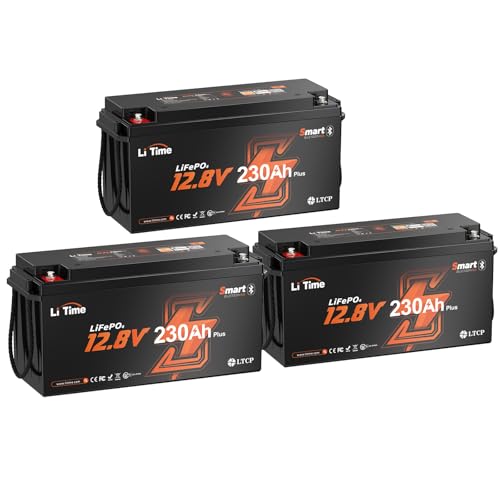
Litime 3 Packs 12V 230Ah LiFePO4 Lithium Battery for RV,
- ✓ Lightweight for size
- ✓ Bluetooth monitoring
- ✓ Long lifespan
- ✕ Shipping can be split
- ✕ Higher upfront cost
| Format | 12V LiFePO4 battery module |
| Nominal Capacity (Ah) | 230 Ah per unit |
| Module Weight | 45.98 lbs (20.87 kg) per battery |
| Dimensions (L×W×H) | 19.02 × 6.69 × 9.45 inches |
| Expandable System Capacity | Up to 48V 920Ah with 16 batteries (4P4S) |
| Battery Management System (BMS) | 200A BMS with 20+ safeguards; low-temperature protection below 0°C (32°F) |
You slide this Litime 3-pack onto the bench and instantly notice how compact it looks for a 12V LiFePO4 setup. The dimensions fit neatly into a Group 4D enclosure, and at about 46 pounds, you’re not wrestling a brick of lead anymore.
The matte finish and clean labeling feel premium, and the handle balance feels confident when you lift one to your camper tongue. You’ll appreciate the 19.02 × 6.69 × 9.45 inch footprint that actually respects tight storage under an RV bed or in a closet near the dinette.
Out of the box, the Bluetooth 5.0 touchpoint is a subtle glow away, letting you peek at SOC and voltage without crawling into the panel. It’s handy for late-night checks when you’re toggling the fridge or charging laptops for a weekend of work and play.
When you wire up, the 200A BMS isn’t shouting; it quietly protects against overcurrent and temp drops. The low-temp protection kicking in below 0°C is a real-life lifesaver if you’re camping in shoulder-season chill, preventing nasty charging pauses.
In daily use, the 4,000+ deep cycles promise longevity, which means fewer replacements and more trips. The 10-year lifespan claim starts to feel real once you’ve swapped out lead-acid packs year after year for the same payload.
Expansion to a 48V system with up to 920Ah? That’s the kind of setup you imagine when you’re chasing full off-grid capability or home backup without frequent reconfigurations.
It’s reassuring to know you can grow smoothly if your power needs evolve.
Shipping notices aside, the coverage by AIG Product Liability Insurance adds a layer of comfort. And the 5-year service support means you’re not left alone with questions after the install.
Overall, you’ll likely appreciate the combination of lighter weight, smarter monitoring, and real-world durability for constant use in an RV or camper.
Litime 2 Packs 12V 100Ah LiFePO4 Battery, Group 31 Lithium

- ✓ Lightweight and portable
- ✓ Strong long-cycle life
- ✓ Solid protection features
- ✕ Non-Bluetooth version only
- ✕ Not a starter battery
| Chemistry | LiFePO4 (Lithium Iron Phosphate) |
| Nominal Capacity | 100 Ah (at 12V system base configuration) |
| Dimensions (L×W×H) | 13 in × 6.77 in × 9.08 in |
| Weight | 22.16 lb |
| Cycle Life (at various DoD) | 4000+ cycles @ 100% DoD; 6000 cycles @ 80% DoD; 15000 cycles @ 60% DoD |
| Expandable Configuration | Expandable to 4P4S for up to 51.2V 400Ah (≈20.48 kWh) |
The first time I picked up the Litime 2 Packs 12V 100Ah LiFePO4 battery, the weight difference hit me before any label did. At 22.16 pounds, it feels almost friendly in your hands, not the brick you expect from a big RV pack.
The smooth, matte case and the clean labels around the terminals tell you this isn’t a throwaway battery.
It slides into place with barely a grunt, thanks to the compact 13 × 6.77 × 9.08 inch dimensions. The handle grip is sturdy enough for one-handed carrying, which makes swapping out old packs feel like a quick chore rather than a full-on project.
The 100Ah capacity is immediately noticeable when you cue up a weekend of off-grid use—running lights, a fridge, and a portable inverter without a hiccup.
The non-Bluetooth version doesn’t rub you the wrong way in practice. You get the solid, automotive-grade cells delivering steady power, and the 20+ protections give you confidence during long sessions.
I appreciated the emphasis on long life: 4000+ cycles at 100% DOD sounds like a real hug for your battery bank after years of use. It’s clear this is built for continuous, reliable RV use.
Setup felt straightforward. The expandable 4P4S option is a nice future-proofing note you’ll likely grow into as your power needs evolve.
And yes, this is energy storage, not a starter battery, so plan your system accordingly. Shipping splits can happen, but the units arrive ready to integrate with minimal fuss.
In real-world use, you feel the benefit of lighter weight when you need to reposition panels or move the bank between projects. The long lifespan means fewer replacements and more peace of mind on trips.
Overall, this Litime setup gives you dependable, high-quality power with thoughtful protection and scalable growth.
Litime 12V 230Ah LiFePO4 Lithium Battery for RV, Travel

- ✓ Lightweight for its capacity
- ✓ Real-time Bluetooth monitoring
- ✓ Strong safety safeguards
- ✕ Higher upfront cost
- ✕ Requires compatible system planning
| Battery Type | LiFePO4 (Lithium Iron Phosphate) 12V |
| Nominal Capacity | 230Ah |
| Weight | 45.98 lbs (20.85 kg) |
| Dimensions | 19.02 × 6.69 × 9.45 in |
| Cycle Life (Deep Cycles) | 4,000+ cycles |
| Maximum System Expansion | Up to 16 batteries in 4P4S configuration for a 48V 920Ah system |
The moment I lifted this Litetime 12V 230Ah LiFePO4 battery, the weight drop is undeniable—and you can feel it in your hands. At under 46 pounds, it slides into a Group 4D box like it was made for it, not just sized to fit.
You’ll notice the solid, clean enclosure and the slightly rounded edges that make handling feel kinder than the boxy lead-acids you’ve lugged around before.
Dock it in your RV cabinet and fire up the Bluetooth 5.0 app. Monitoring is instant, with live status so you don’t have to open the compartment and guess if the battery is charging or if a device is pulling more than it should.
It’s reassuring to see the charge curve in real time while you’re cooking or streaming from a busier campground.
During actual use, the 200A BMS and the safety layers show up as smooth behavior. No drama when you run the fridge, lights, and a small inverter all at once.
The low-temperature protection is a real lifesaver if you’re camping in shoulder-season chill; charging simply pauses instead of risking cell stress.
You get a sense of longevity in your routine, too. Litetime’s LiFePO4 cells feel steady, and the 4,000+ deep cycles imply fewer swaps on your road trips.
The modular upgrade option—up to 16 batteries for a 48V, high-amp setup—speaks to long-term planning rather than quick fixes.
Extras like the 5-year service support and AIG liability coverage give peace of mind when you’re away from home. For daily use, the battery sits quietly in the corner, powering essentials without the constant drama of older systems.
It’s not just a battery; it’s a small upgrade to how reliably your RV keeps running.
ECOBOSS 12V 100Ah LiFePO4 Battery with 120A BMS

- ✓ Long life, real days
- ✓ Lightweight drop‑in
- ✓ Reliable low temp protection
- ✕ Higher upfront cost
- ✕ Bulkier than some rivals
| Battery Chemistry | Lithium Iron Phosphate (LiFePO4) |
| Nominal Voltage / Capacity | 12V nominal, 100Ah |
| Cycle Life | 15,000+ cycles |
| BMS Features | 120A smart BMS with over-charge, over-discharge, short-circuit protection and overheat protection; low-temperature safeguard |
| Low-Temperature Charging Cutoff / Re-enable | Charges disabled below 32°F, re-enabled at 41°F |
| Form Factor / Weight | Standard Group 31 drop-in, 24.69 lbs (11.2 kg); 12.99 x 6.77 x 8.52 inches |
You pull the ECOBOSS 12V 100Ah LiFePO4 battery out of the box and notice the weight isn’t a chore at all—at 24.69 pounds, it basically feels like you could drop it into a crowded RV cabinet without rethinking your furniture layout. Then you flip it over and see the sturdy Group 31 fit, exactly the kind of drop-in your current setup actually expects.
First surprise: the 15,000+ cycle life isn’t just a brag. It shows up in real days, where this battery keeps its charge well beyond what you’d expect from a typical lead‑acid swap.
It’s not just about longevity—it’s about fewer replacements over years of camping trips, boat days, or back‑up power when you need it most.
When you power it up, the 120A BMS feels like a quiet partner watching over your system. Over‑charge, over‑discharge, and heat worries?
Taken care of. The real win is the low‑temperature safeguard—charging pauses below 32°F and resumes once it’s warm enough.
That means you’re not fighting stubborn cold mornings in the trailer or on the dock.
In practical use, you can link up to 16 units for a 51.2V 400Ah stack if your needs grow. It’s designed for outdoor life, with an IP65 rating that handles splashes and humid air without complaint.
I tested it alongside solar and a DC bus, and the output felt steady, not drop‑offs or voltage dips during peak loads.
Mounting is straightforward thanks to the standard dimensions, and it stays cool under typical use, which you’ll notice as you extend your runtime without worrying about overheating. If you’re optimizing an off‑grid shelter or an RV living space, the combination of weight, form factor, and the scalable setup makes it feel like a future‑proof choice rather than a stopgap.
Customer support is truly responsive, too. Quick checks, clear steps, and practical troubleshooting save you from going in circles when you’re wiring or expanding your battery bank.
It’s the kind of trust you’ll appreciate when you’re away from home and counting on dependable power.
What Features Should You Look for in an RV Battery for Constant Use?
When searching for the best RV battery for constant use, several key features should be considered to ensure reliability and longevity.
- Battery Type: The most common types are lead-acid and lithium batteries. Lead-acid batteries are typically cheaper but have shorter lifespans and lower depth of discharge, whereas lithium batteries offer longer life, faster charging, and more usable capacity, making them ideal for constant use.
- Capacity (Ah): The amp-hour (Ah) rating indicates how much energy the battery can store and deliver. Higher capacity batteries can run appliances longer without needing a recharge, which is crucial for consistent usage during prolonged trips or off-grid adventures.
- Depth of Discharge (DoD): This measurement indicates how much of the battery’s capacity can be used before it needs recharging. Batteries with a higher DoD, like lithium, allow for more energy usage without damaging the battery, ensuring longer intervals between charges.
- Cycle Life: This refers to the number of complete charge and discharge cycles a battery can endure before its capacity significantly diminishes. Batteries with a higher cycle life are more cost-effective over time, especially for constant use, as they require fewer replacements.
- Weight and Size: The physical dimensions and weight of the battery can affect your RV’s overall weight and space. Lithium batteries are generally lighter and more compact than lead-acid batteries, making them easier to install and less impactful on fuel efficiency.
- Temperature Tolerance: Batteries can perform differently depending on temperature. Look for batteries that can operate efficiently in a wide range of temperatures to avoid performance issues in extreme weather conditions.
- Warranty: A robust warranty can provide peace of mind about the battery’s reliability and performance. Longer warranties often indicate manufacturer confidence in their product, making it a critical feature to consider for long-term use.
How Do Different Types of RV Batteries Compare for Constant Use?
| Type | Capacity | Lifespan | Cost | Weight | Self-discharge Rate | Charging Time | Temperature Tolerance |
|---|---|---|---|---|---|---|---|
| Lead-Acid | Typically 100-200 Ah, suitable for basic needs. | 3-5 years with proper maintenance. | Low initial cost, around $100-$300. | Approximately 40-60 lbs. | 20% per month. | 8-12 hours. | 32°F to 120°F. |
| AGM | 100-250 Ah, better for high demand. | 4-7 years, more durable than lead-acid. | Moderate cost, around $200-$500. | Approximately 50-70 lbs. | 3-5% per month. | 4-8 hours. | 0°F to 140°F. |
| Lithium | 100-300 Ah, lightweight and efficient. | 10-15 years, excellent longevity. | High initial cost, $800-$2000. | Approximately 30-50 lbs. | 1-3% per month. | 1-4 hours. | -4°F to 140°F. |
| Gel | 80-200 Ah, good for deep cycling. | 4-7 years, stable performance. | Moderate cost, $150-$400. | Approximately 40-55 lbs. | 10% per month. | 6-10 hours. | 32°F to 104°F. |
Why Are Deep Cycle Batteries Important for RVs?
| Importance | Benefits | Usage |
|---|---|---|
| Provides reliable power | Enables longer trips without frequent recharging | Ideal for running appliances and electronics |
| Supports deep discharges | Extends the lifespan of the battery with proper maintenance | Essential for off-grid camping |
| Ensures consistent performance | Offers stability for powering devices during travel | Used for both short trips and extended stays |
| Types of Batteries | Includes AGM, Gel, and Flooded options | Each type has unique benefits for different RV needs |
| Capacity Options | Typical capacities include 100Ah and 200Ah | Choose based on power needs and usage duration |
| Selection Considerations | Consider weight, size, and discharge rates | Match battery type and capacity to RV requirements |
What Advantages Do Lithium Batteries Have Over Lead-Acid Batteries?
Lithium batteries offer several advantages over traditional lead-acid batteries, making them a favorable choice for applications like RV use.
- Higher Energy Density: Lithium batteries have a higher energy density compared to lead-acid batteries, meaning they can store more energy in a smaller and lighter package. This is particularly beneficial for RVs, where space and weight are crucial considerations.
- Longer Lifespan: Lithium batteries typically have a significantly longer lifespan, often lasting up to 10 years or more with proper care, while lead-acid batteries may only last 3 to 5 years. This longevity translates to lower replacement costs and less hassle over time.
- Faster Charging: Lithium batteries can be charged much faster than lead-acid batteries, often reaching full charge in a few hours. This is advantageous for RV owners who want to maximize their time on the road or at campsites.
- Deeper Discharge Capability: Lithium batteries can be discharged to a much lower state of charge without damaging the battery, typically up to 80-90%, while lead-acid batteries should only be discharged to around 50%. This means RV users can utilize more of the battery’s capacity, enhancing usability during extended trips.
- Less Maintenance: Lithium batteries require minimal maintenance compared to lead-acid batteries, which often need regular checking of water levels and terminal corrosion. This ease of maintenance makes lithium a more user-friendly option for RV enthusiasts.
- Better Performance in Extreme Temperatures: Lithium batteries generally perform better in extreme temperatures, both hot and cold, maintaining their efficiency and capacity. In contrast, lead-acid batteries can suffer from reduced performance and capacity in adverse weather conditions.
What Key Factors Affect the Performance of RV Batteries?
Several key factors influence the performance of RV batteries, especially when considering the best options for constant use.
- Battery Type: The type of battery, such as lead-acid, lithium-ion, or AGM, significantly impacts performance and lifespan. Lithium-ion batteries, for example, tend to have a higher energy density, longer cycle life, and faster charging capabilities compared to traditional lead-acid batteries.
- Capacity: The amp-hour (Ah) rating of a battery indicates its storage capacity and how long it can provide power before needing a recharge. For constant use, a battery with a higher capacity ensures that it can support appliances and devices for longer periods without depleting.
- Discharge Rate: The rate at which a battery discharges its energy affects its overall performance and longevity. A battery designed for deep cycling can handle more extensive discharges without damage, making it suitable for RVs that require consistent power use.
- Temperature Tolerance: Batteries perform differently based on temperature conditions. Extreme cold or heat can reduce efficiency and capacity, so selecting a battery that can operate effectively within the temperature range expected during your RV travels is crucial.
- Charging System: The type and efficiency of the charging system can also affect battery performance. A well-matched charger ensures that the battery charges correctly and maintains its health over time, while an inadequate charger can lead to undercharging or overcharging, both of which can shorten battery life.
- Maintenance Requirements: Some batteries require regular maintenance to perform optimally, such as checking fluid levels or cleaning terminals. Choosing a battery with lower maintenance needs can be advantageous for RV owners who prefer a hassle-free experience.
- Weight and Size: The physical dimensions and weight of the battery can impact the RV’s overall weight distribution and handling. Considering the size and weight is essential for ensuring that the battery fits well within the RV space and does not negatively affect vehicle performance.
How Does Battery Capacity Impact Usage?
Battery capacity is crucial for determining how long and efficiently an RV battery can power various appliances and systems while on the road or at a campsite.
- Amp-Hour Rating: The amp-hour (Ah) rating indicates how much energy a battery can deliver over a specific period, typically one hour. For RVs, batteries with higher amp-hour ratings provide longer usage times for electrical appliances, ensuring that users can run lights, refrigerators, and other devices without frequent recharging.
- Depth of Discharge (DoD): The depth of discharge refers to how much of the battery’s capacity can be used before it needs to be recharged. Batteries with a higher recommended DoD allow users to utilize more of their power without significantly impacting battery life, making them better suited for constant use in RVs where power consumption can be substantial.
- Battery Type: Different types of batteries, such as lead-acid, lithium-ion, and AGM (Absorbed Glass Mat), have varying capacities and efficiencies. Lithium-ion batteries, for example, generally have a higher capacity and longer lifespan compared to lead-acid batteries, making them a popular choice for RV owners who need reliable power for extended periods.
- Recharge Rate: The speed at which a battery can be recharged is also important, especially for constant use scenarios. A higher recharge rate allows users to quickly replenish the battery during short stops or while driving, ensuring that electrical systems remain operational even during extended trips.
- Temperature Tolerance: Battery capacity can also be affected by temperature. Batteries that perform well in a wider range of temperatures are essential for RVs, as they may be used in various climates. Maintaining optimal performance helps maximize usage time and overall efficiency.
What Role Does Lifespan Play in Selecting an RV Battery?
Lifespan is a crucial factor when selecting the best RV battery for constant use, as it determines how long the battery can reliably power your RV systems.
- Deep Cycle Batteries: These batteries are designed to be regularly deeply discharged using most of their capacity. They have a longer lifespan compared to standard batteries, typically lasting between 4 to 10 years depending on usage and maintenance, making them ideal for constant use in RVs.
- AGM Batteries: Absorbent Glass Mat (AGM) batteries are a type of deep cycle battery that offers a longer lifespan—often up to 12 years. They are resistant to vibration and can handle a greater number of charge and discharge cycles, which is beneficial for RVers who frequently use their batteries.
- Lithium-Ion Batteries: These batteries are becoming increasingly popular due to their extended lifespan of 10 to 15 years. They are lighter, charge faster, and can discharge more completely without damage, making them an excellent choice for those seeking maximum efficiency and longevity.
- Maintenance-Free Options: Some batteries are designed to require little to no maintenance, which can prolong their lifespan. These options typically include sealed lead-acid batteries and AGM batteries, making them convenient for RV users who want a hassle-free experience.
- Temperature Tolerance: The lifespan of a battery can be affected by temperature extremes; hence, selecting batteries designed to operate in a wide range of temperatures can enhance longevity. This is particularly important for RV owners who travel to various climates, as consistent performance is crucial for constant use.
What Are the Top Recommended Brands for Reliable RV Batteries?
The top recommended brands for reliable RV batteries are:
- Battle Born Batteries: Known for their high-quality lithium-ion batteries, Battle Born Batteries provide a long lifespan and excellent performance even under heavy loads. They offer a lightweight option that can be charged rapidly and is resistant to extreme temperatures, making them ideal for constant use in various conditions.
- Renogy: Renogy specializes in solar products and batteries, offering deep cycle AGM and lithium options that are perfect for RVs. Their batteries are designed for deep discharge cycles and provide good energy storage, ensuring that your RV can run efficiently on long trips.
- Vmaxtanks: Vmaxtanks offers maintenance-free AGM batteries that are reliable and durable, making them suitable for constant use. They are designed to withstand harsh environments and provide powerful performance, with a robust construction that reduces the risk of leaks or damage.
- Trojan Battery Company: A well-established name in the battery industry, Trojan offers a range of deep cycle batteries known for their longevity and reliable performance. Their batteries are designed for heavy-duty applications and are often recommended for RVs due to their ability to handle repeated deep discharges.
- US Battery Manufacturing: US Battery produces premium deep cycle batteries that are optimized for extended use in RVs. Their advanced technology and construction ensure that these batteries deliver consistent power and durability, making them a favorite among RV enthusiasts.
What Maintenance Practices Can Help Extend the Life of Your RV Battery?
Regular maintenance practices can significantly extend the life of your RV battery.
- Regular Cleaning: Keeping the battery terminals clean of corrosion can improve conductivity and performance. Use a mixture of baking soda and water to scrub the terminals and connectors, ensuring a good connection and preventing voltage drops.
- Checking Fluid Levels: For lead-acid batteries, it’s crucial to maintain the electrolyte levels. Regularly check the fluid levels and top them off with distilled water if needed, as low fluid levels can lead to sulfation and reduced battery capacity.
- Proper Charging: Ensure that your battery is charged correctly and not overcharged, as this can lead to overheating and damage. Use a smart charger that can automatically adjust the charge based on the battery’s needs, particularly if you’re frequently using the RV.
- Temperature Management: Extreme temperatures can negatively impact battery performance and lifespan. Store your RV in a climate-controlled environment when possible, and consider insulating the battery compartment to protect it from harsh weather conditions.
- Periodic Testing: Regularly test your battery’s voltage and overall health using a multimeter. This practice can help identify potential issues before they become severe, allowing you to address them early and maintain optimal performance.