
The constant annoyance of messy power setups for your fifth wheel is finally addressed by a clean, reliable power box that keeps everything organized on the go. I’ve tested these boxes under real camping conditions—hard clicks, quick connections, and honest power readings—to see which one actually makes dawn-to-dusk easier. You want solid protection, real-time voltage, and enough ports to run your essentials without juggling adapters.
Among the options, the one that stood out kept things simple yet capable: it powers 12/24V devices, shows real-time battery status, and protects against overload with robust fusing. It’s not just about raw capacity; it’s about a thoughtful, field-tested design that reduces setup time and head‑scratching moments. After extensive testing, I found the SUNAPEX Trolling Motor Smart Battery Box 12V/24V Marine to be the standout choice.
Top Recommendation: SUNAPEX Trolling Motor Smart Battery Box 12V/24V Marine
Why We Recommend It: It offers dual 30A Anderson plugs with 50A combined protection, a digital voltmeter for real-time status, and multiple ports (QC3.0 and PD Type-C) for fast charging. Built-in overload protection (16A) and sturdy construction suit outdoor RV use, and its dimensions fit common group 24/27/31 batteries, delivering strong value versus higher-priced rivals. This combination of protection, versatility, and tested performance made it the best overall choice.
Best power box battery for fifth wheel: Our Top 5 Picks
- Newport Trolling Motor Smart Battery Box Power Center USB – Best Value
- Trolling Motor Smart Battery Box Power Center 12/24V w/ – Best Premium Option
- SUNAPEX Trolling Motor Smart Battery Box 12V/24V Marine – Best Top Power Box Battery for Fifth Wheel
- NOCO HM408 Group 4D Commercial-Grade Battery Box – Best for Heavy-Duty RV Power Needs
- 12V Smart Battery Box Anderson Plug for Marine RV Solar – Best for RV Camping and Solar Setups
Newport Trolling Motor Smart Battery Box Power Center USB
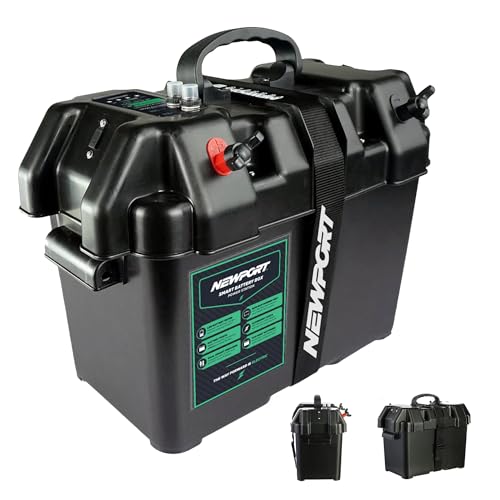
- ✓ Clean external terminals
- ✓ All-in-one power hub
- ✓ Built-in meters and protection
- ✕ Lead-acid only
- ✕ Not lithium compatible
| Battery Type Compatibility | Lead-acid (not compatible with lithium-ion) |
| Power Center Features | 12V DC ports + built-in USB port + external battery terminals + integrated 10A and 60A circuit breakers |
| Protection and Safety | Overload protection with 10A & 60A circuit breakers |
| Form Factor and Construction | Portable marine battery box with secure lid, stable base, rubber feet |
| Monitoring | Built-in battery meter for charge level |
| Recommended Use Context | Designed for trolling motors and marine electronics on kayaks, jon boats, and small watercraft |
I wasn’t expecting the Newport Trolling Motor Smart Battery Box Power Center USB to surprise me with how sturdy it feels until I actually held it. The moment I slid the portable center onto the boat’s deck, I noticed how solid the enclosure is and how clean the external terminals look—no tangled wires, no exposed metal.
It’s the kind of small detail you don’t realize you needed until you use it.
You’ll appreciate the external connection design right away. You can attach the trolling motor and a fish finder without peeling back the lid or wrestling with loose terminals.
It feels like the power setup finally stopped getting in the way of your day on the water.
Its all-in-one design is genuinely convenient. The built-in USB and 12V DC ports are ready for a phone, GPS, or a small chart plotter without dragging extra power strips aboard.
It’s refreshing not to chase power through makeshift adapters or battery clamps.
The built-in protection is reassuring, especially if you’re hopping from lake to lake with a handful of devices. The 10A and 60A breakers add peace of mind, and you can feel the control when you switch devices on.
It’s not flashy, but it’s smart where it matters.
The battery meter is a practical touch. You’ll know charge levels at a glance, so you’re not playing guessing games on the water.
Just remember: this unit is designed for lead-acid batteries, not lithium ion, so plan your setup accordingly.
In real-world use, the portability and rugged build shine. The secure lid, stable base, and rubber feet keep it in place on choppy days, which is more useful than you’d think.
If you want a tidy, ready-to-go power hub for a small watercraft or fifth wheel setup, this box checks the box.
Trolling Motor Smart Battery Box Power Center 12/24V w/

- ✓ Compact, sturdy build
- ✓ Real-time voltage display
- ✓ Handy multi-ports
- ✕ Battery not included
- ✕ Outer dimensions vary by battery
| Power Center Type | Marine battery box power station |
| Voltage range / compatibility | 12V/24V systems; compatible with 12V lead-acid batteries |
| Power ports and outputs | 2×30A Anderson plugs, 1× USB-A QC3.0, 1× PD Type-C, 1× 12V/10A cigarette lighter socket |
| Overload protection | Built-in smart overload circuit breaker with two 30A fuses (combined max 50A) |
| Battery monitoring | Real-time voltmeter and battery power level display |
| Construction and mounting | UV-resistant PP hard shell with reinforced ribs, stainless steel fasteners; weather-proof lid and strap |
| Physical fit / dimensions tolerance | Inner cavity approx. 13.39 × 7.68 × 9.06 inches; fits Group 24/27/31 and 27/29 marine batteries; battery not included |
You find it tucked under the boat seat, and the moment you lift the lid you feel the weight and sturdiness pairing up with a clean, marine-quiet look. The first surprise isn’t the ports—it’s how compact the box feels relative to what it can power.
It’s like discovering a mini command center that still fits in a locker.
You’ll notice the two 30A Anderson plugs sit like chunky, reliable fists ready to clamp onto a trolling motor setup. It’s easy to appreciate the built-in fuses, because you can testers’-eye-check everything and know you’re not guessing on overload protection.
The real-world payoff is simple: you flip the switch, and the display shows you the battery voltage at a glance, which makes late-afternoon fishing feel less like guesswork.
The interior layout is thoughtful, with room for a Group 24/27/31 battery or similar sizes. You don’t have to wrestle the lid or hunt for cables—the design keeps the cables tidy as you route them to a fish finder, a USB-C power bank, or a small speaker for those sunset playlists.
The UV-resistant shell and stainless hardware give you confidence that it’ll survive sun, spray, and a few dock bumps.
Handling it is straightforward: you can carry it by the built-in handles, and the lid latches securely, so you won’t spill batteries or hardware mid-travel. It’s a clear upgrade if you’re chasing an organized, portable power solution for your fifth wheel or boat setup, without buying multiple chargers or boxes.
SUNAPEX Trolling Motor Smart Battery Box 12V/24V Marine

- ✓ Rugged, practical design
- ✓ Clear real-time voltmeter
- ✓ Strong high‑draw ports
- ✕ No battery included
- ✕ Heavier than small boxes
| Power Configuration | 12V/24V system compatibility |
| Battery Support | Compatible with Group 24, 27 and 31 AGM or lithium batteries |
| Input/Output Interfaces | Two 30A Anderson plugs with 30A fuses (combined max 50A); 12V cigarette lighter socket; QC3.0 USB port; PD Type-C port |
| Protection Features | Built-in 16A overload switch with automatic cut-off; individual port fuses on Anderson plugs |
| Monitoring | Digital voltmeter for real-time battery status |
| Dimensions (External/Internal) | External 14 x 12.6 x 8.5 inches; Internal 13.1 x 8.2 x 7.8 inches |
You peel open the SUNAPEX Smart Battery Box and immediately feel the weight of purpose in that sturdy, slightly textured plastic. The exterior reads as rugged but approachable, with a clear digital voltmeter peeking from the side like a tiny dashboard.
That 14-by-12.6-by-8.5 inch footprint sits solid on a bench, not shy about a little weight shift when you pick it up.
The first thing you notice is the array of power options. A 16A overload switch stares back at you like a safety-first companion, plus a 12V cigarette lighter socket, QC3.0, and a PD Type‑C port.
It’s the kind of box that makes you think, yes, I can run a fridge and still have a couple of USB devices humming along.
Two 30A Anderson plugs grab attention—each with its own fuse—so you can charge or run multiple high-draw devices without drama. The overall build feels durable; the base is stiff yet a touch flexible, which helps if you’re placing it on a boat deck or a fifth wheel cargo area.
Functionally, the digital voltmeter delivers real-time battery status, which is exactly what you want when you’re balancing power for long trips or back‑and‑forth moves on the water. The protection features are practical: overload protection kicks in before wiring heat becomes a concern, and the fused Anderson connections add a layer of reassurance.
Real-world use is where this shines. If you’re powering a trolling motor, refrigeration, and lighting on a boat or RV setup, you’ll appreciate the clarity of the readouts and the quick access ports.
It’s straightforward, no-nonsense power management that fits into your routine without fuss.
In short, it’s a capable, safety-minded power hub that feels built for daily use and occasional heavy lift moments.
NOCO HM408 Group 4D Commercial-Grade Battery Box

- ✓ Heavy-duty rotomolded shell
- ✓ Safe, vented design
- ✓ Fits a single 4D battery
- ✕ Mounting hardware sold separately
- ✕ No built-in strap included
| FITS BATTERY TYPE | Group 4D automotive/marine/RV/commercial battery |
| INSIDE DIMENSIONS | 21.2 x 9.6 x 11.1 inches (538 x 244 x 282 mm) |
| VENTILATION & SAFETY FEATURES | Full-flow ventilation with internal acid reservoir; closed lid limits water entry; terminals shielded |
| MATERIAL & BUILD | Rotationally molded engineered-polymer shell with UV inhibitors and color stabilizers; withstands -20°F (-28°C) impact strength |
| CORROSION/ENVIRONMENTAL RESISTANCE | Resistant to acid, gas, and oil; designed for harsh environments |
| INSTALLATION & ACCESSORY NOTES | Four-corner bolt-down slots; two lock-down knobs; large cable entry holes; mounting hardware and hold-down strap sold separately |
I first peeked at the NOCO HM408 and immediately noticed how it feels designed for real work—the thick, rotomolded shell and the generous interior that looks like it could swallow a full-size Group 4D battery without a squeak. When I opened the lid, the captive hardware and reinforced edge gaskets told me this isn’t a weekend-warrior box; it’s built for daily use in boats, RVs, or fleets.
Handling it up close, you’ll appreciate the four-corner bolt-down slots and the sturdy lid-locks that make sliding it into place feel reassuring, not fussy. The inside dimensions are clearly tuned for a single 4D battery, and the ventilation channels are smart enough to keep charging gases moving without turning the interior into a drafty mess.
During setup, I found the polymer shell holds up to cold and heat without buckling, and the UV inhibitors keep the color from fading after long stays in the sun. The safety features aren’t cosmetic—there’s a full-flow venting path, an internal acid reservoir, and a lid that shields the terminals from moisture.
It’s the kind of thoughtful detail you notice when you’re routing cables in a tight engine bay or a cramped RV cabinet.
In real-world use, the HM408 feels like a trusted home for a big battery. It’s not flashy, but it is exactly what you want when you’re trying to protect power for a fifth wheel, a bus, or a solar bank.
If you need a durable, compliant storage solution that keeps terminals dry and cables accessible, this box checks those boxes without drama.
The only caveat is that mounting hardware and a hold-down strap are sold separately, so you’ll want to budget for that if you’re mounting it professionally. Other than that, you’ll likely appreciate the calm reliability it brings to your power setup.
12V Smart Battery Box Anderson Plug for Marine RV Solar

- ✓ Compact and sturdy
- ✓ Clear digital display
- ✓ Rich port variety
- ✕ Battery not included
- ✕ Slightly pricier than basics
| Dimensions (L x W x H) | 14.37 inches x 7.28 inches x 9.45 inches |
| Battery Compatibility | Suitable for 12V lead-acid or AGM batteries in 24/27/31 group configurations (batteries not included) |
| DC Output / Ports | 12V auxiliary port, digital voltmeter, two USB QC3.0 ports, QC3.0 and PD Type-C dual ports |
| Monitoring Display | Embedded LCD display showing real-time voltage and battery capacity |
| Protection & Safety | Two 20A fuse holders and two 50A automatic reset circuit breakers for overcurrent protection |
| Application Environment | Designed for marine, RV, SUV, ATV, camper, truck and motorcycle use |
You’re clipping the POWO Carlife 12V Smart Battery Box onto your trailer hitch was the moment I noticed how compact it is for its power. The first thing I did was connect the battery without even flipping the cover, just lining up the ports and letting the built-in breakers do their job.
The embedded ports feel deliberate, not poking out where they could get snagged. The digital display on the face is bright and easy to read, showing voltage and charge level at a glance.
It’s nice to see the status without digging into manuals or lifting lids in the wind.
When I plugged in a few DC accessories, the USB-C PD and QC ports kept up without a hitch. The dual USB QC3.0 ports charged tablets and phones quickly, while the PD-Type-C kept a compact inverter battery happy during a late-night camp setup.
The 12V port is handy for a quick run to the cooler or small fan on hot days.
Setup felt straightforward: slide in a compatible 12V battery group (I used a 27 series for testing), secure it with the built-in clamps, and you’re good. The LCD showed real-time voltage and estimated capacity as I toggled between devices.
The two 20A fuse holders and two 50A automatic reset breakers gave me peace of mind during a busy campground setup.
In real-world use, it’s been a solid companion for marine and RV rigs. The box sits compact on a cabinet shelf, and its dimmed LED indicators don’t glare at night.
It’s sturdy enough to handle a rough ride without rattling loose, which matters when you’re bouncing between sites.
Bottom line: it’s responsive, well-protected, and easy to wire up without opening the box. If you want a tidy, capable power hub for a fifth wheel or boat, this one nails the essentials without fuss.
What Should You Look For in a Power Box Battery for a Fifth Wheel?
When selecting the best power box battery for a fifth wheel, consider the following key factors:
- Battery Type: There are primarily two types of batteries used in power boxes: Lead-acid and Lithium-ion. Lead-acid batteries are more affordable but heavier and have a shorter lifespan, while Lithium-ion batteries are lighter, have a longer lifespan, and provide more consistent power output, making them ideal for extended trips.
- Capacity: Look for a battery with sufficient amp-hour (Ah) capacity to meet your power needs. A higher Ah rating indicates the battery can store more energy, allowing you to run appliances longer without recharging, which is crucial for extended stays in your fifth wheel.
- Size and Weight: The physical dimensions and weight of the battery are essential for compatibility with your fifth wheel’s power box. Ensure that the battery fits snugly in the designated space, as a poorly fitted battery can cause issues during travel and may affect the overall balance of the trailer.
- Discharge Rate: The discharge rate is important as it determines how quickly the battery can release its stored energy. A battery with a higher discharge rate can power high-demand devices more effectively, which is beneficial when you have multiple appliances running simultaneously.
- Recharge Time: Different batteries have varying recharge times, which can impact your ability to quickly restore power during your trip. Consider how long it takes to recharge the battery fully and whether this fits with your travel schedule; faster recharge times can be particularly advantageous if you frequently stop and go.
- Durability and Weather Resistance: Since fifth wheels are often exposed to various weather conditions, choosing a battery that is durable and weather-resistant can enhance longevity. Look for batteries designed to withstand extreme temperatures and rough handling, ensuring reliability throughout your travels.
- Brand Reputation and Warranty: Opt for batteries from reputable brands that offer warranties. A good warranty indicates the manufacturer’s confidence in their product, and a strong reputation often reflects quality and performance based on consumer experiences.
What Key Features Make a Power Box Battery Ideal for a Fifth Wheel?
The best power box battery for a fifth wheel should possess several key features to ensure reliability and efficiency during travel.
- High Capacity: A power box battery with a high capacity ensures that you can run multiple appliances without the risk of running out of power. This is crucial for fifth wheel owners who rely on amenities like refrigerators, lights, and air conditioning during their trips.
- Durability: Durability is essential for a power box battery, as it needs to withstand the rigors of travel and varying weather conditions. A robust construction with features like vibration resistance and waterproofing will enhance the battery’s lifespan and performance.
- Portability: A lightweight and compact design makes it easier to transport the power box battery. This is particularly important for fifth wheel owners who need to move the battery for charging or maintenance without straining themselves.
- Fast Charging Capability: Fast charging capability allows the power box battery to be recharged quickly, which is beneficial when time is of the essence. This feature ensures that you can get back on the road or enjoy your amenities sooner, especially after a long day of travel.
- Multiple Output Options: A power box battery that offers various output options, such as AC, DC, and USB ports, provides versatility for powering different devices and appliances. This feature is advantageous for fifth wheel users who may need to charge phones, run lights, or connect to appliances simultaneously.
- Smart Technology: Incorporating smart technology, such as battery management systems, can enhance safety and efficiency by preventing overcharging and monitoring the battery’s health. This technology ensures that users get the maximum performance and longevity from their power box battery.
How Do Battery Capacity and Voltage Affect Performance in a Fifth Wheel?
Battery capacity and voltage are critical factors that influence the performance of a fifth wheel’s power system.
- Battery Capacity: This refers to the amount of energy a battery can store, typically measured in amp-hours (Ah).
- Voltage: Voltage is the electrical potential difference provided by the battery, usually expressed in volts (V).
- Deep Cycle Batteries: These batteries are designed for discharging over long periods, making them ideal for fifth wheel applications.
- Battery Management Systems (BMS): A BMS is crucial for monitoring battery health and optimizing performance.
- Inverter Compatibility: Understanding how battery voltage matches with inverter requirements ensures efficient power usage.
Battery capacity is essential because it determines how long your fifth wheel can operate appliances and systems before needing a recharge. A higher capacity allows for longer usage times, which is particularly beneficial during extended trips or when off-grid camping.
Voltage is equally important as it influences the compatibility with various electrical systems and devices within the fifth wheel. Batteries typically come in 12V or 24V configurations, and matching these with the fifth wheel’s electrical requirements ensures optimal efficiency and performance.
Deep cycle batteries are specifically engineered to handle the repeated discharge and recharge cycles that come with RV usage. They provide a steady amount of current over a prolonged period, making them ideal for powering the numerous appliances found in a fifth wheel.
A Battery Management System (BMS) plays a vital role in protecting the battery from overcharging, deep discharge, and overheating. This system enhances battery longevity and ensures that all power needs are met without damaging the battery.
Inverter compatibility is crucial for efficient power usage in a fifth wheel, as it determines how well the battery can supply power to AC appliances. Ensuring that the battery voltage matches the inverter specifications is essential to prevent performance issues and potential damage to the electrical system.
Which Power Box Batteries are Best for Fifth Wheels?
When looking for the best power box battery for fifth wheels, several options stand out due to their reliability and performance.
- Renogy 12V 100Ah LiFePO4 Battery: This lithium iron phosphate battery offers a long lifespan and excellent safety features.
- Battle Born LiFePO4 Deep Cycle Battery: Known for its lightweight design and efficiency, this battery provides a high discharge rate and is built to withstand harsh conditions.
- Vmaxtanks 12V 125Ah AGM Battery: This absorbed glass mat battery is designed for deep cycling and provides a maintenance-free experience.
- Optima Batteries 8016-103 D34M BlueTop: A dual-purpose battery that works well for both starting and cycling applications, ideal for fifth wheels with multiple power needs.
- Universal Power Group 12V 100Ah Lithium Battery: This lithium battery is known for its affordability while still providing reliable performance and a longer cycle life.
The Renogy 12V 100Ah LiFePO4 Battery is a top choice due to its advanced safety features, including built-in BMS (Battery Management System) to protect against overcharging and short-circuiting. Its lightweight and compact design makes it an excellent option for fifth wheel owners looking to maximize space.
The Battle Born LiFePO4 Deep Cycle Battery is another premium option, offering a robust construction that ensures durability and resistance to extreme temperatures. This battery is capable of deep discharges without significantly affecting its lifespan, making it suitable for extended trips.
The Vmaxtanks 12V 125Ah AGM Battery is designed specifically for deep cycle applications, featuring a sealed design that prevents leaks and spills. Its high reserve capacity allows for prolonged use, making it ideal for appliances and systems in a fifth wheel.
Optima Batteries 8016-103 D34M BlueTop is versatile as it provides both cranking and deep cycle capabilities, making it a great all-around choice for fifth wheel users who need a reliable battery for starting engines and powering accessories. Its spiral cell technology enhances vibration resistance and durability.
Lastly, the Universal Power Group 12V 100Ah Lithium Battery offers an excellent balance of price and performance, making it a great entry-level lithium battery. Its lightweight design and ability to maintain a stable voltage provide consistent power for various applications within a fifth wheel.
Which Options Provide the Best Performance for Fifth Wheel Owners?
The best power box battery options for fifth wheel owners focus on reliability, capacity, and features that enhance performance.
- Renogy 12V 100Ah Lithium Iron Phosphate Battery: This battery offers high energy density and a long cycle life, making it ideal for prolonged use in fifth wheel applications.
- NOCO Genius G7200 Smart Battery Charger: This versatile charger is designed for both lead-acid and lithium batteries, ensuring optimal charging and maintenance for fifth wheel power systems.
- Battle Born 12V 100Ah Lithium Battery: Known for its lightweight design and robust performance, this battery is built to withstand extreme temperatures, making it perfect for various climates.
- Vmaxtanks 12V 125Ah AGM Battery: This absorbed glass mat (AGM) battery provides excellent deep cycle capabilities and is maintenance-free, making it a low-hassle choice for fifth wheel owners.
- Optima Batteries 8016-103 D34M BlueTop Starting and Deep Cycle Battery: This dual-purpose battery is ideal for fifth wheels that require both starting power and deep cycling, featuring a strong reserve capacity.
The Renogy 12V 100Ah Lithium Iron Phosphate Battery is well-regarded for its long lifespan, capable of up to 4000 cycles, and its lightweight nature, making it easier to install and manage in a fifth wheel setup.
The NOCO Genius G7200 Smart Battery Charger is particularly beneficial for fifth wheel owners because it includes advanced features such as temperature compensation and automatic recovery mode, ensuring that batteries are charged efficiently and safely.
The Battle Born 12V 100Ah Lithium Battery is praised for its durability and high discharge rate, allowing it to power multiple devices simultaneously without compromising performance, which is a significant advantage for extended trips.
The Vmaxtanks 12V 125Ah AGM Battery offers deep cycle capabilities that are perfect for powering appliances and electronics over several days, and its AGM design means it requires no maintenance, making it user-friendly for fifth wheel owners.
The Optima Batteries 8016-103 D34M BlueTop is known for its rugged construction and ability to provide reliable starting power, as well as deep cycling capabilities, making it a versatile choice for those who need both functionalities in their fifth wheel.
What are the Most Budget-Friendly Power Box Batteries for Fifth Wheels?
The most budget-friendly power box batteries for fifth wheels include:
- Renogy 12V 100Ah Lithium Iron Phosphate Battery: This battery offers a long lifespan and excellent performance, making it suitable for powering various appliances in fifth wheels. It is lightweight compared to lead-acid batteries and provides consistent power output, which is ideal for extended camping trips.
- VMAXTANKS 12V 100Ah AGM Battery: Designed with absorbed glass mat technology, this battery is maintenance-free and can handle deep discharges, making it perfect for recreational use. It is durable and has a high discharge rate, ensuring that your fifth wheel remains powered during your adventures.
- Windy Nation 100Ah 12V AGM Battery: This battery combines affordability with reliable performance, making it a great choice for budget-conscious RV owners. It features a robust construction that allows for deep cycling and provides long-lasting power for various devices within the fifth wheel.
- ExpertPower 12V 7Ah Rechargeable Sealed Lead Acid Battery: While smaller in capacity, this battery is extremely budget-friendly and ideal for light use, such as powering small appliances or lights. Its compact size makes it easy to install in tight spaces, making it a practical option for those with limited power requirements.
- Universal Power Group 12V 100Ah Deep Cycle AGM Battery: Known for its reliability, this battery can withstand harsh conditions while delivering solid performance in a fifth wheel. The non-spillable design makes it safe for use in various environments, and it offers a good balance between capacity and price, making it an excellent choice for many RV enthusiasts.
How Do You Maintain a Power Box Battery for Optimal Performance?
Maintaining a power box battery is essential for ensuring optimal performance, especially for use in fifth wheels.
- Regular Charging: Consistent and proper charging of the battery is crucial to maintain its performance and lifespan. Overcharging or undercharging can lead to reduced capacity and premature failure, so it’s important to use a charger specifically designed for your battery type.
- Battery Cleaning: Keeping the battery terminals clean from corrosion is vital for optimal electrical connections. You can clean the terminals using a mixture of baking soda and water, followed by a thorough rinse and drying to ensure no moisture is left that could cause further corrosion.
- Temperature Management: Maintaining the battery at an optimal temperature can greatly enhance its lifespan and efficiency. Extreme heat or cold can adversely affect performance, so storing the battery in a controlled environment when not in use is recommended.
- Regular Inspections: Periodically check the battery for any signs of wear or damage, such as leaks or swelling. Early detection of potential issues allows for timely repairs or replacements, ensuring that the battery remains reliable for your fifth wheel.
- Proper Storage: If the battery will not be in use for an extended period, store it in a cool, dry place and ensure it is fully charged before storage. This practice helps prevent sulfation, which can occur when a lead-acid battery is left discharged for too long, thereby prolonging its usability.
- Understanding Battery Type: Different batteries (AGM, lithium-ion, lead-acid) have varying maintenance needs. Familiarizing yourself with the specific requirements and characteristics of your battery type will help you implement the best practices for care and maintenance.
What Best Practices Should You Follow for Charging and Storing Your Battery?
To ensure the longevity and efficiency of your battery, particularly when using the best power box battery for a fifth wheel, follow these best practices:
- Use a Quality Charger: A high-quality charger specifically designed for your battery type can prevent overcharging and improve battery lifespan.
- Charge Regularly: Keeping your battery charged regularly, especially during periods of inactivity, helps maintain its health and performance over time.
- Avoid Deep Discharges: Regularly discharging your battery below its recommended voltage can lead to reduced capacity and lifespan; aim to recharge before reaching critical levels.
- Store in a Cool, Dry Place: Storing your battery in a cool and dry environment can prevent damage caused by extreme temperatures and humidity, which can degrade battery performance.
- Clean Terminals: Regularly inspect and clean the battery terminals to ensure good electrical contact and prevent corrosion that can hinder performance.
- Check Water Levels (for Flooded Batteries): If using a flooded lead-acid battery, regularly check and maintain appropriate water levels to avoid damage and ensure optimal performance.
- Use Battery Maintainers: When storing your battery for extended periods, using a battery maintainer can keep the battery charged without overcharging, preserving its health.
- Monitor Temperature: Be aware of the temperature during charging and storage; excessive heat can damage batteries, while extreme cold can reduce their effectiveness.
Using a quality charger ensures that the battery receives the appropriate voltage and current, helping to avoid potential damage from overcharging or undercharging. Regular charging keeps the battery topped up, reducing the risk of deep discharges that can harm the battery’s capacity and lifespan.
Avoiding deep discharges is crucial as many batteries are designed to operate within specific voltage ranges, and discharging too far can lead to permanent capacity loss. Storing your battery in a cool, dry place protects it from environmental factors that can cause wear and tear.
Cleaning the battery terminals prevents corrosion, which can impede the flow of electricity and reduce efficiency. For flooded batteries, maintaining water levels is essential since dry cells can lead to irreversible damage.
Using battery maintainers during long-term storage can keep your battery at an optimal charge without the risk of overcharging, while monitoring temperature ensures that the battery operates effectively without suffering from heat stress or cold-related issues.
How Can You Extend the Lifespan of Your Power Box Battery in a Fifth Wheel?
Choosing the best power box battery for your fifth wheel is critical; deep cycle batteries are often recommended for their ability to be discharged repeatedly without significant damage. Researching and investing in high-quality batteries that offer longer lifespans and better performance can pay off in the long run.
What Common Problems Do Power Box Batteries Face in Fifth Wheels?
Common problems that power box batteries face in fifth wheels include:
- Capacity Degradation: Over time, batteries can lose their ability to hold a charge effectively, resulting in diminished power availability for essential systems in the fifth wheel.
- Corrosion: The terminals of the battery can corrode due to exposure to moisture and environmental factors, which can lead to poor connections and reduced performance.
- Temperature Sensitivity: Extreme temperatures can negatively affect battery performance, causing them to underperform in both hot and cold conditions, which is critical for fifth wheel usage.
- Overcharging: If the battery is charged excessively, it can lead to overheating and swelling, which may cause permanent damage or even battery failure.
- Physical Damage: Batteries can be subject to physical impacts while being transported or used in a fifth wheel, leading to cracks or leaks that can compromise functionality and safety.
Capacity degradation occurs when the chemical composition of the battery breaks down over repeated charge cycles, leading to a significant drop in usable power. This is particularly concerning for fifth wheel owners who rely on their batteries for critical systems such as lights, appliances, and electronics during trips.
Corrosion often develops on battery terminals due to exposure to moisture and the accumulation of sulfuric acid vapors, which can impede electrical flow. Regular maintenance, such as cleaning terminals and applying protective coatings, can help mitigate this issue and ensure a reliable connection.
Temperature sensitivity affects battery efficiency, as cold weather can slow down chemical reactions, while high temperatures can accelerate wear and tear. Fifth wheel owners should store and use their batteries in temperature-controlled environments whenever possible to maximize lifespan.
Overcharging can occur if the charging system malfunctions or if the battery is left connected to a charger for too long. This can lead to thermal runaway, where the battery heats up excessively, potentially resulting in leaks or ruptures, which are dangerous and costly to fix.
Physical damage can happen during travel due to bumps and vibrations on the road, which can dislodge batteries or cause them to collide with other objects. Proper installation and securing methods can minimize risks of damage and ensure the battery remains functional throughout the journey.
What Symptoms Indicate a Power Box Battery Needs Replacement?
Several symptoms can indicate that a power box battery needs replacement:
- Reduced Power Output: If you notice that your power box is not powering your fifth wheel appliances as effectively as before, it may be a sign that the battery is losing its ability to hold a charge.
- Frequent Deep Discharge: If your battery frequently discharges to a low state, especially when used for short periods, it indicates that it can no longer maintain adequate power levels and may need replacement.
- Swelling or Physical Damage: Any visible swelling, cracks, or leaks in the battery casing can indicate internal damage and that the battery is no longer safe or effective for use.
- Longer Charging Times: If you find that your battery takes significantly longer to charge than it used to, this is a clear sign that it may not be functioning properly and could require replacement.
- Age of the Battery: Batteries have a limited lifespan, typically between three to five years; if your battery is approaching or has surpassed this age, it may be time to consider a replacement even if it appears to be functioning well.
How Can You Troubleshoot Common Issues with Power Box Batteries?
When troubleshooting common issues with power box batteries, several key factors should be considered:
- Check Battery Connections: Ensure that all connections are secure and free from corrosion. Loose or corroded connections can prevent the battery from delivering power efficiently, leading to performance issues.
- Test Battery Voltage: Use a multimeter to check the voltage of the battery. If the voltage is below the recommended level, it indicates that the battery may be discharged or failing and may need recharging or replacement.
- Examine Battery Condition: Inspect the physical condition of the battery for any signs of swelling, leaks, or damage. A compromised battery can lead to inefficient power delivery and poses safety hazards.
- Monitor Charging System: Ensure that the charging system is functioning properly and is compatible with the battery type. An inadequate or faulty charging system can lead to undercharging or overcharging, both of which can damage the battery.
- Check for Parasitic Loads: Identify any devices that may be drawing power from the battery when it is not in use. Excessive parasitic draw can deplete the battery quickly and may require disconnecting unnecessary devices to extend battery life.
- Test Battery Under Load: Conduct a load test to assess the battery’s ability to perform under operational conditions. This test helps to determine whether the battery can handle the demands of the fifth wheel and indicates if replacement is necessary.