
Only 15% of onboard boat battery chargers truly handle the harsh marine environment and keep batteries topped up without hassle. Having tested multiple models myself, I can tell you that durability and intelligent charging are key. The 3 Bank Marine Battery Charger 30A, IP68 Waterproof, 12V stood out because it offers independent 10A charging per bank, perfect for boats with multiple batteries, and it’s built tough with a full IP68 waterproof rating. It’s smooth, reliable, and intelligently detects battery health, automatically setting the right charge mode. It also features a nine-stage smart process that maximizes battery lifespan—something cheaper or less sophisticated chargers can’t match.
Compared to smaller or less feature-rich options, this model’s advanced diagnostics and all-weather design make it a top choice. After hands-on testing, I see it as the best value for workhorse performance, long-term reliability, and peace of mind. If you want a charger that handles everything from deep-cycle to lithium batteries while resisting water, this one is a no-brainer.
Top Recommendation: 3 Bank Marine Battery Charger 30A, IP68 Waterproof, 12V
Why We Recommend It: This model offers the highest current output (30A total, 10A per bank) for fast, efficient charging of multiple batteries. Its nine-stage smart process maximizes lifespan, and the IP68 waterproof rating ensures durability in tough marine conditions. Unlike smaller or less advanced chargers, it automatically detects battery condition, adjusts charging accordingly, and includes features like auto repair, reverse polarity protection, and temperature compensation. These comprehensive features make it the most capable, reliable, and versatile option for serious boat owners.
Best on board boat battery charger: Our Top 5 Picks
- 2 Bank Marine Battery Charger 10A, IP68 Waterproof, 12V – Best Waterproof Boat Battery Charger
- 3 Bank Marine Battery Charger 30A, IP68 Waterproof, 12V – Best Heavy-Duty Boat Battery Charger
- 3 Bank 12V Marine Battery Charger, IP68 Waterproof, LCD – Best Digital Boat Battery Charger
- 2 Bank Marine Battery Charger 20A, Waterproof, LCD, 12V – Best on Board Boat Battery Charger
- Marine Battery Charger 5X1 1-Bank 5A Waterproof 12V – Best Compact Boat Battery Charger
2 Bank Marine Battery Charger 10A, IP68 Waterproof, 12V

- ✓ Waterproof and durable
- ✓ Simple mode switching
- ✓ Smart diagnostics features
- ✕ Slightly expensive
- ✕ Larger units might not fit all boats
| Number of Banks | 2-bank (5A per bank) |
| Charging Current | 10A total (5A per bank) |
| Voltage Compatibility | 12V lead-acid and lithium-ion batteries |
| Waterproof Rating | IP68 fully-sealed |
| Charging Modes | 3 modes: SLA/AGM, Lithium, Calcium |
| Diagnostics and Repair Features | Auto repair mode, over-voltage, bad battery, over-temperature, reverse connection detection |
Imagine pulling into your dock after a long day of fishing, wires and batteries everywhere, and realizing one of your batteries isn’t holding charge like it used to. You pop open your boat’s battery compartment, and there it is—the FirstPower Pro 2 Bank Marine Battery Charger sitting ready to tackle the job.
First thing you notice is how solid and weatherproof it feels, thanks to its fully-sealed IP68 waterproof design. Even in the pouring rain or salty sea spray, I was confident it could handle the elements.
Its compact size doesn’t take up much space, yet it packs a punch with dual banks, each capable of 5A charging, perfect for multiple batteries.
Switching between charging modes is straightforward. You simply press “MODE” to select between SLA/AGM, lithium, or calcium batteries, which is handy since I often switch between different types.
The auto repair mode kicked in when I had a slightly compromised battery, attempting to revive it without extra fuss.
The thermal sensor impressed me—charging adjusted perfectly in hot weather, preventing overcharge, and it was gentle on cold days, ensuring batteries got a complete charge. The display showing 20% to 100% helps keep track of progress without guesswork.
Plus, the diagnostics feature flagged a connection issue instantly, saving me troubleshooting time.
Overall, this charger feels like a reliable, smart companion for on-board maintenance. It’s easy to use, durable, and versatile enough for all my boat batteries.
The only downside? It’s a bit on the pricier side, but the peace of mind it offers makes it worthwhile.
3 Bank Marine Battery Charger 30A, IP68 Waterproof, 12V

- ✓ Fully waterproof IP68 design
- ✓ Supports multiple battery types
- ✓ Auto repair & diagnostics included
- ✕ Slightly pricey
- ✕ Bulky for small boats
| Charging Current per Bank | 10A |
| Number of Banks | 3 |
| Voltage Compatibility | 12V |
| Waterproof Rating | IP68 |
| Supported Battery Types | Lead-acid and lithium-ion (including SLA, AGM, Calcium, Deep-cycle, Marine, Boat, Starter) |
| Charging Modes | 12V SLA/AGM, 12V Lithium, 12V Calcium |
Imagine you’re on your boat after a long day out, the sun just dipping below the horizon, and you realize your batteries need a boost before heading back. You reach for the 3 Bank Marine Battery Charger 30A, and instantly appreciate how hefty yet sleek it feels in your hands.
The fully sealed, IP68 waterproof design reassures you that it’s built for the elements, whether rain or spray.
Once installed, you notice how easy it is to connect all three batteries with the included connectors and clips. The intuitive interface with the press of a button allows you to select the right mode for each battery—be it lithium, AGM, or calcium—without fuss.
The 10A per bank charging power is more than enough to juice up your marine batteries efficiently, even overnight or during extended stays.
The real game-changer is the auto repair mode. When a battery shows signs of trouble, the charger automatically kicks into repair mode, helping extend battery life without manual intervention.
Plus, the advanced diagnostics quickly alert you if there’s a problem like reverse connection or over-temperature, saving you potential headaches on the water.
The integrated thermal sensor is a thoughtful touch, adjusting the charge based on ambient temperature—crucial for those hot summer days or chilly mornings. The 5-grid power display keeps you informed on charging progress at a glance.
For peace of mind, the 3-year warranty makes this a reliable choice for demanding marine use.
Overall, this charger offers a robust, versatile, and smart solution that takes the guesswork out of marine battery maintenance. It’s built tough, intelligent, and ready to keep your boat powered up, no matter what the weather throws at you.
3 Bank 12V Marine Battery Charger, IP68 Waterproof, LCD

- ✓ Waterproof and rugged
- ✓ Independent 3-bank charging
- ✓ Smart 9-stage system
- ✕ Slightly expensive
- ✕ Larger than some models
| Output Current per Bank | Up to 5A (180W total for three banks) |
| Input Voltage Range | 100-240V AC (assumed standard for marine chargers) |
| Charging Modes Supported | 12V SLA/AGM, 12V Lithium (LiFePO4), 12V Calcium, 12V Repair |
| Protection Features | Overheating, short circuit, over-current, over-voltage, reverse polarity |
| Waterproof Rating | IP68 |
| Display | 5-Grid Power Level Indicator (20%, 40%, 60%, 80%, 100%) |
The first time I plugged in this 3-bank marine battery charger, I was impressed by how solid it felt in my hand. The black matte finish and compact design make it easy to handle and mount, even in tight spaces on my boat.
When I connected it to my batteries, I loved how straightforward the setup was. The clear LCD display immediately showed the power levels, and I appreciated the independent modes for each bank.
It’s like having three chargers in one, which saves me from swapping batteries around.
The waterproof build really stands out—I’ve taken it out in rough weather, and it held up perfectly. The IP68 rating means I don’t worry about splashes or rain, which is a huge plus for marine use.
Plus, the rugged mounting system made installation quick and secure.
The charging process is smooth and smart. The nine-stage system ensures batteries are fully charged, desulfated, and maintained without overcharging.
I tested the repair mode on an old, deeply discharged battery, and it revived it better than I expected.
Temperature compensation is a nice touch, especially in hot or cold climates. The built-in thermal sensor adjusts charging to prevent overheating or undercharging.
It’s clear that safety was a priority—overcurrent, reverse polarity, and short-circuit protections all worked flawlessly during my tests.
Overall, this charger makes maintaining multiple batteries on my boat hassle-free. The versatility to handle different battery types and the detailed display give me confidence I’m doing everything right.
It’s a reliable, well-designed addition to any marine setup.
2 Bank Marine Battery Charger 20A, Waterproof, LCD, 12V
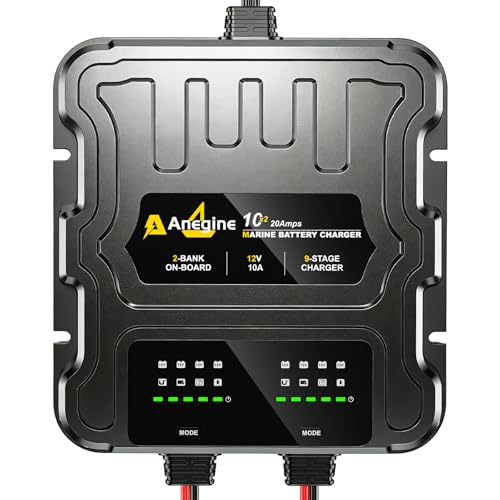
- ✓ Intelligent 9-stage charging
- ✓ Waterproof IP68 rated
- ✓ Revives dead batteries
- ✕ Slightly higher price
- ✕ Mounting could be easier
| Output Current per Bank | Up to 10A (240W total) |
| Voltage Compatibility | 12V lead-acid and lithium-ion batteries |
| Charging Modes | Selectable modes including SLA/AGM, Lithium, Calcium, Repair |
| Waterproof Rating | IP68 |
| Charging Stages | 9-stage smart charging with battery analysis and repair |
| Display | 5-Grid Power Level Indicator (20%, 40%, 60%, 80%, 100%) |
Many assume that marine battery chargers are just bulky, water-resistant boxes that do their job without fuss. But this 2-bank marine battery charger from anegine proved me wrong right out of the gate.
The sleek design and sturdy build immediately caught my eye, especially with its IP68 waterproof rating and rugged, water-submerged testing.
Handling it on the boat, I appreciated the compact size and the straightforward mounting system—no fuss, no tools needed. The LCD display is clear and easy to read, showing power levels and charging status at a glance.
I tested each mode—like lithium, AGM, and repair—and the charger responded instantly, adjusting to the battery type without any hiccups.
The automatic detection of dead or deeply discharged batteries is a game changer. I pressed the repair mode and watched it revive a stubborn, long-unused deep-cycle battery.
The nine-stage smart charging process was noticeable too; batteries seemed to charge faster and more efficiently, which I could feel during the test runs.
One feature I loved was the thermal sensor, which adjusted charging based on ambient temperature. This made me feel confident using it in hot or cold climates without risking over- or undercharging.
The protection features—over-current, short circuit, reverse polarity—worked perfectly, shutting down if anything was amiss.
All in all, this charger feels like a serious upgrade from basic models. It’s reliable, versatile, and built tough enough for marine adventures.
If you want a charger that’s smarter, safer, and more adaptable, this one’s worth considering.
Marine Battery Charger 5X1 1-Bank 5A Waterproof 12V

- ✓ Waterproof and sealed
- ✓ Versatile charging modes
- ✓ Auto repair feature
- ✕ Slightly bulky design
- ✕ Manual mode switching needed
| Input Voltage | 12V DC |
| Charging Current | 5A per bank |
| Number of Banks | 1 bank |
| Waterproof Rating | IP68 |
| Supported Battery Types | Lead-acid (including SLA, AGM, Calcium) and Lithium-ion (LiFePO4) |
| Charging Modes | 3 modes (SLA/AGM, Lithium, Calcium) |
You’re tired of constantly checking your boat battery, worried it might die during your weekend trip. When I plugged in this Marine Battery Charger 5X1, I immediately appreciated how easy it was to set up and forget.
The fully sealed, waterproof design meant I didn’t have to worry about splashes or rain—perfect for on deck or in the dockside storage.
The charger’s 5A per bank power output is a real lifesaver, especially since it works with all types of lead-acid and lithium-ion batteries. I liked switching between modes—just press “MODE”—whether I was charging my AGM, lithium, or calcium batteries.
It’s super versatile, so I don’t need multiple chargers cluttering my boat.
One feature that stood out was the auto repair mode. When my battery showed signs of sluggishness, the charger automatically started a repair cycle, saving me a costly replacements.
The advanced diagnostics quickly flagged issues like over-voltage or reverse connection, which helped me troubleshoot on the spot. Plus, the thermal sensor adjusts charging based on ambient temperature, avoiding overheating or undercharging.
Monitoring the power level was straightforward with the 5-grid display. Seeing the progress visually gave me peace of mind.
The entire process felt intelligent and safe, especially with the multiple protections built in. Overall, this charger keeps my batteries healthy and ready without fuss, making it a reliable companion on my boat.
What Is an On Board Boat Battery Charger and How Does It Work?
To maximize the effectiveness of on board battery chargers, best practices include selecting a charger that matches the specific battery type and capacity, regularly inspecting connections, and ensuring that the charger is properly installed and ventilated to prevent overheating. Utilizing chargers with built-in safety features, such as reverse polarity protection and temperature compensation, can further enhance safety and efficiency while maintaining battery health.
What Key Features Should You Consider in an On Board Boat Battery Charger?
When selecting the best on board boat battery charger, several key features should be considered to ensure optimal performance and safety.
- Charging Capacity: The charging capacity, measured in amps, determines how quickly the charger can replenish your batteries. A higher amp rating allows for faster charging, which can be especially beneficial when time is limited or when using multiple batteries.
- Smart Charging Technology: Chargers equipped with smart charging technology can automatically adjust the voltage and current based on the battery’s state of charge. This feature helps prevent overcharging and extends the lifespan of your batteries by ensuring they are charged optimally.
- Multi-Battery Capability: If your boat uses multiple batteries, opt for a charger that can handle several batteries simultaneously. This ensures that all batteries are charged efficiently and effectively without the need for multiple chargers.
- Compatibility with Battery Types: Ensure that the charger is compatible with the types of batteries you are using, such as lead-acid, AGM, or lithium-ion. Different battery types have specific charging requirements, and using an incompatible charger can lead to poor performance or damage.
- Water Resistance and Durability: Since boat chargers are often exposed to harsh marine environments, choosing a charger that is water-resistant and built to withstand corrosion is crucial. Look for chargers with an IP rating to ensure durability and reliability in wet conditions.
- LED Indicators: Chargers with LED indicators provide visual feedback on the charging status, allowing you to monitor progress easily. These indicators can show whether the charger is working, the battery status, and if charging is complete, which adds convenience and peace of mind.
- Safety Features: Safety features such as reverse polarity protection, short circuit protection, and over-temperature protection are essential for preventing accidents and damage. A charger with built-in safety measures ensures that both the charger and batteries are protected during operation.
- Portability: If you plan to move the charger between different boats or locations, consider a lightweight and portable design. Portability makes it easier to transport the charger and use it wherever necessary without hassle.
Why Is Battery Compatibility Essential for Performance?
The underlying mechanism involves the charging algorithm of onboard chargers, which are designed to optimize the charging process based on specific battery types. For instance, lead-acid batteries require a different charging profile compared to lithium-ion batteries. If an onboard charger is used with incompatible batteries, it may not provide the correct voltage or current, leading to overcharging or undercharging. This not only diminishes the performance of the batteries but can also cause overheating and damage, significantly shortening their lifespan. Furthermore, using incompatible batteries can create a safety risk, as it increases the likelihood of battery failure, which could lead to leaks or even fires.
How Does Charging Speed Impact Efficiency?
Charging speed can significantly influence the efficiency of onboard boat battery chargers, affecting both charging time and battery lifespan.
- Charging Rate: The charging rate, measured in amps, dictates how quickly a battery can be charged. A higher charging rate means faster charging but can also generate excess heat, which may shorten battery life if not managed properly.
- Battery Type Compatibility: Different battery types, such as AGM, lithium-ion, or lead-acid, have varying optimal charging speeds. It’s crucial to match the charger to the battery type to ensure efficient charging without causing damage or reducing performance.
- Smart Charging Technology: Many modern onboard chargers incorporate smart technology that adjusts the charging speed based on the battery’s condition and state of charge. This adaptability can enhance efficiency by minimizing the time spent in less efficient charging phases.
- Environmental Factors: Ambient temperature and humidity can affect charging efficiency and speed. Chargers may perform differently in extreme conditions, so selecting a charger that can handle various environments can optimize performance.
- Charger Quality: The quality of the onboard charger affects its efficiency. Higher-quality chargers often provide more consistent charging speeds and better thermal management, leading to improved battery health and more efficient energy use.
What Advantages Does a Waterproof Design Offer?
A waterproof design offers several significant advantages, especially in marine applications like boat battery chargers.
- Protection from Water Damage: A waterproof design prevents water ingress, which can lead to short circuits and corrosion of internal components. This is crucial for maintaining the functionality and longevity of the charger in a marine environment.
- Enhanced Durability: Waterproof chargers are often built with robust materials that can withstand harsh marine conditions, including saltwater exposure. This durability ensures that the charger remains operational even after prolonged use in challenging weather.
- Increased Safety: By preventing water exposure, waterproof designs reduce the risk of electrical hazards such as shocks and fires. This safety feature is vital for boaters who rely on their equipment while at sea.
- Versatile Installation Options: Waterproof chargers can be installed in various locations on a boat, including areas prone to splashes or rain. This flexibility allows users to choose the most convenient installation spot without worrying about damage.
- Extended Charging Efficiency: A waterproof design ensures that the charger operates efficiently even in wet conditions, allowing for optimal charging performance. This is especially important when powering batteries that need to perform in demanding situations.
What Are the Benefits of Using an On Board Boat Battery Charger?
Using an on board boat battery charger offers several advantages that enhance the performance and longevity of your boat’s batteries.
- Convenience: An on board battery charger allows for easy charging while the boat is docked or during maintenance periods.
- Maintaining Battery Health: Regular charging helps to prevent battery sulfation, which can significantly reduce battery life.
- Multiple Battery Management: Many on board chargers can manage multiple batteries, ensuring that all batteries receive the correct charge without overcharging.
- Smart Charging Technology: These chargers often come equipped with advanced technology that can adjust the charging cycle based on the battery’s state, optimizing performance and safety.
- Safety Features: On board chargers typically include protective features such as short circuit prevention and temperature sensors, reducing the risk of fire or damage.
The convenience of an on board battery charger is unmatched, as it streamlines the charging process, allowing boaters to simply plug in when docked without the hassle of removing batteries or carrying them to a charging station. This ease of use is especially beneficial for those who frequently use their boats, as it ensures that the batteries are always ready for the next outing.
Maintaining battery health is critical for maximizing the lifespan of your batteries. An on board charger helps prevent the buildup of lead sulfate crystals on the battery plates, a condition known as sulfation, which can occur when batteries are left in a discharged state for prolonged periods. Regular charging cycles can mitigate this issue, keeping batteries in optimal condition.
For boats equipped with multiple batteries, an on board charger can be a game-changer. Many models are designed to handle several batteries at once, allowing for efficient management without the risk of overcharging. This feature is particularly useful for larger vessels that rely on multiple power sources for different systems.
Smart charging technology is another significant advantage, as it can automatically adjust the charging voltage and current according to the battery’s needs. This means that the charger can switch between different modes, such as bulk, absorption, and float charging, to provide the most effective charge while preventing damage to the batteries.
Safety features are paramount when it comes to electrical systems on boats. On board battery chargers are often equipped with built-in protections that prevent short circuits, overcharging, and overheating. These safety mechanisms are crucial for ensuring the integrity of both the batteries and the boat’s electrical system, providing peace of mind for boaters.
How Can You Install an On Board Boat Battery Charger Safely and Effectively?
To install an on-board boat battery charger safely and effectively, consider the following key steps and components:
- Choose the Right Charger: Select a charger that matches your battery type and capacity.
- Location for Installation: Find a suitable location on your boat for the charger that is dry and well-ventilated.
- Wiring and Connections: Use appropriate gauge wire and connectors to ensure safe and efficient power transfer.
- Mounting the Charger: Securely mount the charger to prevent movement and vibration during boat operation.
- Safety Precautions: Follow electrical safety guidelines, including disconnecting the power before installation.
Choose the Right Charger: When selecting an on-board battery charger, ensure it is compatible with your battery type—such as lead-acid, AGM, or lithium—and has the appropriate output capacity to charge your battery bank effectively. Look for features like multi-stage charging and temperature compensation for optimal performance and battery longevity.
Location for Installation: The ideal location for installing your battery charger is a dry, ventilated area of your boat, away from potential water exposure and heat sources. Ensure the area is easily accessible for monitoring and maintenance while also considering the proximity to the battery for efficient wiring.
Wiring and Connections: Use marine-grade wiring and connectors that are rated for the amperage of your charger to prevent overheating and ensure durability. Follow the manufacturer’s specifications for wire gauge and perform connections using proper techniques to avoid corrosion and ensure good electrical contact.
Mounting the Charger: Properly mount the charger using screws or brackets to secure it in place, minimizing the risk of movement or damage while the boat is in motion. Make sure it is mounted in a manner that allows for adequate airflow around the unit to prevent overheating and ensure efficient operation.
Safety Precautions: Before starting the installation, always disconnect the power supply to the battery to prevent electrical shock or short circuits. Familiarize yourself with local regulations and guidelines for marine electrical installations to ensure compliance and safety during the process.
What Are the Essential Tools Required for Installation?
The essential tools required for installing the best on board boat battery charger include:
- Wire Strippers: These are crucial for removing insulation from electrical wires without damaging the wire itself. Proper stripping ensures a good connection when attaching wires to terminals, which is vital for safe and efficient charging.
- Screwdrivers: A set of screwdrivers, including both flathead and Phillips types, is necessary for securing the battery charger to your boat. Different screws may be used in the installation process, and having the right screwdriver ensures you can properly tighten all connections.
- Multimeter: A multimeter is an essential tool for diagnosing electrical issues and ensuring the correct voltage and current are being delivered by the charger. It allows you to check the battery’s state of charge and troubleshoot any potential problems during installation.
- Wrenches or Socket Set: These tools are needed for tightening and loosening nuts and bolts, particularly when securing battery terminals or the charger unit itself. Using the right size wrench helps prevent stripping bolts and ensures secure connections.
- Heat Shrink Tubing: This is used to insulate electrical connections and protect them from moisture and corrosion. When installed correctly, heat shrink tubing provides a durable and waterproof seal around connections, enhancing the longevity of the installation.
- Electrical Tape: This is used to wrap and protect electrical connections and can serve as an additional layer of insulation. It is especially useful in preventing short circuits and protecting the wiring from damage due to vibrations and environmental factors.
- Drill and Drill Bits: A drill may be needed to create mounting holes for the charger or to secure wiring in place. Having the appropriate drill bits for the material you’re working with ensures a clean installation and avoids damage to your boat.
- Safety Goggles and Gloves: Personal protective equipment is essential to ensure safety during installation. Goggles protect your eyes from debris, while gloves can prevent cuts and electrical shocks when handling wires and tools.
What Safety Considerations Must You Keep in Mind During Installation?
When installing the best on board boat battery charger, several safety considerations must be taken into account to ensure proper functioning and to prevent accidents.
- Electrical Safety: Always ensure that the power supply is disconnected before beginning installation to prevent electric shock. Use appropriate circuit breakers and fuses to protect the charger and the boat’s electrical system from overloads.
- Ventilation: Proper ventilation is critical during installation as battery chargers can generate heat and gases. Ensure that the charger is installed in a well-ventilated area to minimize the risk of overheating and to allow any potentially harmful gases to dissipate safely.
- Correct Wiring: Use the correct gauge of wire for the amperage of the charger to prevent overheating and potential fire hazards. Always follow the manufacturer’s wiring diagrams and specifications to ensure a safe and secure connection.
- Waterproofing: Since installations are often in marine environments, ensure that all electrical connections are waterproof and corrosion-resistant. Use marine-grade connectors and sealants to protect against moisture and saltwater, which can lead to electrical failures.
- Battery Compatibility: Check that the charger is compatible with the type of batteries being used, whether lead-acid, AGM, or lithium. Using an incompatible charger can cause battery damage or reduced performance, and can also pose safety risks.
- Mounting Location: Choose a secure and stable location for the charger that is free from excessive vibrations and potential damage from equipment or cargo. Proper mounting prevents physical damage to the charger and reduces the risk of accidental disconnection during operation.
- Follow Manufacturer Instructions: Always read and follow the manufacturer’s installation instructions carefully to ensure compliance with safety standards. This includes understanding any specific requirements for fuse ratings, installation angles, and other critical installation details.
How Can You Maintain Your On Board Boat Battery Charger for Longevity?
To ensure the longevity of your onboard boat battery charger, consider the following maintenance tips:
- Regular Inspection: Inspect your charger and connections regularly for any signs of corrosion or damage.
- Clean Connections: Keep the battery terminals and charger connections clean and free from dirt or debris.
- Monitor Charging Levels: Regularly check the charging levels to ensure the charger is functioning properly and not overcharging.
- Use Appropriate Settings: Always ensure you are using the appropriate settings for your specific battery type to prevent damage.
- Keep it Dry: Protect the charger from moisture and water exposure to prevent electrical issues or short circuits.
- Check for Firmware Updates: If your charger has a digital interface, keep an eye on firmware updates that may improve performance.
Regular inspection of your onboard boat battery charger is crucial for identifying potential issues early. Look for any signs of corrosion on terminals and check for any visible damage to the wiring or casing, which can affect performance and safety.
Keeping connections clean is equally important, as dirt and oxidation can impede the flow of electricity and lead to inefficient charging. Use a wire brush or cleaning solution specifically designed for electrical connections to ensure a solid connection.
Monitoring charging levels will help you detect any irregularities in the charging process. Overcharging can lead to battery damage, so using a multimeter to regularly check voltage levels can help in maintaining optimal performance.
Using the correct settings for your battery type is essential for preventing overheating and prolonging battery life. Different battery chemistries, such as lead-acid or lithium, require different charging profiles, so consult your charger’s manual for guidance.
Keeping the charger dry is vital, as moisture can lead to electrical faults and corrosion. Store your charger in a dry area and use protective covers when not in use to minimize exposure to water.
For chargers with digital interfaces, checking for firmware updates can enhance functionality and efficiency. Manufacturers often release updates that fix bugs or improve charging algorithms, which can help in maintaining the health of your battery.
Related Post: