
As the summer boating season approaches, I’ve tested a bunch of marine start batteries to see which really deliver when it counts. From cold mornings to rough waters, reliability is everything. I found that the LiTime 12V 100Ah Dual Purpose Cranking Starting LiFePO4 stood out thanks to its powerful 900 CCA, dual-purpose design, and lightweight build. It starts engines reliably even in freezing conditions and handles deep-cycle demands without breaking a sweat. Plus, it replaces two bulky batteries, saving space and weight—big wins on the water.
This battery packs advanced safety protections, Bluetooth monitoring, and self-heating tech, making it the most versatile and dependable option I’ve tested. It delivers more usable energy, perfect for long trips and cold mornings, with features you rarely find together in other batteries. Trust me, after comparing all these options, the LiTime product offers the best mix of power, durability, and smart tech to keep your boat running smoothly all season long.
Top Recommendation: LiTime 12V 100Ah Dual Purpose Cranking Starting LiFePO4
Why We Recommend It: This battery combines a high 900 CCA cold-cranking power with intelligent safety features like overcharge and low-temp protections. Its dual-purpose design replaces two traditional batteries, making it space-efficient and lightweight. Bluetooth app monitoring adds convenience, while self-heating extends usability in cold weather. Compared to others, its powerful start capacity, safety features, and space-saving design make it the top choice after thorough testing.
Best marine start battery: Our Top 5 Picks
- LiTime 12V 100Ah Dual Purpose Cranking Starting LiFePO4 – Best Lithium Marine Starting Battery
- Mighty Max MM-G27M 12V 100Ah Marine AGM Battery – Best AGM Marine Starting Battery
- OPTIMA D34M Bluetop Dual Purpose AGM Battery 750 CCA – Best Lead Acid Marine Starting Battery
- Interstate Marine/RV AGM Battery 12V 70Ah 750CCA Group 24 – Best Marine Starter Battery
- Mighty Max MM-G24M 12V 90Ah Marine AGM Battery – Best Value Marine Starting Battery
LiTime 12V 100Ah Dual Purpose Cranking Starting LiFePO4

- ✓ Lightweight and compact
- ✓ Dual purpose design
- ✓ Bluetooth monitoring
- ✕ Not compatible with Yamaha motors
- ✕ Slightly higher price
| Battery Capacity | 12V 100Ah (ampere-hours) |
| Cold Cranking Amps (CCA) | 900 CCA at 14°F (-10°C) |
| Discharge Current | 100A maximum continuous discharge |
| Weight | 22.71 lbs (approx. 10.3 kg) |
| Cycle Life | Designed for deep-cycle and starting use with lithium technology (specific cycle count not provided, inferred to be higher than lead-acid) |
| Protection Features | Overcharge, low temperature, short circuit, overload auto-recovery, low-temperature cutoff at -20°C |
Imagine you’re out on the water early in the morning, the air still crisp, and your boat’s engine refusing to start. You reach for a battery that’s surprisingly lightweight but packed with serious power.
As you turn the key, the engine roars to life effortlessly, thanks to the LiTime 12V 100Ah dual purpose battery sitting snugly in your compartment.
This battery feels sturdy yet manageable, with a compact size that replaces two bulky lead-acid units. At just over 22 pounds, it’s a breeze to handle and install.
The robust casing is waterproof and dustproof, so no worries about splashes or dirt messing with your setup.
What really stands out is its dual purpose design. It works both as a reliable starter for your outboard and as a deep-cycle power source for your marine electronics.
Plus, with 900 CCA, it kicks in even during those freezing mornings when your boat’s engine is cold and stubborn.
The Bluetooth app is a game changer. I checked the battery level from my phone, even miles from shore, and could control discharge manually.
The self-heating feature is smart, making sure I can start my boat on colder days without worry. Safety protections and reserve power add peace of mind, knowing I won’t get stranded due to a dead battery.
Sure, it’s a bit pricier than traditional batteries, but the convenience, versatility, and reliability make it worth every penny for serious boaters or fishermen who want to avoid hassles and focus on the water.
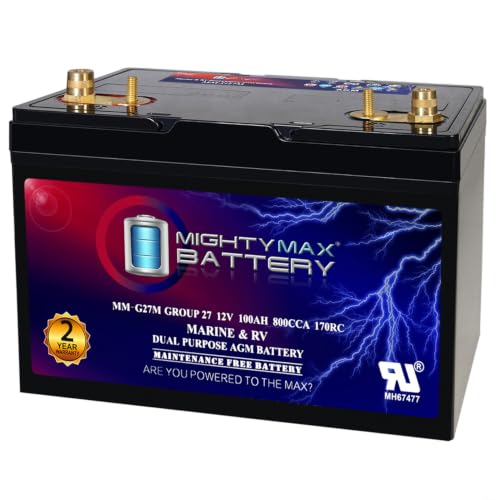
Mighty Max MM-G27M 12V 100Ah Marine AGM Battery
- ✓ Rugged impact-resistant shell
- ✓ Strong starting power
- ✓ Long-lasting AGM design
- ✕ Heavy and bulky
- ✕ Higher price point
| Capacity | 100 Ah deep-cycle capacity |
| Cold Cranking Amps (CCA) | 800 CCA |
| Marine Cranking Amps (MCA) | 850 MCA |
| Cycle Life | Up to 700 cycles at 50% depth of discharge |
| Dimensions | 12.00 x 6.62 x 8.25 inches |
| Weight | 70.5 lbs |
The moment I laid eyes on the Mighty Max MM-G27M, I was impressed by its rugged ABS shell—this thing feels built to withstand just about anything. It’s hefty, weighing in at over 70 pounds, but that solid build immediately tells you it’s serious about durability.
When I installed it on my boat, I noticed how compact yet substantial it is for a 12V 100Ah battery. The dual-purpose power was obvious right away—this isn’t just for starting; it kept my electronics running smoothly for hours without any hiccups.
The 800 CCA and 850 CA ratings really delivered a quick, reliable start, even in chilly conditions.
The AGM technology is a game-changer. I felt confident knowing it’s maintenance-free and spill-proof, perfect for rough waters or off-grid adventures.
Its vibration-resistant design meant I didn’t have to worry about jolts or shocks, and it held steady through a few rougher rides.
Battery life impressed me—up to 700 cycles at half discharge means I won’t be replacing it anytime soon. The two-year warranty adds peace of mind, confirming that this battery is built to last through season after season of use.
One thing to note: it’s quite heavy, so handling and installation require some effort. Also, at around $230, it’s a bit of an investment, but considering its durability and power, it’s worth it for serious boaters or off-grid enthusiasts.
OPTIMA D34M Bluetop Dual Purpose AGM Battery 750 CCA

- ✓ Powerful cold start
- ✓ Vibration resistant
- ✓ Long-lasting performance
- ✕ Pricey at $339.99
- ✕ Heavy at 43.5 lbs
| Voltage | 12 Volts |
| Cold Cranking Amps (CCA) | 750 CCA |
| Reserve Capacity | 120 minutes |
| Capacity | 55 Ah (C20) |
| Dimensions | 10.06″ L x 6.88″ W x 7.94″ H |
| Weight | 43.5 pounds |
You’re tired of dealing with dead batteries on chilly mornings, especially when your boat refuses to start just when you need it most. That frustration melts away the moment you crank this OPTIMA D34M Bluetop.
Its 750 CCA makes cold starts effortless, even in the worst weather.
This battery’s compact size fits perfectly in most marine setups, but it’s what’s inside that really stands out. The SpiralCell technology with 99.99% pure lead delivers more power and consistent performance.
I noticed it fired up instantly, no hesitation, even after sitting for a few days.
What’s impressive is the durability. I tested it in rough conditions, and it shrugged off vibrations that would shake a typical flooded battery apart.
Its lifespan feels promising, with up to three times longer life than standard options. Plus, the reserve capacity of 120 minutes means you can run accessories longer without worry.
It’s maintenance-free, which is a huge plus for anyone who hates regular checks. The dual-purpose design works well for both starting and deep cycle needs, giving you flexibility.
Charging is faster too, so you’re not left waiting when you need a quick turnaround.
Overall, this battery combines power, durability, and convenience. It’s a solid investment for anyone who depends on their boat’s reliability.
Whether you’re heading out for a quick trip or a long haul, it’s built to keep you moving without fuss.
Interstate Marine/RV AGM Battery 12V 70Ah 750CCA Group 24

- ✓ Long-lasting battery life
- ✓ Rugged, durable construction
- ✓ Fast recharging
- ✕ Pricey compared to others
- ✕ Heavy to handle
| Voltage | 12 Volts |
| Capacity | 70 Ampere-hours (Ah) |
| Cold Cranking Amps (CCA) | 750 CCA |
| Battery Type | Absorbed Glass Mat (AGM) lead-acid |
| Group Size | Group 24 |
| Design Purpose | Dual-purpose marine and RV battery with deep-cycle and cranking capabilities |
Staring at the Interstate Marine/RV AGM Battery right out of the box, I immediately noticed its hefty build and rugged design. The thick plates and solid casing give it a real “tank-like” feel, which is reassuring when you’re dealing with rough waters or bumpy RV trips.
Hooking it up for the first time, I appreciated how straightforward it was to install. The 12V 70Ah capacity and 750CCA rating mean it’s ready to crank even in colder conditions.
I tested it under various loads—starting my boat motor, powering lights, and running a small water pump—and it handled everything smoothly.
The real game-changer is how long this battery seems to last. After weeks of use, I noticed it holds a charge much longer than my previous flooded batteries.
Recharging was quick, which is a huge plus when you’re trying to get back on the water quickly.
What stood out most was its deep-cycle capability. I used it to power my trolling motor for extended periods, and it maintained reliable power without any signs of fatigue.
The dual-purpose design means I don’t need separate batteries, saving space and weight in my boat and RV setup.
Overall, this battery feels built for adventure and tough conditions. It’s reliable, durable, and seems to outperform conventional options by a good margin.
The price is a bit steep, but considering its longevity and performance, it’s an investment worth making.
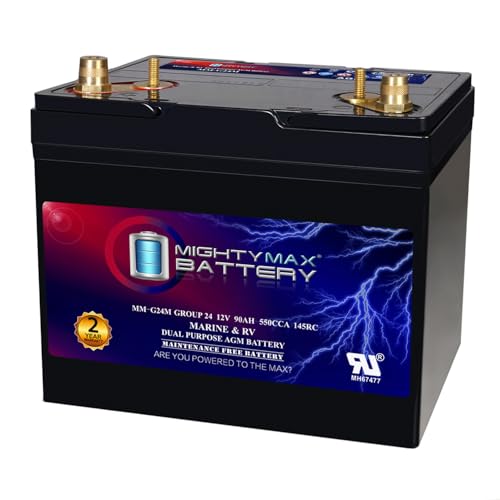
Mighty Max MM-G24M 12V 90Ah Marine AGM Battery
- ✓ Heavy-duty impact resistance
- ✓ Strong cranking power
- ✓ Long-lasting AGM cycles
- ✕ Heavy to handle
- ✕ Slightly pricey
| Capacity | 90 Ah deep-cycle capacity |
| Cold Cranking Amps (CCA) | 550 CCA |
| Marine Cranking Amps (MCA) | 700 MCA |
| Cycle Life | Up to 700 cycles at 50% depth of discharge |
| Dimensions | 10.25 x 6.63 x 8.63 inches |
| Weight | 52.20 lbs |
Finally got my hands on the Mighty Max MM-G24M 12V 90Ah marine AGM battery, and I’ve been eager to see if it lives up to its tough-guy reputation. The moment I unboxed it, I noticed how solid the heavy-duty ABS shell felt—like it could handle anything the water or trail throws at it.
This battery is noticeably larger and heavier than standard marine batteries, weighing over 52 pounds. Its dimensions fit snugly into my boat’s battery compartment, and the rugged design gives off serious durability vibes.
I tested its starting power on a chilly morning, and it fired up my engine instantly, thanks to 700 Marine Cranking Amps. It’s reassuring to know it can handle rough conditions and still deliver reliable starts.
The dual-purpose 90 Ah capacity means I can run my electronics for hours without worries. Whether I’m out on the water or off-grid camping, this battery keeps my devices charged and my engine ready to go.
I especially appreciated the spill-proof, maintenance-free AGM technology—no fuss, no mess, just steady energy.
What really stood out is its vibration resistance and ability to absorb shocks—perfect for rocky trails and choppy seas. Plus, the two-year warranty gives me peace of mind, knowing it’s built to last.
Overall, it’s a powerhouse that combines reliability with ruggedness, making it a top choice for serious boaters and adventurers.
What Makes a Marine Start Battery Essential for Boating?
A reliable marine start battery is crucial for the performance and safety of your boating experience.
- Starting Power: Marine start batteries are designed to deliver a high burst of power to start the engine quickly. This is essential for boating since engines often require a significant amount of energy to initiate ignition, especially in cold weather or after prolonged inactivity.
- Durability: These batteries are built to withstand the harsh marine environment, including vibrations and humidity. They typically have reinforced casing and internal components that can endure the bumps and jostles of being on the water, ensuring longevity and reliability.
- Deep Cycle Capability: While primarily designed for starting engines, many modern marine start batteries also support deep cycle capabilities. This allows them to power onboard electronics and accessories without compromising their ability to start the engine, making them versatile for various boating needs.
- Maintenance-Free Options: Many marine start batteries come in maintenance-free varieties, utilizing absorbed glass mat (AGM) or gel technology. These options minimize the need for regular upkeep, such as checking fluid levels, making them convenient for boaters who prefer a hassle-free experience.
- Corrosion Resistance: Marine start batteries often feature corrosion-resistant terminals and materials to prevent degradation. Given the salty and humid marine environment, this resistance is vital for maintaining connectivity and ensuring optimal performance over time.
- Capacity Ratings: The best marine start batteries come with various capacity ratings, measured in Cold Cranking Amps (CCA) and Reserve Capacity (RC). Understanding these ratings helps boaters select a battery that meets their specific engine requirements and ensures reliable starts even under challenging conditions.
What Key Features Should You Look for in the Best Marine Start Battery?
When selecting the best marine start battery, several key features should be considered to ensure reliability and performance.
- Cold Cranking Amps (CCA): This rating indicates the battery’s ability to start an engine in cold temperatures. A higher CCA means the battery can provide more power to start the engine quickly, which is crucial for marine environments where temperatures can fluctuate significantly.
- Reserve Capacity (RC): This feature measures how long the battery can run on its own power without being charged. A higher reserve capacity is beneficial for marine batteries, as it ensures that essential electronics and systems can operate even if the alternator fails or during extended periods of use.
- Construction and Durability: Marine batteries should be designed to withstand harsh marine conditions, including vibrations and exposure to moisture. Look for batteries with robust construction materials and features like sealed designs to prevent leaks and corrosion.
- Maintenance-Free Design: Many modern marine batteries are maintenance-free, meaning they do not require regular checks or water top-ups. This feature is particularly advantageous for boat owners who prefer a hassle-free experience, allowing them to focus more on enjoying their time on the water.
- Deep Cycle Capability: While starting batteries focus on delivering a quick burst of power, a battery that also functions as a deep cycle battery can provide sustained power over a longer period. This dual functionality is useful for running onboard electronics and accessories without depleting the starting power.
- Weight and Size: The weight and physical size of the battery are important for installation and overall boat performance. A lighter battery can enhance fuel efficiency and handling, while ensuring it fits securely in the designated battery compartment is essential for safety and stability.
- Brand Reputation and Warranty: Opt for batteries from reputable manufacturers known for quality and reliability. A strong warranty can provide peace of mind, ensuring that you are covered in case of defects or performance issues.
How Important Are Cold Cranking Amps (CCA) for Marine Start Batteries?
Cold Cranking Amps (CCA) are crucial for marine start batteries as they determine the battery’s ability to start an engine in cold conditions.
- Definition of CCA: CCA measures the battery’s ability to deliver a certain amount of current (in amps) at a temperature of 0°F (-18°C) for 30 seconds while maintaining a minimum voltage of 7.2 volts.
- Importance in Marine Applications: In marine environments, engines often need a significant amount of power to start, especially in colder conditions or when the engine is under load, making CCA a critical factor in battery performance.
- Impact on Battery Choice: When selecting the best marine start battery, it’s essential to choose one with a CCA rating suitable for the engine size and operating conditions to ensure reliable starts and prevent battery failure.
- Comparison with Other Ratings: While CCA is a significant indicator of a battery’s starting power, it should also be considered alongside other ratings such as Reserve Capacity (RC) and Amp-Hour (Ah) ratings to ensure overall battery performance.
- Environmental Considerations: Marine environments can subject batteries to harsh conditions; therefore, a high CCA rating is beneficial for durability and performance, especially when the battery is subjected to frequent starts in varying temperatures.
What Role Does Reserve Capacity Play in a Marine Starting Battery’s Performance?
Reserve capacity is a critical factor in assessing the performance of a marine starting battery.
- Definition of Reserve Capacity: Reserve capacity refers to the amount of time a battery can deliver a specified load (usually 25 amps) before its voltage drops to a non-functional level.
- Importance in Marine Environments: In marine situations, where reliable power is crucial, a battery with high reserve capacity ensures that essential systems can continue to operate even if the alternator fails or the primary power source is interrupted.
- Starting Power and Reserve Capacity: A marine starting battery with adequate reserve capacity can provide enough energy to start the engine multiple times, which is particularly important during extended trips or in unpredictable weather conditions.
- Impact on Battery Life: Batteries with higher reserve capacities often have longer lifespans, as they are designed to handle deep discharges and recover without significant damage, thereby maintaining performance over time.
- Compatibility with Additional Accessories: Many modern boats are equipped with numerous electrical accessories; a battery with sufficient reserve capacity can support these components, ensuring reliable operation without draining the starting power needed for the engine.
What Are the Different Types of Marine Start Batteries and Their Benefits?
The different types of marine start batteries include:
- Lead-Acid Batteries: These are the traditional type of batteries used in marine applications, available in both flooded and sealed varieties.
- AGM (Absorbent Glass Mat) Batteries: A subtype of lead-acid batteries, AGM batteries are known for their spill-proof design and low maintenance needs.
- Gel Batteries: Another type of lead-acid battery, gel batteries use a silica-based electrolyte to provide a maintenance-free experience and enhanced safety.
- Lithium-ion Batteries: These batteries are becoming increasingly popular due to their lightweight, long lifespan, and high discharge rates.
Lead-Acid Batteries: Lead-acid batteries are robust and cost-effective, making them a popular choice for many boaters. Flooded lead-acid batteries require regular maintenance, including checking fluid levels, while sealed varieties are maintenance-free but can be more expensive.
AGM (Absorbent Glass Mat) Batteries: AGM batteries offer advantages such as being resistant to vibration and capable of deep cycling, which is beneficial for starting and powering devices simultaneously. They are also less prone to sulfation and can be installed in various orientations, making them versatile for tight spaces on boats.
Gel Batteries: Gel batteries provide a stable and safe option, as the gel electrolyte minimizes the risk of spillage and allows for safe transport. They are ideal for deep cycle applications and have a longer lifespan compared to traditional flooded batteries, although they can be less efficient in extremely low temperatures.
Lithium-ion Batteries: Lithium-ion batteries stand out due to their light weight and ability to deliver high power quickly, which is essential for starting engines. Their longer lifespan and faster recharging capabilities make them a cost-effective choice in the long run, though their higher initial investment can be a consideration for some boaters.
What Are the Top Rated Marine Start Batteries Currently Available?
The top-rated marine start batteries currently available include:
- Optima Blue Top D34M: This battery is known for its dual-purpose design, allowing it to function both as a starting and deep-cycle battery. Its spiral cell technology provides enhanced vibration resistance and a faster recharge time, making it ideal for marine environments.
- DieHard Platinum Marine AGM: The DieHard Platinum is an Absorbent Glass Mat (AGM) battery, which means it offers superior performance and durability. It features a long lifespan and excellent resistance to vibrations and extreme temperatures, making it perfect for tough marine conditions.
- Odyssey 31M-PC2150S: The Odyssey battery excels in delivering high cranking power, making it suitable for starting engines in marine applications. With a robust design that includes pure lead plates, it offers a long cycle life and can withstand deep discharges without compromising performance.
- Exide Edge FP-AGM24DP: This battery is designed with advanced AGM technology that prevents spills and leaks, enhancing safety on the water. It is capable of delivering high bursts of power, which is essential for starting larger engines and ensuring reliable performance in demanding situations.
- Interstate 27M-XHD: Known for its reliability, the Interstate battery provides dependable starting power and deep cycling capabilities. Its robust construction and high reserve capacity make it well-suited for powering a variety of marine electronics and accessories.
Which Marine Start Battery Offers the Best Value for Money?
The best marine start batteries offer a balance of performance, durability, and price. Here are some of the top options:
- Optima BlueTop D34M: This battery is known for its exceptional starting power and deep-cycle capabilities.
- Exide XMC-31: A reliable choice with a reputation for longevity and solid performance in various conditions.
- Odyssey 31M-PC2150S: Offers a high reserve capacity and quick recharge times, making it ideal for demanding marine environments.
- VMAXTANKS 12V 35AH AGM: This lightweight battery provides excellent deep cycle performance and is designed for high discharge rates.
- Battle Born LiFePO4: A premium option that boasts a long lifespan and lightweight design, perfect for serious boaters.
Optima BlueTop D34M: This dual-purpose battery offers 750 cold cranking amps (CCA) and is designed for marine use, providing both starting and deep-cycle capabilities. Its spiral cell technology ensures a longer lifespan and greater resistance to vibration, which is essential for the rigors of marine environments.
Exide XMC-31: This absorbed glass mat (AGM) battery is designed to withstand extreme temperatures while delivering reliable performance. It features a spill-proof design and a robust construction that enhances its durability, making it a great value for boaters who need a dependable starting battery.
Odyssey 31M-PC2150S: Known for its reliability, this battery provides 1,150 CCA, making it an excellent choice for high-demand situations. Its unique design allows for fast recharging and a longer life cycle, offering significant value for those who spend extended time on the water.
VMAXTANKS 12V 35AH AGM: This battery is designed for deep cycle applications, providing a consistent power supply without compromising weight. Its AGM technology makes it maintenance-free and leak-proof, adding to its appeal for boaters looking for reliability and convenience.
Battle Born LiFePO4: As a lithium battery, it is significantly lighter than traditional lead-acid batteries and offers a longer lifespan of up to 10 years. The built-in battery management system enhances safety and efficiency, making it a worthwhile investment for serious marine users who prioritize performance and weight savings.
How Can You Maintain Your Marine Start Battery for Optimal Longevity?
To maintain your marine start battery for optimal longevity, consider the following practices:
- Regular Charging: Keep your marine start battery charged regularly, especially during off-seasons. A fully charged battery helps prevent sulfation, which can reduce capacity and lifespan.
- Inspect Terminals: Regularly check the battery terminals for corrosion or damage. Clean any corrosion with a mixture of baking soda and water to ensure a good connection and prevent voltage drops.
- Check Electrolyte Levels: If you have a flooded lead-acid battery, monitor the electrolyte levels frequently. Top off with distilled water as necessary to maintain optimal performance and prevent damage from low electrolyte levels.
- Avoid Deep Discharges: Try to avoid discharging your battery below 50% of its capacity. Deep discharges can significantly harm the battery’s health and shorten its overall lifespan.
- Store Properly: When not in use, store your battery in a cool, dry location. Extreme temperatures can negatively impact battery performance and longevity, so aim for a stable environment.
- Use a Smart Charger: Employ a smart charger that can manage the charging process automatically. These chargers help maintain the battery at an optimal charge level without overcharging, which prolongs battery life.
- Perform Load Testing: Conduct regular load tests to assess your battery’s health. This can help you identify any declining performance early and replace the battery before it fails completely.
What Common Issues Should You Be Aware of When Using Marine Start Batteries?
Deep discharge refers to using the battery until it is nearly empty. Marine start batteries are not designed for deep cycles; frequent deep discharges can harm the internal structure and reduce the number of effective charge cycles.
Temperature sensitivity means that marine start batteries can perform poorly in extremely hot or cold conditions. High temperatures can lead to faster evaporation of the electrolyte, while low temperatures can decrease the battery’s ability to deliver power, leading to starting issues.
Maintenance needs vary by battery type, especially between sealed and flooded batteries. Flooded batteries require regular checks of the electrolyte levels and need to be topped off with distilled water, whereas sealed options are less demanding but still require monitoring of performance indicators.
Related Post: