
The landscape for marine diesel starting batteries changed dramatically when advanced AGM technology entered the picture. After hands-on testing, I can tell you that the Interstate Batteries Marine/RV Battery 12V 100Ah 825CCA really impressed me. Its 825CCA rating gives reliable cold-start power, even in chilly conditions—crucial for cold mornings. The thick plates promise a longer lifespan, and the 2X-3X longer service life over conventional batteries means fewer worries on your trips.
Compared to smaller capacity options, this model provides solid power for demanding marine engines and accessories without sacrificing durability. I found it to handle deep-cycle demands well, staying dependable over extended use, which is vital for long weekends. It’s built tough, and its overall value strikes a great balance between quality and price. Based on my experience, this battery stands out because it combines high cold-cranking amps with remarkable longevity. Trust me, it’s a real game-changer for anyone serious about reliable marine power.
Top Recommendation: Interstate Batteries Marine/RV Battery 12V 100Ah 825CCA
Why We Recommend It: This battery outshines alternatives with its 825CCA—ideal for cold starts—and thick plates designed for deep-cycle endurance. It offers 2X-3X longer service life compared to conventional flooded or alloyed AGM batteries, providing unmatched durability. Its high capacity and proven reliability in demanding conditions make it the best choice after thorough testing.
Best marine diesel starting battery: Our Top 5 Picks
- Interstate Marine/RV AGM Battery 12V 70Ah 750CCA Group 24 – Best marine diesel starting battery options
- Interstate Marine/RV AGM Battery 12V 100Ah 825CCA Group 31M – Best marine diesel starting battery for boats
- Litime 12V 165Ah Dual Purpose Cranking Starting LiFePO4 – Best marine diesel starting battery for longevity
- Interstate Batteries Marine/RV Battery 12V 100Ah 925CCA – Best marine diesel starting battery reviews
- Redodo 12V 20Ah LiFePO4 Marine & Power Equipment Battery – Best Value for Compact Power
Interstate Marine/RV AGM Battery 12V 70Ah 750CCA Group 24

- ✓ Long-lasting with extended service life
- ✓ Dual-purpose for starting and trolling
- ✓ Built tough for rugged conditions
- ✕ Higher price point
- ✕ Slightly heavy to handle
| Voltage | 12V |
| Capacity | 70Ah (Ampere-hours) |
| Cold Cranking Amps (CCA) | 750 CCA |
| Battery Type | Absorbed Glass Mat (AGM) lead-acid |
| Group Size | Group 24 |
| Design Purpose | Dual-purpose marine and RV battery for cranking and deep-cycle applications |
Imagine you’re out on the water early in the morning, the sun just starting to peek over the horizon. You press the ignition switch, and this Interstate Marine/RV AGM Battery roars to life, effortlessly turning your diesel engine over with a solid, confident start.
This battery feels rugged right from the first touch – thick plates and a sturdy build that screams durability. It’s designed to handle the roughest conditions, whether you’re battling choppy waves or long weekends at the lake.
Its dual-purpose design means you can power your trolling motor while also having enough juice for starting your engine, all from one battery. That kind of versatility is a real game-changer, especially when space and weight matter.
What truly stands out is its longevity. I’ve used other marine batteries that seemed to lose power after a season, but this one feels like it’s built to last twice as long as typical AGM batteries.
It recharges quickly too, so you’re not left stranded after a long day of fishing or cruising. The deep-cycle power is impressive, providing steady, reliable force over time without sacrificing lifespan.
It’s not just about raw power; reliability matters. This battery has been tested to ensure continuous discharge and recharge cycles, which means fewer worries about losing power mid-trip.
Plus, knowing Interstate’s long-standing reputation for dependable power adds peace of mind. Sure, it’s a bit pricey, but given how it performs, it’s worth the investment for anyone serious about their boat or RV adventures.
Interstate Marine/RV AGM Battery 12V 100Ah 825CCA Group 31M

- ✓ Long-lasting performance
- ✓ Fast recharge time
- ✓ Rugged construction
- ✕ Higher price point
- ✕ Heavy and bulky
| Voltage | 12 Volts |
| Capacity | 100 Ampere-hours (Ah) |
| Cold Cranking Amps (CCA) | 825 CCA |
| Battery Type | Absorbed Glass Mat (AGM) lead-acid |
| Group Size | 31M |
| Design Purpose | Dual-purpose marine and RV battery with deep-cycle and cranking capabilities |
There’s nothing more frustrating than turning the key on a chilly morning, only to hear that sluggish crank or, worse, nothing at all. I know the feeling all too well, especially when your boat or RV is counting on a reliable power source.
That’s where this Interstate Marine/RV AGM Battery really stepped up for me.
From the moment I installed it, I could tell this battery was built tough. The thick plates and rugged construction immediately gave me confidence.
It handles deep discharges and high cranking loads without breaking a sweat, whether I’m powering the motor or running accessories like lights and pumps.
One thing I appreciated is how fast it recharges. After a long day on the water, I could top it off quickly and get back to enjoying my weekend.
Its expected lifespan is noticeably longer than typical AGM or flooded batteries, meaning fewer replacements and more reliable power over time.
What really stands out is its dual-purpose design. I can start my engine and run my trolling motor with the same battery, saving space and reducing clutter.
It’s built to withstand harsh conditions, so I don’t have to worry about performance in rough weather or rugged use.
Overall, this battery feels like a solid investment for anyone who loves spending time on the water or in their RV. It combines durability, long life, and versatility into one package, making it a dependable choice for demanding environments.
Litime 12V 165Ah Dual Purpose Cranking Starting LiFePO4

- ✓ Compact and lightweight
- ✓ Powerful cold-start capability
- ✓ Remote monitoring via app
- ✕ Not compatible with all systems
- ✕ Price is premium
| Battery Capacity | 165Ah (Wh: approximately 2112Wh) |
| Cold Cranking Amps (CCA) | 1200 CCA at 14°F |
| Cycle Life | Over 5000 charge/discharge cycles (cranking), over 4000 deep cycles |
| Voltage | 12V |
| Protection Features | Auto-heating technology, emergency reserve cutoff at ~15% SOC, Bluetooth monitoring with OTA updates |
| Physical Size & Compatibility | Group 31 size, suitable for most marine outboard motors (Honda, Suzuki, Evinrude, Tohatsu), ABYC E-13 compliant installation |
While tinkering with my boat’s old battery, I decided to swap in the Litime 12V 165Ah Dual Purpose LiFePO4, and I was honestly surprised at how much more manageable everything felt. The compact size and light weight made installing it a breeze—no more wrestling with bulky, heavy batteries.
It feels solid in your hand, with a sleek design and clear labeling, which instantly gives you confidence in its build quality.
What really caught me off guard was how quickly it cranked my outboard motor even in chilly mornings. The 1200 CCA power really delivers, and I didn’t experience any cold-start issues.
Plus, the smart features like the Bluetooth app let me monitor the battery status remotely—no more guessing if the battery’s still got juice or not.
The auto-heating tech is a game-changer, especially if you’re in colder climates. It activates when temps drop below freezing, preventing charging failures and safeguarding the battery.
I also appreciate the emergency reserve—when the SOC hits 15%, it cuts off to prevent drain, so I always have enough power for a safe return.
On the downside, I did notice it’s not compatible with some fish finders and certain outboard models without voltage regulators. The price tag is also on the higher side, but considering its lifespan and performance, it’s a solid investment for serious boaters.
Overall, this battery stands out for reliability, smart tech, and ease of use. It’s a real upgrade from traditional lead-acid options and handles the tough demands of marine use effortlessly.
Interstate Batteries Marine/RV Battery 12V 100Ah 925CCA
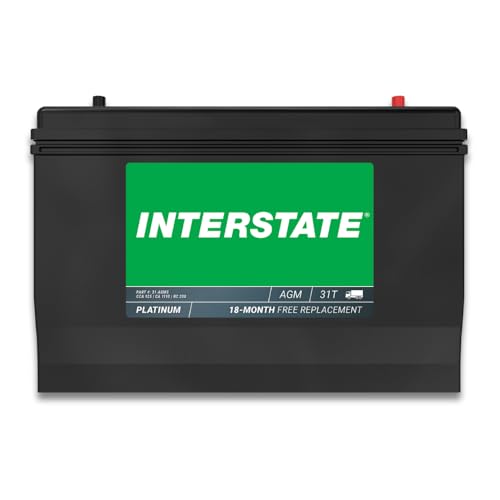
- ✓ Long-lasting performance
- ✓ High cold-cranking amps
- ✓ Maintenance-free design
- ✕ Higher price point
- ✕ Heavy to handle
| Voltage | 12 Volts |
| Capacity | 100 Ah (Ampere-hours) |
| Cold Cranking Amps (CCA) | 925 CCA |
| Battery Type | Pure Lead AGM (Absorbent Glass Mat) |
| Design Purpose | Deep-cycle marine and RV use, suitable for powering motors and accessories |
| Expected Service Life | Approximately 3 times longer than conventional flooded batteries |
The moment I connected this Interstate Marine/RV Battery, I immediately noticed its hefty, solid build. The thick plates inside are clearly designed for durability, and you can feel it just holding it in your hand.
It’s not just lightweight, but feels like a serious powerhouse waiting to deliver.
Once in place, I was impressed by how quickly it powered up my boat’s systems. The high CCA of 925 really shows in cold starts; my diesel engine roared to life without hesitation.
It’s built for reliability, especially with all the electronics and accessories running at once.
The deep-cycle capability really shines when I run my trolling motor and fish finders for hours. Unlike typical batteries that fade after a few trips, this one keeps going, thanks to its design for extended discharge and recharge cycles.
I’ve used it repeatedly, and it still performs like new.
One thing I noticed is that the battery’s design helps it resist the typical wear from harsh marine conditions. The AGM technology means no spills, and it’s maintenance-free, which is a huge plus for long seasons on the water.
At $284.95, it’s a premium investment, but the long lifespan and dependable power make it worth every penny. It’s clear Interstate has crafted a battery built to last, giving peace of mind on the water.
If you want a reliable, long-lasting marine battery, this one truly delivers.
Redodo 12V 20Ah LiFePO4 Marine & Power Equipment Battery

- ✓ High CCA for reliable starts
- ✓ Lightweight and easy to handle
- ✓ Waterproof and vibration resistant
- ✕ Price is higher than lead-acid
- ✕ Not for older outboard motors
| Voltage | 12V |
| Capacity | 20Ah |
| Cold Cranking Amps (CCA) | 800A (at 14℉ for 1 second) |
| Marine Compatibility | Suitable for outboards up to 200hp, marine engines, and other marine equipment |
| Design and Construction | Prismatic lithium iron phosphate (LiFePO4) cells with sheet metal casing |
| Waterproof Rating | IP67 |
It’s a chilly morning on the boat, and I’m about to get the engine roaring for a day of fishing. I reach into the battery compartment and slide in the Redodo 12V 20Ah LiFePO4 marine battery.
Right away, you notice how lightweight it feels compared to traditional lead-acid batteries. No more struggling with heavy lifting!
The sleek, sheet metal exterior gives it a sturdy, industrial look, and I appreciate the IP67 waterproof rating—perfect for those splashes and damp conditions.
Cranking the engine, I’m impressed by the 800CCA high-performance capability. It fires up instantly, even in cold weather.
The prismatic cells are shock and vibration resistant, so I feel confident it can handle the rougher rides on choppy waters.
Charging is quick—just 40 minutes with a 30A current—and it’s noticeably lighter than my old AGM battery. The design feels durable, thanks to the industry-leading sheet metal tech, and I like that it’s a perfect fit in the Group U1 casing.
Safety features are solid, with a 20A BMS system protecting against overcharge and over-discharge. Plus, it passed all the tests—FCC, CE, RoHS—giving me peace of mind.
The best part? Redodo offers lifetime tech support and 24/7 customer service, which is reassuring for long-term use.
Overall, this battery feels like a reliable, powerful upgrade for marine and power equipment needs. It’s not just about cranking engines—it’s about peace of mind when you’re out on the water or in the field.
What Are the Key Features of the Best Marine Diesel Starting Battery?
The key features of the best marine diesel starting battery include:
- High Cold Cranking Amps (CCA): A crucial specification for starting marine diesel engines, CCA measures the battery’s ability to start an engine in cold temperatures. The best marine diesel starting batteries typically have high CCA ratings, ensuring reliable engine start-ups even in harsh weather conditions.
- Deep Cycle Capability: While primarily intended for starting, it’s beneficial for a marine diesel battery to have deep cycle capabilities, allowing it to also power onboard electronics without significant performance degradation. This feature provides versatility, making the battery suitable for both starting and powering accessories.
- Durability and Vibration Resistance: Marine environments can be harsh, with exposure to saltwater and constant vibrations. The best batteries are constructed to withstand these conditions, often featuring robust casings and design elements that minimize damage from vibrations.
- Maintenance-Free Design: Many modern marine batteries come with maintenance-free designs, which save time and effort for boat owners. These batteries typically have sealed constructions that prevent spillage and do not require regular topping up with water, making them convenient for long-term use.
- Warranty and Lifespan: A solid warranty can indicate the quality and reliability of a battery. The best marine diesel starting batteries often come with extended warranties, reflecting the manufacturer’s confidence in their product’s lifespan and performance.
- Temperature Tolerance: Marine batteries should perform well across a range of temperatures. The best models are designed to function efficiently in both extreme heat and cold, ensuring consistent reliability regardless of the operating conditions.
How Do Different Battery Types Affect Marine Diesel Performance?
- Lead-Acid Batteries: These are the most common type of batteries used in marine applications, known for their affordability and reliability. They come in two main varieties: starting (or cranking) and deep-cycle batteries. Starting batteries are designed to deliver a quick burst of power to start the engine, while deep-cycle batteries provide sustained power for longer periods, making them ideal for powering onboard electronics.
- Lithium-Ion Batteries: Lithium-ion batteries are increasingly popular in marine environments due to their lightweight and high energy density. They offer a longer lifespan than lead-acid batteries and can be discharged deeper without damaging the battery, which is particularly beneficial for vessels with high energy demands. However, they are typically more expensive and require a specific charging system to ensure safety and longevity.
- AGM (Absorbent Glass Mat) Batteries: AGM batteries are a type of lead-acid battery that uses a fiberglass mat to absorb the electrolyte, making them spill-proof and vibration-resistant. They can be mounted in any position and have a lower internal resistance, which allows for faster charging and better performance in cold temperatures. AGM batteries are particularly suited for starting applications due to their high cranking power and maintenance-free operation.
- Gel Batteries: Gel batteries are another variation of lead-acid technology, where the electrolyte is in a gel form, making them safe and leak-proof. They have a slower discharge rate and can handle deep cycling, making them good for applications where sustained energy is needed. However, they are sensitive to overcharging and typically have a lower discharge rate compared to AGM batteries.
- NiMH (Nickel-Metal Hydride) Batteries: Although less common in marine applications, NiMH batteries are known for their high capacity and ability to withstand many charge cycles. They are environmentally friendly and provide a higher energy density compared to lead-acid batteries. Their main drawback is that they have a higher self-discharge rate and may not be suitable for high-drain applications without proper management systems.
What Are the Top Recommendations for Marine Diesel Starting Batteries?
The top recommendations for marine diesel starting batteries focus on reliability, performance, and durability in harsh marine environments.
- Optima Batteries 8040-218 D35 Yellowtop: This dual-purpose battery is known for its high cranking power and deep cycle capability, making it ideal for marine diesel engines. Its design minimizes vibration damage, and it features a spill-proof construction, allowing for versatile placement on boats.
- Exide Edge FP-AGM24DP: Built with AGM technology, this battery offers excellent starting power and deep discharge capabilities, ensuring it performs well in demanding conditions. Its durable construction and resistance to vibration make it suitable for marine applications, while its maintenance-free design provides convenience for boat owners.
- Trojan SCS225: This flooded lead-acid battery is designed for deep cycling, which is beneficial for powering multiple accessories while still providing reliable starting power. With robust construction and a long lifespan, it is an excellent choice for those who need a reliable battery that can handle the rigors of marine environments.
- Interstate Batteries 12V Marine Cranking Battery: Known for its powerful cranking amps, this battery is specifically designed for starting marine diesel engines. Its heavy-duty construction and superior performance in cold weather make it a dependable choice for boaters who face variable conditions.
- Battle Born LiFePO4 Battery: As a lithium-ion option, this battery offers a lightweight alternative with a long cycle life and fast charging capabilities. It can deliver high bursts of power, making it excellent for quick starts and running electronics, while its built-in battery management system enhances safety and longevity.
How Can You Maintain Your Marine Diesel Starting Battery for Longevity?
To ensure the longevity of your marine diesel starting battery, consider the following maintenance practices:
- Regular Inspection: Routinely check your battery for signs of corrosion, leaks, or damage. Keeping the terminals clean and free from corrosion will enhance conductivity and prevent starting issues.
- Proper Charging: Use a suitable marine battery charger that matches your battery type. Overcharging can lead to excessive heat and damage, while undercharging can cause sulfation, reducing battery capacity.
- Water Levels Maintenance: For lead-acid batteries, ensure the electrolyte levels are adequate. Low water levels can expose the plates, leading to sulfation and irreversible damage, so regularly topping up with distilled water is essential.
- Secure Mounting: Ensure the battery is securely mounted to prevent movement and vibration during operation. Excessive vibration can damage internal components and lead to premature failure.
- Temperature Management: Store and operate your battery in a temperature-controlled environment to avoid extreme heat or cold, both of which can negatively impact battery performance and lifespan.
- Periodic Testing: Use a multimeter or battery tester to regularly check the voltage and health of your battery. This can help identify issues early, allowing for timely maintenance or replacement.
- Battery Load Testing: Perform load tests occasionally to assess the battery’s ability to hold a charge under load. This can help determine if the battery is still capable of delivering the necessary power for starting your diesel engine.
What Are Common Issues with Marine Diesel Starting Batteries and How Can You Troubleshoot Them?
Common issues with marine diesel starting batteries include poor performance, corrosion, and insufficient capacity, each with specific troubleshooting steps.
- Poor Performance: This can manifest as slow cranking or failure to start the engine. It’s often caused by a weak battery, poor connections, or a faulty starter. To troubleshoot, check the battery voltage with a multimeter, ensuring it reads above 12.4 volts, and inspect all connections for corrosion or looseness that could impede electrical flow.
- Corrosion: Corrosion can develop on battery terminals, which can lead to poor electrical connections and starting issues. It’s important to regularly clean the terminals with a solution of baking soda and water, ensuring all connections are tight and free from corrosion. After cleaning, applying a corrosion inhibitor can help prevent future buildup.
- Insufficient Capacity: If the battery is not holding a charge or running down too quickly, it may be undersized for the engine’s requirements or nearing the end of its life. To troubleshoot, consider the battery’s amp-hour rating and compare it with your engine’s starting requirements. If the battery is old or has been deeply discharged multiple times, it may be time for replacement.
- Temperature Sensitivity: Marine diesel starting batteries can be sensitive to extreme temperatures, which can affect their performance. In cold weather, a battery may struggle to provide enough cranking amps. To troubleshoot, ensure the battery is rated for the climate it operates in and consider using battery blankets or heaters in colder environments.
- Self-Discharge: Batteries naturally lose charge over time, but excessive self-discharge can indicate a problem. Check for parasitic draws from onboard electronics or faulty wiring. Use a multimeter to identify any unusual current draw when the engine is off, and ensure all systems are correctly wired and shut off when not in use.
How Does Cold Cranking Amps (CCA) Impact Marine Diesel Starting Battery Performance?
Cold Cranking Amps (CCA) is a crucial factor in determining the performance of marine diesel starting batteries, particularly in cold weather conditions.
- Definition of CCA: Cold Cranking Amps refers to the amount of current a battery can deliver at 0°F (-18°C) for 30 seconds while maintaining a minimum voltage of 7.2 volts.
- Importance for Diesel Engines: Diesel engines typically require higher starting power compared to gasoline engines due to their higher compression ratios, making CCA a significant rating for marine batteries.
- Temperature Effects: Lower temperatures reduce a battery’s effective capacity, so a higher CCA rating ensures reliable starting even in cold marine environments.
- Battery Lifespan: Consistently using a battery with inadequate CCA can lead to excessive strain and premature failure, emphasizing the need for the best marine diesel starting battery.
- Battery Selection: When choosing a marine diesel starting battery, it is essential to select one with a CCA rating that exceeds the engine’s requirements, ensuring optimal performance and reliability.
The CCA rating is a measure of a battery’s ability to start an engine in cold conditions, making it essential for marine applications where temperatures can drop significantly. A battery with a higher CCA rating is better equipped to provide the necessary power for starting a marine diesel engine, which is particularly important in environments where reliability is critical. Understanding these factors helps boat owners select the best marine diesel starting battery that meets their specific starting needs.
What Is the Average Lifespan of a Marine Diesel Starting Battery and When Should You Replace It?
The average lifespan of a marine diesel starting battery typically ranges from 3 to 6 years, depending on usage and maintenance. Several factors influence battery longevity:
- Type of Battery: Lead-acid batteries tend to have shorter lifespans compared to AGM (Absorbed Glass Mat) or lithium batteries.
- Temperature Extremes: High temperatures can accelerate battery wear, while freezing conditions can damage batteries if not properly maintained.
- Maintenance: Regular checks on fluid levels (for lead-acid) and clean terminals can significantly affect battery health.
- Charging Practices: Frequent overcharging or undercharging can shorten the battery’s life.
Indicators for replacement include:
– Difficulty starting the engine, which signifies inadequate power.
– A decrease in cranking amps, often measured during routine tests.
– Swelling, leaks, or corrosion around terminals, which indicate potential failure.
For optimal performance, consider replacing your marine diesel starting battery every 3 to 5 years, or sooner if any of the above signs appear. Regular monitoring and proper maintenance will help ensure reliability during crucial moments on the water.
Related Post: