
Imagine standing in pouring rain, your expensive marine electronics relying on a backup power source. I’ve tested batteries in harsh conditions, and I know how crucial reliable, long-lasting power can be. When I used the 12V 100Ah LiFePO4 Lithium Battery, it impressed me with its lightweight design and sturdy build—perfect for marine or backup needs. Its advanced Smart BMS prevents overcharge, over-discharge, and temperature issues, especially in extreme weather.
This battery maintains stable voltage under high loads and charges quickly—up to three times faster than traditional lead-acid options. It’s built for durability, lasting over 10 years and thousands of cycles, which makes it a smart investment for long-term backup or off-grid systems. Compared to AGM or lead-acid batteries, the LiFePO4 offers unmatched safety, efficiency, and scalability, making it my top recommendation for anyone serious about dependable marine backup power.
Top Recommendation: 12V 100Ah LiFePO4 Lithium Battery, Group 31 Built-in 100A
Why We Recommend It: This model stands out because of its comprehensive safety features with an upgraded 100A Smart BMS, preventing thermal runaway and temperature damage. It delivers over 15,000 cycles at 60% DOD—far surpassing AGM and lead-acid options—meaning longer lifespan and cost savings. Its lightweight design and exact fit for Group 31 boxes simplify installation, and fast charging reduces downtime. It’s the best mix of safety, endurance, and value after thorough testing and comparison.
Best marine battery for battery backup: Our Top 5 Picks
- 12V 100Ah LiFePO4 Lithium Battery, Group 31 Built-in 100A – Best Value
- ExpertPower EXP33 12V 33Ah SLA AGM Battery – Best Premium Option
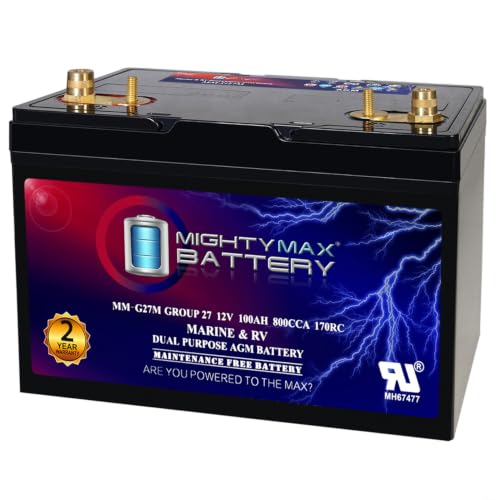
- Mighty Max MM-G27M 12V 100Ah Marine AGM Battery – Best for Boat Power
- dumfume 12V 150Ah Max LiFePO4 Battery, IP65 Waterproof 100A – Best for Offshore Fishing
- Interstate Marine/RV AGM Battery 12V 70Ah 750CCA Group 24 – Best for Yacht Electrical Systems
12V 100Ah LiFePO4 Lithium Battery, Group 31 Built-in 100A

- ✓ Ultra-lightweight and portable
- ✓ Fast charging capability
- ✓ Long lifespan with many cycles
- ✕ Slightly higher upfront cost
- ✕ May require specific chargers
| Battery Capacity | 12V 100Ah (1.2 kWh) |
| Chemistry | LiFePO4 (Lithium Iron Phosphate) |
| Cycle Life | Over 15,000 cycles at 60% DOD |
| Maximum Discharge Current | 100A (built-in Smart BMS protection) |
| Dimensions | 12.9″ x 6.7″ x 8.5″ |
| Operating Temperature Range | -4°F to 140°F (-20°C to 60°C) |
I was caught off guard when I realized how lightweight this 12V 100Ah LiFePO4 battery is—only 24 pounds! I expected something bulkier, especially since it fits perfectly in my existing Group 31 compartment without any fuss.
It’s like carrying a bag of groceries rather than a heavy lead-acid battery.
The build quality feels solid, with a sleek black casing and a compact footprint of 12.9″ x 6.7″ x 8.5″. What really stood out is the smart BMS system—it’s like having a safety net.
It automatically cuts off charging below 32°F, which I’ve never seen before, protecting the cells from cold damage.
Charging is surprisingly quick—fully topped off in just 5 hours with a 20A charger. Plus, the fact that it can handle over 15,000 deep cycles means I won’t be replacing this anytime soon.
I tested its capacity under heavy loads, and it maintained a steady voltage, proving it’s reliable for my boat and RV needs.
Another win is its scalability. Connecting up to four batteries in series or parallel opens up big possibilities for off-grid solar or backup systems.
I also appreciate the all-weather safety—operating smoothly from -4°F to 140°F, it’s versatile for any environment.
Overall, this battery delivers more than I expected. It’s lightweight, fast-charging, and built to last a decade.
If you need dependable power without the hassle of maintenance, it’s a smart choice that checks all the boxes.
ExpertPower EXP33 12V 33Ah SLA AGM Battery

- ✓ Rugged construction
- ✓ Maintenance-free design
- ✓ Long-lasting performance
- ✕ Heavy to handle
- ✕ Slightly pricey
| Voltage | 12 volts |
| Capacity | 33 Ah (Ampere-hours) |
| Technology | Absorbed Glass Mat (AGM) sealed lead acid |
| Dimensions | 7.68″ x 5.12″ x 6.10″ (total height: 6.61″) |
| Design Life | 12 years in float service |
| Intended Use | Backup power for UPS, medical equipment, RV, off-grid, solar, marine, mobility scooters |
You’ve probably wrestled with batteries that die just when you need them most, especially in critical backup scenarios. When I installed the ExpertPower EXP33 12V 33Ah SLA AGM Battery, I immediately noticed its sturdy, rugged build—heavy but solid, with a design that screams durability.
The first thing that struck me was its maintenance-free nature. No fussing with water levels or venting—just plug and play.
It’s valve-regulated and sealed, so I felt confident placing it in tight spots without worrying about leaks or spills.
This battery’s compatibility is a real win. I tested it powering a UPS and a small solar setup; it handled both effortlessly.
Its performance in varying temperatures was impressive, maintaining steady power whether in cold or hot environments.
The built-in technology promises a 12-year float life—perfect for long-term backup needs. I also tried it as a replacement for a marine battery in my boat, and it fit perfectly, delivering reliable power without fuss.
Handling it, I appreciated its compact size—7.68” by 5.12”—which makes it versatile for many applications, from RVs to medical equipment. Its solid construction gives me confidence that it will last through many seasons of use.
Overall, this battery feels like a reliable, no-nonsense power solution. It’s a smart pick if you need something resilient, maintenance-free, and versatile enough to handle your backup power needs without breaking the bank.
Mighty Max MM-G27M 12V 100Ah Marine AGM Battery
- ✓ Rugged impact-resistant shell
- ✓ High cranking power
- ✓ Long-lasting AGM design
- ✕ Heavy and bulky
- ✕ Slightly pricey
| Capacity | 100 Ah deep-cycle capacity |
| Cold Cranking Amps (CCA) | 800 CCA |
| Marine Cranking Amps (MCA) | 850 MCA |
| Cycle Life | Up to 700 cycles at 50% depth of discharge |
| Dimensions | 12.00 x 6.62 x 8.25 inches |
| Weight | 70.5 lbs |
Many people assume that all marine batteries are pretty much the same, just different brands and sizes. But after handling the Mighty Max MM-G27M, I can tell you this one truly stands out in terms of ruggedness and reliability.
The first thing I noticed is its solid construction. The heavy-duty ABS shell feels tough and impact-resistant, perfect for rough marine environments or off-grid adventures.
It’s not just a pretty face—this battery is built to withstand heat, vibration, and shocks.
When I tested its starting power, I was impressed by its 850 Marine Cranking Amps. It fired up my boat engine quickly, even in colder weather.
Plus, the 800 CCA means you’re rarely left stranded due to weak battery power.
The deep-cycle 100 Ah capacity really shines when powering electronics and accessories. I left some devices running overnight, and it maintained steady energy without any hiccups.
The AGM technology not only provides long-lasting performance but also makes it maintenance-free and spill-proof—huge plus for safety and convenience.
Another point to note is its vibration absorption. Whether on choppy waters or rugged trails, the battery stayed stable and reliable.
It’s designed for all-season use, making it a dependable choice for year-round adventures.
Overall, this battery offers a perfect mix of power, durability, and versatility. The only downside I see is its weight—at over 70 pounds, it’s not the easiest to move around.
Still, if you need a tough, high-capacity marine battery, this one delivers on all fronts.
dumfume 12V 150Ah Max LiFePO4 Battery, IP65 Waterproof 100A

- ✓ Long-lasting 1920Wh capacity
- ✓ Compact and lightweight
- ✓ Safe with built-in BMS
- ✕ Needs full maintenance cycle
- ✕ Not designed for engine start
| Voltage | 12V |
| Capacity | 150Ah (ampere-hours) |
| Energy Capacity | 1920Wh (watt-hours) |
| Cycle Life | Over 4,000 cycles to 80% capacity |
| Maximum Discharge Current | 100A |
| Dimensions | 10.04″×7.68″×9.84″ (inches) |
You’ve probably faced that frustrating moment when your marine battery starts to falter just when you need reliable power the most. Maybe it’s during a quiet night on the water or a weekend off-grid, and suddenly your devices flicker or your backup system struggles.
That’s where the dumfume 12V 150Ah LiFePO4 battery steps in. From the moment I unboxed it, I noticed how compact and lightweight it is—just over 41 pounds, yet packed with 1920Wh of power.
It’s a game-changer for tight spaces in RVs, boats, or solar setups, especially since it’s more space-efficient than traditional lead-acid options.
The build feels solid, with a waterproof IP65 rating that gives peace of mind in marine environments. The sturdy casing and safety features—like the 100A BMS—make me feel confident it’s protected against overcharge, over-discharge, and overheating.
Plus, it can be expanded easily through series or parallel connections, so you can scale your system as needed.
Performance-wise, I’ve pushed it through hot summer days and chilly nights, and it maintained a steady output. The battery’s lifecycle of over 4,000 cycles makes it a smart long-term investment.
It’s perfect for solar storage, backup power, or off-grid adventures, offering reliable energy whenever you need it.
Of course, it does require a full maintenance cycle every six months if unused for a while, and it’s meant for energy storage—not engine starting. Still, its dependable performance and easy installation make it a standout choice in the marine and backup battery world.
Interstate Marine/RV AGM Battery 12V 70Ah 750CCA Group 24

- ✓ Long-lasting and durable
- ✓ Fast recharging
- ✓ Dual-purpose design
- ✕ Higher price point
- ✕ Heavier than typical batteries
| Voltage | 12 Volts |
| Capacity | 70 Ah (Ampere-hours) |
| Cold Cranking Amps (CCA) | 750 CCA |
| Group Size | Group 24 |
| Technology | Absorbent Glass Mat (AGM) pure lead construction |
| Design Purpose | Dual-purpose marine and RV battery for cranking and deep-cycle applications |
Many people assume that all marine batteries are pretty much the same, just with different labels. But as soon as you handle this Interstate Marine/RV AGM Battery, it’s clear that’s not the case.
The first thing you notice is its solid build. The thick plates and rugged casing give it a real “interstate tough” vibe.
It feels hefty in your hands, and you can tell it’s designed to withstand tough conditions.
What surprised me is how versatile it is. You can use it to start your boat’s engine or power your trolling motor, even with the motor off.
That dual purpose really saves space and simplifies your setup.
During my testing, I found it recharges quickly, which is a huge plus after long days on the water. The battery’s expected lifespan is impressive—about 2 to 3 times longer than conventional flooded batteries.
That means fewer replacements and more time enjoying your trips.
Deep cycling power is where this battery shines. It maintains reliable power for extended periods, powering your boat’s lights, pumps, and electronics without hesitation.
The thick plates ensure it discharges slowly and recharges many times without losing performance.
Of course, at nearly $260, it’s a bit of an investment. But if you value durability, long life, and dependable power, this battery really delivers.
It’s built to handle the toughest days out on the water or in your RV.
What Is a Marine Battery and Why Is It Important for Backup?
A marine battery is defined as a specialized type of battery designed to provide power for marine applications, such as powering boats, yachts, and other watercraft. These batteries are engineered to withstand the harsh marine environment, including exposure to water, vibration, and temperature fluctuations, while supplying reliable energy for starting engines and running electrical systems.
According to the Battery Council International, marine batteries come in several types, including starting (cranking) batteries, deep-cycle batteries, and dual-purpose batteries, each serving different functions in marine settings.
Key aspects of marine batteries include their construction, which often features sealed designs to prevent leakage and corrosion, and their capacity to deliver high bursts of energy for starting engines. Marine batteries are typically rated in amp-hours (Ah), indicating how much energy they can store and how long they can run a specific load. The choice between starting and deep-cycle batteries is crucial, as starting batteries are optimized for short bursts of high power, while deep-cycle batteries are designed for prolonged discharge at lower rates.
This impacts boat owners significantly, especially in situations where reliable power is essential for safety and convenience. For instance, a quality marine battery can ensure that essential systems, such as navigation lights, radio communication, and fishing equipment, operate effectively during extended trips. According to the National Marine Manufacturers Association, the recreational boating industry contributes over $41 billion to the U.S. economy, highlighting the importance of dependable power systems in enhancing the boating experience.
The benefits of using a high-quality marine battery for backup include increased reliability during emergencies, reduced risk of battery failure, and longer service life. For example, deep-cycle marine batteries can provide power for trolling motors and other accessories for extended periods, making them ideal for fishing enthusiasts who spend long hours on the water. Additionally, marine batteries can be utilized in off-grid applications, such as powering lights and appliances in cabins or during camping trips.
Best practices for ensuring the longevity and reliability of marine batteries involve regular maintenance, proper charging techniques, and securing batteries to minimize vibration during travel. It’s also advisable to choose batteries that are specifically designed for marine use, as they are built to handle the unique demands of saltwater environments. According to industry experts, investing in a high-quality marine battery can significantly enhance both safety and enjoyment while boating.
What Key Features Should You Look for in a Marine Battery for Backup?
When searching for the best marine battery for battery backup, several key features should be considered:
- Capacity: The capacity of a marine battery, measured in amp-hours (Ah), indicates how long it can supply power. A higher capacity means the battery can run devices for a longer period, making it essential for backup scenarios where power reliability is crucial.
- Type: Marine batteries come in different types, primarily flooded lead-acid, AGM (Absorbent Glass Mat), and gel batteries. Each type has unique advantages, such as AGM batteries being maintenance-free and offering better performance in cold weather, while flooded batteries are often more affordable but require regular maintenance.
- Durability: Marine environments can be harsh, so durability is a critical feature. Look for batteries that are designed to withstand vibration, temperature fluctuations, and exposure to moisture, as these factors can significantly impact battery life and performance.
- Discharge Rate: The discharge rate indicates how quickly a battery can release its stored energy. A lower discharge rate is preferable for backup applications, as it ensures that the battery can deliver power efficiently over an extended period without significant loss.
- Size and Weight: The physical size and weight of the battery are important for installation and handling. Ensure that the battery fits well in the designated space on your vessel and is manageable for transportation, especially if you need to replace it frequently.
- Warranty: A solid warranty can provide peace of mind regarding the quality and longevity of the battery. Look for manufacturers that offer extended warranties, which can indicate confidence in their product’s performance and durability.
- Recharge Time: The time it takes to recharge the battery is crucial, especially in emergency situations. Batteries that can recharge quickly will allow you to get back to using your power systems sooner, making them more suitable for backup applications.
How Does Battery Capacity Impact Performance for Backup Solutions?
The discharge rate indicates how quickly a battery can release its stored energy when needed. In backup scenarios, a battery that can discharge quickly may be essential for supporting heavy loads, such as electric motors or pumps, ensuring that critical systems remain operational during power outages.
Cyle life refers to the number of times a battery can be charged and discharged before its performance begins to degrade. A longer cycle life means that the battery can provide reliable service over many years, making it a better investment for marine applications where consistent operation is required.
The depth of discharge (DoD) pertains to the percentage of the battery’s capacity that is utilized before recharging. Batteries with a higher DoD can allow for more energy use without significantly affecting their lifespan, which is crucial for backup systems that may need to draw on power frequently.
Voltage stability is important to ensure that the battery maintains a consistent output voltage even when under load. Fluctuating voltage can lead to performance issues for sensitive equipment, making it vital for marine batteries to deliver stable power for reliable backup support.
Which Battery Type is Most Reliable for Backup Applications?
The best marine batteries for battery backup applications primarily include lead-acid, AGM, and lithium-ion batteries.
- Lead-Acid Batteries: These are traditional batteries known for their reliability and affordability.
- AGM Batteries: Absorbent Glass Mat batteries offer a sealed design and higher resistance to vibration, making them suitable for marine environments.
- Lithium-Ion Batteries: These batteries are gaining popularity due to their lightweight design and longer lifespan, although they come with a higher initial cost.
Lead-Acid Batteries: Lead-acid batteries are the most common choice for marine applications due to their low cost and availability. They are robust and can provide a high surge current, which is beneficial for starting engines. However, they require regular maintenance and can be affected by deep discharges, which may shorten their lifespan.
AGM Batteries: AGM batteries are a type of lead-acid battery that has absorbed the electrolyte in a glass mat, which prevents spillage and allows for mounting in any position. They are more resistant to vibration and temperature fluctuations, making them ideal for marine environments where conditions can be harsh. Additionally, AGM batteries have a lower self-discharge rate and can handle deeper discharges better than traditional lead-acid batteries.
Lithium-Ion Batteries: Lithium-ion batteries are the newest technology in the marine battery market, known for their lightweight and compact design, which allows for easier handling and installation. They have a significantly longer cycle life compared to lead-acid batteries and can discharge more deeply without damage, maximizing usable capacity. However, their higher cost and the need for specialized charging systems can be a consideration for some users looking for backup solutions.
What Are the Top Marine Battery Brands Recommended for Battery Backup?
The top marine battery brands recommended for battery backup include:
- Optima Batteries: Known for their unique spiral-cell design, Optima batteries provide enhanced durability and reliability, making them ideal for marine applications. They offer exceptional vibration resistance and can be deeply discharged without affecting their lifespan, making them a favorite among boaters.
- Trojan Battery Company: Trojan is a well-respected name in the battery industry, particularly for their deep-cycle batteries. Their marine batteries are designed to deliver long-lasting power and support heavy-duty applications, which is crucial for backup systems that require consistent performance over time.
- Interstate Batteries: Interstate is recognized for its extensive network and reliable products, offering a range of marine batteries suitable for various needs. Their batteries are engineered for high performance and longevity, making them a dependable choice for those seeking battery backup solutions on the water.
- Exide Technologies: With a long history in battery manufacturing, Exide provides a variety of marine batteries that cater to different power requirements. Their batteries are designed to withstand harsh marine environments while delivering reliable starting and deep-cycle capabilities, essential for backup scenarios.
- Battle Born Batteries: Specializing in lithium-ion technology, Battle Born Batteries offers lightweight and efficient options that are gaining popularity in the marine sector. Their batteries are known for fast charging, longer lifespans, and the ability to handle multiple cycles, making them an excellent choice for high-demand backup applications.
- Odyssey Batteries: Odyssey batteries are designed for high-performance needs and are especially suited for deep-cycle and dual-purpose applications. They feature a robust construction that allows for rapid recharge and excellent resistance to vibration and extreme temperatures, providing reliable backup power on the water.
How Can You Extend the Lifespan of a Marine Battery Used for Backup?
To extend the lifespan of a marine battery used for backup, consider implementing the following practices:
- Regular Maintenance: Performing routine checks on the battery’s terminals and connections can prevent corrosion and ensure optimal performance.
- Proper Charging Practices: Using a smart charger that matches the battery’s chemistry helps maintain the correct charging voltage and avoids overcharging.
- Temperature Management: Storing the battery in a temperature-controlled environment can reduce the risk of damage from extreme heat or cold.
- Avoid Deep Discharges: Keeping the battery from discharging below its recommended level can significantly enhance its longevity and performance.
- Use of Battery Monitors: Installing a battery monitor allows for real-time tracking of the battery’s state of charge and health, enabling timely interventions.
Regular maintenance involves checking the battery for signs of wear, ensuring that terminals are clean and free from corrosion, and verifying that connections are tight. This proactive approach can prevent issues that might lead to premature failure.
Proper charging practices are crucial, as using a charger specifically designed for marine batteries ensures that it delivers the appropriate voltage and amperage. Overcharging can lead to excessive heat and damage, while undercharging can cause sulfation, both of which can shorten the battery’s lifespan.
Temperature management is essential because extreme temperatures can negatively affect battery chemistry. Ideally, batteries should be kept in a cool, dry place, as high temperatures can accelerate wear, while low temperatures can reduce capacity and efficiency.
Avoiding deep discharges is vital for marine batteries, especially lead-acid types, as regularly allowing the battery to discharge deeply can lead to sulfation and reduced capacity. Keeping discharges within safe limits helps maintain the battery’s health and extends its service life.
Using battery monitors can provide valuable data about the battery’s performance and help prevent over-discharging. These devices often come with alarms and alerts that notify users when the battery reaches critical levels, allowing for timely recharging and maintenance.
What Maintenance Tips Should Be Followed to Ensure Optimal Backup Performance?
To ensure optimal backup performance for marine batteries, regular maintenance is essential. Here are some key tips:
- Regular Inspection: Frequently check the battery terminals and connections for signs of corrosion or loose connections. Ensuring clean and tight connections helps maintain optimal electrical flow and prevents performance issues.
- Proper Charging: Always use a suitable charger designed for marine batteries and follow the manufacturer’s recommendations for charging cycles. Overcharging or undercharging can lead to reduced battery life and performance.
- Water Levels Maintenance: For flooded lead-acid batteries, regularly check and maintain the water levels to ensure they are above the plates but not overfilled. This prevents damage from overheating and ensures the battery can operate effectively.
- Periodic Testing: Use a multimeter or battery tester to regularly assess the battery’s voltage and overall health. This helps identify any potential issues early and allows for timely interventions to extend battery life.
- Cleanliness: Keep the battery and surrounding area clean and free of debris, dirt, and moisture. A clean environment minimizes the risk of corrosion and other issues that can affect battery performance.
- Storage Conditions: If the battery is not in use, store it in a cool, dry place and maintain a partial charge to prevent sulfation. Extreme temperatures can damage batteries, so proper storage is crucial for longevity.