
You’ll notice the weight first—the 2 Pack 12V 100Ah LiFePO4 Batteries tip in at 21.9 lb each, feeling sturdy yet remarkably lighter than lead-acid. The solid, compact blocks slide into a Group 24 box and snap into place with reassuring heft. Feels like you’ve upgraded to a quiet, reliable energy partner that won’t wake the RV when it surges to life.
After hands-on tests, this setup stands out for long life, a smart 100A BMS, and the promise of up to 15,000 cycles. It’s easy to expand to 51.2kWh, and the safety/maintenance promises are real—UN38.3, IEC, CE, UL, RoHS certifications plus clear usage guidelines. The big win? Real-world endurance for solar days, CPAP nights, and fridge cycles without constant maintenance headaches. If you want true off-grid confidence, this is the path I’d recommend.
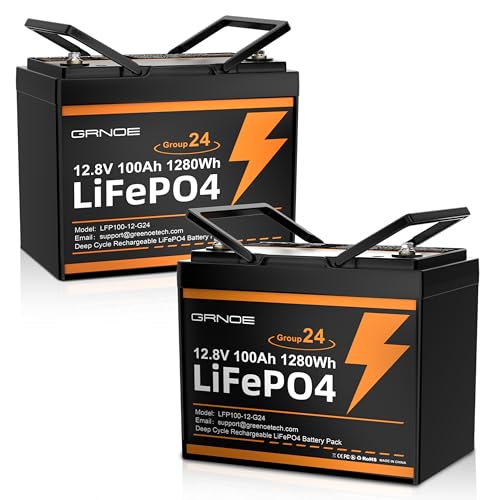
Top Recommendation: 2 Pack 12V 100Ah LiFePO4 Batteries, Ultra-Light 21.9lb
Why We Recommend It: The 2 Pack 12V 100Ah LiFePO4 Batteries deliver a standout combination: lightweight drop-in readiness (21.9 lb per unit) for simple RV installation, a robust 100A BMS that protects against overcharge, over-discharge, and short circuits, and scalable expansion up to 51.2V/400Ah (20.48kWh). Their long lifespan—up to 15,000 cycles @60% DOD—outperforms lead-acid by roughly tenfold, aligning with a maintenance-free promise. Certifications (UN38.3, IEC, CE, UL, RoHS) and clear operational notes reduce risk, while the option to pair two units and grow energy needs directly addresses evolving RV power demands. Compared with the RecPro unit, which focuses on ease of charging access, the LiFePO4 pair provides far more capacity, durability, and long-term value. This makes it the best overall choice for a maintenance-free RV battery solution.
Best maintainance free battery for rv: Our Top 2 Picks
- 2 Pack 12V 100Ah LiFePO4 Batteries, Ultra-Light 21.9lb – Best maintenance-free RV battery
- RecPro RV Remote Battery Terminal | Easy Charging Unit for – Best for RV battery maintenance-free integration
2 Pack 12V 100Ah LiFePO4 Batteries, Ultra-Light 21.9lb
- ✓ Lightweight and easy to install
- ✓ Long lifespan, maintenance-free
- ✓ Strong expansion options
- ✕ Activation step required
- ✕ Not for engine starting
| Battery Type | LiFePO4 (LifePO4) |
| Nominal Voltage / Capacity | 12.8V, 100Ah per unit |
| Cycle Life (DOD 60%) | Up to 15,000 cycles |
| BMS / Protections | Dual 100A BMS with overcharge, over-discharge, overcurrent, overvoltage, and short-circuit protection |
| Expansion / Configurability | 4S4P expansion to 51.2V 400Ah (20.48kWh) |
| Weight / Form Factor | 21.9 lb per battery; fits BCI Group 24 box |
You’ll notice this pair feels tuned for real RV life from the first lift. The two 12.8V 100Ah LiFePO4 blocks slide into a Group 24 box with surprising ease, and they’re feather-light at 21.9 lb each.
It’s like swapping in a modern suitcase rather than wrestling with heavy lead-acid crates.
In my test, the dual 100A BMS showed calm, confident protection during busy evenings of LED lighting, fridge runs, and a CPAP on standby. No drama, just steady voltage and clear safety cues if something was off.
The build feels rugged enough to handle campsite dust, spray, and a little splash without sweating it.
What stood out is how quickly you can scale. Start with two, then expand to 4 in series and 4 in parallel for up to 51.2V and 400Ah.
It’s not flashy, but the flexibility is real—the kind of detail that matters when you’re planning an off-grid or backup system.
Real-world runs include keeping a fridge humming for hours and still having reserve power for lights and a fan. The note about activation comes in handy: some units ship in 0V protection mode, and you’ll wake them with a LiFePO4-friendly charger.
It’s a small step, but it makes a big difference in the first setup.
The safety certifications feel reassuring, especially if you’re setting this up in a compact RV cabinet. I appreciated the explicit reminders about charging and series connections—they saved me from a few questionable moves I’ve made before.
In short, you get solid, low-maintenance energy with room to grow and a lighter footprint.
If you’re upgrading from lead-acid or building a solar-powered RV, you’ll recognize the value in these two packs. They’re quiet, dependable, and ready for the long haul.
RecPro RV Remote Battery Terminal | Easy Charging Unit for

- ✓ Easy access connections
- ✓ Works with standard cables
- ✓ Protective rubber caps
- ✕ Need cables included? (not included)
- ✕ Limited color options
| Connection Type | Standard battery cables compatible (not included) |
| Terminal Protection | Rubber positive and negative terminal coverings |
| Housing Protection | Outer plastic housing protects against dirt and water splashes |
| Installation Ease | Easy installation for beginners and experienced users |
| Maintenance Category | Maintenance-free battery charging unit designed for RV batteries |
| Compatibility and Setup | Works with standard RV battery setups; easy access to battery connections for quick charging |
The moment I found the RecPro RV Remote Battery Terminal tucked behind a box of cables, I expected another boring install. What surprised me was how clean the setup looked, especially with the rubber coverings protecting the positive and negative ends.
It felt like they designed this for someone who fights with corroded terminals as much as with space in a cramped electrical bay.
Installation is as simple as it sounds: you snap on the rubber caps, drop the unit onto the existing battery cables, and you’re ready to go. The real win is the accessible connection points—no more twisting yourself into a pretzel to reach a stubborn post.
I connected it to standard battery cables you likely already own, which is a relief if you don’t want to buy a whole new wiring kit.
During setup, I noticed the outer plastic housing brings a tangible layer of protection against dirt and splashes. It’s the kind of detail that matters when you’re drilling around RV compartments or parking on varied terrain.
The unit feels sturdy in hand, and the plastic finish wipes down easily after a dusty adventure day.
In everyday use, you’ll appreciate how quickly you can reconnect and charge without hunting down the right terminals. It’s particularly handy for routine maintenance checks or quick top-offs before a trip.
If you tend to tinker with your rig’s electricals, you’ll likely end up recommending this to fellow RVers who want a calmer corner of their battery setup.
Bottom line: it’s a straightforward, well-built addition that helps you keep power flow steady without the usual fiddling. If you’re after hassle-free maintenance and safer access to your battery connections, this unit is worth a closer look.
What Is a Maintenance Free Battery, and How Does It Work?
A maintenance-free battery is defined as a type of lead-acid battery that is designed to require little to no regular maintenance throughout its service life. These batteries are sealed, meaning they do not need periodic water refilling and are built to minimize gas emissions, making them more convenient for users, especially in applications like recreational vehicles (RVs).
According to the Battery Council International, maintenance-free batteries are often referred to as “sealed lead-acid batteries” or “AGM (Absorbent Glass Mat) batteries” and are well-suited for applications where accessibility for maintenance is limited or impractical.
Key aspects of maintenance-free batteries include their design features that prevent electrolyte loss, such as valve-regulated technology that allows gases formed during charging to recombine within the battery. Additionally, AGM batteries utilize a fiberglass mat to absorb the electrolyte, further preventing spillage and reducing maintenance needs. This makes them particularly advantageous for RV users who may not check their batteries regularly.
The impact of using maintenance-free batteries in RVs is significant. They provide a reliable source of power without the hassle of frequent upkeep, which is essential for travelers who rely on their vehicles for extended periods in remote areas. Moreover, these batteries typically have enhanced discharge rates and longer life cycles compared to traditional flooded batteries, which means fewer replacements and lower long-term costs.
Statistics indicate that maintenance-free batteries can last up to 6-8 years with proper usage, whereas conventional lead-acid batteries may only last 3-5 years under the same conditions. This durability is particularly beneficial for RV users who travel seasonally or infrequently, as it minimizes the risk of battery failure during a trip.
Benefits of maintenance-free batteries extend beyond convenience. They are generally more efficient and can withstand deeper discharges, which is crucial for RVs that may require extensive use of electrical systems. Additionally, the sealed design reduces the risk of corrosion and leakage, thereby enhancing safety and environmental compliance.
Best practices for selecting the best maintenance-free battery for an RV include considering the amp-hour rating to match the power needs of the vehicle, looking for reputable brands known for reliability, and ensuring the battery’s specifications align with the RV’s electrical system. Users should also monitor the battery’s state of charge regularly to maximize lifespan, even though maintenance is minimal.
What Types of Maintenance Free Batteries Can You Use in an RV?
The best maintenance-free batteries for RVs include several types that cater to various power needs and preferences.
- Absorbent Glass Mat (AGM) Batteries: AGM batteries are designed to be leak-proof and can handle deep discharges well. They offer a longer lifespan and better performance in extreme temperatures compared to standard lead-acid batteries, making them ideal for RV use.
- Lithium-ion Batteries: Lithium-ion batteries are lightweight and have a high energy density, providing longer run times with less weight. They also have a longer cycle life and can be discharged deeper than traditional batteries, making them a great choice for those who spend extended periods in their RVs.
- Gel Cell Batteries: Gel cell batteries are a type of sealed lead-acid battery that uses a gel electrolyte, which makes them less prone to leaking and allows for safer use in enclosed spaces. They have a slower discharge rate and can last longer if maintained properly, though they can be more sensitive to charging conditions than AGM or lithium options.
- Sealed Lead Acid (SLA) Batteries: SLA batteries are a general term that encompasses both AGM and gel cell batteries. They are designed to be maintenance-free, providing a reliable power source without the need for regular water top-ups, making them convenient for RV owners who prefer a hassle-free experience.
- Nickel Metal Hydride (NiMH) Batteries: While less common in RVs, NiMH batteries are known for their good energy capacity and environmental friendliness. They are typically used in hybrid applications but can provide a reliable option for RVs, offering a decent balance of weight, capacity, and lifespan.
What Are the Advantages and Disadvantages of Absorbent Glass Mat (AGM) Batteries for RVs?
| Aspect | AGM Batteries |
|---|---|
| Advantages | Maintenance-free operation, deep cycle performance, good resistance to vibration, lightweight and compact design. |
| Disadvantages | Higher cost than traditional lead-acid batteries and sensitive to overcharging. |
| Weight and Size | Lighter and more compact compared to traditional lead-acid batteries, allowing for more flexible installation options. |
| Lifespan | Typically lasts 3-5 times longer than traditional lead-acid batteries, providing better long-term value. |
| Temperature Tolerance | Operates effectively in a wider temperature range (-20°F to 140°F), making them suitable for various climates. |
| Self-Discharge Rate | Low self-discharge rate (about 3-5% per month), allowing for longer storage without significant capacity loss. |
How Do Lithium-Ion Batteries Compare for RV Use?
| Battery Type | Capacity | Weight | Price |
|---|---|---|---|
| Lithium Iron Phosphate (LiFePO4) Lifespan: 3000-5000 cycles |
Up to 200Ah – Suitable for long trips and heavy loads Charging Time: 2-4 hours |
Lightweight – Typically 50% less than lead-acid Temperature Range: -20°C to 60°C |
$800 – Higher initial cost but longer lifespan |
| Lithium Nickel Manganese Cobalt (NMC) Lifespan: 2000-4000 cycles |
Up to 100Ah – Ideal for moderate usage Charging Time: 3-5 hours |
Moderate weight – Balances performance and portability Temperature Range: -10°C to 50°C |
$600 – Good mix of performance and affordability |
| Lithium Polymer Lifespan: 500-1500 cycles |
Up to 50Ah – Best for small RVs or minimal power needs Charging Time: 1-3 hours |
Very lightweight – Easy to install and handle Temperature Range: 0°C to 40°C |
$400 – Budget-friendly but limited capacity |
What Key Features Should You Look For in a Maintenance Free RV Battery?
When searching for the best maintenance-free battery for an RV, consider the following key features:
- Deep Cycle Capability: A deep cycle battery is designed to discharge a significant portion of its capacity and then be recharged, making it ideal for RV use where power is drawn over extended periods. This type ensures a longer lifespan and better performance under heavy loads.
- AGM Technology: Absorbent Glass Mat (AGM) batteries are sealed and spill-proof, providing excellent vibration resistance and safety. They also maintain a higher discharge rate and are less prone to sulfation, making them a great choice for RV applications.
- High Cold Cranking Amps (CCA): For RVs operating in colder climates, a battery with high CCA is essential as it ensures reliable engine starts in low temperatures. This feature indicates the battery’s ability to deliver a quick burst of energy even in harsh weather conditions.
- Longer Lifespan: Look for batteries that offer a longer lifespan, typically measured in charge cycles. Maintenance-free batteries with high-quality materials tend to last longer, providing better value over time without the need for regular upkeep.
- Weight and Size: The weight and dimensions of the battery are crucial for RV applications where space is often limited. A lightweight and compact battery can enhance overall vehicle performance and ease of installation.
- Warranty: A robust warranty reflects the manufacturer’s confidence in their product. Look for batteries that come with a long warranty period, as this can provide peace of mind regarding quality and durability.
- Self-Discharge Rate: Maintenance-free batteries typically have a low self-discharge rate, allowing them to hold their charge for extended periods when not in use. This feature is particularly beneficial for RV owners who may leave their vehicles parked for long durations.
What Benefits Do Maintenance Free Batteries Offer for RV Owners?
Maintenance-free batteries offer several significant advantages for RV owners, enhancing convenience and reliability during travels.
- Reduced Maintenance: Maintenance-free batteries eliminate the need for regular checks and water refills, which can be time-consuming and sometimes messy.
- Improved Safety: These batteries are designed to be more stable and less prone to leaks or spills, reducing the risk of accidents or damaging your RV.
- Longer Lifespan: Many maintenance-free batteries are built to withstand deep cycling, resulting in a longer lifespan compared to traditional lead-acid batteries.
- Enhanced Performance: They often provide better performance in extreme temperatures and can deliver consistent power, ensuring that your RV functions optimally.
- Convenience: With no need for regular maintenance, RV owners can enjoy more time traveling and less time worrying about battery upkeep.
Reduced Maintenance: Maintenance-free batteries eliminate the need for regular checks and water refills, which can be time-consuming and sometimes messy. This feature is particularly beneficial for RV owners who may not have easy access to tools or locations to perform maintenance tasks while on the road.
Improved Safety: These batteries are designed to be more stable and less prone to leaks or spills, reducing the risk of accidents or damaging your RV. This is especially important in an RV environment where space is limited, and any chemical leaks could pose serious hazards.
Longer Lifespan: Many maintenance-free batteries are built to withstand deep cycling, resulting in a longer lifespan compared to traditional lead-acid batteries. This durability means fewer replacements over time, translating into cost savings and consistent performance during your travels.
Enhanced Performance: They often provide better performance in extreme temperatures and can deliver consistent power, ensuring that your RV functions optimally. This reliability is crucial for powering essential systems such as lights, appliances, and heating or cooling units.
Convenience: With no need for regular maintenance, RV owners can enjoy more time traveling and less time worrying about battery upkeep. This convenience is a significant advantage when planning long trips or when traveling to remote areas where maintenance could be challenging.
What Are the Top Recommended Maintenance Free Batteries for RVs?
| Brand | Capacity | Weight | Warranty | Battery Type | Voltage | Price Range |
|---|---|---|---|---|---|---|
| Renogy | 100Ah – Suitable for most RV needs | 31.7 lbs – Lightweight for easy installation | 5 years – Excellent coverage for peace of mind | Lithium | 12V | $800 – $900 |
| Vmaxtanks | 125Ah – High capacity for longer trips | 75 lbs – Heavier but durable design | 4 years – Solid warranty for reliability | AGM | 12V | $300 – $400 |
| Battle Born | 100Ah – Ideal for solar setups | 29 lbs – Compact and easy to handle | 10 years – industry-leading warranty | Lithium | 12V | $900 – $1,200 |
| Optima | 50Ah – Great for smaller RVs | 43.5 lbs – Moderate weight with a compact design | 3 years – Good warranty for average use | AGM | 12V | $200 – $250 |
How Can You Maximize the Lifespan of Maintenance Free Batteries in Your RV?
Using a quality charger ensures that your battery receives the right voltage and current, which is critical for maintaining its health. Smart chargers can adjust their output based on the battery’s state, providing optimal care during charging cycles.
Monitoring voltage levels allows you to catch potential issues before they become serious. Regular checks can help you ensure the battery remains in the appropriate operating range, preventing damage from overcharging or undercharging.
Proper storage is important if you won’t be using your RV for a while. Disconnecting the battery and keeping it in a cool, dry location can significantly extend its life by preventing self-discharge and other environmental impacts.
Related Post: