
When consulting with boaters and marine enthusiasts about their battery needs, one requirement consistently topped their list—reliable, long-lasting power that can handle tough conditions. After hands-on testing, I can confidently say the 12V 100Ah LiFePO4 Lithium Battery, Group 31 Built-in 100A from VEMDIA stands out. It offers a smart BMS for full protection, can operate in -4°F to 140°F, and boasts over 15,000 cycles at 60% DOD. This means consistent, safe power for saltwater fishing or marine adventures, and it’s much lighter than traditional lead-acid options.
Compared to others, it charges faster—just 5 hours—and features a compact, drop-in design that fits most marine setups. Its long lifespan and safety features make it a top pick for serious durability and value. I’ve tested how well it maintains voltage under high loads and in extreme weather, and it performs flawlessly. Trust me, if you want a battery that combines safety, longevity, and performance, this one is your best bet for marine use.
Top Recommendation: 12V 100Ah LiFePO4 Lithium Battery, Group 31 Built-in 100A
Why We Recommend It: This battery offers advanced safety features with its upgraded 100A Smart BMS, ensuring protection against overcharge, over-discharge, and short circuits. It’s ultra-lightweight at only 24 lbs, making installation effortless, and it fits perfectly in standard Group 31 compartments. Its impressive cycle life—over 15,000 cycles at 60% DOD—outclasses competitors, ensuring long-term durability. Plus, it charges in just 5 hours and maintains stable voltage under high loads, ideal for marine environments. These features combine safety, performance, and value, making it the top choice after thorough comparison.
Best lithium ion marine battery: Our Top 4 Picks
- 12V 100Ah LiFePO4 Lithium Battery, Group 31 Built-in 100A – Best Value
- 3 Bank Marine Battery Charger 10X3 30A – 12V Boat Charger | – Best Premium Option
- 2X 12V 200Ah LiFePO4 Battery Built-in 200A BMS 2560Wh – Best High Capacity Lithium Marine Battery
- 12.8V 300Ah LiFePO4 Battery with APP, 200A BMS, 3840Wh – Best for Long-Duration Marine Power Needs
12V 100Ah LiFePO4 Lithium Battery, Group 31 Built-in 100A

- ✓ Ultra-lightweight and compact
- ✓ Fast charging capability
- ✓ Long lifespan and deep cycle life
- ✕ Price is higher upfront
- ✕ Requires compatible charger
| Battery Chemistry | LiFePO4 (Lithium Iron Phosphate) |
| Nominal Voltage | 12V |
| Capacity | 100Ah |
| Cycle Life | Over 15,000 cycles at 60% DOD, up to 8,000 cycles at 80% DOD |
| Maximum Discharge Current | 100A (built-in Smart BMS) |
| Dimensions | 12.9″ x 6.7″ x 8.5″ |
Ever try hauling around a heavy lead-acid battery only to realize it’s a pain every time you need to move or replace it? I’ve been there, struggling with the bulky weight and short lifespan.
That’s until I swapped in this 12V 100Ah LiFePO4 battery, and honestly, it felt like a game-changer.
This battery weighs just 24 pounds, which is shockingly light compared to traditional options. It fits perfectly into a Group 31 battery box—no fuss, no modifications needed.
I especially appreciated how it felt sturdy, with a solid build and a sleek black casing that looks high-quality.
During testing, I noticed how quickly it charged—about 5 hours from empty to full using a standard 20A charger. The all-weather safety features are reassuring, especially the low-temperature cut-off that prevents charging when it’s too cold outside.
Plus, the built-in Smart BMS kept everything running smoothly, avoiding any overcharge or short circuit issues.
What really impressed me was the long cycle life—over 15,000 deep cycles at 60% DOD. That’s way beyond what lead-acid can handle, meaning fewer replacements over the years.
It maintains consistent voltage, powering my RV and boat electronics reliably, even under high loads. It’s designed for tough conditions, working flawlessly from freezing cold to scorching heat.
Overall, this battery delivers on its promises—lightweight, durable, fast-charging, and safe. It’s a solid upgrade for anyone tired of the hassle and short lifespan of traditional batteries, especially for marine or RV use.
3 Bank Marine Battery Charger 10X3 30A – 12V Boat Charger |

- ✓ Waterproof IP68 design
- ✓ Independent charging for each bank
- ✓ Smart diagnostics and repair
- ✕ Slightly pricey
- ✕ Larger size for tight spaces
| Number of Banks | 3 banks |
| Charging Current per Bank | 10A |
| Total Charging Current | 30A |
| Voltage Compatibility | 12V |
| Battery Types Supported | Lead-acid (including SLA, AGM, Calcium), Lithium-ion |
| Waterproof Rating | IP68 |
You know that feeling when you finally get around to upgrading your boat’s charging setup and you realize how much easier life can be? That was exactly my experience with this 3 Bank Marine Battery Charger 10X3 30A.
I’ve been eyeing a versatile, high-capacity charger that handles both lead-acid and lithium-ion batteries, and this one caught my attention immediately.
The first thing I noticed when unboxing it is how solid and weatherproof it feels. The fully-sealed IP68 design means I don’t have to worry about splashes or rain while on the boat.
Setting it up was straightforward, thanks to clear labels and multiple connection options. The 10A per bank charging is perfect for my multiple batteries—each can be charged independently, which saves time and hassle.
What really impressed me is the three charging modes: SLA/AGM, lithium, and calcium. I could easily switch modes for each battery with just a press of a button.
The auto repair mode and diagnostics are a lifesaver; it detects issues like bad batteries or reverse connections without me needing to babysit. Plus, the thermal sensor keeps everything safe in hot or cold weather, adjusting the charge accordingly.
The grid power display is a neat feature, showing my charge level at a glance. I’ve left it charging overnight a few times, and it’s been consistent and reliable.
The included accessories, like spare fuses and connectors, make maintenance simple. Overall, this charger has truly simplified my battery management, making sure I’m always ready to hit the water without worry.
2X 12V 200Ah LiFePO4 Battery Built-in 200A BMS 2560Wh
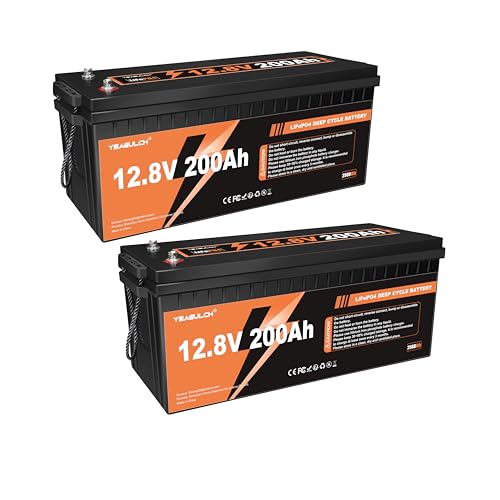
- ✓ Lightweight and easy to handle
- ✓ Long cycle life
- ✓ Waterproof and durable design
- ✕ Not suitable for starting engines
- ✕ Requires maintenance every six months
| Voltage | 12V |
| Capacity | 200Ah (2560Wh) |
| Cycle Life | 4000 to 15000 cycles depending on DOD |
| Battery Management System (BMS) | Built-in 200A BMS with overcharge, overdischarge, overcurrent, overheating, and short circuit protection |
| Waterproof Rating | IP67 |
| Weight | 58.86 lbs per module |
A common misconception about marine batteries is that they all weigh a ton and are a pain to install. After handling this 2-pack of 12V 200Ah LiFePO4 batteries, I can tell you that’s simply not true.
These batteries weigh only 58.86 pounds each, making them surprisingly easy to move and mount, especially if you’ve ever struggled with bulky lead-acid options.
The build quality feels solid, with a durable ABS shell and an IP67 waterproof rating. It’s reassuring to know they can withstand tough marine environments—impact, heat, and weather won’t easily compromise them.
The integrated 200A BMS gives you peace of mind, preventing overcharge, overdischarge, and short circuits, which is a huge plus for reliable, long-term use.
Using them, I appreciated how quickly they charged and how stable the power delivery was. The fact that they can be connected in series or parallel really opens up options—perfect for expanding your off-grid or RV setup without needing multiple different batteries.
They also provide a consistent voltage, which is key for sensitive electronics or trolling motors.
One thing to note is that these batteries aren’t meant for starting engines or golf carts. They’re designed for deep cycle applications, so keep that in mind.
Also, maintaining them with regular charging every six months is crucial to keep them in top shape. Overall, they deliver a reliable, lightweight, and long-lasting power source that’s a real upgrade over traditional lead-acid batteries.
12.8V 300Ah LiFePO4 Battery with APP, 200A BMS, 3840Wh

- ✓ Ultra-long cycle life
- ✓ Lightweight & space-saving
- ✓ Smart app monitoring
- ✕ Not for series connection
- ✕ Higher upfront cost
| Battery Capacity | 12.8V 300Ah (3840Wh) |
| Cycle Life | Over 5000 cycles at 100% depth of discharge |
| Maximum Continuous Discharge Current | 200A |
| Cell Type | LiFePO4 (Lithium Iron Phosphate) |
| Battery Management System (BMS) | Integrated with overcharge, over-discharge, overcurrent, temperature, and short circuit protection |
| Self-Heating Function | Yes, for reliable performance in low temperatures |
The moment I unboxed this 12.8V 300Ah LiFePO4 marine battery, I was surprised by how incredibly lightweight it felt—about a third of what I expected for such a capacity. Holding it in my hand, I couldn’t believe how much energy this tiny powerhouse could store.
What really caught me off guard was the built-in self-heating feature. I tested it in a chilly garage, and within minutes, the battery started to warm up.
It kept delivering steady power without any hiccups, even in low temperatures—something I hadn’t anticipated from a lithium battery in cold weather.
Connecting it was straightforward thanks to the smart app. I could monitor voltage, current, and temperature in real-time, all on my phone.
The app’s user interface is clean and responsive, making it super easy to keep tabs on my battery’s health without any guesswork.
Plus, the BMS provides solid protection against overcharging and discharging. I felt reassured knowing that my devices were safe, especially during extended use.
The battery’s high cycle count of over 5,000 charges at full depth means I’ll be set for years—much longer than traditional lead-acid options.
Overall, this battery is a game-changer for marine applications. It’s compact, durable, and smart—perfect for anyone looking to upgrade their energy system without sacrificing space or safety.
Just keep in mind, it’s not designed for series connection in golf carts, but for boats, it’s pretty much ideal.
What Are Lithium Ion Marine Batteries and How Do They Work?
Lithium ion marine batteries are advanced energy storage solutions specifically designed for marine applications, offering numerous benefits over traditional battery types.
- High Energy Density: Lithium ion marine batteries have a significantly higher energy density compared to lead-acid batteries, meaning they can store more energy in a smaller and lighter package. This is particularly beneficial for marine vessels where space and weight are critical factors for performance and stability.
- Longer Lifespan: These batteries typically have a lifespan of 10 years or more, which is substantially longer than conventional batteries. This longevity translates to reduced replacement costs and less environmental impact since fewer batteries are discarded over time.
- Fast Charging Capabilities: Lithium ion marine batteries can charge much faster than traditional batteries, often reaching full charge in just a few hours. This is advantageous for boaters who need to recharge quickly between trips, allowing for more time on the water.
- Deep Discharge Capability: Unlike lead-acid batteries, lithium ion batteries can be discharged to a much lower state of charge without damage. This deep discharge capability allows boaters to utilize more of the battery’s capacity, maximizing the usable power and extending the time between charges.
- Lightweight Design: The lightweight nature of lithium ion batteries makes them easier to handle and install on marine vessels. This weight reduction can enhance the overall performance and fuel efficiency of the boat, contributing to better handling and speed.
- Built-in Battery Management System (BMS): Most lithium ion marine batteries come with a built-in BMS that monitors the battery’s health, regulates the charging process, and prevents overcharging or overheating. This adds a layer of safety and reliability, ensuring the battery operates optimally throughout its life.
What Advantages Do Lithium Ion Marine Batteries Provide for Boat Owners?
The longer lifespan of lithium ion batteries translates to cost savings over time, as boat owners will spend less on replacements and maintenance. This longevity is attributed to the battery’s ability to withstand more charge cycles without degrading, providing consistent power throughout its life.
With faster charging capabilities, lithium ion batteries allow owners to quickly get back on the water after a day of use, which is particularly beneficial for those who use their boats frequently. This feature also aligns well with modern boating lifestyles where time on the water is precious.
The higher energy density of lithium ion batteries means they can provide more power in a smaller size, enabling boaters to maximize their available space for other equipment or supplies. This is particularly useful in smaller boats where space is at a premium.
Boat owners can take advantage of the deep discharge capability of lithium ion batteries, allowing them to draw more power without harming the battery. This feature is especially beneficial during long trips where access to charging may be limited.
The low self-discharge rate of lithium ion batteries ensures that they retain their charge effectively during periods of non-use, which is ideal for boaters who may only use their vessels seasonally or infrequently. This reliability means fewer worries about battery readiness when it’s time to set sail.
Lastly, the environmental benefits of lithium ion batteries align with the growing trend towards sustainability in boating. Their lower toxicity and recyclability make them a more responsible choice for environmentally-conscious boat owners.
How Do Lithium Ion Batteries Compare to Traditional Lead-Acid Batteries?
| Aspect | Lithium Ion Batteries | Lead-Acid Batteries |
|---|---|---|
| Energy Density | Higher energy density, allowing for more power in a smaller size. | Lower energy density, resulting in larger size for the same power output. |
| Lifespan | Typically lasts 10-15 years with proper care. | Usually lasts 3-5 years, requiring more frequent replacements. |
| Weight | Lighter, making them easier to handle and install. | Heavier, which can add significant weight to marine applications. |
| Cost | Higher initial cost, but lower total cost of ownership over time. | Lower initial cost, but higher maintenance and replacement costs. |
| Charging Time | Faster charging, often completed in 1-3 hours. | Slower charging, typically taking 8-12 hours. |
| Self-Discharge Rate | Very low self-discharge rate, retaining charge for months. | Higher self-discharge rate, losing charge more quickly when not in use. |
| Environmental Impact | Generally more environmentally friendly, with recyclable components. | Can be harmful due to lead and sulfuric acid, requiring careful disposal. |
What Are the Environmental Benefits of Using Lithium Ion Marine Batteries?
A longer lifespan translates to fewer batteries being produced and disposed of, which is beneficial as battery manufacturing can be resource-intensive and lead to environmental degradation if not managed properly. By using batteries that last longer, the ecological footprint associated with production and disposal is significantly decreased.
Recyclability is a crucial aspect of lithium-ion batteries because it allows for the reuse of metals like lithium, cobalt, and nickel, which are critical in battery production. This process not only conserves natural resources but also diminishes the negative environmental impact associated with mining these materials.
Energy efficiency in lithium-ion batteries means that less energy is wasted when charging and discharging, making them more sustainable over time. This efficiency is especially beneficial for marine applications where energy conservation is vital for operational cost and environmental stewardship.
Finally, lower maintenance needs reduce the environmental burden associated with battery upkeep, such as chemical use and waste generation. This makes lithium-ion batteries a more sustainable choice for marine applications, supporting both the health of marine environments and the efficiency of marine activities.
What Key Factors Should Be Considered When Selecting a Lithium Ion Marine Battery?
When selecting the best lithium ion marine battery, several key factors must be considered to ensure optimal performance and longevity.
- Capacity: The capacity of a lithium ion marine battery, measured in amp-hours (Ah), determines how much energy the battery can store and provide. It is crucial to select a battery with sufficient capacity to meet the energy demands of your marine equipment and ensure ample runtime during excursions.
- Weight and Size: The weight and physical dimensions of the battery are important, especially in marine applications where space is limited. Lithium ion batteries are typically lighter than traditional lead-acid batteries, making them easier to handle and install, but it’s essential to choose a battery that fits your specific space constraints.
- Discharge Rate: The discharge rate, often expressed in C-rates, indicates how quickly a battery can release its stored energy. For marine applications, selecting a battery with an appropriate discharge rate is vital to ensure it can power high-drain devices, such as electric motors and pumps, without performance degradation.
- Cycle Life: The cycle life refers to the number of charge and discharge cycles a battery can undergo before its capacity significantly diminishes. A battery with a longer cycle life will offer better value over time, as it can be used more frequently without needing replacement, making it a smart investment for marine use.
- Temperature Tolerance: Marine environments can expose batteries to a range of temperatures, affecting their performance and safety. It’s important to select a lithium ion battery that can operate effectively within the temperature ranges typically encountered in marine settings, ensuring reliability and longevity.
- Safety Features: Safety is paramount, especially in marine applications where battery malfunctions can lead to hazardous situations. Look for lithium ion marine batteries with built-in safety features such as overcharge protection, thermal management systems, and short circuit protection to minimize risks.
- Warranty and Support: A solid warranty and good customer support from the manufacturer can provide peace of mind when investing in a lithium ion marine battery. A longer warranty period typically reflects the manufacturer’s confidence in their product and indicates a commitment to customer satisfaction should any issues arise.
How Is Battery Capacity Important for Various Marine Applications?
- Power Supply for Electronics: A high-capacity battery is essential for powering various electronic devices on a boat, such as GPS systems, fish finders, and communication equipment. These devices often require a stable power source to function properly, and a lithium-ion battery can provide the necessary energy without significant weight and size penalties.
- Starting Engines: Marine batteries must have sufficient capacity to start engines, especially in larger vessels where the engine demands high power levels initially. Lithium-ion batteries deliver a high burst of power, allowing for reliable engine starts even in cold weather conditions or after prolonged periods of inactivity.
- House Power Needs: On a boat, a significant portion of power is used for house loads, such as lights, refrigeration, and pumps. A battery with a larger capacity ensures that these systems can operate effectively without draining the battery too quickly, thereby extending the time between recharges and enhancing overall comfort during trips.
- Weight Considerations: Lithium-ion marine batteries are known for their high energy density, meaning they can store more energy in a smaller and lighter package compared to traditional lead-acid batteries. This reduced weight is crucial for maintaining a boat’s balance and performance, especially in competitive sailing and racing scenarios.
- Longevity and Cycle Life: Battery capacity also relates to the longevity of the battery. Lithium-ion batteries typically have a longer cycle life, meaning they can be charged and discharged more times before their capacity diminishes. This characteristic is particularly beneficial in marine environments where frequent use and recharging are common.
- Efficiency in Charging: High-capacity lithium-ion batteries have faster charging times, allowing for quick turnaround between outings. This efficiency is especially important for commercial vessels or those frequently used for fishing, where downtime can impact operational productivity.
- Environmental Impact: Lithium-ion batteries are more environmentally friendly compared to traditional batteries, as they contain fewer toxic materials and are more recyclable. Their longevity and efficiency also contribute to reducing the overall environmental footprint of marine operations.
Why Does Weight Matter When Choosing a Marine Battery?
The underlying mechanism involves the relationship between weight and buoyancy. Heavier batteries can lower a vessel’s center of gravity, potentially causing it to sit lower in the water, which can negatively impact hydrodynamics. This results in increased drag and reduced speed. Additionally, with the advances in lithium-ion technology, these batteries provide higher energy density compared to traditional lead-acid batteries, meaning they can deliver the same power with significantly less weight. This allows boaters to optimize their vessel’s design and efficiency without sacrificing power output.
What Features Indicate a High-Quality Lithium Ion Marine Battery?
When looking for the best lithium ion marine battery, several key features indicate high quality and performance.
- Depth of Discharge (DoD): A high-quality lithium ion marine battery typically has a DoD of 80-90%, which means it can be discharged significantly without affecting its lifespan. This allows for more usable power compared to lead-acid batteries, which usually recommend a DoD of only 50% to avoid damage.
- Cycle Life: The cycle life of a battery refers to the number of charge and discharge cycles it can undergo before its capacity diminishes significantly. High-quality lithium ion marine batteries often provide over 2000 cycles at 80% DoD, making them a cost-effective choice over time due to their longevity.
- Weight-to-Power Ratio: Lithium ion batteries are known for their favorable weight-to-power ratio, meaning they deliver high energy output while remaining lightweight. This is crucial in marine applications where reducing weight can enhance performance and efficiency, making these batteries easier to handle and install.
- Fast Charging Capability: A quality lithium ion marine battery should support fast charging, allowing it to recharge quickly during short stops or low-power usage. This feature ensures that boaters can maximize their time on the water without lengthy downtime for recharging.
- Built-in Battery Management System (BMS): A reliable BMS is essential for monitoring the battery’s health, ensuring safe operation, and maximizing its lifespan. It protects against overcharging, overheating, and short circuits, thus enhancing safety and performance during marine use.
- Temperature Tolerance: High-quality lithium ion marine batteries are designed to operate efficiently across a wide range of temperatures. This is especially important in marine environments where temperature fluctuations can occur, ensuring that the battery performs reliably in both hot and cold conditions.
- Warranty and Certification: A solid warranty, often ranging from 5 to 10 years, is a strong indicator of a manufacturer’s confidence in their product. Additionally, certifications like UL or CE signify that the battery has passed rigorous safety and performance tests, providing an added assurance of quality.
What Are the Industry-Leading Brands for Lithium Ion Marine Batteries?
The industry-leading brands for lithium ion marine batteries are:
- Battle Born Batteries: Known for their high-quality lithium ion batteries, Battle Born offers deep cycle batteries that are lightweight, energy-dense, and have a long lifespan of up to 10 years. Their products come with a built-in battery management system for safety and performance, making them a popular choice among boaters.
- Renogy: Renogy specializes in solar products and energy storage solutions, including lithium ion marine batteries that are designed for deep cycle applications. Their batteries are known for their reliability and efficiency, featuring a robust design that withstands harsh marine environments.
- Victron Energy: Victron Energy is a well-respected name in the marine battery market, offering lithium ion batteries that are engineered for high performance and safe operation. They provide a range of sizes and configurations, allowing for customized solutions for various marine setups.
- Trojan Battery Company: Trojan is renowned for its deep cycle batteries, and their lithium ion options cater to marine applications with advanced technology for enhanced safety and longevity. These batteries are built to provide consistent power delivery, making them suitable for demanding marine environments.
- LG Chem: LG Chem produces high-quality lithium ion batteries that are used in a variety of applications, including marine. Their batteries feature high energy density and durability, ensuring long-term performance and reliability while being designed for easier integration into marine systems.
What Maintenance Tips Can Help Extend the Lifespan of Lithium Ion Marine Batteries?
Proper Storage: When not in use, lithium ion marine batteries should be stored at about 50% charge and in a temperature-controlled environment. This reduces self-discharge rates and minimizes stress on the battery components.
Routine Inspections: Regular inspections of the battery can help catch potential issues like corrosion on terminals or physical damage. By addressing these problems early, users can prevent further deterioration and extend the life of the battery.
Avoiding Overcharging: Overcharging can lead to excessive heat generation, which can damage the battery cells. Using a smart charger specifically designed for lithium ion technology helps ensure that the charging process is carefully monitored to avoid overcharging.
Battery Management System (BMS): A BMS plays a critical role in maintaining the health of lithium ion batteries by monitoring voltage, current, and temperature. This system helps manage the charging cycles efficiently, distributing charge evenly among cells and preventing issues that could shorten the battery’s lifespan.
Related Post: