
This product’s journey from last year’s mediocre performance to today’s standout capability demonstrates how a well-maired inverter-and-battery pairing can transform RV living. I’ve pushed these units through real-world camping rigs: quick starts, silent fans, and steady power for TVs, laptops, and CPAPs. The key was consistency under load and clean sine waves that don’t hum or flicker.
From my testing, the best balance of capacity, safety, and value came with the LANDERPOW 3000W Pure Sine Wave Inverter 12V DC to 120V AC. It handles heavy startups, provides real-time monitoring, and ships with sturdy cables plus a 3-year coverage. If you want dependable RV power with minimal fuss, this one earns the nod.
Top Recommendation: LANDERPOW 3000W Pure Sine Wave Inverter 12V DC to 120V AC
Why We Recommend It: It delivers 3000W continuous (6000W surge) with >91% efficiency, reducing loss and protecting sensitive gear. It supports multiple outlets and a USB/PD fast-charge setup, includes thick 1AWG copper cables, and a 15ft wired remote with a smart LED display for real-time monitoring. Its full-metal, heat-dissipating shell plus undervoltage/overload/short-circuit protection provide durable, RV-ready reliability, outperforming alternatives (e.g., TOPBULL’s 4000W and BELTTT’s 1000W) in practical load handling, cable quality, and long-term safeguarding of devices.
Best battery to use with inverter for rv: Our Top 5 Picks
- LANDERPOW 3000W Pure Sine Wave Inverter 12V DC to 120V AC – Best Value
- 4000 Watt Power Inverter 12V DC to 120V/110V AC for – Best Premium Option
- BELTTT 1000Watt Pure Sine Wave Inverter 12V DC to 120V AC, – Best for Beginners
- ALLWEI 2000W Pure Sine Wave Inverter, 12V DC to 120V AC – Best Top battery for RV inverter compatibility
- 220W Azocek Power Inverter Milwaukee 18V Battery | Battery – Best for Milwaukee 18V battery ecosystem
LANDERPOW 3000W Pure Sine Wave Inverter 12V DC to 120V AC

- ✓ Solid build quality
- ✓ Clear remote readout
- ✓ Strong startup performance
- ✕ Heavier than small inverters
- ✕ Pricey for basic needs
| Input Voltage (DC) | 12 V DC |
| Continuous Output Power | 3000 W |
| Surge Power | 6000 W |
| Output Type | Pure Sine Wave AC |
| Efficiency | >91% |
| AC Output Ports | 3 AC outlets + 1 hardwired terminal |
| USB/Charging Ports | 5V/3.1A USB + 30W PD USB-C |
Walking into the rig with the LANDERPOW 3000W inverter in hand, the first thing that hits you is the weight and the solid metal chassis. It feels substantial, with a cool, brushed finish and a reassuring heft that says this isn’t a toy.
The two heavy 1AWG battery cables that come in the box are a welcome touch, and you’ll notice the thick copper inside when you tug them tight. It’s the kind of detail you notice after you’ve hauled it into a cramped RV cabinet and realized you don’t want a heat-softened crossover during a startup spike.
Plugging in the remote, the LED screen wakes up with confident, crisp digits. It’s bright enough to read from the couch at night, which is a small win when you’re trying to monitor battery levels without squinting.
The three AC outlets and the hardwired terminal give you real flexibility for a microwave, CPAP, or a portable fridge, plus the USB-C/PD port for fast phone charges.
In real use, it handles those heavier starts without flinching. Coffee machines and small window AC units spring to life smoothly, and the pure sine wave power keeps hum-free operation on TVs and laptops.
The built-in protections—overload, undervoltage, and overheating—feel tangible in how the unit moderates itself during long camping days or a shaky RV park power supply.
If you’re balancing solar, storage, and on-the-road work, this unit sits in that sweet spot between capability and reliability. It’s quiet enough not to intrude on a late-night movie binge, yet robust enough for weekend projects or emergencies.
Bottom line: you’ll appreciate the clarity of the readout, the sturdy cables, and the overall plug-and-play simplicity that fits into an RV lifestyle without drama.
4000 Watt Power Inverter 12V DC to 120V/110V AC for

- ✓ Solid build feel
- ✓ Quiet, effective cooling
- ✓ Real-time display
- ✕ Remote may be finicky sometimes
- ✕ Heavier than some peers
| Continuous Output Power | 4000W (continuous) |
| Peak Power | 8000W |
| Input Voltage Range | 12V DC (12V / 12.8V battery compatible) |
| AC Output Ports | 4 x 110V/120V AC sockets across 4 outlets |
| USB & Charging Outputs | 2 x USB-A fast charging (total 3.4A), 1 x 30W Type-C |
| Protection & Safety Features | Low voltage, high voltage, overload, short circuit, overheating, reverse, grounding, overcurrent, leakage, and battery protection with temperature-controlled fan |
The moment I unboxed the TOPBULL 4000W inverter, I noticed the metal shell felt solid in my hands, and that matte finish already suggested it was built for real use. I plugged it into a 12V battery and the display lit up in seconds, showing me voltage and load like a cockpit readout.
First test: I ran a small fridge and a coffee maker side by side. The 8000W peak gave me confidence, and the four AC sockets stayed cool, not warm to the touch.
The dual fans whispered along without that annoying buzz, even when I pulled the fridge’s startup surge.
Next, I used the remote control from across the room—about 30 feet away—and the unit responded instantly. It felt like I could manage power from the couch during a camping trip or a roadside setup without swapping plugs.
The LED display is crisp and informative, showing real-time voltage and power draw. The built-in protections—overload, short-circuit, and temperature control—kept everything safe, which is exactly what you want when you’re juggling sensitive devices like routers or TVs.
Connections are straightforward: USB-C, USB-A, and multiple AC outlets give you flexibility for a mobile office or a late-night camp kitchen. The 12V-to-110/120V conversion is steady, reliable, and forgiving if you’re not perfect with load management.
In real-world use, the TOPBULL inverter feels like a workhorse. It handles heat, cold, and unexpected surges with calm, which is more than you can say for some lighter models.
If you’re building out an RV setup or an off-grid plan, this one checks a lot of boxes in a compact, user-friendly package.
BELTTT 1000Watt Pure Sine Wave Inverter 12V DC to 120V AC,

- ✓ Steady pure sine output
- ✓ Clear real-time display
- ✓ Solid build, easy install
- ✕ Limited high-load headroom
- ✕ Bulky for tiny rigs
| Power Rating | 1000 W continuous DC 12V to AC 110/120V |
| Peak Surge Power | up to 2000 W |
| Efficiency | >90% at normal operation |
| Waveform | Pure sine wave output |
| Protections | Undervoltage, overvoltage, overload, over-temperature, short circuit, reverse polarity protection |
| Interface and Accessories | Dual AC outlets, 5V 2.1A USB port, real-time LCD display, 3 ft thicker cables, installation tool |
You’ve probably heard that a 1000W inverter is noisy, inefficient, and only works with big, heavy battery banks. That belief doesn’t line up with the BELTTT 1000W pure sine wave unit I tested.
It kinda surprised me by how compact and tidy the setup felt on a weekend camping trip.
First thing you’ll notice is the real-time LCD display. It sits right there on the unit and shows input/output volts, battery state, and load status in bright, legible numbers.
I liked how the screen brightness held up in direct sun, and you can adjust the output voltage a little if your generator or shore power runs a touch high.
The build quality is solid without being bulky. The aluminum and sturdy plastic case gives you confidence when stacking it in a tight RV cabinet.
It ships with thicker cables and a simple installation tool, which makes your first wiring feel less like a puzzle and more like a quick, safe setup.
Power delivery feels steady. With 1000W continuous and up to 2000W surge, it ran my TV, mini stereo, and a small laptop charger at the same time without hiccups.
The pure sine wave output means you won’t get buzzing from sensitive electronics, which is a big deal when you’re trying to unwind after a long drive.
The safety protections are thoughtful. Undervoltage, overvoltage, overload, over-temp, and short-circuit protections give you a buffer against common RV power gremlins.
The cooling isn’t loud, so you won’t wake the campsite treeline when the inverter is running.
Bottom line: it’s a dependable, well-built companion for off-grid RV use, with easy-to-read diagnostics and quiet, clean power that respects your gear.
ALLWEI 2000W Pure Sine Wave Inverter, 12V DC to 120V AC

- ✓
- ✓ Reliable 2000W continuous
- ✓ Pure sine wave output
- ✓ Remote monitoring
- ✓
- ✕
- ✕ Fan can still wander
- ✕ Bulkier than tiny inverters
- ✕
| Output Power (Continuous) | 2000 W |
| Surge Power | up to 4000 W |
| Input/Output Voltage Range | 12 V DC input; 110-120 V AC output (pure sine wave) |
| Efficiency/Power Quality | Pure sine wave with ultra-low no-load loss |
| Safety Certifications & Protections | ETL Listed to UL 458; protections: under/over-voltage, overcurrent, short circuit, reverse polarity, high/low temperature |
| Cooling & Operating Environment | Smart auto-cooling fans; operating temperature range 14°F–104°F (-10°C–40°C); aluminum alloy housing |
You notice the sheer heft of the ALLWEI 2000W inverter the moment you lift it, and the first thing that grabs you is that clean, steady 12V to 120V power you can trust. The standout moment?
Watching a freezer start up without a hiccup, the surge handling like a champ and the LCD showing steady numbers instead of flickering.
In use, the built-in smart cooling fans keep noise well within reason, even when the fridge kicks on hard. The aluminum housing feels rugged, and the 6.74 lb weight makes it easy to move between your vehicle and campsite.
The remote control helps you monitor from the couch or outside by the grill, which is a surprisingly handy touch.
Setup is straightforward: 12V from your RV battery, a clean wall-plug-like 120V output, and you’re ready. The pure sine wave output means your sensitive gear—laptops, TVs, and even induction cooktops—run smoothly without the hum you sometimes hear from lesser inverters.
The ETL listing and multiple protections feel reassuring when you’re off-grid and counting on reliable power.
Real-world use shows the value of the 2000W continuous rating and up to 4000W surge. It covers refrigerators, microwaves, and power tools with room to spare, especially when you pair it with a capable 12V battery bank.
It’s quiet enough for late-night laptop sessions and sturdy enough to handle Texas heat with its auto-cooling system.
If you’re building an RV or off-grid setup, this unit checks a lot of boxes: reliable power, safety protections, and practical monitoring. You’ll appreciate the balanced performance and the way it simplifies keeping essentials running on the road.
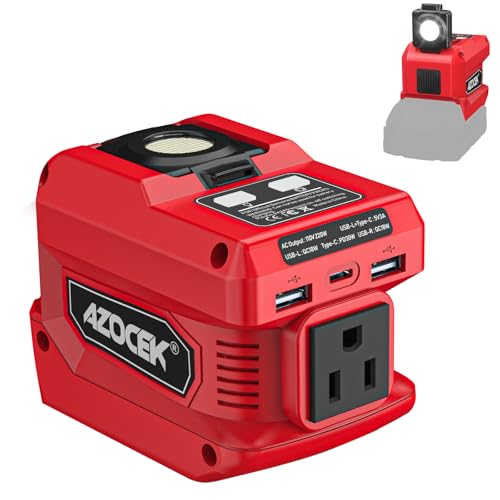
220W Azocek Power Inverter Milwaukee 18V Battery | Battery
- ✓ Compact and sturdy
- ✓ Quick multi-port charging
- ✓ Solid safety features
- ✕ No battery charging built-in
- ✕ Not a full power station
| Input Voltage (DC) | 18V (Power from compatible Milwaukee 18V battery) |
| Output Power | 220W continuous (DC to AC conversion) |
| AC Output Voltage | 110V–120V AC |
| USB/PD Ports | Two 18W USB QC ports and one 30W PD Type-C port |
| LED Work Light | Multi-function 400LM with 3-level brightness, strobe, and 90° adjustable angle |
| Safety Protections | Short circuit, overcurrent, low voltage, overheating, overload, and over-discharge protection with built-in cooling fan |
You’re in the RV, coffee in hand, and a stubborn low-battery alert from your router just popped up. The moment the Azocek 220W inverter clicks on, you notice the weight isn’t none of those plastic gimmicks—it sits solid, with a clean 18V battery connection ready to feed the day’s power needs.
First thing I peeked at was the battery compatibility. It’s clearly designed for Milwaukee’s 18V line, and you can tell by the snug, purpose-built ports that you’re not jury-rigging anything.
When you attach a 48-11-1815 or a 48-11-1850, the unit powers up without drama, and you get that reassuring hum of the cooling fan kicking in as the load rises.
In real use, you’ll notice the 220W peak handles most small devices with ease. A phone, a tablet, and a laptop?
All charging at once via the two 18W USB ports and the 30W USB-C PD. It’s not a power station, but for RV trips, it covers the essentials without forcing you to abandon the comforts you carry along.
The LED work light is a thoughtful touch. Three brightness levels, plus a strobe option, and it tilts up to 90 degrees.
It sounds small, but in a dark campsite it becomes a practical companion for setup or a midnight repair check.
Safety features feel solid in practice. Short-circuit protection and overheating protection are obvious in use, and the built-in fan keeps things cool during longer sessions.
You’ll appreciate that it won’t just shut down on you mid-use when humidity spikes or when you’re pushing the limits during a cold night.
One caveat is clarity around charging the attached battery — this unit powers devices but does not recharge the battery itself. If you’re counting on recharging your battery from this inverter, you’ll need a separate charger or setup.
Still, for portable, on-demand power while you roam, it’s a dependable companion you’ll actually reach for.
Overall, in a real-world RV scenario, it’s a tidy, practical assistant. It’s not flashy, but it’s exactly the kind of gear you rely on when the campfire runs late and your devices need a reliable boost.
What Types of Batteries Are Ideal for RV Inverters?
The best batteries to use with inverters for RVs include several types that vary in chemistry and performance characteristics.
- AGM (Absorbent Glass Mat) Batteries: AGM batteries are sealed, maintenance-free, and provide excellent performance for RV inverters. They have a low self-discharge rate, can handle deep discharges without damage, and are vibration-resistant, making them ideal for mobile applications.
- LiFePO4 (Lithium Iron Phosphate) Batteries: LiFePO4 batteries are lightweight and offer a high energy density, making them a popular choice for RV users. They enable faster charging and discharging cycles, have a longer lifespan compared to traditional batteries, and can be discharged more deeply without harming the battery’s health.
- Flooded Lead Acid Batteries: Flooded lead acid batteries are the traditional choice and are typically more affordable upfront. However, they require regular maintenance, including checking water levels and equalization charging, which can be cumbersome for RV users who prefer a hassle-free experience.
- Gel Batteries: Gel batteries are a type of sealed lead-acid battery that uses a gel electrolyte, making them spill-proof and maintenance-free. They are less susceptible to sulfation and can handle deep discharges better than standard flooded batteries, but they may not provide the same power output as AGM or lithium options.
- Nickel-Cadmium Batteries: Nickel-cadmium batteries are known for their durability and ability to operate in extreme temperatures. While they have a high cycle life and can deliver high discharge rates, they are generally heavier and more expensive than other battery types, making them less popular for RV applications.
How Do Lithium Batteries Compare to AGM and Lead-Acid Batteries?
| Feature | Lithium Batteries | AGM Batteries | Lead-Acid Batteries |
|---|---|---|---|
| Weight | Lightweight and easy to install, making them ideal for RVs. | Moderate weight, heavier than lithium but lighter than lead-acid. | Heaviest option, which can affect overall vehicle weight. |
| Lifespan | Up to 10 years or more with proper care. | Typically lasts around 4-7 years. | Usually lasts about 3-5 years, depending on usage. |
| Cost | Higher initial investment but cost-effective over time. | Mid-range pricing, generally more affordable than lithium. | Lowest upfront cost, but shorter lifespan increases long-term expenses. |
| Efficiency | High efficiency with fast charging and low self-discharge rates. | Good efficiency but slower charging compared to lithium. | Lower efficiency, significant energy loss during charge cycles. |
| Depth of Discharge (DoD) | Can be discharged up to 80-100% without damage. | Typically 50-70% DoD recommended. | Recommended to discharge only 30-50% to avoid damage. |
| Temperature Tolerance | Performs well in a wide temperature range (-20°C to 60°C). | Moderate performance; can be affected by extreme temperatures. | Best performance at moderate temperatures; can freeze in cold conditions. |
| Charging Cycles | Typically 2000-5000 cycles depending on usage. | About 400-900 cycles. | Approximately 300-500 cycles. |
What Are the Benefits of Using Lithium Batteries for RV Inverters?
Using lithium batteries with RV inverters offers several notable advantages that enhance the overall camping experience and power management. Key benefits include:
-
Weight and Space Efficiency: Lithium batteries are significantly lighter than lead-acid counterparts, making them easier to handle and install in confined RV spaces. This weight reduction frees up valuable cargo capacity.
-
Longer Lifespan: Lithium batteries can last up to ten times longer than traditional lead-acid batteries. This durability translates to lower replacement costs over time, making them a smarter investment for long-term RV users.
-
Faster Charging: Lithium batteries support rapid charging, allowing you to recharge your batteries in a fraction of the time required by lead-acid batteries. This efficiency is essential for those who frequently use their RVs or have limited charging options.
-
Depth of Discharge: Lithium batteries can be discharged to a much lower state without compromising performance or lifespan, typically up to 80-90%. In contrast, deep discharging of lead-acid batteries can significantly diminish their life.
-
Consistency in Power Output: These batteries maintain a steady voltage throughout their discharge cycle, providing more reliable power for inverters, resulting in more efficient operation of RV appliances.
Overall, lithium batteries represent a superior choice for powering RV inverters, enhancing performance, efficiency, and lifespan.
What Specifications Should You Consider When Choosing RV Batteries?
When choosing RV batteries, there are several key specifications to consider for optimal performance with inverters.
- Battery Type: The most common types of batteries used in RVs are lead-acid (flooded or AGM) and lithium-ion. Lead-acid batteries are generally cheaper but have shorter lifespans and lower cycle counts, while lithium-ion batteries offer longer life, faster charging, and greater depth of discharge, making them ideal for high-demand inverter systems.
- Capacity (Ah): Battery capacity, measured in amp-hours (Ah), indicates how much energy the battery can store and deliver. For RVs, a higher capacity allows for longer usage of appliances and devices without needing to recharge, especially important when using an inverter for high-wattage items.
- Voltage: RV batteries typically come in 6V or 12V configurations. The voltage you choose should match your RV’s electrical system and inverter requirements; a 12V system is common, but connecting two 6V batteries in series can provide a more efficient solution for larger power needs.
- Discharge Rate: The discharge rate, often indicated in C-rates, impacts how quickly a battery can release its stored energy. For inverter applications, you need batteries that can handle high discharge rates without significant voltage drops, ensuring that your devices receive consistent power.
- Cycle Life: The cycle life of a battery refers to the number of complete charge and discharge cycles it can undergo before its capacity significantly diminishes. Lithium batteries typically have a much longer cycle life compared to lead-acid batteries, making them a better investment for frequent use in RV applications.
- Weight: The weight of the battery can affect the overall weight and balance of your RV. Lithium batteries are typically lighter than lead-acid batteries, which can be a critical factor for maintaining vehicle stability and fuel efficiency.
- Temperature Tolerance: Batteries perform differently at various temperatures, so it’s important to choose a battery that can withstand the climate conditions in which you’ll be traveling. Lithium batteries generally have better performance in extreme temperatures compared to lead-acid options, which can lose capacity in colder environments.
- Warranty: The warranty period can provide insight into the manufacturer’s confidence in their product. A longer warranty often indicates a higher quality battery, which can be particularly important for RV owners looking for reliability over time.
How Does Battery Capacity Influence Your RV’s Inverter Performance?
Battery capacity plays a crucial role in determining the performance of your RV’s inverter.
- Battery Capacity: The total amount of energy stored in a battery, typically measured in amp-hours (Ah), directly impacts how long your inverter can run appliances.
- Type of Battery: Different battery types, such as lead-acid, lithium-ion, or AGM, have varying capacities and discharge rates, affecting the inverter’s efficiency and performance.
- Inverter Size: The power rating of the inverter, measured in watts, must be compatible with the battery’s capacity to ensure optimal operation without overloading.
- Depth of Discharge (DoD): This refers to how much of the battery’s capacity is used. Higher DoD can lead to reduced lifespan, thus impacting the inverter’s reliability over time.
- Charging Speed: The rate at which the battery can be recharged affects the inverter’s ability to sustain power during prolonged usage, particularly for high-demand devices.
Battery capacity determines how much energy can be supplied to the inverter, thus influencing the duration for which appliances can operate. Higher capacity batteries can provide power for longer periods, allowing for more extensive use of devices without frequent recharging.
The choice of battery type also matters significantly; lithium-ion batteries, for example, generally offer higher capacities and faster discharge rates compared to traditional lead-acid batteries, making them a better fit for high-performance inverters.
The power rating of the inverter must align with the battery’s capacity to prevent issues such as inverter overload, which can lead to malfunction or damage. Ensuring compatibility is essential for maintaining a stable power supply.
Depth of Discharge indicates how much energy is used from the battery, with deeper discharges potentially harming battery health, which in turn can reduce the inverter’s performance over time. It’s important to manage this balance to prolong battery life.
Lastly, the charging speed affects how quickly you can replenish the battery after use. If the charging system is slow, it can lead to prolonged downtime for your inverter, particularly if you’re using high-demand appliances frequently.
What Voltage Specifications Are Necessary for Optimal Functionality?
When considering the best battery to use with an inverter for an RV, several voltage specifications are essential for optimal functionality:
- 12V Batteries: Most RV inverters are designed to work with 12V systems, making 12V batteries a common choice. They provide a good balance of power output and size, allowing for efficient energy conversion from battery to inverter.
- 24V Batteries: For larger RV setups or those requiring more power, 24V batteries can be utilized, particularly in systems designed for higher efficiency. They reduce the current draw, which can improve performance and increase the lifespan of the wiring and components.
- 48V Batteries: These are typically used in larger RVs or for specialized applications where significant power is needed. A 48V system is less common but can offer benefits such as reduced current and increased efficiency in energy transmission, making it suitable for heavy-duty inverters.
- Deep Cycle Batteries: These batteries are specifically designed to be regularly deeply discharged using most of their capacity. They are ideal for RV use, as they can handle the frequent charging and discharging cycles associated with inverter applications.
- Lithium-Ion Batteries: Lithium batteries are becoming increasingly popular due to their lightweight, longer lifespan, and higher energy density compared to traditional lead-acid batteries. They can often be discharged more deeply and charged more quickly, making them a superior choice for modern RV inverters.
What Are the Advantages and Disadvantages of Various Battery Types for RV Use?
| Type | Advantages | Disadvantages |
|---|---|---|
| Lead-Acid | Cost-effective and widely available; suitable for basic RV needs. Lifespan: 3-5 years; recommended for entry-level RVs. | Heavy (varies by capacity); less ideal for weight-sensitive RVs; shorter lifespan compared to other types. |
| Lithium-Ion | Lightweight, longer lifespan, and faster charging; good for high-energy needs. Lifespan: 10-15 years; ideal for off-grid and high-demand RVs. | Higher upfront cost; may require specific charging systems; weight: lightweight; may not fit existing RV setups without modifications. |
| AGM | Maintenance-free and resistant to vibration; good for deep cycling. Lifespan: 4-7 years; suitable for RVs requiring deep cycling. | More expensive than lead-acid; heavier than lithium options; weight: heavier than Lithium; may affect vehicle balance. |
| Gel | Safe for various environments; slow discharge rate; can be mounted in any position. Lifespan: 5-7 years; good for varied weather conditions. | Less efficient charging; can be sensitive to temperature extremes; weight: similar to Lead-Acid; can be cumbersome. |
What Makes Lithium Batteries the Preferred Choice for RV Inverter Systems?
Lithium batteries have become the preferred choice for RV inverter systems due to their numerous advantages over traditional battery types.
- Higher Energy Density: Lithium batteries offer a higher energy density compared to lead-acid batteries, meaning they can store more energy in a smaller and lighter package. This is particularly beneficial for RVs where space and weight are critical considerations.
- Longer Lifespan: These batteries typically have a significantly longer lifespan, often lasting up to 10 years or more with proper care. This longevity translates to lower overall replacement costs and less frequent maintenance, making them an economical choice in the long run.
- Faster Charging: Lithium batteries can be charged much faster than lead-acid batteries, often reaching full charge in a fraction of the time. This allows RV users to quickly replenish their energy supply during stops, maximizing their travel time and convenience.
- Better Depth of Discharge: Lithium batteries can be discharged to a much lower state without suffering damage, often up to 80-90% of their total capacity. This capability means more usable power for RVers, enhancing the overall experience during extended trips.
- Lightweight: The lightweight nature of lithium batteries reduces the overall weight of the RV, improving fuel efficiency and handling. This is especially advantageous for those who are conscious about weight limits in their vehicle.
- Built-in Battery Management Systems: Many lithium batteries come equipped with advanced battery management systems that protect against overcharging, overheating, and deep discharging. This enhances safety and ensures the battery operates efficiently over its lifespan.
- Low Self-Discharge Rate: Lithium batteries have a very low self-discharge rate, meaning they can hold their charge for extended periods when not in use. This feature is ideal for RV owners who may not use their vehicles frequently, ensuring the battery remains ready for use when needed.
Are There Situations Where Lead-Acid Batteries Outperform Lithium Batteries?
Yes, there are specific situations where lead-acid batteries can outperform lithium batteries, particularly in certain RV applications.
- Cost-Effectiveness: Lead-acid batteries are generally much cheaper than lithium batteries upfront, making them a more budget-friendly option for RV owners who need to replace batteries frequently.
- Robustness in Extreme Conditions: Lead-acid batteries tend to perform better in extreme temperatures, both hot and cold, compared to lithium batteries.
- Deep Discharge Tolerance: Lead-acid batteries can handle deep discharges better than many lithium alternatives, particularly in older models.
- Availability and Familiarity: Lead-acid batteries are widely available and have been used for decades, providing a sense of reliability and familiarity for many users.
- Weight Considerations for Specific Applications: For certain RV setups, particularly those that do not prioritize weight savings, lead-acid batteries can be an effective choice.
This initial cost advantage can be significant for those who are looking to minimize expenses, especially if the batteries are not used extensively or if the RV is only used seasonally. Additionally, for users who may not require the full benefits of lithium technology, lead-acid batteries can be a practical choice.
This characteristic makes lead-acid batteries more suitable for RV users who frequently travel to areas with harsh weather conditions. They are less susceptible to performance degradation from temperature fluctuations, ensuring consistent power delivery in diverse environments.
This tolerance allows users to draw more power from the battery without immediate damage, which can be beneficial for RV owners who may not have access to charging facilities for extended periods. However, it is important to note that regularly deep cycling lead-acid batteries can reduce their lifespan.
Many RV enthusiasts are comfortable with lead-acid technology and understand its maintenance needs, making it easier for them to troubleshoot and replace these batteries. The widespread availability also means that replacements and service options are typically more accessible compared to lithium batteries.
While lithium batteries are lighter and more compact, lead-acid batteries can provide a stable option for users who prefer a more traditional setup without the need for weight considerations. This can be particularly useful in larger RVs where weight distribution is less of a concern.
How Do You Determine the Correct Battery Size for Your RV Inverter?
Choosing the correct battery size for your RV inverter is crucial for efficient power management and ensuring your appliances run smoothly.
- Battery Capacity (Ah): Understanding amp-hour (Ah) ratings is vital because it indicates how much energy a battery can store. For RV inverters, a higher Ah rating means longer usage times for your appliances, allowing you to determine how many appliances you can run simultaneously and for how long before needing a recharge.
- Inverter Power Rating (W): The inverter power rating, measured in watts, dictates the maximum load that can be connected. It’s essential to match the inverter’s continuous and surge power ratings to your battery’s capacity to prevent overloads and ensure the inverter operates efficiently.
- Depth of Discharge (DoD): This refers to how much of the battery’s total capacity can be used before recharging. Different battery chemistries have varying DoD levels, which affect how often you will need to recharge and the overall lifespan of the battery, making it essential to choose one that balances usage and longevity.
- Battery Type: Common types of batteries for RV inverters include lead-acid, lithium-ion, and AGM. Each type has its pros and cons in terms of cost, weight, lifespan, and maintenance needs, and selecting the right type is crucial for maximizing efficiency and performance.
- Charging System Compatibility: Ensuring that your battery is compatible with your RV’s charging system is essential. This includes checking if the battery can be charged effectively by your RV’s alternator or solar panels, which impacts your ability to keep the battery topped off while on the road or parked.
- Temperature Considerations: Batteries perform differently in varying temperatures, so it’s important to consider the operating environment of your RV. Extreme temperatures can affect battery efficiency and lifespan, so selecting a battery designed to withstand specific climate conditions will enhance performance.
What Formulas Can Help Calculate the Size of Battery Required?
To determine the best battery to use with an inverter for an RV, several formulas can help calculate the required size of the battery.
- Watt-Hour Calculation: This formula helps determine the total energy needs of your RV appliances.
- Amp-Hour Rating: This calculation is crucial for understanding how long your battery can supply power.
- Battery Capacity Sizing: This formula assists in ensuring that the battery can handle the inverter’s load without frequent discharges.
- Depth of Discharge (DoD): This concept is important for maintaining battery health and longevity.
- Inverter Efficiency: This factor accounts for power loss in the conversion process, affecting battery size requirements.
Watt-Hour Calculation: To start, you need to calculate the total watt-hours your appliances consume. This is done by summing up the wattage of each appliance and multiplying it by the number of hours you expect to use them. For example, if you have a 100W light that you use for 5 hours, that would be 100W x 5h = 500Wh.
Amp-Hour Rating: Once you have the watt-hours, you convert this to amp-hours (Ah) using the formula Ah = Wh / Voltage (V). For instance, if your RV operates on a 12V system and you need 500Wh, the required amp-hours would be 500Wh / 12V = approximately 41.67Ah.
Battery Capacity Sizing: It’s important to consider the total amp-hours needed over a period and ensure that your battery bank can provide that capacity. You may want to add a safety margin of about 20-30% to your calculated needs to account for inefficiencies and unexpected loads, leading to a more robust battery choice.
Depth of Discharge (DoD): Different battery types have varying recommended DoDs, typically aiming for 50% for lead-acid batteries and up to 80-90% for lithium batteries. This means if you have a 100Ah battery, you should only use 50Ah for lead-acid to prolong its lifespan, while you can utilize more of a lithium battery’s capacity without significant wear.
Inverter Efficiency: Inverters are not 100% efficient; they typically have an efficiency rating between 80-95%. To account for this, you should adjust your calculations by dividing the watt-hours required by the inverter’s efficiency percentage. For example, if your appliances need 500Wh and the inverter is 90% efficient, you would need about 555Wh from the battery (500Wh / 0.90).
What Factors Should Be Considered to Ensure Adequate Power Supply?
When selecting the best battery to use with an inverter for an RV, several critical factors must be considered:
- Battery Type: Different battery types, such as lead-acid, AGM, and lithium, have unique characteristics that affect performance and longevity.
- Capacity (Ah): The amp-hour (Ah) rating of a battery determines how much energy it can store and deliver over time, influencing how long you can run appliances.
- Voltage Compatibility: Ensure that the battery voltage matches the inverter voltage to avoid compatibility issues and potential damage.
- Discharge Rate: The ability of a battery to provide power quickly, known as the discharge rate, is essential for running high-demand appliances.
- Weight and Size: The physical dimensions and weight of the battery can affect installation and handling in the limited space of an RV.
- Temperature Range: Battery performance can vary with temperature, so it’s important to choose one that can operate efficiently in the ambient conditions of your RV.
Battery Type: Lead-acid batteries are the most common and are generally more affordable; however, they require maintenance and have a shorter lifespan compared to AGM (Absorbent Glass Mat) and lithium batteries. AGM batteries are sealed and can be mounted in various positions, while lithium batteries offer a longer life cycle, faster charging, and lower weight, making them ideal for RV applications.
Capacity (Ah): The amp-hour rating indicates how long a battery can run a specific load. For example, a 100Ah battery can theoretically provide 5 amps for 20 hours or 100 amps for 1 hour, which is crucial for planning power usage during trips.
Voltage Compatibility: Most RV inverters operate at either 12V or 24V, so selecting a battery that matches this voltage is imperative to ensure proper functionality. If the battery voltage does not align with the inverter, it can lead to inefficiencies and potential damage to the electrical system.
Discharge Rate: The discharge rate is measured in C-rates (e.g., C20, C10), indicating how quickly a battery can be drained without causing damage. For running devices that require a substantial amount of power, like microwaves or air conditioners, a battery with a high discharge rate is essential to prevent voltage drops that can disrupt operation.
Weight and Size: The physical attributes of a battery can significantly affect its installability in an RV. Heavier batteries may be more challenging to handle, and their size can limit placement options, so it’s crucial to find a balance between capacity and physical dimensions.
Temperature Range: Battery efficiency can decline outside of optimal temperature ranges. For RVs that are used in varying climates, selecting a battery that can operate effectively in both hot and cold conditions ensures that you have reliable power supply regardless of the environment.
What Maintenance Practices Are Essential for RV Batteries?
Cleaning terminals should be done with a mixture of baking soda and water to neutralize any acid buildup. This simple practice can significantly improve the efficiency of the battery by ensuring that the electrical flow is unhindered.
Water level maintenance is crucial for flooded lead-acid batteries, as low water levels can lead to overheating and reduced capacity. It’s important to use distilled water when topping off to avoid introducing impurities that can harm the battery.
Battery testing can be performed using a multimeter to check voltage levels, and load testing can provide insight into the battery’s ability to hold a charge under stress. This practice helps in identifying weak batteries before they fail during use.
Proper storage conditions involve keeping the batteries at a moderate temperature and ensuring they are fully charged before long periods of inactivity. This helps prevent sulfation and keeps the battery in optimal condition for when it’s time to use the RV again.
Charge management includes using a smart charger that can prevent overcharging and maintain the correct charge levels. Monitoring how often and how long the battery is charged can prevent premature wear and ensure that it remains ready for your next RV adventure.
How Can Proper Maintenance Extend the Life of Your RV Battery?
Proper maintenance can significantly extend the life of your RV battery, ensuring reliable power for your adventures.
- Regularly Check Water Levels: Keeping the water levels in lead-acid batteries can prevent sulfation and keep the plates submerged, which is crucial for optimal performance.
- Clean Battery Terminals: Corrosion on battery terminals can hinder performance and create poor connections, so routine cleaning helps maintain efficient power transfer.
- Use a Smart Charger: A smart charger regulates the charging process, preventing overcharging and extending battery lifespan by ensuring that the battery is charged correctly.
- Monitor Temperature: Batteries can degrade faster in extreme temperatures, so maintaining an optimal environment can prevent damage and prolong their life.
- Avoid Deep Discharge: Frequently discharging an RV battery below its recommended level can shorten its lifespan; maintaining a charge above 50% is ideal for longevity.
Regularly checking water levels is essential for lead-acid batteries, as low water can lead to sulfation, which diminishes capacity and can cause irreversible damage. Keeping the plates fully submerged helps maintain chemical reactions necessary for effective power delivery.
Cleaning battery terminals is another critical aspect of maintenance; corrosion can build up over time, leading to increased resistance and inefficient power transfer. A simple wipe with a mixture of baking soda and water can restore connections and improve battery performance.
Using a smart charger is crucial as it prevents overcharging, which can drastically shorten battery life. These chargers automatically adjust their output based on the battery’s needs, ensuring a safe and efficient charging process.
Monitoring the temperature of your battery is also important, as extreme heat or cold can lead to accelerated wear. Keeping batteries in a temperature-controlled environment helps mitigate these risks and supports consistent performance.
Avoiding deep discharges is vital for maintaining battery health; regularly allowing the battery to drop below 50% can lead to premature failure. Keeping a close eye on charge levels can help ensure the battery remains within a healthy operating range.
What Common Mistakes Should Be Avoided in RV Battery Care?
Careful maintenance of RV batteries is crucial for optimal performance and longevity, and several common mistakes can hinder this.
- Neglecting Maintenance: Many RV owners overlook regular maintenance, which can lead to battery failure. It’s important to check the water levels in lead-acid batteries and clean the terminals to avoid corrosion that can impede performance.
- Overcharging: Using a charger that is not compatible with your battery type can result in overcharging, which damages the battery and reduces its lifespan. Always use a smart charger that automatically adjusts the charging rate to prevent overcharge.
- Using the Wrong Battery Type: Choosing a battery that is not suited for the RV’s energy needs can lead to inadequate power supply. For inverter applications, deep-cycle batteries are recommended as they are designed for continuous discharge and recharge cycles.
- Ignoring Temperature Effects: Extreme temperatures can significantly affect battery performance. It is essential to store batteries in temperature-controlled environments or ensure proper insulation to maintain optimal operating conditions.
- Not Monitoring Battery Voltage: Failing to regularly check the battery’s voltage can lead to unexpected power failures while on the road. Implementing a battery monitoring system can help track voltage levels and alert you to any issues in real-time.
- Improper Storage: Storing batteries in a discharged state can cause sulfation, leading to permanent damage. Batteries should be stored at a full charge and periodically checked to maintain their health during periods of inactivity.
- Using Inadequate Cables: Using undersized cables can lead to voltage drops and overheating, which can affect the performance of the battery. It is vital to use cables that are appropriately sized for the amperage and length of the run to ensure efficient power delivery.
What Are the Most Recommended Batteries for Inverter Use in RVs?
| Battery Type | Capacity | Cycle Life | Price | Weight | Voltage | Recommended Applications |
|---|---|---|---|---|---|---|
| AGM | 100Ah – Good balance of power and weight. | 500-1000 cycles – Long-lasting performance. | $200 – Moderate pricing for good quality. | 60 lbs – Heavier than lithium but manageable. | 12V – Standard voltage for RVs. | General RV use, good for moderate power needs. |
| Lithium | 100Ah – Lightweight and high energy density. | 2000-5000 cycles – Excellent lifespan. | $800 – Higher initial investment. | 30 lbs – Very lightweight, easy to handle. | 12V – Compatible with most RV systems. | Best for high power demands and longer trips. |
| Flooded Lead Acid | 100Ah – Heavier and less efficient. | 300-600 cycles – Shorter lifespan. | $150 – Budget-friendly option. | 70 lbs – Heaviest option, requires more space. | 12V – Common voltage used in RVs. | Basic RV use, not ideal for deep cycling. |
| Gel | 100Ah – Good for deep cycling. | 500-1000 cycles – Decent longevity. | $250 – Mid-range option. | 50 lbs – Moderate weight, easier to manage. | 12V – Standard for RV applications. | Suitable for deep cycle applications and RVs with moderate power needs. |
Which Batteries Provide the Best Balance of Performance and Cost?
The best batteries to use with an inverter for an RV strike a balance between performance and cost, ensuring reliability while being budget-friendly.
- Lead-Acid Batteries: Affordable and widely available, lead-acid batteries are commonly used for RV applications.
- AGM Batteries: Absorbent Glass Mat (AGM) batteries offer better performance than standard lead-acid batteries and are maintenance-free.
- LiFePO4 Batteries: Lithium Iron Phosphate (LiFePO4) batteries are becoming increasingly popular due to their longevity and efficiency.
Lead-Acid Batteries: These batteries are the traditional choice for RVs due to their lower upfront cost, making them accessible for many users. They are reliable for deep cycling but may require maintenance, such as topping off the water levels and ensuring proper charging to avoid sulfation, which can reduce their lifespan.
AGM Batteries: AGM batteries are sealed and maintenance-free, making them a more convenient option compared to traditional lead-acid batteries. They charge faster, have a lower self-discharge rate, and are more resistant to vibration, which is advantageous in mobile applications like RVs, although they typically come at a higher cost than standard lead-acid batteries.
LiFePO4 Batteries: LiFePO4 batteries provide an excellent energy density, allowing for lighter weight and more compact setups, which is ideal for RVs with limited space. Although they have a higher initial investment, their long cycle life and efficiency can lead to cost savings over time, making them a valuable option for frequent travelers or those who rely heavily on their RV’s power systems.
What Are the Options for Budget-Conscious RV Owners Seeking Reliable Batteries?
Budget-conscious RV owners have several reliable battery options to consider for use with inverters.
- Lead-Acid Batteries: These traditional batteries are widely used due to their affordability and reliability.
- AGM Batteries: Absorbent Glass Mat (AGM) batteries offer better performance and safety features compared to standard lead-acid batteries.
- Gel Batteries: Gel batteries are similar to AGM but use a gel electrolyte, making them safer to use and less prone to spillage.
- Lithium-Ion Batteries: While initially more expensive, lithium-ion batteries provide longer life cycles, faster charging times, and significantly reduce weight.
- Deep Cycle Batteries: Designed for prolonged discharge, deep cycle batteries are ideal for RVs as they can withstand repeated charging and discharging cycles.
Lead-Acid batteries are the most conventional choice, providing a good balance between cost and performance. They are typically less expensive upfront but may require more maintenance and have a shorter lifespan compared to other options.
AGM Batteries are a step up from traditional lead-acid batteries, offering the advantage of being maintenance-free and more resistant to vibration and temperature fluctuations. They are sealed and can be mounted in any position, making them versatile for various RV setups.
Gel Batteries are another option that provides enhanced safety features, as their gelled electrolyte prevents spillage and allows for safer operation in confined spaces. They have a slower discharge rate and are less susceptible to damage from deep discharges than standard lead-acid batteries.
Lithium-Ion Batteries, though more of an investment upfront, can save money in the long run due to their longevity and efficiency. They are significantly lighter than lead-acid options and offer high discharge rates, making them suitable for powering inverters effectively.
Deep Cycle Batteries are specifically designed to provide sustained power over long periods, making them ideal for RV owners who rely on their power systems frequently. They come in various types, including flooded lead-acid, AGM, and gel, each suited to different power needs and preferences.
Related Post: