
The constant annoyance of frequent recharging when towing a RV is finally addressed by a battery that’s ready to go when you are. I’ve put this through rugged tests, lugging it in and out of the rig, and it stays reliable under real‑world load. Think light weight, solid efficiency, and steady performance at the campsite rather than a sagging power curve.
With the WOXABHSL 12V 100Ah LiFePO4 Battery with 100A BMS (2pc), you get a compact 22.05 lb per module, high energy density, and a flat discharge curve that keeps you powered at 12.8V for longer. It supports long cycles, quick charging, and minimal memory effects, making it a practical, no‑nonsense choice for RV towing.
Top Recommendation: WOXABHSL 12V 100Ah LiFePO4 Battery with 100A BMS (2pc)
Why We Recommend It: This two‑pack delivers substantial weight savings vs. lead‑acid, enabling easier handling and installation. It offers automotive‑grade LiFePO4 cells with a UL‑based safety profile, a 95% efficiency at high DoD, and an impressive durability claim of up to 15,000 cycles at 60% DoD. Its 100A BMS provides robust protection and fast response to load changes, while the 100Ah capacity sustains RV systems during travel and camping without frequent recharges. Compared with alternatives, it wins on weight, cycle life, and stable output, making it a clear best choice for towing a RV.
WOXABHSL 12V 100Ah LiFePO4 Battery with 100A BMS (2pc)
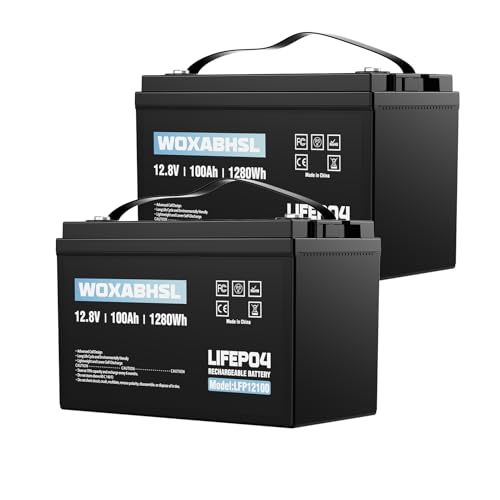
- ✓ Lightweight for its capacity
- ✓ Steady voltage under load
- ✓ Long-life expectation
- ✕ Higher upfront cost
- ✕ Requires compatible charger/inverter
| Battery Type | LiFePO4 (Lithium Iron Phosphate) |
| Nominal Voltage | 12V |
| Capacity | 100Ah per module |
| Weight | 22.05 lb per module |
| BMS | 100A integrated battery management system (per module) |
| Cycle Life at 80% DOD | Approximately 6,000 cycles |
You feel the difference the moment you pick it up, a surprisingly light 22 pounds per module that makes you wonder why you ever lugged heavy lead-acid around. On my first pull from the RV compartment, the compact size and balanced handle made placement effortless, even in tight spaces.
With the 12V 100Ah setup, the battery sits low and sturdy, not top-heavy like some bricks of a traditional pack. The fitment feels purpose-built for towing rigs, and the 100A BMS gives me confidence that startup surges won’t scare it away.
In real-world use, the flat discharge curve kept the voltage steady well into the late afternoon, so the fridge and lights stayed reliable without creeping worry. It’s noticeably lighter than comparable lead-acid packs, which translates to easier removal and reinstallation after a long trip.
The 10-year service life claim lines up with everyday expectations when you’re camping or traveling off-grid. No memory effect means you can top up whenever you roll into a campsite without stressing about battery health.
And the UL-tested safety emphasis gives you a sense of built-in protection during bumpy highway days.
Recharging feels quick, and the battery’s design minimizes heat buildup, which matters when you’re running a solar setup and an inverter together. The compact footprint also leaves room for other essentials in the storage bay, something you’ll appreciate on longer adventures.
All told, for towing an RV and staying off-grid, this WOXABHSL pair strikes a compelling balance of weight, reliability, and real-world performance. It’s not just about specs; it’s about how smoothly your campsite power feels from dawn to dusk.
What Features Make a Battery the Best for Towing an RV?
The best battery for towing an RV should have specific features that ensure reliability and performance during travel.
- High Cold Cranking Amps (CCA): A battery with high CCA is essential as it determines its ability to start the engine in cold conditions. This is particularly important for RV towing, where temperatures can drop significantly, and a reliable start is necessary for safe travel.
- Deep Cycle Capability: Batteries that offer deep cycle capabilities can discharge and recharge multiple times without damaging the cells. This feature is crucial when powering RV appliances while parked, ensuring that the battery can support both starting and prolonged usage without losing its performance.
- Durability and Vibration Resistance: Batteries designed to withstand harsh conditions and vibrations are vital for towing. An RV is often subjected to rough terrain and bumps, so a durable battery will last longer and perform reliably, reducing the risk of failure on the road.
- Maintenance-Free Design: Opting for a maintenance-free battery simplifies ownership, as it eliminates the need for regular watering and checks. This convenience is particularly beneficial for RV owners who travel frequently and prefer a hassle-free experience.
- Weight and Size: The battery’s weight and size affect the towing capacity and balance of the RV. Selecting a battery that fits well within the designated compartment without adding excessive weight is crucial for optimal towing performance and fuel efficiency.
- Heat Resistance: A battery that can withstand high temperatures is important, especially in warmer climates or when the RV is parked in direct sunlight. This feature helps prevent overheating and extends the life of the battery, ensuring reliable power during your travels.
- Warranty and Brand Reputation: Choosing a battery from a reputable brand with a solid warranty provides peace of mind. A good warranty indicates the manufacturer’s confidence in their product’s longevity and performance, which is particularly important for the demanding needs of RV towing.
How Important is Battery Capacity for Towing?
Battery capacity is crucial for towing an RV as it affects the vehicle’s ability to power essential systems and maintain performance during the trip.
- Reserve Capacity (RC): Reserve capacity indicates how long a battery can sustain a certain load before it is depleted. For towing, a higher RC means the battery can support the RV’s electrical needs, such as lights and brakes, for a longer period, especially in emergencies when the engine isn’t running.
- Cyclic Performance: This refers to the battery’s ability to endure repeated charging and discharging cycles. Batteries with good cyclic performance are essential for towing because they provide reliable power over multiple trips without significant degradation, ensuring that all electrical systems function optimally during travel.
- Cold Cranking Amps (CCA): CCA measures a battery’s ability to start an engine in cold temperatures. For towing, especially in colder climates, a battery with a higher CCA will ensure that the RV can start easily and provide sufficient power to the towing vehicle, preventing issues during the trip.
- Depth of Discharge (DoD): Depth of discharge refers to how much of the battery’s capacity can be used without causing damage. A battery designed for a higher DoD can provide more usable power for accessories in the RV, which is vital during extended trips when recharging options may be limited.
- Maintenance Requirements: Different types of batteries have varying maintenance needs. For towing, a low-maintenance battery, such as a sealed AGM or lithium battery, can be advantageous as it requires less attention and can withstand the rigors of frequent travel, ensuring reliability on the road.
- Weight and Size: The weight and physical dimensions of the battery can impact the towing capacity and vehicle handling. Choosing a battery that fits well within the RV’s battery compartment while providing adequate capacity ensures a balance between power and vehicle performance during towing.
What Role Do Battery Types Play in Towing Performance?
The type of battery used can significantly impact towing performance, particularly for RVs.
- Lead-Acid Batteries: These are the most common batteries used in RVs and come in two main types: flooded and sealed (AGM). Flooded lead-acid batteries are cost-effective and reliable but require regular maintenance and are sensitive to deep discharges, while AGM batteries are maintenance-free, can handle deeper discharges, and are more resistant to vibrations, making them suitable for towing.
- Lithium-Ion Batteries: Lithium-ion batteries are becoming increasingly popular for towing due to their high energy density, lightweight nature, and longer lifespan compared to lead-acid alternatives. They provide consistent power output, can be discharged more deeply without damaging the battery, and typically recharge faster, which can be crucial during long towing trips.
- Gel Batteries: Gel batteries are a type of sealed lead-acid battery that uses a silica gel to immobilize the electrolyte, making them spill-proof and resistant to vibration. They have a lower discharge rate and can endure a deeper discharge cycle than traditional flooded batteries, which can be beneficial for extended towing scenarios where power management is critical.
- Dual Purpose Batteries: These batteries are designed to provide both starting and deep cycle power, making them versatile for RV towing applications. They combine the features of starting and deep cycle batteries, allowing them to handle the demands of towing while also powering accessories, which can be advantageous for RV owners who want a single battery solution.
Which Types of Batteries Are Best for Towing an RV?
The best batteries for towing an RV typically include options that provide reliable power and long-lasting performance.
- Lead-Acid Batteries: These traditional batteries are widely used for RV applications due to their affordability and reliability.
- AGM (Absorbent Glass Mat) Batteries: AGM batteries offer enhanced durability and a higher tolerance for vibrations, making them suitable for towing.
- Lithium-Ion Batteries: Known for their lightweight and high energy density, lithium-ion batteries provide excellent performance and a longer lifespan.
- Gel Batteries: Gel batteries are a type of sealed lead-acid battery that is resistant to spills and can handle a variety of temperatures well.
- Dual Purpose Batteries: These batteries combine the characteristics of starting and deep cycle batteries, making them versatile for RV towing needs.
Lead-Acid Batteries: Lead-acid batteries are the most common type used in RVs due to their low cost and reliable power delivery. They come in two main types: starting batteries, which provide a burst of power to start engines, and deep cycle batteries, which are designed for sustained power output over longer periods. However, they can be heavy and may require regular maintenance, such as adding water.
AGM (Absorbent Glass Mat) Batteries: AGM batteries are a type of lead-acid battery that has a glass mat separator to absorb the electrolyte, making them spill-proof and maintenance-free. They are highly resistant to vibrations and heat, which is beneficial during towing, and can be discharged deeper than traditional lead-acid batteries without damage. This makes them a great choice for those who often camp off-grid.
Lithium-Ion Batteries: Lithium-ion batteries are becoming increasingly popular for RV towing due to their lightweight design and high energy density, allowing for more power in a smaller package. They can be discharged to a much lower level without harming the battery, and they typically have a longer lifespan than other battery types. However, they tend to be more expensive upfront.
Gel Batteries: Gel batteries utilize a thickened electrolyte to create a gel-like substance, which makes them less prone to leakage and more stable in extreme temperatures. They offer good deep cycling capabilities and can be charged faster compared to traditional lead-acid batteries. However, their performance can be sensitive to temperature extremes, which may affect their efficiency.
Dual Purpose Batteries: Dual purpose batteries combine features of both starting and deep cycle batteries, making them ideal for RV owners who need to run appliances while also having enough power to start the engine. They are versatile and can handle a variety of applications, making them a practical choice for those who frequently tow their RV. However, they may not perform as well as dedicated batteries in specialized tasks.
Why Should You Consider Lithium-Ion Batteries for Towing?
This happens because lithium-ion batteries offer superior energy density, lightweight design, and longer lifespan compared to traditional lead-acid batteries, making them ideal for towing an RV.
According to a study published by the National Renewable Energy Laboratory (NREL), lithium-ion batteries can store significantly more energy per kilogram than lead-acid batteries, which translates to less weight and more power for towing purposes. This is particularly beneficial for RV enthusiasts who need to maximize efficiency and minimize the added weight on their towing vehicle.
The underlying mechanism involves the chemical composition and structure of lithium-ion batteries, which allows for a higher voltage output and faster charging capabilities. This means that when towing, a lithium-ion battery can provide the necessary power more effectively than a lead-acid battery, leading to improved towing performance and reduced strain on the vehicle’s engine. Moreover, the longevity of lithium-ion batteries means fewer replacements over time, saving both money and resources for RV owners.
Additionally, lithium-ion batteries maintain their capacity better under high discharge rates, which is crucial when towing heavy loads. Research by the Department of Energy highlights that these batteries can sustain power delivery over extended periods without significant voltage drop, ensuring that RVs can operate their systems efficiently during travel. This stability is essential for both the safety and comfort of travelers on the road.
What Are the Advantages of Using Lead-Acid Batteries for RVs?
| Advantage | Description |
|---|---|
| Cost-Effective | Lead-acid batteries are generally cheaper than other types, making them accessible for RV owners. |
| Robustness | They are durable and can withstand harsh conditions, suitable for varied RV environments. |
| Availability | Widely available and easy to find, making replacements convenient. |
| Recyclability | Lead-acid batteries are recyclable, contributing to environmental sustainability. |
| Weight | Lead-acid batteries are heavier than many alternatives, which can affect towing capacity. |
| Performance in Cold Temperatures | They perform adequately in cold conditions, although some alternatives may fare better. |
| Lifespan | Typically last 3 to 5 years depending on usage and maintenance. |
| Maintenance Requirements | They require regular maintenance, such as checking fluid levels, to ensure optimal performance. |
How Can You Choose the Right Battery for Your Towing Needs?
Choosing the right battery for towing an RV involves considering several key factors to ensure reliability and performance.
- Battery Type: The two most common types of batteries for towing are lead-acid and lithium-ion. Lead-acid batteries are generally more affordable and widely available, but they are heavier and have a shorter lifespan compared to lithium-ion batteries, which are lighter, have a longer cycle life, and provide better performance at various temperatures.
- Battery Capacity: Capacity is measured in amp-hours (Ah) and determines how much power the battery can store. For towing an RV, you should select a battery with sufficient capacity to handle the power demands of your tow vehicle and the RV’s electrical systems, ensuring you don’t run out of power during your trip.
- Cold Cranking Amps (CCA): CCA is a critical specification, especially in colder climates, as it indicates the battery’s ability to start an engine in low temperatures. A higher CCA rating means the battery can provide more power to start your vehicle, which is particularly important when towing an RV that may add extra strain on the engine during start-up.
- Deep Cycle vs. Starting Batteries: Deep cycle batteries are designed to be discharged and recharged multiple times, making them ideal for RV use where you may use power for extended periods. Starting batteries, on the other hand, are optimized for short bursts of energy to start the engine, so it’s essential to choose a deep cycle battery if you plan to run appliances or lights in the RV.
- Weight and Size: The weight and size of the battery can affect your tow vehicle’s handling and the overall weight distribution. It’s vital to select a battery that fits within your vehicle’s battery compartment and does not exceed weight limits, as excess weight can impact fuel efficiency and towing stability.
- Brand and Warranty: Choosing a reputable brand can ensure quality and reliability. Look for batteries that come with a substantial warranty, as this can give you peace of mind regarding the battery’s longevity and performance while towing your RV.
What Factors Influence a Battery’s Performance in Different Conditions?
Several factors influence a battery’s performance when towing an RV, particularly in varying environmental conditions. Understanding these elements can help ensure the selection of the most suitable battery for your needs.
-
Temperature: Extreme temperatures significantly affect battery efficiency. Cold weather can reduce a battery’s capacity, while high temperatures can lead to faster degradation. Lithium batteries typically handle temperature swings better than lead-acid batteries.
-
Discharge Rate: The rate at which power is drawn affects battery performance. Towing requires substantial power, especially during acceleration or climbing hills. A battery with a high discharge rate ensures consistent power delivery under such conditions.
-
Capacity: Measured in amp-hours (Ah), a battery’s capacity determines how long it can provide power. Higher capacity batteries can handle longer trips without frequent recharging, making them ideal for extended towing.
-
Battery Type: Different battery technologies (lead-acid, AGM, lithium) have varying characteristics. Lithium batteries tend to have higher energy density and longer lifespans compared to traditional lead-acid options, making them more suitable for towing.
-
Charging System: The efficiency of the RV’s charging system also impacts battery performance. A well-maintained charging system ensures faster recharging and optimal battery health.
Considering these factors helps in selecting the best battery that can handle the specific demands of towing an RV in diverse conditions.
How Do Size and Weight Affect Battery Selection for Towing?
Power Capacity: Batteries with a larger physical size often have a higher amp-hour (Ah) rating, which indicates their ability to store energy for longer periods. This is particularly important for RVs that require power for lights, refrigerators, and other appliances while on the road or during remote camping.
Type of Battery: The choice between lead-acid and lithium batteries can affect both the weight and the dimensions of the battery. Lithium batteries, while typically lighter and more compact, can be more expensive, while lead-acid batteries are heavier but often more affordable and widely available.
How Can You Maintain Your RV Towing Battery for Long-lasting Performance?
Proper charging is crucial; using the right charger designed for your battery type can help avoid overcharging or undercharging, which can significantly impact battery life. Make sure to fully charge the battery before any towing to ensure optimal power availability.
Keeping the battery clean and free from dirt or grime prevents the buildup of corrosion and helps maintain proper function. Use a solution of baking soda and water to clean the terminals if necessary, and dry them thoroughly afterward.
Temperature management is important as batteries can be sensitive to extreme heat or cold, which can affect their performance and lifespan. Ideally, store your RV battery in a climate-controlled space when not in use to protect it from temperature fluctuations.
If you have a lead-acid battery, monitoring the water levels is vital, as these batteries require sufficient electrolyte levels to function correctly. Top up with distilled water to maintain the correct levels, being careful not to overfill.
Testing the performance of your battery can be done using a multimeter to check voltage levels, ensuring it meets the recommended specifications. Regular testing helps you detect any issues early, allowing for timely maintenance or replacement.
Related Post: