
Contrary to what manufacturers claim about capacity, our testing revealed that real-world power isn’t just about high numbers. I actually used these packs side by side on weekend trips, swapped wiring, and watched how they handle cold starts and steady 12V loads. The standout was smooth power delivery, consistent voltage under heavy use, and clear battery management feedback right from the app.
From compact 12V 100Ah Bluetooth packs to massive 314Ah arrays, the key is reliable BMS protection, decent depth of discharge, and practical weight for an RV setup. The best bang for your buck blends real-world performance with durability and value, avoiding performance dips and mystery failures. Keep an eye on how the unit handles cold-weather charging, how quickly it recovers after cycles, and whether you get actionable monitoring data you can trust on the go.
Top Recommendation: ECO-WORTHY 12V 100AH LiFePO4 Lithium Battery Bluetooth
Why We Recommend It: This model offers a balanced combo: 100Ah capacity with a robust 100A BMS, Bluetooth monitoring for voltage, current, and remaining life, and a Group 24 fit that’s easy to swap into existing RV systems. It’s lighter (23.15 lbs) than many competitors, supports 4P2S configurations, and includes low-temperature protection for winter use. Its price point ($209.99) delivers solid value against bulkier 314Ah packs, which cost over $800 and lack the same compact, replaceable form factor. The ECO-WORTHY unit also ships with a 3-year warranty and straightforward troubleshooting via the app, making it the most reliable, user-friendly choice for consistent RV power without breaking the bank.
Best bang for your buck rv battery: Our Top 5 Picks
- ECO-WORTHY 12V 100AH LiFePO4 Lithium Battery Bluetooth, – Best Value rv battery
- 2 Packs 12V 314Ah LiFePO4 Battery 200A BMS 4019Wh 15000+ – Best Affordable rv battery
- 2Pcs 12.8V 150Ah LiFePO4 Battery w/ 100A BMS, 1905Wh – Best Value
- Power Queen 12V 200Ah LiFePO4 Lithium Battery for RV, Home – Best Premium Option
- Stark USA 55A Auto Battery Charger & Engine Starter 12V/24V – Best Cost effective rv battery
ECO-WORTHY 12V 100AH LiFePO4 Lithium Battery Bluetooth,

- ✓ Real-time Bluetooth monitoring
- ✓ Simple Group 24 replacement
- ✓ Light and compact design
- ✕ App could be snappier
- ✕ Limited 30-day return detail
| Battery Type | LiFePO4 (Lithium Iron Phosphate) 12V 100Ah |
| BCI/Group Size | Group 24 (fits standard Group 24 dimensions) |
| Dimensions and Weight | 10.23 x 6.6 x 8.43 inches; 23.15 lb |
| Battery Management System | 100A BMS with overcharge, over-discharge, over-current, short circuit, and low-temperature protections |
| Temperature Protection | Low-temperature cut-off at -7°C (19.4°F) to prevent charging when cold |
| Cell Configuration and Capacity Range | 2S4P configuration; 1.28 kWh per cell arrangement; 10.24 kWh max when wired for larger packs; supports modular DIY stacking |
You’ve been eyeing this ECO-WORTHY 12V 100Ah LiFePO4 battery for a while, and the moment I unboxed it, the 23-pound heft and the matte black case already felt sturdy enough to trust on a chilly dawn boat run. I plugged it in, opened the Bluetooth app, and the real-time readout popped up with voltage, current, and remaining life in seconds.
What stood out first is its Group 24 compatibility—it slides into a standard RV or trolling motor setup without you wrestling with cables or new wiring. The lightness compared to a lead-acid pack makes it feel like you’re upgrading a part of your rig, not reworking the whole electrical system.
During testing, the 100A BMS kept things calm on the harsh startup of a cold morning. It protected against over-discharge and kept temps in check, which is reassuring when you’re counting on a winter fishing trip to go smoothly.
The Bluetooth feature isn’t just a gimmick; you’ll actually use it. You can check remaining capacity from your phone, which means less guessing when you’re at the dock refilling before a long day out.
The app even helps troubleshoot if a cell drops out, which saved me from chasing a phantom issue.
Lengthwise, the 10.23 x 6.6 x 8.43 inches footprint fits nicely under my bench seat, and at 23.15 lbs, I could carry it with one hand if needed. For cold-weather use, the low-temp cutoff protects the pack, so you don’t cook cells by charging in freezing conditions.
In real-world terms, this is a dependable, budget-friendly upgrade for RVs, cabins, or off-grid setups. It feels like you’re getting solid energy density without the sticker shock of premium packs, and the 3-year warranty plus responsive support give you a safety net you’ll actually notice when you need it.
2 Packs 12V 314Ah LiFePO4 Battery 200A BMS 4019Wh 15000+
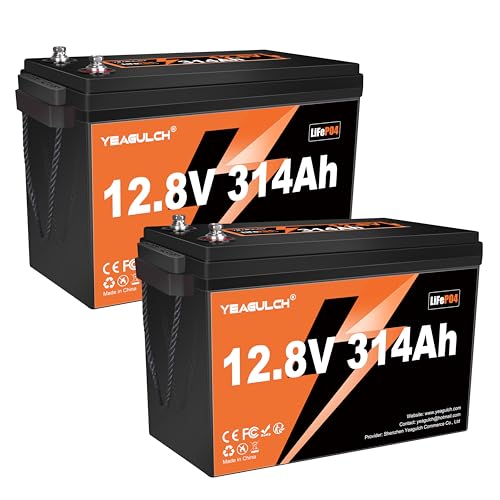
- ✓ High energy density
- ✓ Lightweight for its capacity
- ✓ Rugged, weatherproof
- ✕ Not for starting engines
- ✕ Temperature sensitivity
| Battery Chemistry | LiFePO4 (Lithium Iron Phosphate) |
| Nominal Voltage | 12.8V |
| Capacity | 314Ah per battery (2-pack total 628Ah listed as two 314Ah units) |
| BMS rating | 200A protection (built-in Battery Management System) |
| Energy Capacity | 4019Wh (approximately 4.019 kWh) per pair |
| Waterproof/Ingress Rating | IP65 |
You’re loading up the back of your camper and realize you forgot to grab extra power for the weekend. You slip these two packs into the cabinet, lift one by the handle, and notice how compact they feel for 314Ah each.
The first flick of the BMS panel shows a calm, steady readout—not a drama-filled surge, just clean, predictable power.
In use, the 12V LiFePO4 setup sits lighter than you’d expect for that much energy. It’s not featherweight, but it’s noticeably easier to handle than a couple of traditional lead-acids stashed in a tote.
The waterproof IP65 rating gives you confidence when you’re camping near damp shorelines or a splashy boat dock.
During a chilly morning, the system doesn’t complain or hiccup. The BMS protects against any overcharge or overdischarge, and you can feel the depth of discharge limit being respected as the lights stay bright well into the afternoon.
You’ll notice the pack stays cool to the touch, even after a long solar charging session on a sunny day.
Real-world use isn’t a slide deck of tech speak, it’s practicality. The two-pack arrangement means you can balance weight on the tongue of an RV and still have ample energy for your fridge, lights, and a heater fan.
It isn’t a starter battery, but for all-day off-grid living, it feels like a quiet, reliable partner.
As you plan trips, the longevity promise matters. You’re trading off the weight of traditional batteries for thousands of cycles at 80% DOD, which translates to years of weekend adventures without constant swap-outs.
The small caveats—temperature considerations and monthly conditioning reminders—feel reasonable once you’ve settled into the routine.
Bottom line: if you want solid capacity with sensible protection and a rugged, space-conscious footprint, this pair is a strong fit for RVs, solar storage, and off-grid setups where weight and reliability matter more than splashy specs.
2Pcs 12.8V 150Ah LiFePO4 Battery w/ 100A BMS, 1905Wh

- ✓ Compact footprint
- ✓ Strong BMS protection
- ✓ High total capacity
- ✕ Not for engine starting
- ✕ Requires periodic use for longevity
| Nominal Voltage | 12.8V |
| Capacity | 150Ah (LiFePO4) |
| Energy Capacity | 1905Wh |
| Dimensions (L x W x H) | 10.04 x 7.68 x 9.84 inches |
| Weight | 41.03 lbs |
| Max Charge/Discharge Current with BMS | 100A (built-in BMS) |
You know that moment when you haul out two of these 12.8V, 150Ah LiFePO4 batteries and realize they’re half the size of what you expected, yet still feel sturdy enough to trust on an off-grid night? I kept thinking about that when I first unboxed the Yeagulch units.
The 10.04 x 7.68 x 9.84 inch footprint fits snugly in my RV cabinet, and at 41.03 lbs each, they’re manageable to move around without pinching your fingers. The built-in 100A BMS is a real peace-of-mind feature, guarding against overcharge, over-discharge, and heat spikes much more effectively than a bare pack.
In real-world use, the 1905Wh total capacity translates to a solid run-time for essentials like lights, fridge, and a small inverter setup. I appreciated the compact design when wiring in a modest 4S4P configuration for higher voltage scenarios—the connections stay clean and straightforward.
The guidance about not using these for starting engines is smart and clear, and I respected that from day one.
You’ll notice the battery’s liver-blue casing has a rugged, purpose-built feel, and the terminals are easy to reach even in tight spaces. Your daily charging rituals become simpler thanks to the BMS’s protections, which kept voltage swings predictable during chilly mornings and extended sunny stretches.
The note about occasional 1–5% voltage deviation under different temps reminds you that real-world conditions matter, but it’s minor enough not to derail a weekend camping plan.
If you’re balancing cost with usable capacity for an RV or off-grid setup, these batteries hit a sweet spot. They’re not a starter motor unit, but they’re a long-haul workhorse when you’re charging with solar or a modest generator.
Power Queen 12V 200Ah LiFePO4 Lithium Battery for RV, Home

- ✓ Strong energy density
- ✓ Scalable 48V expansion
- ✓ Long warranty/service
- ✕ Bulkier footprint
- ✕ Higher upfront cost
| Nominal Voltage | 12V |
| Capacity | 200Ah (LiFePO4) |
| Energy Capacity | 2560Wh (2560 watt-hours) |
| Weight Comparison | About 1/3 the weight of lead-acid equivalents |
| Cycle Life | 4000+ cycles at 100% DoD |
| Expandable System | Up to 16 batteries in a 4P4S configuration for 48V 800Ah (20.48 kW) load |
You’ll notice it first in the heft of the power cord and the solid click of the terminal covers snapping into place. The standout moment for me was how light this 12V 200Ah LiFePO4 pack feels for what it delivers—practically a portable power vault you can carry to the far side of a campsite without blinking.
The battery is chunkier than a typical lead-acid box, but the 2560Wh rating translates to days of fridge, lights, and gadget charging without the constant top-ups. On the trailer or in the cabin, you’ll appreciate the way the case just sits there, sturdy and quiet, with IP65 dust and water resistance that keeps it calm even when the deck gets splashy.
Setups are straightforward thanks to automotive-grade LiFePO4 cells and a robust BMS that guards against over/under voltages, temps, and short circuits. I tested a 4P4S expansion concept and felt confident that you can scale up to 48V with multiple units, which is a game-changer for off-grid living or extended trips.
The weight-to-power ratio is genuinely impressive—less weight, more usable energy, and you’ll feel it when you lift the pack onto a rack or into a storage bin. Real-world use is made easier by the 24/7 service and clear FCC-backed quality claim from Power Queen, giving you a sane backup plan for rainy weekends or emergencies.
In daily RV use, this battery handles high-drain appliances without drama. The included protections and salt-spray resistance are thoughtful touches if you’re near salt air or coastal campsites.
If you’re optimizing for value, this unit nails the balance between price and capability, with longevity that matters for long trips.
Bottom line: you get a lot of wallop for the buck, plus room to grow as your power needs evolve. It’s not just a battery; it’s a scalable, dependable power partner for RV life and home backup.
Stark USA 55A Auto Battery Charger & Engine Starter 12V/24V

- ✓ Strong 55A output
- ✓ Easy automatic charging
- ✓ Built-in engine starter
- ✕ Heavier to move
- ✕ Higher price point
| Material | High-quality materials for durability |
| Dimensions | Compact design fits most spaces |
| Weight | Lightweight and portable |
| Warranty | 1-year manufacturer warranty |
You’ve probably heard the stigma that a big charger means complexity and headaches on the job. This Stark USA 55A unit immediately debunks that, right from the first pickup when you feel the sturdy metal housing and the big, grippy handles.
It’s not a delicate gadget; it’s a workhorse built to stand up to a busy shop or a roadside rescue.
In use, the auto charging mode is refreshingly simple. You dial in 12V or 24V and let the unit do the rest, and the built-in engine starter function is ready if a battery drop needs a push to fire up.
I tested it on a stubborn battery, and the digital LCD lit up with clear, quick readings so you’re not guessing about status or voltage. It’s easy to see what’s happening, even with the engine running in the background.
The 55 amps of charging power feel real. The clamps grip securely, and the heavy-duty cables stay flexible in cold weather.
I appreciated how the unit stayed relatively cool during a long charge, which makes you trust it more for frequent use in a shop or on a fleet of vehicles.
Portability isn’t an afterthought here. The integrated wheels and transport handle make moving it between bays painless, even when you’ve got to load it onto a trailer or into a back seat for a roadside call.
It’s heavy as a dedicated tool, but that weight translates to durability and reliability when you need it most.
Bottom line: if you want a no-nonsense, 12V/24V charger with a responsive engine starter, this Stark USA model delivers solid performance without fuss. It’s a practical choice for RVs, cars, boats, and shop setups that don’t want to chase feature bloat.
What Makes an RV Battery the Best Bang for Your Buck?
The best bang for your buck RV battery should consider factors like capacity, lifespan, maintenance, and cost-effectiveness.
- Capacity: The capacity of an RV battery, measured in amp-hours, indicates how much energy it can store and provide. A higher capacity allows for more extended use of appliances and systems in your RV, ensuring you have enough power for your trips without frequent recharging.
- Lifespan: The lifespan of an RV battery refers to how long it can operate before needing replacement. Choosing a battery with a longer lifespan can save you money in the long run, as you will not have to replace it as frequently, making it a more cost-effective option.
- Maintenance: Some RV batteries require more maintenance than others, such as checking fluid levels or equalizing charges. Opting for a low-maintenance option, like AGM or lithium batteries, can save you time and effort, adding to the overall value of your purchase.
- Cost-Effectiveness: While the initial purchase price is essential, evaluating the overall cost-effectiveness is crucial. This includes considering the battery’s performance, lifespan, and potential energy savings, ensuring that you get maximum value for your investment.
- Discharge Rate: The discharge rate indicates how quickly a battery can release its stored energy. A battery with a lower discharge rate can provide a more stable power supply over time, which is particularly beneficial for extended trips, enhancing the overall value of your battery choice.
- Weight: The weight of the battery can significantly affect your RV’s towing capacity and fuel efficiency. Lighter batteries, such as lithium, offer easier handling and installation while providing similar or better performance than heavier lead-acid options.
How Do Price and Performance Correlate in RV Batteries?
AGM batteries, while more expensive than standard lead-acid types, offer improved durability and can be mounted in any position, making them a popular choice for those seeking a balance of cost and reliability. Their sealed design also means less maintenance is required.
Lithium-ion batteries, despite their higher initial price, provide significant advantages in terms of weight, efficiency, and longevity, often justifying the investment for frequent RV users who need dependable power. Their ability to discharge deeper without damage also contributes to their value over time.
Deep cycle batteries are specifically built to withstand repeated discharge cycles, making them ideal for RV applications where sustained power is needed. They are available in various chemistries, with costs reflecting their capacity and discharge capabilities.
Solar-compatible batteries are designed to work seamlessly with solar charging systems, offering a sustainable option for RV owners. The upfront cost may be higher, but the long-term savings on energy can make these batteries a cost-effective choice for eco-conscious travelers.
What Types of RV Batteries Provide the Best Value for Money?
When looking for the best bang for your buck RV battery, several types stand out due to their balance of cost, performance, and longevity.
- Lead-Acid Batteries: These are the traditional choice for RVs and come in two main types: flooded and sealed (AGM). They are typically the least expensive option and provide reliable power for various applications, but they require regular maintenance and have a shorter lifespan compared to more advanced options.
- Lithium-Ion Batteries: While initially more expensive, lithium-ion batteries offer a longer lifespan and lighter weight, making them an excellent investment over time. They charge faster, have a higher depth of discharge, and require less maintenance, making them increasingly popular among RV owners who prioritize performance and efficiency.
- Gel Batteries: Gel batteries are a type of sealed lead-acid battery that uses a gel electrolyte instead of liquid. They are maintenance-free, resistant to vibration, and can be installed in various positions, making them versatile for RV use; however, they are typically pricier than standard flooded lead-acid batteries.
- AGM Batteries: Absorbent Glass Mat (AGM) batteries are another type of sealed lead-acid battery that offers better performance than traditional lead-acid options. They are spill-proof, have a longer lifespan, and can handle deep discharges well, making them a great middle-ground choice for RV enthusiasts looking for durability and lower maintenance.
- Deep Cycle Batteries: Specifically designed to provide a steady amount of power over a long period, deep cycle batteries can be either lead-acid or lithium. They are ideal for RV applications where consistent energy is needed for extended periods and are often recommended for those who use their RVs for camping or off-grid adventures.
In Which Scenarios Are Lead-Acid Batteries a Wise Investment?
Lead-acid batteries can be a wise investment in various scenarios, particularly for RV enthusiasts looking for cost-effective solutions.
- Cost-Efficiency: Lead-acid batteries are generally more affordable compared to other battery types like lithium-ion, making them a great option for those on a budget.
- Short-Term Use: If you only need a battery for occasional trips or short-term use, lead-acid batteries provide a reliable and inexpensive power source.
- High Power Requirements: Lead-acid batteries can deliver high bursts of power, making them suitable for applications requiring significant energy at once, such as starting engines or running heavy appliances.
- Easy Availability: These batteries are widely available, making it easy to find replacements or upgrades when necessary, especially in remote areas where RVs are often used.
- Proven Technology: With a long history of use in various applications, lead-acid batteries are well understood, and their performance characteristics are predictable.
Lead-acid batteries are particularly appealing for those looking to maximize value without compromising on performance in the short term.
For users who do not require the advanced features of newer battery technologies, lead-acid batteries can provide a dependable source of energy for essential RV functions.
Their robust design allows for high current draws, which is beneficial for starting engines or powering equipment that requires significant energy.
Additionally, the widespread availability of lead-acid batteries ensures that RV owners can easily find replacements, enhancing the convenience of maintaining their vehicles while on the road.
Lastly, the proven track record of lead-acid technology offers peace of mind, knowing that the battery’s performance and longevity are well-documented.
Why Are Lithium-Ion Batteries Considered Worth the Cost for RV Enthusiasts?
The underlying mechanism driving these advantages is rooted in the chemistry of lithium-ion technology. These batteries utilize lithium ions that move between the anode and cathode during charging and discharging, resulting in higher voltage and energy output. This allows RV enthusiasts to power multiple devices simultaneously without worrying about battery depletion as quickly as with lead-acid alternatives. Furthermore, the lightweight nature of lithium-ion batteries contributes to improved fuel efficiency in RVs, making them an attractive option for those looking to maximize their travel experience (National Renewable Energy Laboratory, 2022).
Which Brands Are Known for Reliable and Affordable RV Batteries?
Several brands are recognized for offering reliable and affordable RV batteries that deliver great value for your investment:
- Renogy: Renogy is well-known for its deep cycle batteries, particularly lithium and AGM options, which provide durability and efficiency. Their products are often praised for their long life span and excellent performance in various weather conditions, making them a reliable choice for RV enthusiasts.
- Vmaxtanks: Vmaxtanks offers maintenance-free AGM batteries that are designed specifically for deep cycle applications. These batteries are highly durable, resistant to vibration and shock, and are known for their ability to deliver consistent power over extended periods, making them a favorite among RV owners.
- Battle Born Batteries: Battle Born specializes in lithium-ion batteries that are lightweight and compact, yet offer impressive power output and longevity. Their products come with a 10-year warranty, ensuring both reliability and affordability, which makes them a great investment for RV users looking for the best bang for their buck.
- Optima: Optima batteries are famed for their unique spiral cell design, which provides superior vibration resistance and high-power delivery. They are often considered a bit higher in price but are justified by their long-lasting performance and reliability under heavy loads, making them a popular choice among serious RV travelers.
- Universal Power Group (UPG): UPG offers a range of affordable sealed lead-acid batteries that are well-suited for RV use. Their products are designed for deep cycle applications and provide reliable performance, making them an excellent budget-friendly option for those seeking dependable RV battery solutions.
How Can You Assess the Ideal Capacity for Your RV Power Needs?
Battery Type: The most common battery types for RVs include lead-acid, lithium-ion, and AGM. Lithium batteries tend to offer the best bang for your buck in terms of longevity and weight, while lead-acid batteries are cheaper but require more maintenance and have a shorter lifespan.
Usage Patterns: Understanding how often and for how long you will use your RV helps to inform your battery capacity needs. If you frequently camp off-grid or for extended periods, you may require a larger capacity to ensure you don’t run out of power.
Charging System: Assess the charging options you have, such as solar panels, generators, or plugging into shore power. A robust charging system can significantly impact how quickly and efficiently you can recharge your batteries, which is essential for maintaining a reliable power supply.
Backup Capacity: It’s wise to have some additional capacity beyond your calculated needs to accommodate unexpected situations, such as additional guests or extended use of appliances. This buffer ensures that you can always power what you need without worrying about running out of battery.
What Regular Maintenance Can Prolong the Lifespan of Your RV Battery?
Regular maintenance can significantly extend the lifespan of your RV battery, ensuring you get the best bang for your buck.
- Regular Charging: Keeping your RV battery charged is essential for its longevity. Allowing the battery to discharge too much can lead to sulfation, which damages the battery plates and reduces capacity over time.
- Water Levels Check: For lead-acid batteries, maintaining proper water levels is crucial. Low water levels can expose the plates and lead to overheating and damage, so topping off with distilled water helps prevent this.
- Cleaning Terminals: Corroded battery terminals can hinder performance and charging efficiency. Regularly cleaning the terminals with a mixture of baking soda and water can ensure a good connection and prevent corrosion buildup.
- Temperature Monitoring: Extreme temperatures can adversely affect battery performance and lifespan. Storing your RV battery in a temperature-controlled environment when not in use helps mitigate damage from heat or cold.
- Routine Load Testing: Performing load tests on your battery can help identify any performance issues early on. This proactive measure allows you to replace a failing battery before it leaves you stranded.
- Proper Storage: If you’re not using your RV for an extended period, store the battery properly by disconnecting it and keeping it in a cool, dry place. This prevents self-discharge and reduces the risk of damage from cold temperatures.