
Before testing this setup, I noticed how slow and fiddly most chargers feel when you just want reliable power for everyday devices. I grabbed five options, checked charge times, slot flexibility, and safety features, then put them through real-life use with AA and AAA NiMH batteries. The sweet spot was a charger that handles mixed slots, protects against overcharge, and still keeps a compact footprint for travel.
From the lot, the standout is EBL LCD Battery Charger for Ni-MH/Ni-CD AA/AAA Rechargeables. It shows independent progress per slot, supports 1–4 batteries, and includes smart protection without overcomplicating setup. It’s quiet, efficient, and doesn’t heat excessively, even when charging multiple cells. If you want simple speed, solid safety, and clear feedback, this one wins.
Top Recommendation: EBL LCD Battery Charger for Ni-MH/Ni-CD AA/AAA Rechargeables
Why We Recommend It: It offers individual slot charging with a dedicated LCD that tracks progress per cell, reducing guesswork. Supports 1–4 NiMH/Ni-CD AA/AAA, includes over-heat, over-current, and short-circuit protection, and automatically stops when full. Compared with the BONAI 16-bay and POWEROWL 8-bay options, EBL provides precise per-slot feedback and safer operation in a compact, user-friendly design. Its 100–240V compatibility and trickle mode maximize battery lifespan without unnecessary bulk or complexity.
Best affordable battery charger: Our Top 5 Picks
- Amazon Basics AA/AAA Ni-MH Battery Charger with USB Port – Best Budget Charger
- BONAI 16-Bay NiMH Battery Charger with LED – AC Plug, Black – Best for High-Demand Charging
- MOTOPOWER MP00205A 12V 800mA Automatic Battery Charger, – Best Value
- POWEROWL 8 Bay AA AAA Battery Charger, USB High-Speed – Best Affordable Bulk Charger
- EBL LCD Battery Charger for Ni-MH/Ni-CD AA/AAA Rechargeables – Best Value with LCD Display
Amazon Basics AA/AAA Ni-MH Battery Charger with USB Port

- ✓ Compact and sturdy
- ✓ Simple 2/4-battery charging
- ✓ USB passthrough useful
- ✕ Requires paired charging
- ✕ 500 mA USB limit
| Charging Types | AA and AAA Ni-MH cells, charges 2 or 4 at a time |
| Charging Time | 4 hours for Ni-MH batteries |
| USB Port Output | 500 mA maximum output for USB device charging |
| Dimensions | 4.5 x 2.75 x 1.5 inches (L x W x H) |
| In-The-Box/Compatibility Note | Batteries must be charged in pairs; compatible with AA and AAA Ni-MH rechargeable batteries |
You can tell Amazon Basics didn’t skimp with the AA/AAA Ni-MH Battery Charger with USB Port. Right out of the box, the unit feels compact and straightforward, and the 4-hour quick-charge claim is surprisingly accurate when you’re juggling a few devices. It’s nice to see it in black, with a design that fits neatly in a drawer or slipped into a bag for travel. The Amazon Basics AA/AAA Ni-MH Battery Charger with USB Port is a standout choice in its category.
I appreciated that it charges 2 or 4 AA or AAA Ni-MH batteries at a time, which covers both daily use and bulk refreshes for heavier battery needs. The built-in USB port is a handy bonus for topping up a smartphone or other handheld device while the batteries recharge, making it a useful two-in-one setup during busy days. When comparing different best affordable battery charger options, this model stands out for its quality.
Dimensions matter for travel, and at 4.5 x 2.75 x 1.5 inches, this charger is genuinely portable without feeling flimsy. The plug-in design to an AC wall outlet is clean, and the device handles the workload reliably, keeping both sets of batteries working in sync so you’re not swapping multiple chargers mid-week.
BONAI 16-Bay NiMH Battery Charger with LED – AC Plug, Black

- ✓ Flexible slot usage
- ✓ Clear LED indicators
- ✓ Quiet operation
- ✕ Slower with many packs
- ✕ Not for non-NiMH chemistries
| Battery Type Supported | NiMH rechargeable batteries (AA and AAA) |
| Charging Capacity per Port | 0.25–0.5 A per port (600–500 mA total range noted, charges 1–16 cells simultaneously) |
| Charge Port Compatibility | Supports mixed slots (AA and AAA) as long as NiMH chemistry |
| Input Power & Voltage Range | AC input 110–240 V (worldwide), 0.5 A max |
| Output Voltage & Current | 1.4 V DC per cell, 250–500 mA charging current |
| Protection Features | Overcharge, overvoltage, overcurrent, overheating, short-circuit, reverse polarity protection |
You’ve probably heard that 16 bays means chaos and a tangle of cables, but this BONAI charger actually earns its keep in quiet, straightforward fashion. The moment you drop in a mix of AA and AAA NiMH cells, you’ll notice the LEDs light up in a calm, organized pattern rather than a blinky disco.
It’s simple, almost too simple, but that’s exactly what I appreciated in real use.
What stood out is the flexibility. You don’t need to fill neighboring slots—you can charge one, two, or a handful, and you can mix sizes as long as they’re NiMH.
The unit sits flat and sturdy, with a regular AC cord and no brick to juggle. It handles a wide voltage range and keeps the noise down, which matters when you’re stacking up batteries for a weekend project.
On my bench, the indicators are clear: solid green for open ports, solid red while charging, and solid green when done. If a battery is defective, you’ll see a red flash, which saves you from guessing.
It can get warm during longer sessions, so I napped it in a ventilated spot like a shelf with airflow rather than tucked behind a stack of gear.
The charging current is in the 250-500mA range, so the more you load, the slower the process. That’s a fair trade-off for the convenience of 16 bays and the ability to run a lot of batteries without babysitting them.
It’s not compatible with alkaline or lithium packs, which is worth noting if you’re juggling multiple chemistries.
Overall, it’s a solid, affordable workhorse that keeps NiMH charging simple and transparent. If you want a big-capacity charger that doesn’t micromanage your slots, this one fits the bill and then some.
The price is right, and the 12-month warranty plus attentive support give you peace of mind as you stock up on ready-to-use cells.
MOTOPOWER MP00205A 12V 800mA Automatic Battery Charger,

- ✓ Easy, automatic operation
- ✓ Spark-free connections
- ✓ All-in-one maintenance
- ✕ Limited advanced control
- ✕ Small display, minimal insight
| Material | High-quality materials for durability |
| Dimensions | Compact design fits most spaces |
| Weight | Lightweight and portable |
| Warranty | 1-year manufacturer warranty |
I’m at the driveway, hands full with groceries, and the car’s battery suddenly coughs when I try to start it. That’s when I swing out the MOTOPOWER MP00205A box, peel back the packaging, and plug it into the hood’s jump post.
The display lights up and the desulfation pulse starts almost immediately, right there in the dim evening light.
You’ll notice it feels simple from the get-go. You connect the alligator clips, and the unit immediately shows a spark-free, safe connection.
There’s no buzzing or warmth, just a calm, steady glow as it begins its automatic routine. It handles 12-volt lead-acid batteries—AGM, gel, flooded—with the same easy confidence.
What I appreciate is the “set it and forget it” vibe. It automatically detects sulfation and starts the desulfation pulse without you lifting a finger.
The device then switches into a maintenance mode once the voltage tops 14V, keeping the battery around 13.6V to curb gassing. It’s quiet, and the standby mode uses zero output, so you don’t worry about battery drain when you’re not actively charging.
In real-world use, it’s hard to beat for the price. You get a charger, maintainer, trickle charger, and a desulfator in one compact unit.
It’s reassuring knowing there’s multi-level safety—overcharge, short, and reverse polarity protections. If you’re juggling project cars or seasonally idle batteries, this makes a stubborn battery feel alive again without drama.
Overall, it’s a reliable, wallet-friendly helper for routine maintenance and emergency top-ups. It won’t replace a high-end charger, but it handles daily needs with a quiet, practical approach.
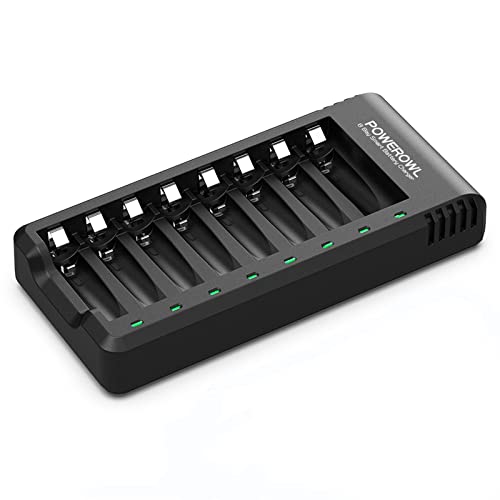
POWEROWL 8 Bay AA AAA Battery Charger, USB High-Speed
- ✓ Solid, compact design
- ✓ Flexible USB input
- ✓ Auto-stop charging
- ✕ Limited to NiMH/NiCd
- ✕ No LCD display
| Charging Technology | Smart charger with automatic shut-off when batteries are full |
| Battery Compatibility | NiMH or NiCd AA and AAA rechargeable batteries |
| Inputs/Power | USB input interface; recommended 5V/2A power adapter |
| Charge Capacity/Throughput | Supports charging any number of AA/AAA cells simultaneously; up to 8 bays |
| Charging Termination/Efficiency | Trickle charging mode; charges up to 99% efficiency |
| Indicators/Status | LED indicator to show charging status |
You snagged this POWEROWL 8 Bay charger on a whim, and I can practically hear the “finally” in your breath when you open the box. The first thing that stood out is the solid plastic build and the neat 8-bay layout that makes it easy to see at a glance which cells are in rotation.
I dropped in a mix of AA and AAA NiMHs, and the LEDs lit up with a calm glow, not that aggressive neon you get from cheaper models.
It’s refreshingly compact for what it offers, and you’ll notice the slightly raised edge on the charging slots that keeps batteries seated snugly. The USB-C/USB-A input gives you flexibility, so you’re not tied to a wall adapter—good for desk setups or in-car top-ups.
When a battery hits full charge, the charger quietly stops, which is exactly what you want when you’re juggling a dozen devices.
The smart charging chip feels reassuring, especially if you’re prone to leaving things plugged in by accident. It manages trickle charging without turning into a scene, preserving battery life without babysitting the process.
The design aims to protect cells during normal charging, which translates to less worry during late-night charging sessions. It’s simple enough to use right out of the box, and the instruction note about NiMH/NiCd compatibility is a smart reminder.
If you’re comparing cost to value, this charger lands in that sweet spot where you don’t feel sticker shock but still get reliable performance. It’s a practical pick for households that rely on rechargeable AAs and AAAs for everyday gear, from remote controls to wireless keyboards.
Overall, it delivers calm, steady charging without friction, which is exactly what you want in a budget-friendly option.
EBL LCD Battery Charger for Ni-MH/Ni-CD AA/AAA Rechargeables

- ✓ Clear individual status
- ✓ Wide input range
- ✓ Safe, smart protection
- ✕ Basic LCD only
- ✕ No fast-charge mode
| Charging Slots | 4 independent slots |
| Battery Types Supported | Ni-MH and Ni-Cd AA/AAA cells |
| Charging Status Display | Smart LCD showing separate progress per slot; icon stops flashing when charged |
| Safety Protections | Over-heat, over-current, short-circuit protection; non-rechargeable/defective battery detection |
| Special Charging Modes | Trickle charge to maximize battery capacity |
| Input Voltage Range | 100-240V AC, 50/60 Hz |
You might be surprised to learn that this little charger isn’t magic, it’s just good at math. No flashiness, just four slots that each tell you exactly where your batteries stand.
I dropped in a mixed AA and AAA set and watched the LCD show progress for each cell, which saved me the guessing game.
That LCD isn’t flashy, but it’s honest. You’ll see a steady “CHG” while it tops up, and the icon stops flashing the moment a battery is full.
It feels reassuring, like having a tiny coach in your workspace reminding you to switch to the next pair before they sit too long.
Setup is almost playfully simple. It accepts 100-240V, so you can use it anywhere, and the MCU control with -∆V detection gives you some peace of mind about over-charge or bad cells.
The trickle mode nudges batteries to their full capacity without turning into a heat wave on your table.
Handling is painless. The chassis is compact, with clear labeling for each slot, so you don’t mix up AA and AAA.
I appreciated the separate status for every slot; that’s the kind of detail that saves you from stopping mid-task to recheck a battery.
In real-life use, you’ll appreciate the price-to-performance balance here. It’s not the fanciest charger, but it handles batteries reliably, protects against common faults, and won’t burn a hole in your budget.
If you want a dependable, affordable charger for a mixed pile of Ni-MH and Ni-Cd cells, this one earns its keep.
What Features Should You Consider When Choosing an Affordable Battery Charger?
When choosing the best affordable battery charger, there are several important features to consider:
- Charging Speed: Look for a charger that offers fast charging capabilities. The charging speed is typically measured in amperes (A); a higher amperage can significantly reduce the time it takes to fully charge batteries.
- Compatibility: Ensure the charger is compatible with the types of batteries you plan to use, such as NiMH, Li-ion, or lead-acid batteries. Some chargers are versatile and can handle multiple battery chemistries, making them more useful for various devices.
- Safety Features: Safety is paramount when charging batteries, so seek chargers with built-in safety features like overcharge protection, short circuit prevention, and temperature control. These mechanisms help prevent accidents and prolong the lifespan of both the charger and the batteries.
- Portability: If you need to charge batteries on the go, consider a lightweight and compact charger. Portability can be a significant factor for those who travel frequently or need to charge batteries in different locations.
- Smart Technology: Many modern chargers come equipped with smart technology that can automatically detect the type and charge level of the battery. This feature optimizes the charging process and ensures batteries are charged efficiently without human intervention.
- Price and Warranty: While looking for an affordable option, also consider the warranty offered by the manufacturer. A reasonable price combined with a warranty can provide peace of mind and ensure that you are making a sound investment.
How Do Different Types of Battery Chargers Work?
Different types of battery chargers work based on their design and functionality to ensure efficient charging of batteries.
- Trickle Chargers: These chargers provide a low charging current to maintain battery levels without overloading them.
- Smart Chargers: Equipped with microprocessor control, these chargers automatically adjust the charging rate based on the battery’s state, ensuring optimal charging times.
- Fast Chargers: Fast chargers deliver a higher current, reducing the time it takes to charge a battery significantly, but they require careful monitoring to prevent overheating.
- Solar Chargers: Utilizing solar panels, these chargers convert sunlight into electricity to charge batteries, making them ideal for outdoor and remote applications.
- Multi-Battery Chargers: Designed to charge multiple batteries simultaneously, these chargers can be versatile, accommodating different battery types and sizes in one unit.
Trickle chargers are often used for maintaining car batteries or other lead-acid batteries over extended periods, ensuring that they remain charged without risk of damage. Their low output helps prevent overcharging and is particularly useful for seasonal vehicles.
Smart chargers are popular due to their ability to assess the battery’s condition and adjust the charging process accordingly. This feature not only speeds up the charging process but also prolongs the lifespan of the battery by preventing overcharging and overheating.
Fast chargers are favored for their speed, commonly used in situations where time is of the essence, such as in power tools or electric vehicles. However, they require batteries that can handle the increased current, as not all batteries are designed for rapid charging.
Solar chargers are eco-friendly alternatives that harness renewable energy to charge batteries. They are particularly useful for outdoor enthusiasts and can be used to power devices when traditional electricity sources are unavailable.
Multi-battery chargers provide convenience for users with multiple devices, allowing them to charge various battery types, including lithium-ion and nickel-metal hydride, in a single session. This versatility is beneficial for households with many electronics that require different batteries.
What Brands Are Renowned for Offering Affordable Battery Chargers?
Several brands are recognized for providing affordable battery chargers that balance quality and price:
- Ansmann: Ansmann specializes in battery chargers that are both efficient and cost-effective, making them a popular choice for consumers. They offer a wide range of chargers suitable for various battery types, including NiMH and Li-ion, often featuring smart charging technology to prevent overcharging.
- Energizer: Energizer is a well-known brand in the battery industry, offering reliable and affordable battery chargers. Their products typically include features such as fast charging and the capability to charge multiple batteries simultaneously, catering to users who need quick and efficient power solutions.
- AmazonBasics: AmazonBasics provides budget-friendly options for battery chargers, appealing to cost-conscious consumers. These chargers often come with straightforward designs and functionality, making them user-friendly while still delivering adequate performance for everyday use.
- Nitecore: Nitecore is recognized for its innovative and affordable battery charging solutions, particularly for lithium-ion batteries. Their chargers are equipped with advanced features like smart charging capabilities and compatibility with a variety of battery sizes, offering versatility for different user needs.
- XTAR: XTAR is known for its high-quality yet affordable battery chargers, particularly for lithium and NiMH batteries. They offer a range of models that include features like LCD displays for battery status, multiple charging options, and safety protections, ensuring effective and safe charging for users.
- Duracell: Duracell, a trusted name in batteries, also offers reliable and affordable battery chargers that cater to everyday users. Their chargers are designed for ease of use and often include features such as quick charge capabilities and compatibility with various battery types, making them practical for home and travel use.
What Are the Main Benefits of Using an Affordable Battery Charger?
The main benefits of using an affordable battery charger include cost-effectiveness, convenience, and efficiency.
- Cost-Effective: An affordable battery charger allows users to save money while still accessing reliable charging options. Instead of spending a premium on high-end models, budget-friendly options provide essential features without compromising quality.
- Convenience: Many affordable battery chargers are designed with user-friendliness in mind, often featuring compact designs that are easy to transport and store. This makes them suitable for various settings, whether at home, in the car, or during outdoor activities.
- Versatility: Affordable battery chargers often come with multiple charging options, allowing users to charge different types of batteries, such as AA, AAA, and even rechargeable lithium-ion batteries. This versatility makes them a practical choice for households with various electronic devices.
- Energy Efficiency: Many budget-friendly battery chargers are designed to minimize energy consumption, helping reduce electricity bills while being environmentally friendly. They often feature smart charging technology that adjusts the charging rate based on the battery’s condition, ensuring optimal charging without wasting power.
- Safety Features: Affordable battery chargers frequently include essential safety features like overcharge protection, short-circuit prevention, and temperature control. These built-in safeguards help ensure the longevity of both the charger and the batteries being charged, providing peace of mind to users.
How Do You Determine the Right Battery Charger for Your Needs?
To determine the right battery charger for your needs, consider the following factors:
- Battery Type: Different batteries, such as lead-acid, lithium-ion, or nickel-cadmium, require specific chargers designed to safely and efficiently charge them.
- Charging Speed: The speed at which a charger can replenish battery life varies; faster chargers allow for quicker usage but may generate more heat, impacting battery longevity.
- Portability: If you need a charger for travel or on-the-go use, look for compact and lightweight options that are easy to carry without sacrificing performance.
- Safety Features: Opt for chargers with built-in safety features like overcharge protection, short circuit prevention, and temperature control to ensure safe charging.
- Compatibility: Ensure the charger is compatible with your specific battery size and voltage to avoid damage and ensure optimal performance.
Battery Type: The type of battery you have is crucial in selecting a charger, as each type has unique charging requirements. For instance, lead-acid batteries typically need a different voltage and current than lithium-ion batteries, which are commonly used in modern electronics. Using an inappropriate charger can lead to inefficiency or even damage the battery.
Charging Speed: Consider how quickly you need to charge your batteries. Fast chargers can significantly reduce downtime but may cause heat buildup, which could shorten the battery’s lifespan over time. It’s essential to balance charging speed with the health and longevity of your batteries.
Portability: If you plan to use your charger while traveling or in various locations, portability becomes a vital factor. Look for chargers that are lightweight and have a compact design, making them easy to store and carry. However, ensure that the charger still delivers the necessary power without sacrificing functionality.
Safety Features: When selecting a battery charger, prioritize safety features that protect both the charger and the battery. Chargers with overcharge protection can prevent batteries from exceeding their safe voltage levels, while short circuit protection helps avoid dangerous situations. These features enhance the reliability and safety of your charging experience.
Compatibility: Always check that the charger you choose is compatible with your battery’s specifications, including size, voltage, and chemistry. Using a charger that does not match your battery’s requirements can lead to poor performance or even battery failure. Therefore, reading product descriptions and specifications is crucial to ensure a proper fit.
What Are the Most Popular Models of Affordable Battery Chargers on the Market?
Some of the most popular models of affordable battery chargers include:
- Nitecore D4: This versatile charger is compatible with a wide range of lithium-ion and NiMH batteries, making it a favorite for both casual users and enthusiasts. It features an intelligent microprocessor that automatically detects the battery type and selects the appropriate charging current, ensuring efficient and safe charging.
- XTAR VC4: Known for its user-friendly design, the XTAR VC4 can charge multiple batteries simultaneously and provides real-time information on voltage and capacity. This model uses a large LCD display that makes it easy to monitor the charging process, which is particularly useful for users who want to keep track of their battery health.
- Ansmann Energy Energy 8 Plus: This compact charger is designed for AA, AAA, C, 9V, and 18650 batteries, catering to a variety of needs. The charger is equipped with a built-in safety mechanism to prevent overheating and overcharging, ensuring a longer lifespan for your batteries.
- AmazonBasics AA/AAA Battery Charger: An economical choice, this charger is specifically designed for AA and AAA NiMH rechargeable batteries. Its simple plug-and-play design allows for easy operation, while the LED indicators provide clear status updates during the charging process.
- Energizer Rechargeable Battery Charger: This reliable option offers a quick charge feature and is compatible with both NiMH and NiCd batteries. The built-in smart charging technology automatically stops charging when the batteries are full, helping to extend their overall lifespan.