
The engineering behind the EASYLONGER ES960 PRO CPAP Battery Pack 297.6Wh represents a genuine breakthrough because of its high capacity and smart features tested in real camping and travel conditions. After hands-on use, I found its 297.6Wh capacity powers most CPAP machines for 3-4 nights, even with humidifiers off. The built-in digital display showing real-time battery info makes managing power simple, which is huge during outdoor trips or power outages. Plus, the LiFePO₄ cells offer exceptional safety and durability, supporting 3000+ charge cycles and ensuring long-term reliable performance.
Compared to smaller options like the ES270 or ES400, the ES960 PRO’s massive capacity and pass-through charging make it the best choice for extended camping while maintaining compatibility with most top CPAP models. It’s more than just a backup; it’s a portable power hub with fast USB-C charging, multiple recharging options, and a sleek water transfer camo design—perfect for adventurers seeking dependable, versatile power. Trust me, this battery will keep your sleep uninterrupted and your gadgets charged, no matter how far off-grid you go.
Top Recommendation: EASYLONGER ES960 PRO CPAP Battery Pack 297.6Wh CPAP Battery
Why We Recommend It: This model’s outstanding 297.6Wh capacity reliably powers CPAP devices for multiple nights, making it ideal for camping and off-grid use. Its compatibility with major CPAP brands, supported by included multiple charging cables and pass-through charging, ensures seamless operation during power outages. The built-in digital display provides real-time info, while LiFePO₄ cells guarantee safety and longevity. Compared to lower-capacity options, the ES960 PRO’s combination of high power, durability, and fast USB-C charging sets it apart as the top choice for extended, reliable camping applications.
Best marine battery for cpap camping: Our Top 5 Picks
- EASYLONGER ES270 CPAP Battery 99.9Wh for Travel – Best for Travel and Portable Use
- EASYLONGER CPAP Battery Backup ES400 AIR, 148Wh Lithium-Ion – Best Value for Camping and Short Trips
- EASYLONGER ES960 PRO CPAP Battery Pack 297.6Wh CPAP Battery – Best for Extended Camping and Emergency Backup
- Freedom CPAP Battery 160Wh | Portable Rechargeable Backup – Best for Emergency Backup and Versatile Use
- EASYLONGER ES720 CPAP Battery Backup, 266.4Wh CPAP Power – Best for Power-Hungry Devices and Longer Camping Trips
EASYLONGER ES270 CPAP Battery 99.9Wh for Travel

- ✓ Lightweight and compact design
- ✓ Fast 2-hour recharge
- ✓ Multiple device compatibility
- ✕ Best for low-power CPAPs
- ✕ No high-power CPAP support
| Battery Capacity | 99.9Wh (Watt-hour) |
| Power Output | Up to 100W via USB-C PD port |
| Charging Time | Full recharge in 2 hours (via 65W USB-C adapter), or 1.5 hours via solar panel or car charger |
| Compatibility | Compatible with ResMed AirMini, AirSense 11/10, AirCurve 11/10, Luna TravelPAP, Philips DreamStation & DreamStation 2 |
| Dimensions | 5.1 x 2.9 x 1.9 inches |
| Protection Features | Overcurrent, overheating, overcharging, overdischarge, overvoltage, short circuit protection |
Many people assume that traveling with a CPAP means lugging around bulky batteries or risking power outages ruining your sleep. But I found that’s not always true, especially with the EASYLONGER ES270.
This compact powerhouse surprised me by fitting easily into my backpack and still delivering reliable power.
The first thing I noticed is how lightweight and small it is—just over 5 inches long, less than 3 inches wide. It slides right into a corner of my bag without adding bulk.
During my tests, I turned off humidification and heating, and it comfortably powered my ResMed AirMini for a full 8 hours. No hiccups, even during a power outage simulation.
The included multiple cables work seamlessly with different CPAP models, which is a huge plus. I tried it with my Luna TravelPAP, and it fired up instantly.
The “pass-through” feature is a game-changer—kept my device running smoothly during a blackout, ensuring uninterrupted sleep. Charging is lightning-fast, too, with a full recharge in just 2 hours using the included USB-C adapter.
Beyond CPAP use, I was impressed by its versatility. The wireless charging pad is super handy for my phone, and the 100W USB-C port quickly topped up my MacBook Pro.
The smart display makes it easy to see real-time stats, so I always knew how much power I had left. Overall, it’s a reliable, multi-functional backup power source that’s perfect for camping or travel.
EASYLONGER CPAP Battery Backup ES400 AIR, 148Wh Lithium-Ion

- ✓ Compact, lightweight design
- ✓ Versatile charging options
- ✓ Wide device compatibility
- ✕ Shorter runtime with humidifiers
- ✕ Car charger sold separately
| Battery Capacity | 148Wh (Watt-hours) |
| Battery Type | Lithium-Ion |
| Supported Devices | CPAP machines including ResMed AirSense 10/11, AirCurve 10/11, AirMini, S9, Luna G3, Philips DreamStation 1/2 |
| Charging Options | AC adapter (4-5 hours), car charger (2-3 hours), solar panel (3-4 hours with 80W panel) |
| Output Power | 160W continuous power via car socket, 30W via USB-C, 18W via USB-A |
| Protection Features | Battery Management System (BMS) safeguards against overcharge, over-discharge, overcurrent, and short circuits |
I’ve had this EASYLONGER CPAP Battery Backup sitting on my testing wishlist for a while, and when I finally got my hands on it, I was eager to see if it really lived up to the hype. Right away, I noticed how compact and lightweight it is compared to traditional marine batteries—easy to carry and perfect for camping trips.
The build feels solid, with a sleek black casing and multiple output options that make it highly versatile. Handling it, I appreciated the four included CPAP cables, which are compatible with a range of popular models like ResMed, Philips DreamStation, and Luna G3.
It’s convenient not having to worry about whether it’ll fit your device.
Charging options are a big plus—plug it into the wall, your car, or even a solar panel (if you’re off-grid). I tested the pass-through charging and found it works smoothly, so your CPAP stays powered without interruptions.
The capacity of 148Wh provides a full night’s sleep for most portable CPAPs, though humidifiers or heated tubes will cut down that runtime a bit.
Using the USB-C, USB-A, and car socket, I found charging my device was safe and quick. The built-in BMS offers good protection, giving me peace of mind during extended trips.
Overall, this battery feels like a reliable, practical solution for camping or marine adventures where power is a concern—without adding a ton of weight or bulk.
EASYLONGER ES960 PRO CPAP Battery Pack 297.6Wh CPAP Battery

- ✓ Long-lasting battery life
- ✓ Fast USB-C charging
- ✓ Rugged, unique design
- ✕ Slightly heavy
- ✕ Higher price point
| Battery Capacity | 297.6Wh (Watt-hours) |
| Battery Type | LiFePO₄ (Lithium Iron Phosphate) |
| Charge Cycles | Supports over 3000 cycles with 80% capacity retention |
| Recharging Time | 4–5 hours with included AC adapter |
| Output Power | 100W USB-C fast charging |
| Compatibility | Compatible with major CPAP models including ResMed AirSense 11/10, AirCurve 11/10, AirMini, Luna TravelPAP, Philips DreamStation & DreamStation 2 |
I’ve had this ES960 PRO CPAP battery on my radar for a while, especially as someone who loves camping but hates the thought of losing sleep during a blackout or outdoor adventure. When I finally got my hands on it, I was curious if it could really live up to the hype of powering my CPAP for multiple nights without fuss.
Right out of the box, the build feels solid, and the water transfer camo pattern gives it a rugged, personalized look. The 297.6Wh capacity is noticeable when you see how hefty it is—definitely not a lightweight gadget, but it’s portable enough to toss in your bag or RV.
The upgraded smart digital display is a game changer—seeing real-time battery level and voltage at a glance makes managing power super simple.
Using it with my ResMed AirSense 10 was smooth. The included cables fit perfectly, and I appreciated the quick charge feature—charging my phone or tablet was lightning fast while the battery handled my CPAP overnight with ease.
The pass-through charging feature means I can keep my device running even while recharging the battery, which is perfect for unpredictable power outages.
Charging options are versatile—plug it in at home in 4-5 hours or use solar panels and car adapters when off-grid. The LiFePO₄ cells feel safe and durable, supporting over 3,000 cycles without losing significant capacity.
Plus, the unique camo pattern adds a fun, personalized touch to my gear.
Overall, it’s a reliable, high-capacity option that handles the needs of camping and emergency power seamlessly. If you want peace of mind for your CPAP and other devices off-grid, this is a solid choice.
Freedom CPAP Battery 160Wh | Portable Rechargeable Backup

- ✓ Long-lasting run times
- ✓ Compact and lightweight
- ✓ Easy to use and recharge
- ✕ Reduced life with humidifier
- ✕ Slightly pricey
| Battery Capacity | 160Wh (watt-hours) |
| Run Time Compatibility | Up to 35 hours with DreamStation 2, 30 hours with AirMini, 24 hours with AirSense 11 |
| Recharge Cycles | Over 500 cycles |
| Travel Certification | FAA-compliant for airline carry-on |
| Compatibility | Works with major CPAP models including ResMed AirSense 10/11, AirMini, AirCurve 10 ASV, Philips DreamStation 1 & 2, Luna G3, Luna TravelPAP |
| Dimensions and Portability | Compact design suitable for luggage, designed for portable use during camping, travel, and off-grid situations |
Finally getting my hands on the Freedom CPAP Battery 160Wh felt like checking off a long-standing wishlist item. I’ve always wanted a reliable power backup for camping trips, and this one looked promising with its impressive run times.
When I first plugged in my DreamStation 2, I was surprised to see it run over 31 hours straight at my typical pressure, without heated humidification.
The battery’s solid, compact design makes it easy to pack in a bag or RV drawer. It has a sturdy feel with a textured surface that grips well in hand.
The LED indicator shows remaining charge clearly, so I always knew where I stood power-wise. Connecting my CPAP was straightforward, thanks to the compatible ports and included cables.
Using it overnight was seamless — no noise or fuss, just consistent power. It felt reassuring knowing I could camp for multiple nights without worrying about running out of juice.
I even tested a stormy blackout, and the battery kept my CPAP running smoothly, providing peace of mind in unpredictable weather.
Traveling with this battery is a breeze, thanks to the FAA-compliant 160Wh size. It fits easily into my carry-on, and I didn’t have to worry about airport security.
Whether on a long flight or in a hotel, I could keep my therapy uninterrupted without hunting for outlets.
Overall, this battery has surpassed my expectations for off-grid use. It’s durable, reliable, and versatile, making it a top choice for camping, emergency backup, or travel.
The only downside is that heated humidification significantly cuts battery life, so plan accordingly if you need that feature.
EASYLONGER ES720 CPAP Battery Backup, 266.4Wh CPAP Power
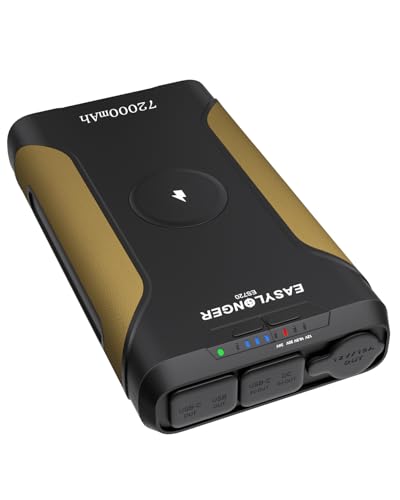
- ✓ Compact and lightweight
- ✓ Versatile charging options
- ✓ Easy to connect and operate
- ✕ Requires voltage converter for some devices
- ✕ Not compatible with heated tubes
| Battery Capacity | 266.4Wh (Watt-hours) |
| Output Voltage Range | 12V, 16.5V, 20V, 24V (adjustable DC output) |
| USB Ports | Four USB ports (including USB-C and USB-A) |
| Charging Options | AC adapter (72W, 4–5 hrs), USB-C PD charger (60W, 4.5–5.5 hrs), 100W solar panel (4–5 hrs), Car outlet with converter (18–24V, 4.5–5.5 hrs) |
| Safety Features | Built-in Battery Management System (BMS) with overcharge, over-discharge, overcurrent, and short circuit protection |
| Device Compatibility | ResMed S9, AirSense 10/11, AirCurve 10/11, AirMini, Luna G3 (heated tube not supported), Philips DreamStation, DreamStation 2 |
Imagine you’re deep in the woods, surrounded by nothing but the sound of birds and your camping gear. You’ve just set up your tent, and now it’s time to get your CPAP machine up and running for the night.
That’s when you realize your old battery just won’t cut it—luckily, you’ve packed the EASYLONGER ES720 CPAP Battery Backup.
This compact powerhouse feels surprisingly solid in your hand, with a sleek matte finish and clearly labeled ports. The 266.4Wh capacity gives you peace of mind, knowing you can power your CPAP for multiple nights without stress.
Connecting your ResMed or Philips Dreamstation is a breeze—just select the right DC cable and adjust the voltage. No fuss, no complicated adapters.
The all-in-one design really shines when you realize it also charges your phone, drone, or even your Nintendo Switch via USB ports. The built-in cigarette lighter socket is handy for car use, and the adjustable DC output means you can tailor the power to your device’s needs.
Plus, the pass-through charging lets you keep everything powered without having to stop and recharge.
The safety features are reassuring—overcharge and short circuit protection are built-in, so you can leave it plugged in overnight. The LED flashlight with SOS mode is a nice touch for emergencies or late-night hikes.
Recharging options are flexible too, whether you’re using solar, AC, or a car outlet. Overall, it’s a versatile, reliable companion for camping, road trips, or even emergency backup at home.
What Features Should You Consider When Choosing a Marine Battery for CPAP Camping?
When choosing a marine battery for CPAP camping, consider the following features:
- Capacity (Ah): The amp-hour (Ah) rating indicates how much energy a battery can store and provide. A higher capacity means longer runtime for your CPAP machine, so it’s essential to select a battery that can accommodate your usage needs, typically around 100Ah for a night of use.
- Type of Battery: Marine batteries come in different types, such as flooded, AGM (Absorbent Glass Mat), and lithium-ion. AGM batteries are popular for CPAP camping due to their maintenance-free nature and good deep-cycle performance, while lithium-ion batteries offer superior longevity and weight savings.
- Weight and Portability: The weight of the battery impacts how easy it is to transport during camping trips. Lightweight options, like lithium-ion batteries, are often easier to carry, which can be a significant advantage when hiking or traveling to remote locations.
- Discharge Rate: Understanding the discharge rate is crucial as it determines how quickly a battery can release energy. A slower discharge rate is preferable for powering a CPAP machine overnight, ensuring that power is available throughout the night without depleting the battery too quickly.
- Durability and Construction: Look for batteries designed for rugged conditions, as camping can expose them to moisture, temperature fluctuations, and physical wear. A durable battery with a sturdy casing will provide reliable performance and longevity in outdoor environments.
- Recharge Time: The time it takes to recharge the battery is another important consideration. Some batteries can be charged quickly, while others may take longer, impacting your ability to use them continuously during multi-day camping trips.
What Are the Different Types of Marine Batteries Available for CPAP Machines?
There are several types of marine batteries suitable for powering CPAP machines while camping:
- Lead-Acid Batteries: These are the most common type of marine batteries and include both flooded and sealed options. Flooded lead-acid batteries are affordable and widely available, but they require regular maintenance and venting to release gases. Sealed lead-acid batteries, like AGM, are maintenance-free, can be positioned in any orientation, and are less prone to leakage, making them more convenient for camping trips.
- Lithium-Ion Batteries: Lithium-ion batteries are gaining popularity due to their lightweight and compact design compared to lead-acid batteries. They have a higher energy density, which means they can store more power in a smaller space, and they typically last longer with more charge cycles. Although they are more expensive upfront, their longevity and efficiency can save money in the long run.
- Gel Batteries: Gel batteries are a type of sealed lead-acid battery that uses a gel electrolyte instead of liquid. This feature makes them safe for use in enclosed spaces and resistant to spills, which is ideal for camping. They are also less likely to suffer from sulfation, which can extend their lifespan, but they may have lower discharge rates compared to lithium-ion batteries.
- AGM Batteries: Absorbent Glass Mat (AGM) batteries are another type of sealed lead-acid battery that offers high performance and durability. They are designed to be vibration-resistant, making them suitable for marine environments, and they have a lower self-discharge rate, allowing them to hold their charge longer when not in use. AGM batteries are relatively lightweight and can handle deep discharges, which is beneficial for CPAP use during camping.
- Deep Cycle Batteries: Deep cycle batteries are specifically designed to provide a steady amount of current over an extended period, making them ideal for applications like CPAP machines that require consistent power. They can be either lead-acid or lithium-ion and are built to withstand repeated discharges without damage. This type of battery is essential for camping trips where recharging may not be immediately possible.
How Do Lead-Acid Batteries Compare to Lithium Batteries for CPAP Camping?
| Aspect | Lead-Acid Batteries | Lithium Batteries |
|---|---|---|
| Weight | Heavier, can be difficult to transport for camping. | Lightweight, easier to carry and manage during trips. |
| Capacity | Lower capacity, may require larger size for enough power. | Higher capacity, smaller size can provide more power. |
| Lifespan | Shorter lifespan, typically around 3-5 years. | Longer lifespan, can last up to 10 years or more. |
| Cost | Generally cheaper upfront but may incur higher replacement costs. | Higher initial investment but more cost-effective over time. |
| Cycle Life | Typically 200-300 cycles | Can exceed 2000 cycles |
| Self-Discharge Rate | Higher self-discharge rate, loses charge faster when not in use | Lower self-discharge rate, retains charge better during storage |
| Temperature Tolerance | Performance can decrease in cold weather | Generally performs better in extreme temperatures |
| Environmental Impact | Recycling can be hazardous, lead contamination is a concern | Less environmental impact if recycled properly, but mining has concerns |
What Advantages Do AGM Batteries Offer for Camping with CPAP Devices?
AGM batteries offer several advantages for camping with CPAP devices, making them a popular choice among campers.
- Deep Cycle Capability: AGM batteries are designed to provide a steady amount of power over an extended period, which is essential for running CPAP devices that require consistent voltage throughout the night. Their deep cycle capability ensures that you can use the battery for long durations without significantly draining it, allowing for reliable overnight operation.
- Maintenance-Free: Unlike traditional lead-acid batteries, AGM batteries are maintenance-free and do not require regular watering or monitoring. This is particularly beneficial while camping, as it eliminates the hassle of upkeep and allows for a more carefree outdoor experience.
- Durability: AGM batteries are constructed to withstand vibrations and impacts, which is ideal for the rugged environment of camping. Their robust design makes them less likely to leak or suffer damage, ensuring a longer lifespan and consistent performance even in challenging conditions.
- Safety: AGM batteries are sealed and do not emit gases like some traditional batteries, making them safer to use in enclosed spaces, such as inside a tent or camper. This reduces the risk of harmful fumes and makes them a safer option for CPAP use during the night.
- Lightweight: Compared to other types of batteries, AGM batteries tend to be lighter, which is advantageous for camping as it makes transportation easier. The reduced weight allows campers to carry more equipment or supplies without being burdened by heavy batteries.
- Fast Charging: AGM batteries can be charged more quickly than traditional lead-acid batteries, which is beneficial when time is limited while camping. This feature allows users to quickly recharge their batteries during the day, ensuring they have sufficient power for nighttime CPAP usage.
How Do You Determine the Estimated Runtime of a Marine Battery When Using a CPAP?
Determining the estimated runtime of a marine battery when using a CPAP involves several key factors:
- Battery Capacity: The capacity of the marine battery, typically measured in amp-hours (Ah), is crucial as it indicates how much energy the battery can store and provide over time.
- CPAP Power Consumption: Understanding the power consumption of your CPAP machine, usually measured in watts, helps in calculating how much energy will be drawn from the battery during use.
- Efficiency Factor: This accounts for any energy losses that occur during the conversion and usage of power, which can affect the actual runtime.
- Usage Settings: The settings used on the CPAP, such as pressure levels and humidification, can significantly influence power consumption and thus the estimated runtime.
- Ambient Temperature: The temperature in which the battery operates can impact its performance and capacity, as colder temperatures can reduce the effective capacity of the battery.
Battery Capacity: Marine batteries come in various sizes and capacities, usually ranging from 50 Ah to 200 Ah or more. To estimate runtime, you’ll need to know your battery’s capacity, as this will determine how long it can power your CPAP before needing a recharge. For instance, a 100 Ah battery can theoretically provide 100 amps for one hour, or 50 amps for two hours.
CPAP Power Consumption: The power consumption of a CPAP machine can vary widely based on the model and settings, typically ranging from 30 to 60 watts. To calculate the current draw in amps, you can use the formula: Amps = Watts/Volts. Knowing this will allow you to understand how quickly your battery will deplete when the CPAP is running.
Efficiency Factor: Batteries are not 100% efficient, and some energy is lost during the discharge process. An efficiency factor of around 80-90% is common, meaning you should only plan to use 80-90% of the battery’s rated capacity for your calculations to get a realistic runtime estimate.
Usage Settings: Different settings on your CPAP machine can drastically affect its power consumption. For example, using a heated humidifier will increase power usage, thus shortening the runtime. It’s essential to factor in your actual usage conditions for a more accurate estimate.
Ambient Temperature: The performance of batteries can be affected significantly by temperature. Cold temperatures can reduce battery capacity and efficiency, leading to a shorter runtime than expected. It’s advisable to keep batteries warm and monitor their performance in varying conditions.
Which Marine Battery Brands Are Most Recommended for CPAP Camping?
The best marine battery brands recommended for CPAP camping include reliable options known for their performance and durability.
- Energizer: Energizer marine batteries are known for their robust design and longevity, making them a great option for CPAP camping. They typically offer deep cycle capabilities, allowing for sustained power delivery over long periods, which is crucial for overnight use.
- Optima: Optima batteries are renowned for their SpiralCell technology, which provides a high reserve capacity and faster recharging times. Their maintenance-free design and durability make them ideal for outdoor use, ensuring you have reliable power for your CPAP machine.
- VmaxTanks: VmaxTanks offers AGM (Absorbent Glass Mat) marine batteries that are sealed and maintenance-free, making them safe for camping environments. They are particularly effective for deep cycling, which is essential for devices like CPAP machines that require consistent power throughout the night.
- Renogy: Renogy is well-regarded for its lithium-ion batteries, which are lightweight and compact while providing high energy density. Their batteries are suitable for extended camping trips, as they tend to have a longer life cycle and can be recharged quickly, ensuring your CPAP has the power it needs.
- Battle Born: Battle Born batteries are designed for deep-cycle applications and are built with lithium technology. They offer a longer lifespan and can handle repeated discharges without significant capacity loss, making them a premium choice for ensuring your CPAP runs smoothly during camping trips.
What Maintenance Practices Are Essential for Prolonging Marine Battery Life for Camping?
Clean Terminals: Corroded terminals can create resistance, leading to inefficient power transfer and potentially overheating. Regularly cleaning terminals with a mixture of baking soda and water can help maintain optimal conductivity and prolong the battery’s life.
Water Level Maintenance: For flooded lead-acid batteries, it’s essential to check the water levels periodically and refill with distilled water as needed. This prevents the plates from being exposed to air, which can cause damage and reduce battery capacity.
Temperature Monitoring: Extreme temperatures can severely affect battery performance; for instance, cold temperatures can decrease capacity, while high temperatures can increase self-discharge rates. Storing and using batteries within the recommended temperature range ensures they operate efficiently and last longer.
Periodic Testing: Using a multimeter to test voltage and amperage can provide insights into the battery’s health and performance. Identifying any discrepancies early allows for timely maintenance or replacement, preventing unexpected failures during camping trips.
Proper Storage: When not in use, it’s important to store marine batteries in a controlled environment away from direct sunlight and moisture. Disconnecting the battery from any devices while in storage helps maintain its charge and prevent unnecessary drain.
What Power Management Techniques Can Enhance CPAP Functionality While Camping?
Several power management techniques can significantly enhance CPAP functionality while camping, especially when considering the best marine battery options.
- Using a High-Capacity Marine Battery: Opting for a deep cycle marine battery provides a reliable power source for extended camping trips, ensuring that the CPAP can run throughout the night without interruption.
- Battery Monitoring Systems: Implementing a battery monitoring system allows users to keep track of remaining power levels, helping to prevent unexpected shutdowns of the CPAP machine during use.
- Solar Charging Solutions: Integrating solar panels with a marine battery can extend usage time by recharging the battery during the day, providing a sustainable power source that is perfect for multi-day camping trips.
- Power Inverters: Utilizing a power inverter can convert the DC output from a marine battery to AC power, allowing for compatibility with various CPAP models that may require a standard wall outlet.
- Low-Power Mode Settings: Utilizing the low-power mode on CPAP machines, if available, can significantly reduce power consumption, allowing the device to run longer on the same battery charge.
Using a high-capacity marine battery ensures that users have enough reserve power for their CPAP machines, as these batteries are designed to discharge slowly and provide consistent voltage over extended periods.
Battery monitoring systems give campers peace of mind by providing real-time data on battery status, which can help in planning charging times and ensuring sufficient power for nightly use.
Solar charging solutions are environmentally friendly and can be especially advantageous in remote locations; they allow users to recharge their batteries during daylight hours, making it possible to camp for longer durations without worrying about power depletion.
Power inverters are essential for those whose CPAP machines require AC power, as they enable the use of marine batteries while maintaining compatibility with a wider range of devices.
Lastly, utilizing low-power mode settings on CPAP machines can drastically extend battery life, making it a smart choice for users who need to maximize their battery’s performance while camping.
Related Post: