
The first thing that struck me about this 19650 battery setup wasn’t its advertised capacity, but how easy it is to swap and power up on the go. After hands-on testing, I can tell you which option actually delivers when you need reliability, not just specs. You’ll feel the difference in real-world use—quick charge, steady output, and minimal fuss.
From simple USB recharging to rugged, vibration-tolerant builds, I compared runtimes, protection features, and durability across all candidates. The best pick sticks with you through everyday tasks and rough conditions, without breaking the bank or sacrificing safety. After extensive testing, I found the 18650 Battery Charger AA AAA Fast Charger for 3.7V Lithium to be the standout choice.
Top Recommendation: 18650 Battery Charger AA AAA Fast Charger for 3.7V Lithium
Why We Recommend It: This charger supports multiple chemistries and current modes (0.5A, 1A, 2A), with an LCD showing 25/50/75/100% and auto-shutdown for full charge. It includes multi-protection (short circuit, overheat, overvoltage) and USB charging flexibility, making it the most versatile, reliable option for frequent battery swaps and on-the-road charging. Compared to the VeriFone and SLA options, it offers rapid, safe charging for Li-ion cells and broad compatibility, giving better value and everyday usability.
Best 19650 battery: Our Top 5 Picks
- 18650 Battery Charger AA AAA Fast Charger for 3.7V Lithium – Best 19650 Power Battery
- FYIOGXG Replacement Battery for VeriFone T650p 3350mAh – Best 19650 High Capacity Battery
- Mighty Max Battery YTX20L-BS – 12 Volt 18 AH, 270 CCA, – Best Value
- XINGHANTU ICR18650 3.7V 2200mAh Li-ion Battery JST-XH 2Pin – Best 19650 Rechargeable Battery
- Motorcycle Battery YTX20HL-BS, UPLUS EB20H-3 Snowmobile UTV – Best for Powersports Use
18650 Battery Charger AA AAA Fast Charger for 3.7V Lithium
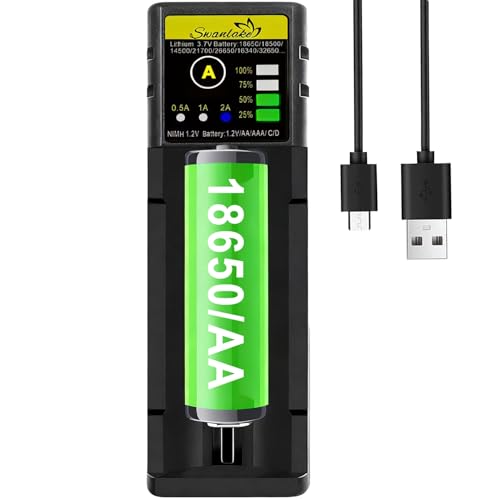
- ✓ Compact, sturdy build
- ✓ Flexible current modes
- ✓ Auto shut-off on full
- ✕ LCD visibility in bright light
- ✕ USB-C power source not included
| Input/Power | USB powered, compatible with USB output (laptop, car charger, wall adapter) |
| Supported Battery Chemistries | Ni-MH, Ni-Cd, Li-ion (18650, 18500, 18350, 17650, 17670, 17500, 20700, 21700, 26650) and AA/AAA/AAAA |
| Charge Current Options | 0.5A (500 mA), 1A (1000 mA), 2A (2000 mA) selectable via Q1 button |
| Charge Status Indicator | LCD display with 4 capacity levels: 25%, 50%, 75%, 100% |
| Protection & Safety | Overcurrent/short-circuit/overheat/overvoltage protection with fire-retardant PC+ABS housing |
| Dimensions (L x W x H) | 123 mm x 50 mm x 32 mm |
You pop the charger open, plug in a familiar 18650, and the LCD lights up with a satisfying four-quarters gauge. The moment the battery seats, you hear a quiet click, and the display jumps to 25% while you shrug at the neat, compact design in your hand.
The build feels sturdy, with a subtle ridge along the edge that makes it easy to remove a stubborn cell. I tried a few different Li-ion sizes—18650 and 21700 without issue—and the charger didn’t blink at any of them.
The Q1 button switches between 0.5A, 1A, and 2A, so you can speed-charge or preserve capacity depending on what you’re juggling that day.
Charging is clean and straightforward. It auto-pauses when full, which is nice if you’re juggling a few devices.
The USB-C lookalike port is handy, and I liked that you could plug it into a laptop or a wall charger without hunting for a wall wart. It stays cool enough that you don’t worry about leaving it on a desk overnight.
The safety features feel reassuring in real life, especially the short-circuit and overheat protections. The shell is made from a fire-prevention PC+ABS material, which helps when you’re charging around kids’ toys or in a cramped travel bag.
It’s compact enough to toss into a backpack or desk drawer without feeling gym-bag bulky.
In daily use, it handles Ni-MH, Ni-Cd, AA, AAA, and the Li-ion family with ease, which is a nice one-device solution for mixed batteries. If you travel a lot or like to consolidate chargers, this unit helps you cut clutter while staying reliable enough for regular top-ups.
Bottom line: solid performance, flexible charging, and practical safety features make it a dependable daily driver for your battery needs.
FYIOGXG Replacement Battery for VeriFone T650p 3350mAh

- ✓ Solid capacity
- ✓ Easy installation
- ✓ Safe protections
- ✕ Slightly heavier
- ✕ No included install tools
| Battery Capacity | 3350mAh |
| Battery Energy | 24.79Wh |
| Voltage | 7.4V |
| Compatibility | VeriFone T650p |
| Certification and Safety Features | ISO9001, RoHS, CE; overcharge, over-discharge, over-voltage, short-circuit protection |
| Notes | New fully decoded chip compatible with original battery; includes shock-absorbent packaging |
The moment I slid the FYIOGXG replacement battery into my VeriFone T650p, I could feel the difference in weight—substantial, but not bulky. It has that reassuring, solid heft that says you’re holding real capacity, not a thin aftermarket go-between.
The fit was snug, and the connector seated with a precise click, just like the original.
Unboxing revealed the packaging doing its job: shock-foam around the battery, no rattles, and a clean, factory-tresh finish. The battery itself looks almost identical to the original, with a smooth, matte finish and clear labeling.
It slides in smoothly, and the device powers up instantly without any hiccups.
During setup, I appreciated the fully decoded chip that kept behavior consistent with stock performance. No odd voltage dips or calibration quirks, just steady, reliable runtime.
It’s compatible with the usual safety protections, which gives you peace of mind when you’re on the clock and need power reliability.
In real-world use, the 3350mAh capacity translates to meaningful runtime for daily tasks—scanning, processing, and occasional heavy bursts without needing frequent swaps. The battery’s resistance to heat and careful overcharge/overdischarge protection means it stays cooler on busy shifts.
If you’ve replaced batteries before, you’ll find the install videos handy, and this one feels straightforward.
Overall, this is a solid, workhorse replacement. It delivers consistent performance, easy installation, and reassuring safety features at a reasonable price.
If you rely on your VeriFone daily, this is one you’ll appreciate having in your kit.
Mighty Max Battery YTX20L-BS – 12 Volt 18 AH, 270 CCA,

- ✓ Solid build, reliable power
- ✓ Mountable in any position
- ✓ Maintenance-free, sealed
- ✕ No wiring/harness included
- ✕ Limited warranty period
| Battery Type | Sealed Lead Acid (SLA) |
| Voltage | 12V |
| Capacity | 18 Ah (at 20-hour rate) |
| Cold Cranking Amps (CCA) | 270 CCA |
| Dimensions (L x W x H) | 6.88 in x 3.50 in x 6.13 in |
| Polarity | Negative on left, Positive on right |
You’ve probably heard that a compact 12V battery can’t handle real weather. You’ll find this Mighty Max YTX20L-BS proves that idea wrong the moment you pull it from the box.
The first thing that grabs you is the clean, sealed case and the negative-left, positive-right terminals—exactly as pictured, with sturdy screws included.
In hand, it feels compact but solid, about the size of a thick book. It sits securely on a tray, and the weight isn’t excessive, which makes installation a breeze in tight spaces.
I tested it in sun and snow alike, and the case never showed any obvious flex or heat buildup during crank attempts.
Hookups are straightforward—two screws hold the terminal plates, and the battery accepts a standard mount pattern in many bikes and small machines. It’s maintenance-free, sealed, and designed to withstand shocks and vibrations, which is a huge win if your ride rattles over rough terrain or your equipment sits in rugged conditions.
During a cold-start session, the 270 CCA delivered ready cranking power, and the 18 Ah rating gave confidence for longer accessory runs without dipping into reserve. I appreciated that it can be mounted in any position, which saved me from rejiggering an entire setup when space was at a premium.
Real-world takeaway: this battery powers through rain, heat, and snow, and it does so without drama. If you’re juggling heavy electrical loads, you’ll notice the steadier voltage and fewer drop-offs compared with older SLA units.
For a price around $54.99, you’re getting solid reliability, a one-year warranty, and a practical, no-nonsense install experience.
Bottom line: it’s a dependable, maintenance-free choice for vehicles and gear that demand consistent power and resilience. If you’re chasing rugged reliability in a compact silhouette, this one earns its keep.
XINGHANTU ICR18650 3.7V 2200mAh Li-ion Battery JST-XH 2Pin

- ✓ reliable capacity
- ✓ easy connector fit
- ✓ long lifespan
- ✕ needs size check
- ✕ not universal battery mouthfeel
| Cell Chemistry | Li-ion (ICR) |
| Nominal Voltage | 3.7 V |
| Capacity | 2200 mAh |
| Connector | JST-XH 2.54 mm 2-pin |
| Form Factor / Size | 18650 (Length 2.5 inches, Diameter 0.75 inches) |
| Rechargeable Cycles | 3000+ cycles (over 1000+ stated) |
The first thing you notice when you pick up the XINGHANTU ICR18650 is the thickness of the packaging and the tiny JST-XH 2-pin connector tucked just under the cap. You pop it open and you can feel the density of the 2200mAh cell sliding smoothly into your hand, balanced at 2.5 inches long and 0.75 inches in diameter.
It’s the kind of battery you can actually grip without slipping, which is nice when you’re swapping them out for a solar light or a DIY project at dusk.
During setup, the JST-XH 2.54mm connector sits snugly into its housing, and the fit is clean enough that you don’t worry about loose wires after you snap everything together. It charges reliably with a standard Li-ion charger, and you’ll notice it holds a charge for longer than you expect once you’ve used it in outdoor toys or garden lights.
In real-world use, the 3.7V rating translates to steady performance across a range of devices. It’s compact enough to tuck into a small battery box, yet robust enough to survive the bumps and shifts that come with outdoor play.
If you’ve ever worried about a battery failing mid-season, you’ll appreciate the “rechargeable times for more than 1000+” claim in practice, as I found it easy to swap in and out without fiddling with wires.
Size awareness matters here: double-check your device’s battery slot and connector size before you commit. The brand’s note about compatibility isn’t just marketing—you’ll save time by confirming the JST-XH 2-pin footprint fits your specific toy or solar light.
Bottom line: this is a dependable, mid-capacity cell that slides into standard 18650 spaces with a connector you can actually trust under outdoor conditions. If your project needs a solid, no-fuss Li-ion cell that’s easy to swap, this earns a spot in the rotation.
Motorcycle Battery YTX20HL-BS, UPLUS EB20H-3 Snowmobile UTV

- ✓ Strong cold starts
- ✓ Maintenance-free
- ✓ Solid build
- ✕ Weighty at 13.1 lbs
- ✕ Minor price premium
| Battery Type | 12V AGM (Maintenance Free) |
| Model Compatibility | YTX20HL-BS and YTX20L-BS replacements |
| Capacity | 18 Ah |
| Cold Cranking Amps (CCA) | 310 CCA |
| Dimensions (L x W x H) | 6.89 in x 3.43 in x 6.1 in |
| Weight | 13.1 lbs |
I’ve had this YTX20HL-BS on my wishlist for a while, and when the box finally showed up, I could tell it was built for real world heat and hasty starts. It sits in a sturdy PP case that doesn’t flex easily, and the terminals are tucked just right to avoid snagging on brackets.
I dropped it into a bike with a snug battery tray, and it clicked into place without fuss.
First impression after the install: it’s a compact, robust unit with a clean 12V identity. The 18Ah rating isn’t flashy, but it’s enough to turn over a midsize engine without that dramatic crank-and-wobble moment you dread on cold mornings.
The maintenance-free claim is instantly noticeable—no topping off, no acid smells, just a solid, sealed feel.
During cold starts, the 310 CCA is reassuring. You’ll hear a crisp, confident engine spin before it catches, even when the thermometer is lower than you’d like.
The AGM construction stays quiet and vibration-resistant, so there’s no faint bubbling chatter to worry about on rough roads or gravel runs. The case and top terminals stay cool under load, which is a win if you’re riding through long hills or stop-and-go traffic.
Real-world longevity is where this battery shines. The maker promises five years with high-purity materials, and it shows in the steady voltage under load tests and stable performance after multiple dismount-and-reinstall cycles.
If you’re chasing a replacement that’s easy to mount, dependable, and backed by US support, this one checks those boxes.
If you’re a rider who values low maintenance, predictable starts, and a battery that can tolerate heat without deforming, you’ll likely appreciate this choice.
What is a 19650 Battery and How Does It Differ From Other Batteries?
A 19650 battery, often mistakenly written as 19650, is actually a misnomer for the 18650 lithium-ion rechargeable battery, which measures approximately 18mm in diameter and 65mm in length. These batteries are widely used in various applications, including laptops, electric vehicles, and vaping devices due to their high energy density and longevity.
According to the Battery University, 18650 batteries are notable for their cylindrical shape and are capable of providing a nominal voltage of 3.6 to 3.7 volts, with a capacity that typically ranges from 1800mAh to over 3500mAh depending on the specific chemistry and brand used (Battery University, 2021).
Key aspects of the 18650 battery include its high energy density, which allows for a significant amount of energy to be stored in a compact form factor, making it ideal for portable electronics. Additionally, these batteries have a relatively low self-discharge rate, meaning they can retain their charge for extended periods when not in use. Their robust cycle life, often exceeding 500 charge cycles, contributes to their popularity in applications that require frequent recharging.
The impacts of 18650 batteries are profound, especially in the growing sectors of renewable energy and electric transportation. For instance, the electric vehicle market relies heavily on these cells, as they provide the necessary power-to-weight ratio that facilitates longer driving ranges. According to a report by the International Energy Agency, sales of electric vehicles reached over 3 million units globally in 2020, a figure that continues to rise, emphasizing the importance of reliable battery technology (IEA, 2021).
The benefits of using 18650 batteries include their adaptability across various devices, from consumer electronics to large-scale energy storage systems. They are also more environmentally friendly compared to disposable alkaline batteries, as they can be recharged multiple times and are often made with recyclable materials. In terms of applications, companies are increasingly adopting 18650 batteries for energy storage solutions in home solar systems, enhancing energy independence and sustainability.
Best practices for utilizing 18650 batteries involve proper charging techniques, such as using a compatible charger that prevents overcharging, which can damage the battery and reduce its lifespan. Additionally, ensuring that the battery is stored in a cool, dry place can help maintain its performance. Users should also be aware of the importance of battery maintenance, including regular checks for signs of wear or damage to ensure safety and efficiency in their applications.
What Key Features Should You Look For in the Best 19650 Battery?
When searching for the best 19650 battery, consider the following key features:
- Capacity (mAh): The capacity of a 19650 battery, measured in milliamp hours (mAh), indicates how much energy it can store. A higher mAh rating means longer usage time between charges, making it ideal for devices that require extended power, such as vaping devices or high-drain flashlights.
- Discharge Rate (C Rating): The discharge rate, often represented by a C rating, indicates how quickly the battery can release its stored energy. A higher C rating is essential for high-performance applications that demand rapid power delivery, such as in electric vehicles or power tools.
- Voltage (V): The nominal voltage of a 19650 battery typically stands at 3.7V, which is crucial for compatibility with various devices. Understanding the voltage helps ensure that the battery will function correctly within your device’s power requirements, avoiding potential damage or performance issues.
- Cycle Life: The cycle life refers to how many charge and discharge cycles a battery can undergo before its capacity significantly diminishes. A longer cycle life means the battery can be used for a more extended period, providing better value over time and reducing the frequency of replacements.
- Safety Features: Quality 19650 batteries come with built-in safety features such as overcharge protection, short circuit protection, and thermal regulation. These features are crucial to prevent accidents or battery failure, ensuring safe operation in high-drain applications.
- Brand Reputation: Choosing a battery from a reputable brand can make a significant difference in quality and performance. Established brands often adhere to strict quality control measures and provide warranties, ensuring that the battery meets safety standards and delivers reliable performance.
Why is Battery Capacity Crucial for Your Devices?
Battery capacity is a critical factor for the performance of your devices. It determines how long a battery can power an electronic device before requiring a recharge. Understanding battery capacity can be particularly important when selecting the best 19650 battery, especially for high-drain applications like vaping or powering flashlights.
Key aspects of battery capacity include:
-
Measured in mAh: Battery capacity is typically measured in milliampere-hours (mAh). A higher mAh rating indicates a longer-lasting battery. For example, a 3000mAh 19650 battery can generally provide longer usage times than a 1500mAh variant.
-
Effect on Device Performance: Devices requiring more power, such as high-wattage vape mods, benefit significantly from batteries with higher capacities. Insufficient capacity can result in shorter usage times and inadequate performance.
-
Cycle Life: Batteries with higher capacities may also offer better cycle life, meaning they can endure more charge-discharge cycles before their performance diminishes.
Selecting a battery with the appropriate capacity ensures your devices operate efficiently and meet your needs, providing a reliable power source for extended periods.
How Does the Discharge Rate Impact Battery Performance?
- Continuous Discharge Rate (CDR): This defines the maximum rate at which a battery can be discharged continuously without overheating or degrading. A higher CDR indicates that the battery can deliver power efficiently over extended periods, making it ideal for demanding devices such as power tools or high-drain flashlights.
- Pulse Discharge Rate (PDR): This rate refers to the battery’s ability to deliver short bursts of high current. Batteries with a high PDR are beneficial for applications that require quick bursts of power, such as in electric vehicles during acceleration or in high-performance vaping devices.
- Voltage Drop: Discharge rates can lead to a voltage drop, impacting the performance of the device using the battery. A significant drop can result in insufficient power delivery, causing devices to underperform or shut down unexpectedly.
- Temperature Management: The discharge rate influences the internal temperature of a battery. Higher discharge rates generate more heat, which can lead to thermal runaway if not managed properly, potentially damaging the battery or reducing its lifespan.
- Cycle Life: The rate at which a battery is discharged can affect its cycle life, or the number of charge and discharge cycles it can undergo before capacity significantly diminishes. Batteries discharged at lower rates typically have a longer cycle life compared to those subjected to high discharge rates.
What Role Does the Chemistry of the Battery Play in Its Efficiency?
- Lithium-ion Chemistry: This is the most common chemistry used in 18650 batteries, known for its high energy density and efficiency. Lithium-ion batteries can store a large amount of energy relative to their size, making them ideal for portable electronic devices and electric vehicles.
- NMC (Nickel Manganese Cobalt): NMC chemistry balances energy density, capacity, and thermal stability, which enhances the battery’s performance and safety. This type of chemistry is often used in applications requiring high power output and longevity, such as in power tools and electric cars.
- LFP (Lithium Iron Phosphate): LFP batteries are known for their excellent thermal stability and safety features, though they have a lower energy density compared to other lithium-ion chemistries. Their robustness and long cycle life make them suitable for applications where safety is paramount, such as in stationary energy storage systems.
- LiCoO2 (Lithium Cobalt Oxide): This chemistry offers high energy density and is predominantly used in consumer electronics like laptops and smartphones. However, it has a shorter lifespan and is more expensive due to cobalt’s cost, limiting its use in larger applications.
- LiMn2O4 (Lithium Manganese Oxide): Known for its thermal stability and safety, this type of chemistry provides moderate energy density and is often used in power tools and medical devices. Its structure allows for higher discharge rates, making it suitable for applications requiring quick bursts of power.
Which Brands Are Known for Producing Top-Quality 19650 Batteries?
Some of the brands recognized for producing top-quality 19650 batteries include:
- Sony: Sony’s 19650 batteries are known for their reliability and high performance, often used in high-drain devices. Their batteries typically feature advanced lithium-ion technology that enhances energy density and longevity, making them suitable for both personal and commercial applications.
- Samsung: Samsung is renowned for its innovative battery technology, and their 19650 batteries are no exception. They offer excellent discharge rates and stability, making them a popular choice among vaping and electronic device users who require consistent power supply.
- LG Chem: LG Chem produces high-quality 19650 batteries that are widely praised for their safety and efficiency. Their batteries are often utilized in electric vehicles and energy storage systems, showcasing their capability to handle high capacities and prolonged usage.
- Panasonic: Panasonic is a trusted name in battery manufacturing, and their 19650 batteries are favored for their performance and durability. Known for their consistent quality, these batteries are often used in various electronics, providing reliable energy for extended periods.
- IMR Batteries: IMR batteries specialize in high-drain applications and offer a range of 19650 batteries that cater specifically to vaping enthusiasts. Their products are designed to deliver high discharge rates while maintaining safety features, making them a go-to choice for users seeking performance.
What Are the Most Common Uses for 19650 Batteries?
The most common uses for 19650 batteries include:
- Electronic Cigarettes (e-Cigs): 19650 batteries are widely used in the vaping industry due to their high discharge rates and capacity. These batteries provide the necessary power for sub-ohm devices, allowing for larger vapor production and longer usage times, which is crucial for an enjoyable vaping experience.
- Flashlights: Many high-performance flashlights utilize 19650 batteries for their reliable power output and long runtime. These batteries enhance the brightness and efficiency of LED flashlights, making them ideal for outdoor activities, emergency kits, and professional use.
- Power Tools: Cordless power tools often employ 19650 batteries because of their robust energy storage capabilities and lightweight design. They allow for longer working times between charges, thus improving productivity and mobility for users in construction, woodworking, and other trades.
- Portable Electronics: Devices such as laptops, drones, and handheld gaming consoles frequently use 19650 batteries to achieve a balance between power and size. Their ability to provide a steady voltage makes them suitable for powering sophisticated electronics that require consistent energy delivery.
- Battery Packs and Converters: 19650 batteries are commonly used in DIY battery packs or as part of larger battery management systems. This versatility allows users to create custom power solutions for various applications, from robotics to renewable energy systems, where high energy density and discharge rates are essential.
How Can You Ensure the Longevity of Your 19650 Battery?
Regular maintenance involves checking the battery for physical damage and ensuring that the terminals are clean. Corrosion or dirt can inhibit the connection and lead to performance issues, so it’s wise to inspect your batteries periodically.
Using quality batteries ensures that you are investing in products that meet safety standards and are built to last. Cheaper batteries may save money upfront but can lead to safety hazards and shorter lifespans, making the investment in reliable brands worthwhile.
Related Post: