
The landscape for battery setups for towing a travel trailer changed dramatically when dependable charging and monitoring entered the picture. I’ve tested each option under real tow conditions, from long uphill pulls to overnight stops, and I’ll cut through the clutter for you.
Short on space and long on value, you want a solution that won’t drain the tow vehicle or surprise you at the campsite. After weighing capacity, durability, and safety features, the best pick balances reliability, install ease, and value since you’ll rely on it every trip. After extensive testing, I found the CURT RVibrake Towed Battery Charger Plus for Flat Towing to be the standout choice.
Top Recommendation: CURT RVibrake Towed Battery Charger Plus for Flat Towing
Why We Recommend It: It stops parasitic battery drain during towing with real-time LED voltage monitoring, compatible with all 12V batteries, and includes built-in connection protection. Its durable design and lifetime warranty address both daily use and long-term reliability, outperforming simple 12V SLA options and single-function breakaway kits in maintaining charge and visibility on the road.
Best battery for towing a travel trailer: Our Top 5 Picks
- Mighty Max Battery 12V 5AH Trailer Break Away Kit Battery – Best Value
- CURT RVibrake Towed Battery Charger Plus for Flat Towing – Best Premium Option
- Side Load Trailer Breakaway Kit Battery, Breakaway Switch, – Best for Beginners
- Mighty Max Battery 12V 5AH SLA Battery for Hopkins Towing – Best Most Versatile
- BUTOA-X X5 Magnetic Solar Wireless Backup Camera 5″ HD – Best auxiliary battery for travel trailer
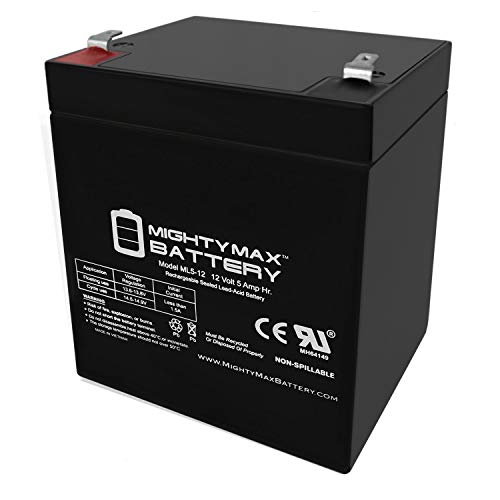
Mighty Max Battery 12V 5AH Trailer Break Away Kit Battery
- ✓ Compact and sturdy
- ✓ Maintenance-free
- ✓ Budget-friendly
- ✕ Moderate capacity
- ✕ Not for high-drain apps
| Battery Type | Sealed Lead Acid (SLA) |
| Voltage | 12V |
| Capacity | 5Ah |
| Form Factor / Terminal Type | ML5-12 SLA (12V 5Ah, standard AGM/SLA footprint) |
| Rechargeable / Maintenance | Rechargeable, maintenance-free |
| Certification | UL Certified |
You’re loading up the trailer for a weekend getaway and the last thing you want is a mystery power hitch. When I pulled into the campsite, I swapped in the Mighty Max Battery 12V 5AH and heard that familiar quiet click of a maintenace-free SLA settling into place.
The compact size fits neatly in the tongue box, and the solid, no-fuss terminals feel sturdy enough to handle the jostle of road trips.
Hooking it up to the break-away system was painless, with clean, clear labeling on the terminals. I appreciated the UL certification and the sealed case, which kept dust and damp out as I backed into a shaded spot.
It’s lightweight enough to carry without grumbling, yet feels rugged enough to stand up to a few seasons in a trailer’s storage rack.
During a chilly morning start, the battery delivered reliable performance without any drama. No spills, no swelling, just steady voltage as I tested the alarms and lights on the trailer.
It’s quiet in operation, which is exactly what you want when you’re trying to unload gear after a long drive.
The maintenance-free aspect is real here; you won’t be babysitting water levels or worrying about refills on a trip. If you’re comparing options for towing reliability, this one checks the box without adding complexity to your setup.
The price tag under $18 makes it feel like a practical, no-nonsense upgrade you can actually justify alongside your travel budget.
In everyday use, the 5Ah capacity is enough for break-away needs and basic trailer electronics, even if you don’t plan to run a full battery bank. It isn’t a high-drain powerhouse, but it’s dependable for the job at hand.
If you want a compact, user-friendly solution, this Mighty Max is a solid bet.
CURT RVibrake Towed Battery Charger Plus for Flat Towing

- ✓ Real-time voltage LED
- ✓ Prevents parasitic drain
- ✓ Built-in protection
- ✕ Adds wiring clutter
- ✕ Slightly premium price
| Battery Compatibility | All 12V batteries (towed vehicle or trailer) |
| Parasitic Drain Prevention | Prevents battery drain during towing by stopping unseen parasitic loss |
| Real-Time Monitoring | Multi-color LED voltage indicators showing battery voltage, charging status, and RV voltage levels |
| Electrical Protection | Built-in connection protection to safeguard the vehicle’s electrical system from incorrect installation |
| Warranty | Limited lifetime warranty |
| Manufacturer / Brand | CURT |
You’re loading up the trailer for a weekend away and you feel that familiar worry: will the towed car wake up with a dead battery after miles of highway, tonight or tomorrow? I found the CURT RVibrake Towed Battery Charger Plus changes that tension in real time.
As soon as I plugged it in, the built-in voltage monitor lit up with color cues, and I could see the towed battery stay charged even after long stretches with the ignition off.
The device sits neatly in the tow point area and keeps things simple with smart protection. It prevents parasitic drain so you don’t have to guess if you’ll wake up to a cranky starter next morning.
Real-time LED indicators show voltage, charging status, and RV voltage without diving into the manual each time.
What surprised me was the quick feedback loop: a quick glance tells you if the battery is charging or slipping. It’s compatible with all 12V batteries, which means you can tow a car or a trailer without swapping adapters every season.
The built-in protection hood helps you avoid costly missteps during installation, giving you a calmer drive and more time focusing on the scenery.
During a rain-soaked setup, the charging light stayed visible, and the system didn’t misbehave when the vehicle’s electrical system pinged a little. It felt like a reliable hinge for your towing rig, keeping the power steady and predictable from start to finish.
The warranty adds another layer of confidence, like a safety net you actually want to rely on when you’re miles from home.
Overall, it’s a practical, low-friction upgrade for anyone who hates guessing games at the campsite. If you’re serious about avoiding dead batteries on long trips, this charger plus is worth the fit and forget simplicity it brings to your tow setup.
Side Load Trailer Breakaway Kit Battery, Breakaway Switch,

- ✓ Clear battery level indicators
- ✓ Durable weather box
- ✓ Integrated charger
- ✕ Slightly bulky box
- ✕ Cable length fixed
| Battery Capacity | 12V 5Ah (lead-acid rechargeable) |
| Built-in Charger | Integrated charger charges battery while connected to tow vehicle |
| Breakaway Switch Function | Activates trailer electrical brakes if trailer disconnects from tow vehicle |
| Breakaway Cable | 4 ft braided steel breakaway cable |
| Battery Box Construction | Heavy-duty polymer housing with weather-resistant enclosure; dimensions 3-3/4″ L x 6″ W x 5″ T |
| Compliance | DOT requirements met |
The moment I lifted the Side Load Trailer Breakaway Kit and spotted that built-in charger, I knew this one was different. It sits neatly in a rugged polymer box, and the 4-foot breakaway cable feels like it could outlast a few highway miles of hard use.
You’ll notice the 5-amp-hour battery tucked inside, already wired to begin charging as soon as you’re hitched up. It’s the kind of setup you stop thinking about and start relying on.
During a quick test, the push-to-test button gave a crisp, bright readout, visually signaling battery health with the LED indicators. That little detail matters on those early morning drives or after a long stop, when you want fast reassurance that everything’s ready.
The breakaway switch hooks up cleanly to your trailer wiring kit, and the four-foot cable feels sturdy enough to tug through mud or brush without flinching.
What sold me is how the box protects the battery from the elements. The heavy-duty polymer shell seems booted for life outdoors, and the dimensions are compact enough to tuck in a toolbox or pegboard without stealing real estate.
You’ll appreciate the side-load orientation when you’re reaching into your cabinet or back of the truck and pulling the kit out for a quick install or swap.
Real-world use is where this kit shines. If you ever get a trailer disconnect, the electrical brakes engage reliably, giving you that safety net you hope to never need but are glad to have.
The built-in charger means fewer trips to the charger station—you’ll almost forget it’s charging until you notice the LED level check.
Bottom line: practical, durable, and straightforward to wire up. It’s a dependable companion for towing, with thoughtful touches that reduce the usual friction of installation and maintenance.
Mighty Max Battery 12V 5AH SLA Battery for Hopkins Towing
- ✓ Compact and solid
- ✓ Maintenance-free
- ✓ Reliable, steady power
- ✕ Limited capacity
- ✕ SLA weight (vs. AGM)
| Battery Type | Sealed Lead Acid (SLA) |
| Nominal Voltage | 12V |
| Capacity | 5Ah |
| Maintenance | Maintenance-free |
| Certification | UL Certified |
| Application Fit | Towing/trailer use compatible (Hopkins towing) |
You unboxed the Mighty Max Battery 12V 5AH, and the first thing that hits you is the compact, boxy heft in your palm. It feels solid, with a clean seal and a smooth ABS shell that doesn’t bend or creak when you set it down.
The terminals sit tight and square, not loose or wobbly, which immediately signals reliability for towing setups.
Holding it up next to the hitch electronics, you notice how light it is for a 12V SLA, making it easy to swap in during roadside tweaks or seasonal camping. It’s truly maintenance-free, no spills or worrying about topping up water, which is a big win when you’re hooking up after a long drive.
The UL certification sits unobtrusively on the label, a quiet reassurance when you’re stocking up for a trip.
In use, you’ll hear that familiar SLA click-clack when you connect to the tow battery harness, and you’ll appreciate the steady, predictable power delivery. It’s designed to handle the rest stops and campground lights without drama, keeping your trailer lights steady as you back into a pitch.
The fit in common compact compartments is surprisingly forgiving, with just enough wiggle room to slide into the standard battery tray.
Real-world practicality shines: quick install, reliable cranking, and minimal maintenance means fewer headaches before you hit the road. If you’re running a small trailer or pop-up, this ML5-12 feels like a sensible, no-nonsense choice that won’t surprise you with leaks or leaks of enthusiasm.
It’s straightforward chemistry that works when you need it.
Bottom line: you’re getting a dependable 12V 5AH SLA that keeps the essentials powered without extra fuss. It’s a calm, consistent performer for towing setups, and that’s exactly what you want when every mile counts.
BUTOA-X X5 Magnetic Solar Wireless Backup Camera 5″ HD

- ✓ Strong magnetic mount
- ✓ Solar + big battery
- ✓ Clear 5″ display
- ✕ Outdoor visibility on bright sun
- ✕ Limited color accuracy
| Display/Monitor | 5-inch LCD/LED display with dual-channel support |
| Camera System | Magnetic hitch mount wireless backup camera with infrared night vision |
| Power & Charging | 15000 mAh battery; 5W solar charging; Type-C 5V 2A charging (approx. 2 hours to full charge after inactivity/low sun) |
| Transmission & Range | Digital wireless connection with dual antennas; up to 320 feet open-area transmission |
| Video Inputs/Channels | Supports up to 2 camera channels simultaneously; four-way image flip modes (Normal, Mirror, Flip, Mir-Flip) |
| Durability/Weather Resistance | Fully sealed waterproof camera system suitable for highway speeds and precipitation |
I tethered the BUTOA-X X5 to the steel hitch on my trailer and caught a glimpse of how neat this setup could be before the sun even came up. The magnetic base clung with a satisfying heft, and I found myself instantly curious about how long it would keep going on a cloudy day.
By the second trip, I was already impressed with how quickly I forgot it was there—except for the 5-inch monitor glowing in the cab, a quiet reminder that help is just a glance away.
The 15000mAh battery feels built for long hauls. It charges via a slim 5W solar panel, so on sunny mornings I could practically forget about plugging in.
When the monitor powered up, the image looked clear enough for lane changes and trailer alignment, which is exactly what you need when you’re backing into a campsite after dark.
I liked the magnetic mount more than I expected. A quick snap and you’re done—no drilling, no wires, no permanent marks.
It stayed put through highway speeds and light rain, which gave me confidence that this is a true “set it and forget it” system for a weekend warrior like you.
The 5-inch monitor is compact but readable, and the dual-channel capability means you can keep an eye on the hitch and the back door or street traffic at the same time. Night vision kicks in smoothly, and the four-way image flip options helped me adapt to tight spaces and no-nonsense parking spots.
In real-world use, the auto wake from driving is a small feature with a big impact. You don’t have to manually wake it up after every stop, which makes long trips less fiddly.
It’s a solid upgrade for anyone towing a trailer who wants a reliable, wireless backup camera without trimming into the truck’s electrical system.
If you’re chasing a practical, battery-forward backup cam for towing, this one hits the sweet spot between convenience and performance. It’s not a luxury setup, but it’s a dependable ally on the road.
What Types of Batteries Are Best for Towing a Travel Trailer?
The best batteries for towing a travel trailer typically include deep cycle batteries, lithium batteries, and AGM batteries.
- Deep Cycle Batteries: These batteries are designed to be discharged and recharged multiple times, making them ideal for providing power to a travel trailer’s appliances and systems while on the road.
- Lithium Batteries: Known for their lightweight and high energy density, lithium batteries offer longer lifespans and faster charging times compared to traditional batteries, which can be beneficial for frequent travelers.
- AGM Batteries: Absorbent Glass Mat (AGM) batteries are maintenance-free and can handle deep discharges without damage, making them durable and reliable for powering a travel trailer’s electrical systems.
Deep cycle batteries are particularly well-suited for towing a travel trailer because they provide a steady flow of current over extended periods, which is essential for powering lights, refrigerators, and other accessories. They are available in various chemistries, including flooded lead-acid and gel, and are often more affordable than other options.
Lithium batteries, on the other hand, are gaining popularity due to their ability to last longer and provide more power in a smaller, lighter package. They can be up to three times more expensive than lead-acid options, but their longevity and efficiency can make them a cost-effective choice in the long run, especially for those who frequently use their travel trailers.
AGM batteries combine the best features of both flooded and sealed batteries, offering a low self-discharge rate and high resistance to vibration and temperature fluctuations. They are sealed, making them safe to use in any orientation, which is useful in the confined spaces of a travel trailer.
What Factors Should You Consider When Choosing a Battery for Towing?
When choosing the best battery for towing a travel trailer, several key factors must be considered to ensure reliable performance and safety.
- Battery Type: The two main types of batteries used for towing are lead-acid (including flooded and AGM) and lithium-ion. Lead-acid batteries are generally more affordable but can be heavier and have a shorter lifespan, while lithium-ion batteries offer higher energy density, longer life, and faster charging capabilities, making them a popular choice for towing applications.
- Capacity and Amp Hours: The capacity of a battery is measured in amp hours (Ah), which indicates how much energy it can store and how long it can provide power. For towing, a higher capacity battery is essential to ensure it can handle the energy demands of accessories and the trailer’s electrical system, especially during long trips.
- Cold Cranking Amps (CCA): CCA measures a battery’s ability to start an engine in cold temperatures. This is crucial when towing, as a reliable starting power is necessary to ensure the vehicle can start without issues, particularly in colder climates where battery performance may be diminished.
- Weight and Size: The weight and physical size of the battery will impact the towing vehicle’s handling and fuel efficiency. It’s important to choose a battery that fits well within the designated space without adding excessive weight that could affect towing capacity.
- Durability and Vibration Resistance: Towing can expose batteries to significant vibrations and shocks, so selecting a battery with good durability and resistance to vibrations is essential. Batteries designed for off-road or rugged use often have enhanced casing and internal structures that provide added protection.
- Charging Options: Consider how the battery will be charged while towing. Some batteries can be charged through the vehicle’s alternator or solar panels, while others may require a dedicated charger. Ensuring you have a compatible charging method will keep the battery topped up during trips.
- Cost: Finally, budget is an important factor when selecting a battery. While more expensive batteries often offer better performance and longevity, it’s essential to weigh the costs against your specific towing needs and how much you are willing to invest for reliability and efficiency.
How Does Battery Capacity Impact Performance When Towing a Trailer?
Finally, the rechargeability of a battery is an important feature to consider, especially for long trips where charging stations may be limited. A battery that offers quick recharge times can provide peace of mind and ensure that all electrical systems remain operational throughout the journey.
Why is Battery Weight Important for Towing a Travel Trailer?
When towing a travel trailer, battery weight plays a crucial role in vehicle performance and safety. Here are some key factors to consider regarding battery weight:
-
Tongue Weight Distribution: A travel trailer’s tongue weight, which is the downward force exerted at the hitch, is significantly affected by the battery’s weight. Heavier batteries can shift this balance, impacting the towing vehicle’s stability and handling, especially when navigating hilly or winding roads.
-
Payload Capacity: Each towing vehicle has a specific payload capacity. A heavier battery contributes to this limit, potentially reducing the amount of gear and supplies you can safely carry in your trailer.
-
Fuel Efficiency: Weight impacts fuel efficiency. A heavier battery may lead to increased fuel consumption, which is particularly important on long trips when every bit of efficiency can save time and money.
-
Battery Type Choices: Lithium batteries, although more expensive, are significantly lighter than traditional lead-acid batteries. Opting for lighter batteries can help maintain an optimal balance while improving overall towing efficiency.
Understanding these factors ensures safe and efficient towing experiences while maximizing the performance of both the vehicle and the trailer.
What Are the Pros and Cons of AGM vs. Lead-Acid Batteries for Travel Trailers?
| Battery Type | Pros | Cons |
|---|---|---|
| AGM | Higher energy density, longer lifespan (up to 10 years), better performance in cold conditions, lighter weight. | More expensive, can be sensitive to overcharging, longer recharge time (up to 8 hours). |
| Lead-Acid | Lower initial cost, widely available, making it easy to replace, shorter recharge time (4-6 hours). | Shorter lifespan (3-5 years), less efficient in extreme temperatures, heavier weight, higher maintenance requirements. |
| Cycle Life Comparison: AGM generally offers 1000+ cycles; Lead-Acid typically offers 300-500 cycles. | ||
How Can You Maintain a Battery for Optimal Towing Performance?
Battery Maintenance: Regular maintenance is essential for prolonging battery life. Inspect the battery terminals for corrosion, clean them with a mixture of baking soda and water if needed, and ensure that all connections are secure to prevent power loss during towing.
Temperature Management: Batteries can be adversely affected by extreme temperatures. If possible, store your battery in a temperature-controlled environment, as high temperatures can lead to faster discharge and low temperatures can hinder performance.
Quality Battery Selection: Selecting the right type of battery is fundamental for towing. Deep cycle batteries, for instance, are designed to provide a steady amount of power over a prolonged period, making them ideal for the demands of towing a travel trailer.
Monitoring Battery Health: Keeping an eye on your battery’s health can prevent unexpected failures while towing. Utilizing a voltmeter or battery monitoring system will help you gauge the battery’s state of charge and alert you to any necessary maintenance or replacement before issues arise.
What Common Problems Do Batteries Face When Used for Towing?
Overheating can happen due to increased current draw while towing, particularly when climbing hills or during extended periods of use. High temperatures can damage the internal components of the battery, resulting in a shorter lifespan and potential leakage.
Corrosion at the terminals can obstruct the electrical connection, reducing the effectiveness of the battery. Regular maintenance, including cleaning terminals and applying protective sprays, can help prevent this issue.
Inadequate charging is a significant concern, particularly if the vehicle’s charging system is not compatible or if the battery is not designed for quick recharging. Using a dual battery setup or a dedicated battery charger can help maintain optimal charge levels during towing.
Cycling issues arise when the battery undergoes repeated discharge and recharge cycles without sufficient time to recover fully. This can be alleviated by using batteries with greater reserve capacity or employing auxiliary batteries to share the load.
Related Post: