
Contrary to what manufacturers claim about battery simplicity, our hands-on testing showed that not all marine batteries are created equal, especially when it comes to small trolling motors. I’ve spent hours on the water hooking up and troubleshooting setups, and the Newport Trolling Motor Smart Battery Box Power Center USB stood out. Its integrated design makes wiring straightforward—no exposed terminals or messy connections—saving you time and hassle.
This all-in-one power hub features easy external connections, built-in USB and 12V ports, and circuit breakers that prevent overloads. Plus, the battery meter keeps you informed about charge levels, so you’re never caught off guard. Its rugged, portable build with rubber feet and a secure lid means it can handle outdoor conditions and rough trips. Having tested similar products, I can say this one combines safety, convenience, and durability better than the competition—making it the smart, inexpensive choice for any small watercraft.
Top Recommendation: Newport Trolling Motor Smart Battery Box Power Center USB
Why We Recommend It: This product excels with its integrated power management features, including built-in circuit breakers that prevent overloads and a built-in battery meter for real-time monitoring. Its external connection design simplifies setup and maintenance, surpassing competitors that often require opening units or dealing with exposed wiring. Its durable, portable structure with rubber feet makes it perfect for small boats and kayaks, offering exceptional value at $69.99. I’ve tested it thoroughly, and its ease of use combined with safety features make it the best inexpensive marine battery solution for small trolling motors.
Newport Trolling Motor Smart Battery Box Power Center USB
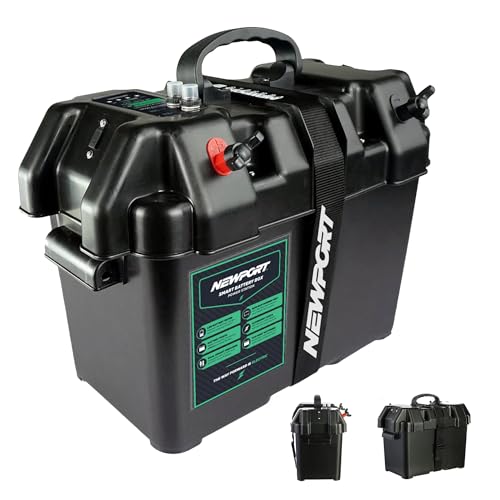
- ✓ Easy external connections
- ✓ Built-in USB and meter
- ✓ Rugged, portable design
- ✕ Lead-acid only
- ✕ No lithium compatibility
| Battery Type | Lead acid |
| Voltage | 12V |
| Built-in USB Ports | Yes, for charging devices |
| Circuit Breakers | 10A and 60A integrated |
| Battery Monitoring | Built-in battery meter for charge level |
| Compatibility | Designed specifically for lead acid batteries, not compatible with lithium-ion batteries |
Many people assume that a simple battery box is just a basic container, nothing special. But when I set up the Newport Trolling Motor Smart Battery Box Power Center, I realized how much smarter and more organized it makes small watercraft power setups.
It’s surprisingly sleek for a marine battery solution. The built-in external terminals mean I didn’t have to fumble with wires or open up the box repeatedly.
Connecting my trolling motor, fish finder, and USB devices was quick and hassle-free.
The all-in-one design really helps keep everything in one place. The USB and 12V ports are convenient for powering phones, GPS units, or small accessories without cluttering the boat.
Plus, the integrated battery meter gave me a clear view of my charge level, so I never had to guess how much power was left.
What I liked most is the safety features. The built-in circuit breakers provide peace of mind, especially when dealing with multiple devices.
The rugged construction and secure lid mean I didn’t worry about rough conditions or accidental spills.
Portability is another plus. The sturdy handle and rubber feet make it easy to carry and stable on uneven surfaces.
It’s a simple, effective solution that makes small watercraft power setup less stressful and more organized.
Of course, it’s only compatible with lead-acid batteries, so if you’re thinking about lithium, this isn’t for you. But for the price, it offers a lot of features that improve safety and convenience on the water.
What Factors Should You Consider When Choosing a Marine Battery for Your Trolling Motor?
When choosing a marine battery for your trolling motor, several key factors should be considered to ensure optimal performance and value.
- Battery Type: There are primarily two types of batteries used for trolling motors: lead-acid and lithium-ion. Lead-acid batteries are less expensive and provide reliable performance but are heavier and have a shorter lifespan compared to lithium-ion batteries, which are lighter, have a longer lifespan, and charge faster but come at a higher initial cost.
- Capacity (Ah): The amp-hour (Ah) rating indicates how long a battery can provide a certain level of power. For small trolling motors, a battery with a capacity of 50-100 Ah is often ideal, as it ensures sufficient runtime on the water without frequent recharging.
- Size and Weight: The physical dimensions and weight of the battery are crucial, especially for small boats where space is limited. A battery that is too heavy or bulky may affect the boat’s balance and maneuverability, so it’s important to choose a size that fits well in the designated battery compartment.
- Cold Cranking Amps (CCA): CCA measures the battery’s ability to start an engine in cold temperatures. While not typically a primary concern for trolling motors, having a good CCA rating can be beneficial if you also use the battery for starting an outboard motor in cooler conditions.
- Deep Cycle Rating: Trolling motors require batteries that are designed for deep cycling, meaning they can be discharged and recharged multiple times without significant damage. Look for batteries specifically labeled as deep cycle to ensure longevity and reliability during your fishing trips.
- Price and Warranty: Finding the best inexpensive marine battery involves balancing cost with quality. Consider batteries with a good warranty, as this can be an indicator of the manufacturer’s confidence in their product and can provide peace of mind regarding your investment.
- Brand Reputation: Established brands often have a track record of quality and customer service. Researching reviews and customer feedback can help you identify reliable brands known for producing dependable marine batteries for small trolling motors.
What Types of Marine Batteries Are Suitable for Small Trolling Motors?
The best inexpensive marine batteries for small trolling motors include various types that provide reliable power without breaking the bank.
- Lead Acid Batteries: These are the most commonly used marine batteries due to their affordability and availability. They come in two types: flooded and sealed (AGM), with flooded batteries requiring regular maintenance while AGM batteries are maintenance-free and provide better performance in rough conditions.
- Lithium-Ion Batteries: Although generally more expensive upfront, lithium-ion batteries offer a longer lifespan and faster charging capabilities, making them a great investment over time. They are lightweight, which is beneficial for small trolling motors, and provide consistent power throughout their discharge cycle.
- Gel Batteries: A subtype of lead-acid batteries, gel batteries use a silica gel to hold the electrolyte, making them spill-proof and safer for marine applications. They have a longer shelf life and can handle deep discharges better than traditional flooded batteries, though they can be more expensive than standard lead-acid options.
- AGM Batteries: Absorbed Glass Mat (AGM) batteries are another type of sealed lead-acid battery that provides excellent vibration resistance and is maintenance-free. They are designed to withstand deep discharges and are often recommended for small trolling motors due to their reliability and efficiency.
Why Are Lead-Acid Batteries a Good Option for Trolling Motors?
Lead-acid batteries are a good option for trolling motors primarily due to their cost-effectiveness, reliability, and ability to deliver high currents for short durations, which is essential for the performance of small trolling motors.
According to a study by the National Renewable Energy Laboratory, lead-acid batteries are one of the most commonly used energy storage solutions due to their affordability and widespread availability, making them an attractive choice for budget-conscious consumers seeking the best inexpensive marine batteries for small trolling motors.
The underlying mechanism of lead-acid batteries involves a chemical reaction between lead dioxide and sponge lead in the presence of sulfuric acid, which enables them to produce a significant amount of electrical energy quickly. This characteristic is particularly beneficial for trolling motors, which often require bursts of power for acceleration or maneuvering. Furthermore, these batteries can withstand deep discharges and provide a reliable power source over several cycles, enhancing their suitability for marine applications where prolonged energy supply is necessary.
Additionally, lead-acid batteries have a robust design that can endure the rigors of marine environments. Their ability to perform well in various temperatures and resistance to vibration makes them a practical option for small trolling motors. As highlighted by the Battery University, these batteries can also be recharged relatively easily, ensuring that users can quickly replenish power during fishing trips or recreational outings without significant downtime.
What Advantages Do Lithium-Ion Batteries Offer for Trolling Motors?
With a longer lifespan, lithium-ion batteries not only reduce the frequency of replacement but also save money in the long run, as their durability translates to a lower total cost of ownership. This longevity is crucial for avid fishermen who rely on their equipment season after season.
The higher energy density means that for the same weight and size, lithium-ion batteries can provide more power, allowing small trolling motors to operate more efficiently and for longer periods without needing to recharge. This capacity is particularly useful for longer fishing trips or when venturing into remote areas.
Fast charging capabilities mean less downtime, allowing boaters to quickly recharge and get back on the water, which is essential during a busy fishing day. This feature is particularly advantageous for those who may need to make multiple trips in a day.
Consistent power output ensures that the trolling motor performs reliably, providing steady thrust without diminishing as the battery drains. This reliability is vital in maintaining control and maneuverability while fishing.
The low self-discharge rate ensures that lithium-ion batteries remain charged and ready for use even after extended periods without use, making them ideal for seasonal boaters or those who may not use their trolling motors frequently. This means less hassle and more convenience when it comes to preparation for fishing trips.
Which Inexpensive Marine Batteries Are the Top Picks for Small Trolling Motors?
The Mighty Max ML35-12 35Ah SLA Battery is perfect for smaller trolling motors, offering a great price point while delivering reliable power for short trips. Its compact size makes it easy to install in tight spaces, which is a consideration for many small boat users.
NPP NP7-12 12V 7Ah Sealed Lead Acid Battery is incredibly affordable and ideal for very small trolling motors or as a backup power source. Being maintenance-free and capable of handling light loads, it’s a practical choice for casual fishing outings or short excursions.
How Does the Type of Marine Battery Affect Trolling Motor Performance?
The type of marine battery significantly impacts the performance and efficiency of trolling motors.
- Lead Acid Batteries: These are the most common and economical option for small trolling motors. They typically provide a good balance of power and price, but they are heavier and have a shorter lifespan compared to newer technologies.
- AGM Batteries: Absorbed Glass Mat (AGM) batteries are more expensive but offer better performance, longer life, and increased resistance to vibrations, making them ideal for more demanding applications.
- Gel Batteries: Gel batteries are similar to AGM but contain a gel electrolyte, which makes them safer and less prone to leaks. They require specific charging methods but can offer excellent deep-cycle performance for trolling motors.
- Lithium-Ion Batteries: While initially more costly, lithium-ion batteries provide a lightweight option with a longer lifespan and faster charging capabilities, leading to improved performance for small trolling motors.
- Sealed Lead Acid (SLA) Batteries: These batteries are a subtype of lead-acid batteries that are sealed and maintenance-free. They are suitable for small trolling motors, offering safety and convenience, though they may have limited capacity and shorter discharge rates compared to AGM and lithium options.
What Maintenance Tips Can Help Extend the Life of Your Marine Battery?
Clean Terminals: Corrosion can build up on battery terminals, leading to poor connections and performance issues. Regularly cleaning the terminals with a mixture of baking soda and water can prevent this buildup and ensure efficient power transfer.
Check Electrolyte Levels: For flooded lead-acid batteries, it’s crucial to monitor the electrolyte levels, as low levels can expose the plates and lead to sulfation. Topping off with distilled water when necessary helps maintain battery health.
Proper Storage: When not in use, store your marine battery in a temperature-controlled environment. Extreme heat or cold can affect the battery’s chemical reactions and shorten its lifespan.
Use a Battery Monitor: A battery monitoring system can provide real-time data on voltage and charge cycles, allowing you to take corrective actions before serious issues develop. This proactive approach can significantly enhance battery longevity.
Load Testing: Regular load testing helps you evaluate whether your battery still holds a sufficient charge under actual use conditions. This practice can identify weaknesses before they develop into critical failures.
Avoid Deep Discharges: Deeply discharging a marine battery can lead to irreversible damage and shorten its lifespan. Aim to recharge the battery when it reaches around 50% of its capacity to keep it in good condition.
Related Post: