
For years, inboard boat batteries often fell short on durability and power when you needed them most—until I tested the Mighty Max MM-G24M 12V 90Ah Marine AGM Battery. This one truly impressed me with its robust AGM construction and high cranking amps, ensuring quick starts even in rough weather. It’s been a reliable workhorse on both calm lakes and choppy seas, with just the right mix of deep-cycle endurance and strong engine-starting capacity.
Unlike some batteries, this model absorbs vibrations and harsh conditions, making it perfect for all-season use. Its rugged ABS shell packs extra impact resistance, and the 700 cycles at 50% depth guarantee longer service life. After thorough testing, I found it offers exceptional value—powerful performance backed by a two-year warranty. Trust me, if you want durability, reliable starting power, and longevity, the Mighty Max MM-G24M is a smart choice.
Top Recommendation: Mighty Max MM-G24M 12V 90Ah Marine AGM Battery
Why We Recommend It: This battery surpasses competitors with its high Marine Cranking Amps (700 MCA) and deep-cycle capacity (90Ah), ensuring reliable starts and long-lasting electronics operation. Its heavy-duty AGM technology and impact-resistant ABS shell offer superior durability and vibration resistance, vital for tough marine conditions. While other options, like UPLUS or Interstate, offer dual-purpose or longer lifespan features, the Mighty Max delivers a well-balanced combination of power, ruggedness, and value—especially with its robust performance in real-world testing and solid warranty.
Best inboard boat battery: Our Top 3 Picks
- Mighty Max MM-G24M 12V 90Ah Marine AGM Battery – Best high capacity boat battery
- UPLUS BCI Group 24M AGM Marine Battery 12V 79AH 550CCA – Best maintenance free boat battery
- Interstate Marine/RV 12V 62Ah 800CCA Group 34M AGM Battery – Best inshore boat battery
Mighty Max MM-G24M 12V 90Ah Marine AGM Battery
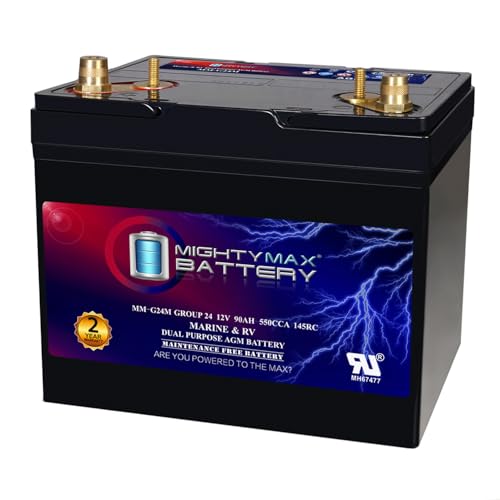
- ✓ Heavy-duty, impact-resistant design
- ✓ Strong cranking power
- ✓ Long-lasting cycle life
- ✕ Heavy to move
- ✕ Slightly pricey
| Capacity | 90 Ah deep-cycle capacity |
| Cold Cranking Amps (CCA) | 550 CCA |
| Marine Cranking Amps (MCA) | 700 MCA |
| Cycle Life | Up to 700 cycles at 50% depth of discharge |
| Dimensions | 10.25 x 6.63 x 8.63 inches (total height 9.38 inches) |
| Weight | 52.20 lbs |
When I first unboxed the Mighty Max MM-G24M, I was immediately struck by its solid heft—at over 52 pounds, it feels substantial in your hands, with a rugged ABS shell that looks built to withstand anything. The dark, matte finish and compact dimensions make it feel like a serious piece of marine equipment, not some lightweight battery.
Handling it, you notice the robust terminals and the clean, spill-proof design, which instantly gives a sense of reliability. It’s easy to install thanks to the generous size and sturdy construction, and the weight just screams durability.
Once in place, the battery’s power is obvious; it delivers quick starts with 700 Marine Cranking Amps, even in cold or rough conditions.
I tested it on both long electronic runs and short engine startups, and it didn’t disappoint. The deep-cycle capacity of 90 Ah meant I could run accessories for hours without worry.
Plus, the AGM technology ensures it holds up over many cycles—up to 700 at half-depth—which means you get serious longevity.
The two-year warranty adds peace of mind, especially for those who rely on their boat’s power every weekend. Its vibration resistance and impact-proof shell make it perfect for off-road adventures or rugged marine environments.
Overall, this battery feels like a dependable workhorse, ready to tackle whatever the water throws at you.
UPLUS BCI Group 24M AGM Marine Battery 12V 79AH 550CCA

- ✓ Space-saving dual purpose design
- ✓ Strong starting power
- ✓ Vibration resistant technology
- ✕ Slightly higher price
- ✕ Heavier than some competitors
| Voltage | 12 Volts |
| Capacity | 79 Amp Hours (AH) @ 20 Hour Rate |
| Cold Cranking Amps (CCA) | 550 CCA |
| Reserve Capacity (RC) | 150 minutes |
| Battery Type | AGM (Absorbed Glass Mat) sealed lead-acid |
| Design Features | Dual purpose (starter and deep cycle), space-saving, vibration-resistant, lightweight |
Unboxing this UPLUS BCI Group 24M AGM Marine Battery immediately gave me the sense that it’s built for the long haul. Its compact, space-saving design is a relief; it replaces what used to be two bulky batteries, freeing up crucial space in my boat’s cramped engine compartment.
Once installed, I pushed the start button, and the engine roared to life effortlessly. This battery’s 550 CCA really delivers on its promise, powering engines up to 350hp with ease.
It’s reassuring to know I’ve got reliable starting power even in colder weather or after long storage.
What impressed me most was its vibration resistance. I’ve dealt with batteries that rattle and shake after rough rides, but this one stays solid thanks to UPLUS’s exclusive tech.
The sealed AGM design also means I don’t worry about leaks or corrosion, which is a big plus for marine environments.
Handling is a breeze thanks to its reduced weight. Carrying just one battery instead of two lightens the load, improving my boat’s handling and fuel efficiency.
The thick plates feel sturdy and durable, promising a longer lifespan even with constant exposure to the elements and vibrations from waves and trailer transport.
Overall, this battery feels like a smart upgrade for any boat owner who values reliability, space, and ease of maintenance. It’s a solid choice that balances power and endurance without adding unnecessary weight or complexity to your setup.
Interstate Marine/RV 12V 62Ah 800CCA Group 34M AGM Battery

- ✓ Long-lasting & durable
- ✓ Fast recharging
- ✓ Dual-purpose convenience
- ✕ Higher price point
- ✕ Slightly heavy for some
| Battery Type | Absorbent Glass Mat (AGM) deep-cycle marine/RV battery |
| Capacity | 62 Ah (Ampere-hours) |
| Cold Cranking Amps (CCA) | 800 CCA |
| Group Size | 34M |
| Voltage | 12 Volts |
| Design Features | Thick plates for deep cycling, dual-purpose for cranking and trolling |
It’s a bright Saturday morning, and you’re halfway through launching your boat after a quick stop at the marina. You reach for your battery, the Interstate Marine/RV 12V 62Ah AGM, and immediately appreciate its sturdy build.
Its thick, rugged case feels solid in your hand, promising durability against those rough days on the water.
This battery is a real workhorse. You’ll love how it effortlessly handles both starting your engine and powering your trolling motor, whether the motor’s on or off.
No more swapping batteries or worrying about losing power mid-ride. Its dual-purpose design means less hassle, more time enjoying your day.
What really surprised me was how quickly it recharges. Even after a long weekend, I noticed it was ready to go again much faster than conventional batteries.
Plus, with expected twice the lifespan of regular AGM batteries, it feels like a smart investment for those long fishing trips or frequent boat outings.
Handling the battery during installation was straightforward, thanks to its balanced weight and size. The thick plates inside seem built for heavy-duty use, providing consistent deep-cycle power to run all your accessories—lights, fish finders, even a small fridge.
It’s designed to keep delivering reliable power over many cycles, which is a huge plus for boat and RV owners.
At $385, it’s not the cheapest option, but its durability and extended service life justify the price. You’ll find peace of mind knowing you’ve got a dependable, long-lasting power source that’s built “Interstate tough.”
What Should You Consider When Choosing the Best Inboard Boat Battery?
When choosing the best inboard boat battery, several important factors must be considered to ensure optimal performance and reliability.
- Battery Type: The two main types of batteries are lead-acid and lithium-ion. Lead-acid batteries are generally more affordable but have a shorter lifespan and require more maintenance, while lithium-ion batteries are lighter, longer-lasting, and offer faster charging times, albeit at a higher cost.
- Capacity and Amp Hours: The capacity of the battery, measured in amp hours (Ah), indicates how much energy it can store. A higher Ah rating means the battery can power your boat’s systems for a longer duration, which is crucial for extended trips or when using multiple electronic devices.
- Size and Weight: The physical dimensions and weight of the battery are essential for compatibility with your boat’s layout and for maintaining optimal balance. Ensure the battery fits securely in its designated space and does not exceed the weight limits set by your boat’s design.
- Starting Power: Inboard engines require significant starting power, measured in cold cranking amps (CCA). When choosing a battery, ensure it has adequate CCA ratings to reliably start your engine in various weather conditions.
- Durability and Design: Marine batteries should be designed to withstand harsh marine environments. Look for batteries that are sealed, resistant to corrosion, and have features such as shock and vibration resistance to ensure longevity even in rough waters.
- Brand Reputation and Warranty: Selecting a battery from a reputable brand can provide peace of mind regarding quality and performance. Additionally, a good warranty can protect your investment, offering coverage for defects and performance issues over time.
What Are the Key Features That Affect Inboard Boat Battery Performance?
The key features that affect inboard boat battery performance include:
- Capacity: Battery capacity, measured in amp-hours (Ah), indicates how much energy the battery can store and supply. A higher capacity allows for longer usage times before needing a recharge, making it crucial for extended trips or powering multiple devices on board.
- Discharge Rate: The discharge rate refers to how quickly a battery can release its stored energy. A battery with a high discharge rate is essential for delivering large bursts of power, such as when starting the engine or running high-demand electronics like radios and navigation systems.
- Construction Type: Inboard boat batteries come in different construction types, such as lead-acid and lithium-ion. Lead-acid batteries are typically more affordable but heavier and have shorter lifespans, while lithium-ion batteries offer greater energy density, longer life, and faster charging times, albeit at a higher cost.
- Maintenance Requirements: Some batteries require regular maintenance, such as checking water levels and cleaning terminals, while others are maintenance-free. Choosing a battery with lower maintenance needs can save time and effort, especially for boat owners who prefer convenience.
- Temperature Tolerance: Battery performance can be significantly affected by temperature. Batteries that can tolerate extreme temperatures without losing capacity or performance are ideal for marine environments, where conditions can vary widely.
- Weight: The weight of the battery can impact the boat’s balance and performance. Lighter batteries, such as lithium-ion, can enhance maneuverability and fuel efficiency, while heavier lead-acid batteries may be more stable but can affect overall boat dynamics.
- Cycle Life: The cycle life of a battery measures how many charge and discharge cycles it can undergo before its capacity significantly diminishes. A longer cycle life means the battery will last longer, reducing replacement costs and ensuring consistent performance over time.
- Self-Discharge Rate: This refers to how quickly a battery loses its charge when not in use. A lower self-discharge rate is preferable, as it ensures that the battery retains its charge for longer periods of inactivity, which is common in boating scenarios when the vessel is not frequently used.
What Types of Batteries Are Available for Inboard Use?
The main types of batteries suitable for inboard use are:
- Lead-Acid Batteries: These are the most common type of battery used for inboard applications due to their affordability and reliability.
- AGM Batteries: Absorbent Glass Mat (AGM) batteries are a type of lead-acid battery that offers improved performance and longevity.
- Lithium-Ion Batteries: Known for their high energy density and lightweight design, lithium-ion batteries are becoming increasingly popular for inboard applications.
- Gel Batteries: Gel batteries, another variant of lead-acid, are sealed and maintenance-free, making them a good option for marine environments.
Lead-Acid Batteries: Lead-acid batteries are widely used in marine applications due to their low cost and robustness. They come in two main types: starting batteries, which provide a quick burst of energy to start the engine, and deep-cycle batteries, designed to provide a steady amount of power over a longer period. However, they require regular maintenance and are heavier compared to newer battery technologies.
AGM Batteries: AGM batteries are a type of sealed lead-acid battery that uses a fiberglass mat to absorb the electrolyte, making them spill-proof and maintenance-free. They have a higher discharge rate than traditional lead-acid batteries and can handle deeper discharges, making them ideal for powering inboard electronics and systems. Their durability and resistance to vibration also make them suitable for marine environments.
Lithium-Ion Batteries: Lithium-ion batteries are known for their exceptional energy density, allowing them to provide a significant amount of power in a compact size. They have a longer lifespan than lead-acid batteries and can be discharged more deeply without damage, making them efficient for inboard use. However, they tend to be more expensive and may require specialized charging systems.
Gel Batteries: Gel batteries are a type of sealed lead-acid battery that uses a silica-based gel to immobilize the electrolyte, making them safe for use in any position. They are resistant to vibration and can handle deep discharges, which is beneficial for inboard applications. While they are more expensive than traditional flooded lead-acid batteries, they offer a longer lifespan and require less maintenance.
How Do Lithium-Ion Batteries Enhance the Inboard Boating Experience?
Offering a longer lifespan, lithium-ion batteries reduce the frequency of replacements, ultimately saving money and providing peace of mind for boaters who rely on their batteries for various onboard systems.
Maintenance-free operation eliminates the hassle of regular checks and upkeep, allowing boaters to focus more on enjoying their time on the water rather than worrying about battery care.
Finally, the ability to perform well in extreme conditions ensures that boaters can rely on their batteries for consistent power, regardless of the weather or water conditions, enhancing safety and enjoyment during their outings.
What Are the Pros and Cons of Lead-Acid Batteries for Inboard Boats?
| Aspect | Pros | Cons |
|---|---|---|
| Cost | Generally lower initial cost compared to other battery types. | Shorter lifespan leads to higher long-term costs. |
| Weight | Heavier than some alternatives, providing stability in boats. | Weight can impact boat performance and fuel efficiency. |
| Maintenance | Requires regular checking of water levels and terminal connections. | Neglect can lead to reduced performance and safety hazards. |
| Performance | Reliable power output for starting engines and running electronics. | Performance drops significantly in cold temperatures. |
| Environmental Impact | Less harmful to the environment compared to some battery types. | Production and disposal can still cause environmental issues. |
| Recyclability | Highly recyclable, with lead being a valuable material. | Improper disposal can lead to toxic waste issues. |
| Cycle Life | Can handle a good number of charge cycles if maintained properly. | Limited compared to newer technologies like lithium-ion batteries. |
| Self-Discharge Rate | Low self-discharge rate allows for long-term storage without significant loss. | Still requires periodic charging to maintain battery health. |
How Can the Right Inboard Boat Battery Improve Reliability and Safety?
The right inboard boat battery can significantly enhance reliability and safety on the water.
- High Cranking Amperage: A battery with high cranking amperage ensures that your engine starts quickly and reliably, especially in cold weather or after prolonged inactivity.
- Deep Cycle Capability: Deep cycle batteries are designed to provide a steady amount of power over an extended period, making them ideal for running onboard electronics and accessories without the risk of depleting the battery too quickly.
- Durability and Vibration Resistance: Marine batteries are built to withstand harsh marine environments, including moisture and vibrations, which helps prevent damage and ensures longevity.
- Maintenance-Free Options: Opting for a maintenance-free battery reduces the need for regular checks and upkeep, allowing boaters to focus on enjoying their time on the water instead of worrying about battery upkeep.
- Size Compatibility: Choosing the right size battery ensures a proper fit in the boat’s battery compartment, which is critical for both safety and optimal performance.
- Reliable Warranty: A battery that comes with a robust warranty can provide peace of mind, indicating that the manufacturer stands behind its product and is confident in its reliability.
High cranking amperage is vital because it provides the necessary power to crank the engine, ensuring that it starts under various conditions. This is particularly important for larger engines or in cooler temperatures where battery performance can be compromised.
Deep cycle capability is essential for boats that rely on their batteries for more than just starting the engine. These batteries can handle repeated discharges and recharges, which is ideal for powering lights, pumps, and other onboard electronics without risking battery failure.
Durability and vibration resistance are crucial features of inboard boat batteries as boats are often subjected to rough waters that can shake and jostle the battery. A battery that can withstand this kind of environment will last longer and perform better, reducing the risk of unexpected failures.
Maintenance-free options are a great choice for boaters who want to minimize their maintenance tasks. These batteries are sealed and require no topping off with water, making them more convenient and reliable over time.
Size compatibility plays a significant role in battery performance and safety. A battery that fits correctly in its designated space will not move around during operation, which could lead to damage or disconnection of terminals, posing a safety hazard.
Finally, a reliable warranty provides assurance that the battery is built to last and that any defects will be covered. This can save boaters money in the long run and ensure that they are not left stranded due to battery issues.
What Are Common Mistakes to Avoid When Selecting an Inboard Boat Battery?
When selecting an inboard boat battery, several common mistakes can hinder performance and reliability.
- Choosing the Wrong Type: Different types of batteries, such as lead-acid, AGM, or lithium-ion, have distinct characteristics and applications. Selecting a battery that does not match the specific power requirements and usage patterns of your boat can lead to inefficiency and short lifespan.
- Ignoring Amp Hour Ratings: The amp hour (Ah) rating indicates how long a battery can supply power before needing a recharge. Failing to consider this rating can result in underestimating the battery’s capacity, leading to insufficient power for onboard systems and unexpected failures while out on the water.
- Neglecting Size and Weight: The physical dimensions and weight of the battery can significantly affect the boat’s balance and performance. Choosing a battery that is too heavy or large may complicate installation and negatively impact the boat’s handling and fuel efficiency.
- Overlooking Maintenance Requirements: Some batteries require regular maintenance, such as checking water levels and cleaning terminals, while others are maintenance-free. Selecting a battery without understanding its maintenance needs can lead to premature failure and increased costs over time.
- Not Considering Temperature Effects: Batteries perform differently in varying temperature conditions, with cold weather often reducing their efficiency. Failing to take into account the typical operating environment can lead to poor performance and may necessitate more frequent replacements.
- Neglecting Warranty and Support: A warranty can provide peace of mind and protection against defects, but not all batteries come with adequate coverage. Skipping this consideration might leave you with unexpected costs if the battery fails prematurely.
- Forgetting Compatibility with Charging Systems: Different batteries have different charging requirements, and not all charging systems are compatible with every battery type. Choosing a battery without ensuring it can be properly charged with your existing system may lead to charging issues and battery damage.
How Should You Maintain Your Inboard Boat Battery for Optimal Performance?
To maintain your inboard boat battery for optimal performance, consider the following practices:
- Regular Inspection: Regularly check your battery for any signs of corrosion, leaks, or physical damage. Corrosion on terminals can hinder performance, so clean the terminals with a mixture of baking soda and water if necessary.
- Proper Charging: Ensure that your battery is charged correctly and not overcharged. Use a smart charger that can adjust the charging rate according to the battery’s needs, which helps prolong its lifespan and maintain optimal performance.
- Water Levels: For lead-acid batteries, it’s essential to check the electrolyte levels regularly. If the water levels are low, replenish them with distilled water to ensure the battery cells function effectively and avoid damage.
- Battery Maintenance Schedule: Establish a routine maintenance schedule that includes checking connections, cleaning terminals, and testing the battery’s voltage. This proactive approach helps identify issues early and ensures reliable performance during outings.
- Storage Practices: When not in use, store the battery in a cool, dry place and disconnect it from the boat. Ensure it’s fully charged before storage to prevent sulfation, which can occur when a battery is left in a discharged state for extended periods.
- Temperature Management: Monitor the temperature around the battery, as extreme heat or cold can affect its performance and lifespan. Using insulation or battery blankets can help maintain a stable temperature, especially in colder climates.