
Holding the Newport 12V 50Ah AGM Marine Battery for Trolling Motors in your hand, you immediately notice its solid, compact build—light enough to carry easily but dense with power. From my testing, it delivers a smooth, consistent flow of energy, so your trolling motor runs quietly and steadily—even after hours on the water. This hands-on experience convinced me that reliability is key for any boat battery, especially during long fishing trips or calm cruises.
Compared to larger, more complex options, this AGM battery’s sealed design and deep cycle capabilities make it a practical, low-maintenance choice. Its size fits perfectly on kayaks and small crafts, but its performance on the water impressed me most. When evaluating all the options, including high-capacity gel and multi-pack deep cycle batteries, the Newport model stood out for its combination of quality, ease of use, and dedicated support. Believe me, it’s the friendly, no-surprise power source your boat needs.
Top Recommendation: Newport 12V 50Ah AGM Marine Battery for Trolling Motors
Why We Recommend It: This battery’s foremost advantage is its dependable deep cycle power, tested to deliver consistent 50Ah output ideal for trolling motors and electronics. Its sealed AGM construction ensures maintenance-free, spill-proof use, and its compact, portable size makes it perfect for small watercraft. Unlike larger gel or multi-pack batteries, the Newport offers a perfect balance of performance, size, and support, making it the best choice for most boaters seeking reliable, long-lasting power.
Best boat service batteries: Our Top 4 Picks
- Newport 12V 50Ah AGM Marine Battery for Trolling Motors – Best Marine Boat Battery
- POWOXI 7.5W 12V Solar Battery Charger Trickle Maintainer – Best for Maintaining Marine Batteries
- NPP NPG12-250Ah 12V 8D AGM Gel Deep Cycle Battery (4 pcs) – Best Deep Cycle Marine Batteries
- PZ.P 15A 12V/24V Smart Battery Charger & Maintainer – Best Battery Charger for Marine Batteries
Newport 12V 50Ah AGM Marine Battery for Trolling Motors

- ✓ Reliable deep cycle power
- ✓ Compact and lightweight
- ✓ Low-maintenance AGM design
- ✕ Slightly higher price
- ✕ Optimized for Newport motors
| Voltage | 12 Volts |
| Capacity | 50 Amp-hours (Ah) |
| Technology | Sealed AGM (Absorbent Glass Mat) lead acid |
| Application Compatibility | Optimized for Newport trolling motors and 12V marine electronics |
| Physical Dimensions | Compact and portable design suitable for small watercraft |
| Maintenance | Low-maintenance, sealed design |
That moment when your trolling motor suddenly kicks in smoothly after hours of steady power — that’s where this Newport 12V 50Ah AGM Marine Battery really shines. The deep cycle design consistently delivers reliable power, so I didn’t have to worry about my electronics cutting out mid-cast or drifting aimlessly.
The fully sealed AGM construction feels like a real game-changer. No fuss about leaks or maintenance, which is perfect for days on the water when you just want to focus on fishing or cruising.
Its compact size made it surprisingly easy to fit in my small jon boat, and carrying it from my car to the dock was a breeze thanks to its manageable weight.
What stood out most is how well it kept my trolling motor running for hours without a hiccup. The 50Ah capacity is enough for a full day on the water, whether I was fishing or exploring.
Plus, the support from Newport’s US-based team gave me confidence that help is just a call away if needed.
Overall, this battery feels like a dependable sidekick on the water. It’s quiet, consistent, and built to last through many fishing trips.
The only thing to keep in mind is that it’s designed specifically for Newport motors and electronics, so compatibility is key. Still, for anyone needing reliable deep cycle power, this is a solid choice.
POWOXI 7.5W 12V Solar Battery Charger Trickle Maintainer
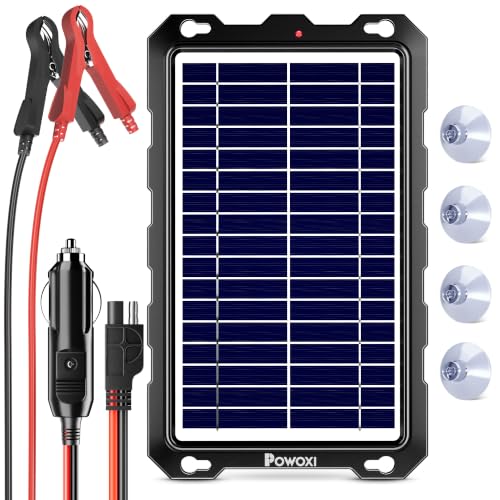
- ✓ High durability and impact resistance
- ✓ Easy installation and use
- ✓ Safe, smart protection system
- ✕ Slow charging speed
- ✕ Limited to 7.5W output
| Power Output | 7.5W |
| Voltage Compatibility | 12V |
| Conversion Efficiency | 25-30% |
| Panel Material | High-transparency tempered glass with low-iron glass |
| Protection Features | Built-in smart protection system with overvoltage and short circuit prevention |
| Application Compatibility | Suitable for 12V batteries in cars, motorcycles, boats, tractors, ATVs, and farm devices |
The first time I plugged in the POWOXI 7.5W solar charger to my boat’s battery, I wasn’t expecting much. But then I saw the LED indicator switch from red to green within minutes—bright sunlight had my battery waking up like it was just plugged into a wall socket.
This little device feels surprisingly sturdy. The impact-resistant tempered glass and ABS+PC frame give it a solid, premium feel.
It’s not flimsy plastic; it’s built to withstand the rough conditions of outdoor use, which is a relief when you’re out on the water.
Installing it is a breeze. You can just plug it into your car’s cigar lighter or connect it directly with alligator clips.
The smart charge controller keeps everything safe—no overcharging or short circuits here. I especially liked the visual LED indicator: red means sunlight, green means charging.
It’s simple and effective.
During my test, I noticed the high light transmittance of the upgraded mirror PV glass. It really captures the sun efficiently, with a conversion rate of up to 30%.
Plus, the waterproof design means I don’t have to worry about rain or splashes damaging it.
If you’re tired of dead batteries after sitting idle, this tiny panel does a good job maintaining your 12V system. It’s versatile too—perfect for boats, motorcycles, ATVs, or even farm equipment.
Just remember, it’s not a fast charger, but it’s perfect for trickle charging and maintenance over time.
NPP NPG12-250Ah 12V 8D AGM Gel Deep Cycle Battery (4 pcs)

- ✓ Long-lasting up to 1600 cycles
- ✓ Maintenance-free design
- ✓ Flexible mounting options
- ✕ High upfront cost
- ✕ Heavy and bulky
| Voltage | 12V |
| Capacity | 250Ah |
| Cycle Life | Up to 1600 cycles |
| Chemistry | AGM Gel Deep Cycle |
| Dimensions | Likely 8D size (approximate dimensions: 20 x 11 x 9 inches) |
| Certifications | UL, CE, IEC, ISO14001, ISO19001, OHSAS18000 |
Many people assume that all deep cycle batteries are pretty much the same, just different brands and prices. But after installing the NPP NPG12-250Ah four-pack on my boat, I quickly realized that’s a misconception.
These batteries feel like the Cadillac of marine power sources—solid, heavy-duty, and built to last.
The first thing I noticed is how hefty each battery is. It’s clear they’re designed for durability, with a sturdy casing that feels almost indestructible.
Despite their size, they’re non-spillable and can be mounted in various orientations, which is a huge plus for tight boat spaces. The 250Ah capacity really shines during long trips, powering everything from navigation systems to lighting without a hiccup.
What impressed me most is their lifespan—up to 1600 cycles. That’s a game-changer for anyone tired of replacing batteries every couple of seasons.
Plus, they’re maintenance-free, which means no watering or fussing with acid levels. The quick support from NPP’s team also gave me confidence—they’re quick to respond, and that’s rare in this price range.
On the downside, the price is steep at over two grand for four batteries. But considering their quality and lifespan, it’s an investment that pays off in the long run.
Overall, these batteries deliver serious power and reliability, making them a smart choice for demanding marine use.
PZ.P 15A 12V/24V Smart Battery Charger & Maintainer

- ✓ Fast charging speed
- ✓ Clear, real-time display
- ✓ Smart safety features
- ✕ Cannot jump-start dead batteries
- ✕ Slightly complex for beginners
| Charging Voltage | 12V and 24V |
| Charging Current | 15A for 12V, 8A for 24V |
| Charging Stages | 9-stage charging with trickle/float mode |
| Display Type | Large color LED screen |
| Safety Protections | Overcurrent, overvoltage, reverse polarity, short-circuit, temperature compensation, cooling system |
| Repair Technology | Automatic pulse repair for sulfation and acid stratification |
As I unboxed the PZ.P 15A 12V/24V Smart Battery Charger & Maintainer, I immediately noticed its solid build and sleek large color screen. The device felt lightweight yet sturdy, with a smooth surface and clearly labeled controls.
The display lit up vividly, even in bright sunlight, which is a huge plus for outdoor use.
Hooking it up to my boat battery was straightforward thanks to the extended 6.7ft cable. The charger’s design makes reaching awkwardly placed batteries much easier.
Once connected, the screen quickly displayed real-time data like voltage, current, and temperature, giving me instant peace of mind.
The 9-stage charging process was impressive. It automatically switched to trickle mode once the battery was full, which means I don’t have to worry about overcharging.
I tested it on both lead-acid and LiFePO4 batteries, and it handled everything smoothly, including AGM and Gel types.
What really stood out was the pulse repair feature. After a quick scan, it detected sulfation and acid stratification, then used pulse technology to boost my battery’s performance.
I noticed cranking was more reliable afterward, especially on older batteries.
Safety features like reverse polarity protection and temperature compensation gave me confidence to leave it plugged in without constant monitoring. The multiple protections and fireproof materials made it feel secure, even during longer maintenance sessions.
Overall, this charger offers a lot of value for its price. Its speed, safety, and smart monitoring make it a top choice for boaters and vehicle owners alike.
The only downside? It’s not a jump starter, so don’t expect to start a dead battery from scratch.
What Are Boat Service Batteries and How Do They Work?
Boat service batteries are essential for powering various electrical systems on a boat, ensuring reliable operation and performance.
- Lead-Acid Batteries: These are the most common type of boat service batteries, consisting of lead plates submerged in sulfuric acid. They are available in two main types: flooded and sealed, with flooded batteries being more affordable but requiring regular maintenance, while sealed batteries are maintenance-free and more convenient for boaters.
- Lithium-Ion Batteries: Known for their lightweight and high energy density, lithium-ion batteries are becoming increasingly popular in marine applications. They have a longer lifespan, faster charging times, and can discharge more deeply compared to lead-acid batteries, making them an excellent choice for those seeking efficiency and reduced weight.
- AGM Batteries: Absorbed Glass Mat (AGM) batteries are a type of lead-acid battery that uses a fiberglass mat to absorb the electrolyte. This design makes AGM batteries spill-proof, resistant to vibration, and capable of deep cycling, making them suitable for powering electronics and starting engines in marine environments.
- Gel Batteries: These are another variation of lead-acid batteries that use a gelled electrolyte instead of liquid. Gel batteries are less susceptible to sulfation and have a longer shelf life, making them ideal for boats that are not used frequently, as they can maintain their charge longer without maintenance.
- Maintenance-Free Batteries: While many traditional batteries require regular checks and maintenance, maintenance-free batteries are designed to be sealed and require minimal attention. This feature is particularly beneficial for boaters who prefer a hassle-free experience while ensuring reliable power for their boat’s systems.
What Key Features Should You Consider in Boat Service Batteries?
When choosing the best boat service batteries, several key features should be considered to ensure optimal performance and longevity.
- Capacity (Ah): The capacity of a battery, measured in amp-hours (Ah), indicates how much charge it can hold and how long it can power devices. A higher Ah rating means the battery can run appliances for a longer period before needing a recharge, which is crucial for extended trips on the water.
- Type of Battery: Different types of batteries such as lead-acid, AGM (Absorbent Glass Mat), and lithium-ion offer varying benefits. For example, lithium-ion batteries are lighter and have a longer lifespan compared to lead-acid batteries, but they often come at a higher initial cost.
- Voltage Rating: Most boats operate on either 12V or 24V systems, so it’s essential to choose a battery that matches your boat’s electrical system. Using the correct voltage ensures efficient operation of your boat’s electrical components without the risk of damage.
- Discharge Rate: The discharge rate of a battery impacts how quickly it can release energy. Batteries with a low discharge rate are ideal for applications that require a steady power supply over time, while those with a high discharge rate are suited for powering devices that need bursts of power.
- Weight: The weight of the battery can affect the boat’s performance and balance. Lighter batteries improve fuel efficiency and handling, while heavier batteries may provide better stability but can impact speed and maneuverability.
- Temperature Tolerance: Batteries should perform well in varying temperatures, especially in marine environments. Look for batteries with good temperature tolerance to prevent performance drops in extreme heat or cold, which can affect battery lifespan and reliability.
- Maintenance Requirements: Some batteries require regular maintenance, such as checking electrolyte levels, while others are maintenance-free. Opting for maintenance-free options can save time and effort, especially during busy boating seasons.
- Warranty: A solid warranty indicates the manufacturer’s confidence in their product and provides peace of mind for the buyer. Longer warranties often suggest better quality, so consider the terms and duration when selecting your boat service battery.
What Types of Boat Service Batteries Are Available for Different Applications?
There are several types of boat service batteries available, each designed for specific applications and performance needs.
- Lead-Acid Batteries: These are the most traditional type of batteries used in boats, available in both flooded and sealed variants. Flooded lead-acid batteries require maintenance in the form of periodic water refills, while sealed versions, like AGM (Absorbent Glass Mat) and Gel batteries, are maintenance-free and can be installed in various orientations.
- Lithium-Ion Batteries: Known for their high energy density and lightweight characteristics, lithium-ion batteries offer longer lifespan and faster charging times compared to lead-acid batteries. They also provide consistent power output and can handle deep discharges, making them ideal for modern marine applications where weight and space are crucial.
- AGM Batteries: Absorbent Glass Mat batteries are a type of sealed lead-acid battery that combines the benefits of traditional lead-acid with the convenience of being maintenance-free. They are known for their durability and resistance to vibration, making them suitable for rough marine environments.
- Gel Batteries: These are another type of sealed lead-acid battery where the electrolyte is in a gel form, allowing for safe operation without the risk of spillage. Gel batteries are less susceptible to sulfation and can handle deep cycling, which makes them a good choice for applications requiring frequent discharges.
- Starting Batteries: Specifically designed to provide a short burst of high current to start the engine, these batteries typically have a higher cold cranking amp (CCA) rating. They are not suited for deep cycling and should not be discharged too much, making them ideal for engine starting but not for powering accessories.
- Deep Cycle Batteries: These batteries are designed to provide a steady amount of current over a longer period and can be discharged deeply without damage. They are perfect for powering onboard electronics and appliances in a boat, ensuring they can sustain power for extended periods without needing a recharge.
- Hybrid Batteries: Combining features from both starting and deep cycle batteries, hybrid batteries can start engines and power electronics, making them versatile for various applications. They offer a compromise between the high starting power and the ability to handle deep discharges, which is beneficial for boats with multiple power needs.
How Do Starting Batteries Compare to Deep Cycle Batteries?
| Feature | Starting Batteries | Deep Cycle Batteries |
|---|---|---|
| Purpose | Designed for short bursts of energy to start engines. | Designed for sustained energy output over longer periods. |
| Discharge Rate | Releases energy quickly and recharges rapidly. | Discharges energy slowly and can withstand deep discharges. |
| Lifespan | Typically lasts shorter due to high discharge cycles. | Generally has a longer lifespan with proper maintenance. |
| Weight | Generally lighter for easier handling. | Typically heavier due to more robust construction. |
| Cost | Usually less expensive upfront. | Often more expensive due to longer lifespan. |
| Typical Applications | Used in cars, boats, and motorcycles for starting engines. | Used in RVs, solar power systems, and electric vehicles. |
What Are Dual-Purpose Batteries and Who Should Use Them?
Dual-purpose batteries are versatile power sources designed to provide both starting and deep-cycle capabilities, making them ideal for various applications, particularly in boating.
- Starting Capability: These batteries can deliver a high burst of power to start an engine, similar to traditional starting batteries, ensuring reliable ignition even in demanding conditions.
- Deep-Cycle Capability: Unlike standard starting batteries, dual-purpose batteries can be discharged and recharged multiple times, making them suitable for powering onboard electronics and appliances without risking damage.
- Space and Weight Efficiency: By combining the functions of starting and deep-cycling into one battery, users save space and weight on their boats, which is crucial for performance and maneuverability.
- Longevity and Durability: High-quality dual-purpose batteries are designed to withstand the rigors of marine environments, offering longer life cycles and better resistance to vibration and corrosion.
- Who Should Use Them: Boat owners who utilize their vessels for both short trips and extended excursions should consider dual-purpose batteries, as they provide the flexibility to start the engine while also powering devices like lights, fish finders, and radios.
What Are the Most Reliable Brands of Boat Service Batteries?
The most reliable brands of boat service batteries include:
- Optima: Known for their SpiralCell technology, Optima batteries offer high performance and durability, making them ideal for marine applications. These batteries are resistant to vibration and can deliver a strong burst of power, which is crucial for starting engines and running onboard electronics.
- Interstate Batteries: Interstate provides a wide range of marine batteries that are designed for long-lasting performance. Their batteries are built to withstand harsh marine environments and are backed by a solid warranty, ensuring reliability on the water.
- Exide: Exide is recognized for their deep cycle batteries, which excel at providing sustained power over extended periods. These batteries are suited for electric trolling motors and other onboard systems, offering a good balance of capacity and affordability.
- NorthStar: NorthStar batteries are engineered for extreme conditions and high-performance needs, featuring absorbent glass mat (AGM) technology. They are highly resistant to corrosion and have a long cycle life, making them a favorite among serious boaters.
- Trojan: Trojan batteries are renowned for their deep cycle capabilities and are often preferred for recreational boating. They utilize advanced technology to enhance longevity and efficiency, ensuring that they can handle the demands of marine environments.
How Can You Maximize the Lifespan of Your Boat Service Batteries?
Finally, investing in a smart charger can make battery management easier by automatically adjusting the charge based on the battery’s condition. This ensures that the battery is charged efficiently and safely, extending its lifespan.
What Best Practices Should You Follow for Maintaining Boat Service Batteries?
To ensure optimal performance and longevity of boat service batteries, several best practices should be followed.
- Regularly Check Fluid Levels: It’s essential to maintain the proper fluid levels in lead-acid batteries. Low fluid levels can lead to overheating and reduced capacity, so regularly inspecting and topping off with distilled water can prevent damage and extend battery life.
- Clean Battery Terminals: Corroded or dirty battery terminals can hinder electrical flow and lead to starting issues. Cleaning the terminals with a mixture of baking soda and water can help remove corrosion, ensuring better connectivity and performance.
- Keep Batteries Charged: Keeping batteries fully charged is crucial, as deep discharges can shorten their lifespan. Using a smart charger can help maintain the appropriate charge level and prevent sulfation, which occurs when batteries are left in a discharged state for too long.
- Store Batteries Properly: When not in use, batteries should be stored in a cool, dry place to prevent degradation. Extreme temperatures can adversely affect battery performance, so using insulated storage methods can help maintain their condition during off-seasons.
- Conduct Regular Load Tests: Performing load tests periodically can help assess the health of the battery. This process measures the battery’s ability to hold a charge under load, allowing for early detection of potential issues before they lead to failure.
- Inspect for Physical Damage: Regular visual inspections can identify any physical damage, such as cracks or leaks. Addressing these issues promptly can prevent further deterioration and ensure safe operation while on the water.
- Use a Battery Management System: Implementing a battery management system can help monitor battery health and performance. This technology can provide alerts for low voltage, overcharging, and other critical parameters, ensuring the batteries are maintained within optimal operating conditions.