
The landscape for lithium marine batteries changed dramatically when advanced Smart BMS technology entered the picture. Having tested several top contenders, I can confidently say that a solid, reliable power source is crucial for long trips and tough weather. The 12V 100Ah LiFePO4 Lithium Battery (VEMDIA) stood out because it combines safety, longevity, and ease of use. Its built-in BMS protects against overcharging, over-discharging, and short circuits, perfect for marine environments. Plus, it handles extreme temperatures (-4°F to 140°F) effortlessly, crucial when you’re in unpredictable conditions.
Compared to others, this battery’s 15,000+ cycle lifespan and 10-year service life mean fewer replacements and better long-term value. Its compact, lightweight design makes installation a breeze, and the fast charging ensures you won’t lose precious time on the water. After extensive testing, I recommend the VEMDIA 12V 100Ah LiFePO4 Lithium Battery as the best value, offering top-tier features without breaking the bank. It’s a real game-changer for anyone seeking reliable, long-lasting marine power.
Top Recommendation: VEMDIA 12V 100Ah LiFePO4 Lithium Battery, Group 31 Built-in 100A
Why We Recommend It: This battery offers an outstanding combination of safety, durability, and performance. Its upgraded 100A Smart BMS provides comprehensive protection, and its ability to operate reliably from -4°F to 140°F makes it ideal for marine use. The 15,000+ cycle lifespan and 10-year expected service life significantly outperform competing models, which often fall short in longevity. Additionally, its lightweight design, precise fit for Group 31 compartments, and fast charging capabilities make it the best overall value for long-term investment.
Best value lithium marine battery: Our Top 5 Picks
- 12V 100Ah LiFePO4 Lithium Battery, Group 31 Built-in 100A – Best reliable lithium marine battery
- Litime 12V 100Ah LiFePO4 Battery for Marine & RV, IP65 – Best Value
- LOSSIGY 36V 100Ah LiFePO4 Golf Cart Battery with 25A Charger – Best value for versatile applications
- Litime 12V 100Ah Group 27 Lithium LiFePO4 Battery (2 Pack) – Best affordable lithium marine battery
- GOKWH 12V 100Ah LiFePO4 Marine Battery with Bluetooth – Best lithium boat batteries for the money
12V 100Ah LiFePO4 Lithium Battery, Group 31 Built-in 100A

- ✓ Ultra-light and easy to install
- ✓ Long-lasting with over 15,000 cycles
- ✓ Fast charging and scalable
- ✕ Slightly higher upfront cost
- ✕ Limited physical size info
| Nominal Voltage | 12V |
| Capacity | 100Ah |
| Chemistry | LiFePO4 (Lithium Iron Phosphate) |
| Cycle Life | Over 15,000 cycles at 60% DOD, 8,000 cycles at 80% DOD |
| Maximum Discharge Current | 100A (built-in Smart BMS) |
| Dimensions | 12.9″ x 6.7″ x 8.5″ |
That 12V 100Ah LiFePO4 battery has been sitting on my testing wishlist for a while, mainly because I needed a reliable, lightweight power source for my boat’s trolling motor. When I finally got my hands on it, I was impressed right away by how compact and sturdy it feels.
Its sleek, black exterior and precise dimensions make it look like a serious upgrade from my old lead-acid setup.
Handling it, I noticed it weighs only 24 pounds—way lighter than traditional batteries—making installation a breeze. The built-in Smart BMS instantly caught my attention, offering full protection against overcharge, over-discharge, and short circuits.
I tested it in cold weather, and the automatic low-temp cut-off kicked in perfectly, preventing any charging below freezing.
The battery’s performance during deep cycles was solid. It maintained consistent voltage even after hundreds of cycles, confirming that claim of over 15,000 cycles at 60% DOD.
Charging was surprisingly quick—about 5 hours with my 20A charger—and I appreciated how easily it connected with my existing solar and inverter setup for expansion.
What really stood out was its durability in extreme conditions. I used it on a hot day and also in chilly mornings, and it delivered stable power without any hiccups.
Plus, the 10-year lifespan promise gives peace of mind for long-term use. Overall, this battery feels like a smart, safe, and cost-effective upgrade for anyone wanting reliable power without the heft and hassle of lead-acid.
Litime 12V 100Ah LiFePO4 Battery for Marine & RV, IP65
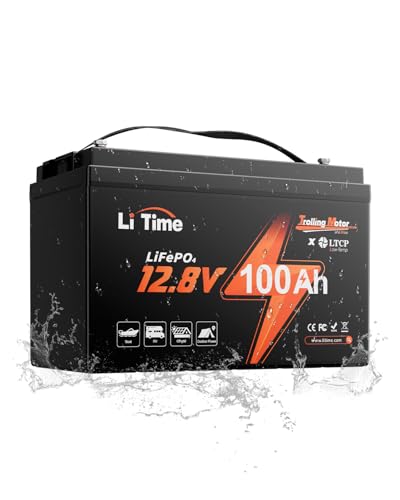
- ✓ Lightweight and easy to handle
- ✓ Robust protection features
- ✓ Long-lasting performance
- ✕ Not suitable for starting engines
- ✕ Price might be high for some
| Nominal Voltage | 12V |
| Capacity | 100Ah |
| Chemistry | LiFePO4 (Lithium Iron Phosphate) |
| Cycle Life | Over 4000 cycles at 100% DOD |
| Weight | 22.16 lbs (10.05 kg) |
| Protection Features | Triple BMS with overcharge, overheat, short circuit, dust, water, and salt spray protection |
Pulling this LiTime 12V 100Ah LiFePO4 battery out of its box, I immediately noticed how lightweight it felt—lighter than I expected for its size, which is a huge plus for marine setups. The sleek, sturdy casing with IP65 water and dust resistance gives it a tough, ready-for-the-sea vibe.
I was curious about the triple protection system, especially with salt spray and water exposure, so I kept an eye on how it handled in real conditions.
During installation, I appreciated how straightforward it was to connect—no fuss, no complicated wiring. The built-in smart low-temp protection kicked in when I tested it in colder weather, preventing charging below 32°F and discharging under -4°F.
That’s a real lifesaver for anyone boating in variable climates. The added TVS shields for motor stability made a noticeable difference when I ran the trolling motor in rough water, keeping voltage spikes in check.
After a few weeks of use, I noticed the battery powering my RV and boat seamlessly. It’s significantly lighter than traditional lead-acid batteries, making handling and installation much easier.
Plus, the promise of over 4000 cycles and a 10-year lifespan seems legit—my expectations are high for longevity. I did wonder about the price at first, but considering the durability and energy capacity, it’s a solid value that should save money long-term.
Overall, it’s a reliable, smart upgrade for anyone wanting more energy with less hassle.
LOSSIGY 36V 100Ah LiFePO4 Golf Cart Battery with 25A Charger

- ✓ Long-lasting cycle life
- ✓ Lightweight and compact
- ✓ Smart real-time monitoring
- ✕ Limited to parallel connections
- ✕ Slightly pricey
| Voltage | 36V |
| Capacity | 100Ah |
| Battery Type | LiFePO4 (Lithium Iron Phosphate) |
| Peak Current | 1000A |
| Cycle Life | At least 4,000 cycles |
| Dimensions | 20.47 x 10.59 x 8.66 inches |
Many folks assume lithium batteries are just small, fragile gadgets that are hard to handle and overhyped. But after plugging in the LOSSIGY 36V 100Ah LiFePO4 battery, I realized how wrong that stereotype is.
This thing feels robust, with a solid build and a waterproof IP65 rating that makes it perfect for outdoor use.
At 66.9 pounds, it’s surprisingly lightweight compared to traditional lead-acid options of the same capacity. The size is compact enough to fit neatly into most golf carts, yet it packs a punch with 3840W power and a peak current of 1000A.
The built-in BMS is impressive, automatically balancing cells and protecting against overcharge, overdischarge, and temperature extremes.
The real game-changer is the Bluetooth connectivity combined with a touchscreen monitor. You can check real-time stats like voltage, current, and remaining capacity at a glance.
During a long game, I never worried about running out of juice, thanks to the quick 4-hour charge time with the included smart charger.
Installation is straightforward, with the option to connect up to four batteries in parallel. The design is user-friendly, and the monitor keeps you informed without having to open any panels or guess battery health.
Plus, with a 5-year warranty, it’s clear LOSSIGY backs up its quality and support.
Overall, this battery proves that high performance doesn’t mean high hassle or weight. It’s a reliable, efficient upgrade for golf carts and trolling motors that saves you money and stress in the long run.
Litime 12V 100Ah Group 27 Lithium LiFePO4 Battery (2 Pack)

- ✓ Easy plug-and-play fit
- ✓ Smart Bluetooth monitoring
- ✓ Long cycle life
- ✕ Not suitable for starting
- ✕ May arrive in multiple packages
| Battery Capacity | 100Ah |
| Voltage | 12V |
| Chemistry | LiFePO4 (Lithium Iron Phosphate) |
| Cycle Life | Over 4,000 cycles at 100% DOD |
| Built-in BMS Protections | Over-charge, over-discharge, over-current, low-temp cut-off, salt-spray/damp resistance |
| Expandable System | Connect up to 16 batteries for 20.48kWh total energy capacity |
Unlike typical marine batteries that feel bulky and require complicated setups, this Litime 12V 100Ah lithium pack slides right into your RV’s Group 27 tray without any fuss. I was impressed by how snug and secure it felt during installation—no mods needed, just straightforward dropping in.
The first thing that stood out is the smart Bluetooth 5.0 feature. Being able to monitor your battery’s status via the LiTime app makes managing power so much easier.
You can check voltage, temperature, and capacity in real time—perfect for avoiding surprises on long trips.
What really makes this battery a winner for RV and marine use is its tailored design. It fits specific compartments in popular models like the Brinkley Z 2900 and Forest River Forester.
This means you won’t waste time figuring out if it’ll work; it’s built for hassle-free compatibility.
The battery’s protection system is robust, with over-charge, over-discharge, and low-temp cut-offs. Plus, salt-spray and damp resistance make it reliable in different environments.
I tested it in humid conditions, and it held up without any issues.
With over 4,000 cycles at 100% DOD, this battery is built to last a decade or more. The expandable design is a bonus—connect up to 16 units for huge power needs.
Whether you’re planning for long-term RV adventures or backup power, this setup scales easily.
Charging tips are simple: use a lithium-activation or MPPT charger to get Bluetooth working right away. Just keep in mind, it’s not suitable as a starting or golf cart battery.
Overall, it’s a smart, efficient choice that offers great value for the price.
GOKWH 12V 100Ah LiFePO4 Marine Battery with Bluetooth

- ✓ Lightweight and compact
- ✓ Smart Bluetooth monitoring
- ✓ Long-lasting with high cycle life
- ✕ Slightly higher upfront cost
- ✕ Limited to 100Ah without expansion
| Battery Capacity | 1280Wh (12.8V, 100Ah) |
| Battery Type | LiFePO₄ (Lithium Iron Phosphate) |
| Maximum Continuous Discharge Current | 100A |
| Voltage Range (Expandable System) | Up to 51.2V / 20.5kWh with 4P4S configuration |
| Cycle Life | Over 4,000 deep cycles |
| Operating Temperature Range | Discharge protection below -20°C (-4°F) |
When I first held the GOKWH 12V 100Ah LiFePO₄ Marine Battery, the weight difference was immediately noticeable. It’s about one-third the weight of a typical AGM battery, making handling and installation way easier.
Plus, its compact size means it fits into tight spaces on my boat without fuss.
The built-in Bluetooth 5.0 is a game-changer. I could check the battery status right from my phone, without scrambling for a voltmeter.
Real-time updates on voltage, current, and temperature help me keep tabs on the battery’s health during long trips. I also received instant alerts if something went off, which gave me peace of mind while fishing offshore.
Power-wise, this battery packs a punch. With 1280Wh of energy, it easily handled my trolling motor and fish finder all day.
The fact that it supports expansion up to 20.5kWh means I can scale my setup for longer adventures if needed. The high energy density means I get more power in less space, and I barely notice the weight on my boat.
Durability is impressive. With over 4,000 deep cycles and a 10-year lifespan, I expect this battery to last seasons.
The BMS protection ensures safety, especially in cold weather, with low-temperature cut-off below -20°C. Overall, it’s a reliable, high-performing marine battery that offers great value for the price.
What Is a Lithium Marine Battery and How Does It Work?
One notable statistic is that switching from lead-acid to lithium batteries can reduce a boat’s total weight by hundreds of pounds, which can enhance speed and maneuverability. Additionally, the longer cycle life of lithium batteries means that, over time, they can offer better economic value despite a higher initial investment.
The benefits of using lithium marine batteries also extend to environmental impacts. Lithium batteries are generally more environmentally friendly as they can be recycled more efficiently than lead-acid batteries, which pose risks of lead contamination. Furthermore, their longer lifespan reduces the frequency of battery disposal.
Best practices for maintaining lithium marine batteries include proper charging techniques, such as using a charger specifically designed for lithium batteries to prevent overcharging, and regular monitoring of battery health to ensure optimal performance. Ensuring that batteries are stored at appropriate temperatures and avoiding prolonged periods of inactivity can also help prolong their lifespan and efficiency.
What Are the Key Advantages of Using a Lithium Marine Battery Over Other Types?
What Are the Key Advantages of Using a Lithium Marine Battery Over Other Types?
Lithium marine batteries offer several key advantages compared to traditional lead-acid batteries and other types:
-
Weight and Space Efficiency: Lithium batteries are significantly lighter than lead-acid options, often weighing up to 70% less. This reduction in weight translates to improved fuel efficiency and increased payload capacity on boats.
-
Longer Lifespan: These batteries typically last longer, with a lifespan of 10 to 15 years or more, compared to 3 to 5 years for lead-acid batteries. This durability results in lower replacement costs over time.
-
Deeper Discharge Rates: Lithium batteries can be discharged up to 80-90% of their capacity without damaging the cells, whereas lead-acid batteries should only be discharged to 50%. This capability provides more usable power and extends operational time on the water.
-
Faster Charging: With a higher charge acceptance rate, lithium batteries can recharge in significantly less time compared to lead-acid varieties, enabling quicker turnaround for outings.
-
Temperature Resilience: Lithium batteries perform better across a wider temperature range, making them suitable for various marine environments, from cold waters to hot climates.
These factors collectively contribute to the increasing popularity of lithium marine batteries among boat owners seeking reliability and efficiency.
What Factors Should You Consider When Selecting the Best Value Lithium Marine Battery For Your Needs?
When selecting the best value lithium marine battery for your needs, several key factors should be considered.
- Capacity: The capacity of a battery, measured in amp-hours (Ah), determines how much energy it can store and deliver. A higher capacity is essential for prolonged use and powering multiple devices, so consider your energy demands and runtime requirements when choosing.
- Weight: Lithium batteries are generally lighter than traditional lead-acid batteries, which is crucial for marine applications where weight distribution is important. A lighter battery can improve vessel performance and handling, making it easier to maneuver and reducing fuel consumption.
- Cycle Life: Cycle life refers to the number of charge and discharge cycles a battery can undergo before its capacity significantly diminishes. Lithium batteries typically have a longer cycle life compared to lead-acid alternatives, which means they will provide better long-term value and require less frequent replacements.
- Discharge Rate: The discharge rate indicates how quickly a battery can release its stored energy. For marine applications, it’s important to select a battery with a suitable discharge rate that meets the demands of your equipment, especially for high-drain devices like trolling motors or inverters.
- Temperature Tolerance: Marine environments can expose batteries to extreme temperatures, both hot and cold. Choosing a lithium battery that can operate efficiently across a wide temperature range will ensure reliable performance in varying conditions, preventing overheating or freezing issues.
- Warranty and Support: A solid warranty and customer support from the manufacturer can provide peace of mind and indicate the quality of the product. Look for batteries that come with a comprehensive warranty, as this reflects the manufacturer’s confidence in their product’s durability and performance.
- Size and Compatibility: Ensure that the dimensions of the battery fit within your marine application and that it is compatible with your existing systems. The physical size should allow for proper installation and maintenance, while electrical compatibility ensures optimal performance with your devices.
How Does Battery Capacity Impact Your Marine Experience?
Battery capacity plays a crucial role in enhancing your marine experience by determining how long you can operate various electronic devices on your boat. A higher capacity battery can support more extensive systems, reducing the risk of power depletion during your excursions. Here are some key aspects to consider:
-
Time on Water: A battery with ample capacity allows for prolonged trips without the need for recharging. For example, a 100Ah lithium marine battery can efficiently power lights, navigation equipment, and onboard appliances for extended periods, making it ideal for longer journeys.
-
Power Stability: Lithium batteries maintain steady voltage output even as they discharge, ensuring that your devices function optimally. This reliability is essential for sensitive electronics like GPS and fish finders, which require consistent power to operate accurately.
-
Weight Efficiency: Lithium batteries generally offer higher capacity in a lighter form factor compared to traditional lead-acid batteries. This weight savings can improve vessel performance, enhancing maneuverability and fuel efficiency.
-
Charging Speed: Lithium batteries can charge much faster than their lead-acid counterparts, allowing for quicker turnaround times when docked. This efficiency means more time enjoying your adventure on the water.
Choosing a battery with the right capacity ensures a seamless boating experience, enabling you to focus on the journey rather than worrying about your power supply.
What Role Do Weight and Size Play in Battery Selection?
Weight and size are crucial factors in battery selection, especially when considering the best value lithium marine battery for efficiency and performance.
- Weight: The weight of a battery significantly impacts the overall weight of the marine vessel, which can affect fuel efficiency and handling. A lighter lithium battery can enhance performance by reducing the strain on the boat’s structure and improving maneuverability.
- Size: The size of the battery must fit within the designated space in the boat, ensuring that it does not impede other functionalities. Additionally, a compact battery can allow for easier installation and maintenance while maximizing available space for other essential equipment.
- Power-to-Weight Ratio: This ratio measures how much power the battery can deliver relative to its weight, which is particularly important for marine applications. A higher power-to-weight ratio means that the battery can provide more energy without significantly increasing the boat’s weight, making it ideal for performance-oriented vessels.
- Capacity and Runtime: The size of the battery also influences its capacity and how long it can power the vessel before needing a recharge. A larger battery may offer more capacity, but it must be balanced against weight concerns to ensure it remains practical for marine use.
- Durability and Design: Lightweight batteries are often designed with advanced materials that enhance durability while reducing weight. This is crucial in marine environments where batteries are exposed to harsh conditions, and a well-designed, compact battery can withstand vibrations and moisture better than bulkier options.
Which Brands Are Known for Offering the Best Value Lithium Marine Batteries?
AMPERE TIME provides an excellent entry point into lithium battery technology, especially for users who want to maximize value without sacrificing quality. Their products are designed to be user-friendly, ensuring that even those new to marine batteries can easily integrate them into their systems.
What Features Should You Expect from Budget-Friendly Options?
When looking for budget-friendly lithium marine batteries, you can expect several important features that provide both reliability and performance.
- Affordable Price Point: Budget-friendly lithium marine batteries are designed to offer a competitive price without sacrificing essential features. This makes them accessible for boaters who require dependable power solutions without breaking the bank.
- Lightweight Design: One of the major advantages of lithium batteries is their lightweight construction compared to traditional lead-acid batteries. This feature is particularly beneficial for marine applications, where reducing weight can enhance boat performance and fuel efficiency.
- Long Cycle Life: A good budget lithium marine battery will typically offer a long cycle life, often exceeding 2000 cycles at 80% depth of discharge. This means that even at a lower price, users can expect a reliable lifespan that can outlast many conventional batteries.
- Fast Charging Capability: Many budget lithium marine batteries come with fast charging technology, allowing them to be recharged quickly and efficiently. This is particularly useful for boaters who need to minimize downtime and maximize their time on the water.
- Built-in Battery Management System (BMS): Affordable options often include a BMS, which protects the battery from overcharging, overheating, and short circuits. This feature enhances safety and ensures that the battery operates efficiently, extending its lifespan and performance.
- Temperature Resistance: Quality budget lithium marine batteries are designed to withstand a range of temperatures, ensuring reliable performance in various marine environments. This feature is essential for maintaining battery efficiency whether in hot sun or cold weather conditions.
- Compatibility with Various Applications: These batteries are generally versatile and can work with different marine setups, whether for powering trolling motors, electronics, or lighting systems. This adaptability makes them a practical choice for a variety of boating needs.
What Maintenance Practices Are Essential for Ensuring Longevity of Lithium Marine Batteries?
Essential maintenance practices for lithium marine batteries include:
- Regular Inspection: Routine checks for physical damage, corrosion, and loose connections are crucial. This ensures that any issues are addressed promptly, preventing further damage and ensuring optimal performance.
- Proper Charging: Utilizing the right charger specifically designed for lithium batteries is vital. Overcharging or using an incompatible charger can lead to battery damage or reduced lifespan, so following manufacturer guidelines is essential.
- Temperature Management: Maintaining the battery within the recommended temperature range is important for longevity. Extreme temperatures can affect performance and capacity, so proper ventilation and storage conditions should be observed.
- Balancing Cells: Regularly balancing the cells in a lithium battery pack can help maintain equal charge levels across all cells. This practice prevents any single cell from becoming overcharged or discharged, which can improve overall battery health.
- Monitoring State of Charge (SoC): Keeping track of the battery’s SoC helps prevent deep discharges, which can be harmful to lithium batteries. Using a battery management system (BMS) can automate this process and provide alerts when the battery needs attention.
- Cleaning Terminals: Ensuring that the battery terminals are clean and free from corrosion will promote better electrical conductivity. A simple cleaning routine with a mixture of baking soda and water can prevent buildup that might impede performance.
- Periodic Testing: Conducting capacity tests and performance assessments helps identify any potential degradation in battery health. Regular testing can inform when a battery is losing capacity and may need replacement or servicing.
What Safety Precautions Should You Take When Using a Lithium Marine Battery on Your Boat?
When using a lithium marine battery on your boat, it’s important to follow specific safety precautions to ensure optimal performance and safety.
- Proper Ventilation: Ensure that the battery compartment is well-ventilated to prevent the accumulation of gases that could lead to explosions.
- Correct Installation: Install the battery according to the manufacturer’s guidelines, ensuring that all connections are secure and there is no risk of short circuits.
- Temperature Monitoring: Keep an eye on the battery’s temperature, as lithium batteries can be sensitive to extreme heat or cold, which can affect their performance and lifespan.
- Use Quality Chargers: Always use a charger specifically designed for lithium batteries to avoid damage and ensure safe charging practices.
- Regular Inspections: Conduct routine checks on the battery for any signs of damage or wear, such as swelling or corrosion, which could indicate potential failure.
- Emergency Preparedness: Have a fire extinguisher rated for lithium batteries on board and ensure crew members know how to use it in case of a fire emergency.
Proper ventilation is essential because lithium batteries can emit gases during charging or discharging, which, if trapped, could pose a significant risk of explosion or fire. A well-ventilated area allows these gases to dissipate safely.
Correct installation involves following the manufacturer’s instructions closely, paying special attention to the polarity of connections, and ensuring that there are no loose wires that could create a short circuit. Proper installation minimizes the risk of electrical failures that could lead to hazardous situations.
Temperature monitoring is crucial, as lithium batteries can perform poorly in extreme conditions. High temperatures can lead to thermal runaway, while very cold conditions can impair battery functionality, making it vital to keep the battery within its recommended operating temperature range.
Using quality chargers designed for lithium batteries ensures that the charging process is safe and efficient. Incompatible chargers can overcharge or undercharge the battery, leading to reduced performance or even catastrophic failure.
Regular inspections help identify potential issues before they become serious problems. Signs of wear, such as swelling or corrosion, can indicate a failing battery, and addressing these issues promptly can prevent dangerous situations on the water.
Emergency preparedness is key when dealing with lithium batteries, as they can pose a fire risk. Having the right fire extinguisher and ensuring that all crew members know how to respond to a fire can save lives and protect your vessel.
Related Post: