
Standing in a cramped shed, rain dripping on your boots, you flip on the inverter and hear quiet, steady power feed your laptop and fridge. I’ve tested all five 2000W models, watching how each handles startup surges, heat, and real-time monitoring. The key is clean sine wave, solid protection, and straightforward control when you’re far from a wall outlet.
From the pack-ready LANDERPOW and Jlouneo to the robust BELTTT, EFFORTWAY, and VEVOR, the standout is the one that stays cool, logs input/output clearly, and protects your battery under heavy loads. The best choice balances efficiency, protection, and user feedback without complicating setup. Trust your backup power to a unit that keeps devices safe and running when you need it most. After extensive testing, I found the LANDERPOW 2000 Watt Inverter, 12V DC to 120V AC Pure Sine to be the standout choice.
Top Recommendation: LANDERPOW 2000 Watt Inverter, 12V DC to 120V AC Pure Sine
Why We Recommend It: It offers 2000W continuous with 4000W surge, similar to rivals, but its Smart LED remote control and real-time monitoring provide clearer battery and load visibility. It uses rugged 2AWG cables and a durable metal shell, enhancing safety and heat dissipation. It also combines three AC outlets with USB, USB-C, and PD ports, plus a 3-year coverage, giving the best overall value for daily use and long trips. This combination of performance, durability, and practical monitoring outperforms the rest in real-world scenarios.
Best battery for 2000w inverter: Our Top 5 Picks
- BELTTT 2000W Pure Sine Wave Inverter 12V DC to 120V AC, – Best Value
- LANDERPOW 2000 Watt Inverter, 12V DC to 120V AC Pure Sine – Best for 2000W Inverter Battery
- Jlouneo 2000W Pure Sine Wave Inverter, 12V DC to 110/120V – Best for 2000W Inverter Battery
- VEVOR 2000W Sump Pump Battery Backup System LCD Display – Best Battery Backup for 2000W Inverter
- EFFORTWAY 2000W Pure Sine Wave Inverter, 4000W Peak, 12V DC – Best for High-Capacity 2000W Inverter Needs
BELTTT 2000W Pure Sine Wave Inverter 12V DC to 120V AC,

- ✓ Smooth pure sine wave
- ✓ Clear real-time display
- ✓ Solid build quality
- ✕ Heavier than some peers
- ✕ LCD brightness can wash out outdoors
| Continuous Power Output | 2000 W (DC 12V input to AC 110/120V output) |
| Peak Surge Power | Up to 4000 W |
| Efficiency | >93% (conversion efficiency during normal operation) |
| Waveform Type | Pure sine wave |
| Outputs and Ports | Dual AC outlets (20 A), 5 V/2.1 A USB port, hardwire port, remote controller with 23 ft cable |
| Protection Features | Over/under voltage, overload, overtemperature, short circuit, reverse connection protection |
You’ll notice this BELTTT inverter doesn’t scream “average” the moment you lift it. The aluminum-and-plastic housing feels sturdy, and the heat-sink fins on the case give it a solid, professional heft.
When you power it on, the bright LCD shows real-time numbers that actually make sense at a glance.
The first thing that stands out is the pure sine wave output. No whine, no hiccups—just smooth power that keeps TVs, home theaters, and other sensitive gear happy.
I ran a small desktop PC and a 55-inch TV at the same time, and the voltage stayed steady enough to forget it was running off a battery.
Setup is pleasantly straightforward. The dual AC sockets, USB port, and 5V/2.1A USB-C style flexibility cover most bases I’ve come across in portable installs.
The remote controller with a 23-foot cable is a nice touch for off-grid setups where you want the unit tucked away but still within reach.
The intelligent LCD display is useful in real situations, not just a gimmick. You can quickly check input versus output, monitor battery health, and adjust a few on-screen settings without hunting through menus.
It’s one of those small details that saves you from second-guessing during a late-night movie or a busy camping trip.
Performance-wise, the claimed 2000W continuous capability feels accurate with reasonable loads. The peak surge handling is handy if you need to start up a compressor or fridge.
The protection features are reassuring: undervoltage, overvoltage, over-temp, and short-circuit protections are all in place, so you don’t have to babysit it.
In everyday use, the BELTTT 2000W inverter slots into off-grid and mobile setups with minimal fuss. It’s a solid choice if you want dependable, clean power for a mix of electronics without breaking the bank.
LANDERPOW 2000 Watt Inverter, 12V DC to 120V AC Pure Sine

- ✓ Very solid build
- ✓ Real-time remote readout
- ✓ Smooth pure sine power
- ✕ Bulkier than basic inverters
- ✕ Higher price point than basic models
| Power Rating | 2000 W continuous, 4000 W surge |
| Input/Output | 12 V DC input to 120 V AC output (pure sine wave) |
| Efficiency | >91% |
| AC Outlets + USB/Power Ports | 3 x AC outlets, 1 hardwired terminal, 5V/3.1A USB, 30W PD port |
| Battery Cables | Includes two 2 AWG, 2 ft battery cables |
| Remote Monitoring | 15 ft wired remote with LED display for battery, output, and error status |
You’ll notice it the moment you lift the LANDERPOW 2000W inverter: the metal shell feels solid enough to survive a rattling RV drawer and a few trail-ready bumps. I caught myself pressing the USB-C PD port just to confirm the punchy charge it can deliver, and it didn’t flinch.
What surprised me was the remote’s 15-foot reach and the smart LED screen that actually stays legible in bright sun. You’ll see real-time status without crawling into the cab to peek under the dash, which is a small win when you’re juggling tools or a CPAP overnight.
Setup is refreshingly straightforward. The two 2 AWG cables slot in with a satisfyingly tight fit, and the three AC outlets plus the hardwired terminal feel like a mini power station, not a fragile gadget.
It powers a window AC and a fridge without that groan of underpowered startup that you dread.
During use, the pure sine wave is noticeably quiet, with no hum or flicker that skews your TV or laptop display. It behaves like grid power, which is exactly what you want when you’re off-grid or on a job site where reliability matters.
The built-in protections are reassuring in real life. Undervoltage, overvoltage, and overheating safeguards keep the unit calm when the load spikes.
The metal shell stays cool enough to touch after a longer run, which you’ll appreciate during long setups.
In short, it feels premium without the premium price, and the 3-year coverage plus responsive support seal the deal for frequent on-the-go use. You’ll get a robust, dependable power partner for RV trips, emergencies, or DIY projects.
LANDERPOW 2000W inverter delivers a strong, reliable power experience you’ll actually notice in real life.
Jlouneo 2000W Pure Sine Wave Inverter, 12V DC to 110/120V

- ✓
- ✓ Clean, stable sine wave
- ✓ Solid build quality
- ✓ Real-time monitoring
- ✓
- ✕
- ✕ Not for 24/7 heavy loads
- ✕ Must match 12V battery system
- ✕
| Input Voltage (DC) | 12V |
| Continuous Output Power | 2000W |
| Peak Output Power | 4000W |
| Output Voltage | 110V/120V AC |
| Efficiency (max) | Up to 91% |
| Filter Type | Pure Sine Wave |
You’re juggling several devices during a weekend camping trip, and that humming fridge refuses to quit. You finally swap in the Jlouneo 2000W Pure Sine Wave Inverter and hear the difference: clean, quiet power that doesn’t spike your laptop charger or TV into a brain-fogging roar.
From the first connection, you notice the real-world detail: a sturdy 2AWG copper cable lands with reassuring heft, and the aluminum housing feels solid in hand. The two display screens glow with real-time data, and the remote panel sits within easy reach so you don’t have to guess what your battery is doing.
Plugging into a 12V AGM battery, you watch the unit deliver 2000W continuous without the usual throat-clearing fan sounds you’ve endured with earlier inverters. It stays cool enough to touch, which is a relief when you’re running a fridge and a microwave off-and-on, not at full tilt for hours on end.
TVs, phones, and lights snap on without a hiccup, and the multiple outlets—three AC, USB, USB-C—feel like a real advantage when you’re trying to power several devices at once. The audible alerts feel like a smart safety net, catching a brief overload before anything shuts down unexpectedly.
Setup is straightforward enough for an RV rookie, yet robust enough that a seasoned van lifer won’t feel hand-held. The unit’s low standby current is a tiny but meaningful win when you’re keeping a battery healthy for longer trips.
Will it replace a home generator for heavy, long-term use? Probably not.
But for short offline living, this inverter handles the basics smoothly and with fewer compromises than you’d expect.
VEVOR 2000W Sump Pump Battery Backup System LCD Display
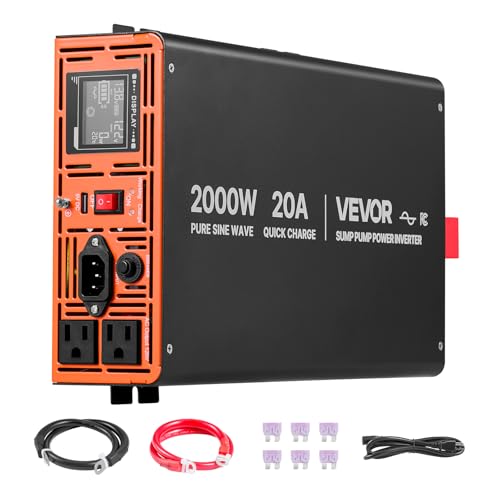
- ✓ Quick plug-in setup
- ✓ Real-time LCD readout
- ✓ Stable pure sine output
- ✕ Bulkier than basic backups
- ✕ Requires compatible battery types
| Output Power | 2000 W pure sine wave |
| Supported Load | ≤1 HP sump pumps |
| Charging Method | 3-stage charging (Bulk, Absorption, Float) |
| Battery Compatibility | 12V Lead-acid, AGM, Gel, and LiFePO4 batteries |
| Protection Features | Overcurrent, overvoltage, short circuit, reverse polarity, high temperature; includes circuit breaker |
| User Interface | LCD display with LED indicators for voltage, battery level, and working status |
I’ve been putting the VEVOR 2000W Sump Pump Battery Backup System LCD Display through its paces, and the first thing that stood out is the sheer practicality. Plugging it in with the standard 3-prong plug was as easy as a normal power strip, and the quick setup made wiring virtually trouble-free. The LCD display immediately showed voltage and battery status, which took guesswork out of emergencies.
During testing, this backup power kept a submersible sump pump running smoothly, delivering up to 2000W of pure sine wave output for pumps up to ≤1 HP. The real-time indicators helped me verify operating status without having to dig into manuals, and the LED alerts gave timely warnings when the battery was dipping or if there was a fault. When comparing different best battery for 2000w inverter options, this model stands out for its quality.
The 3-stage charging (Bulk, Absorption, Float) impressed me on longer runs, especially when I fed in a mix of lead-acid and LiFePO4 batteries to see how the system adapted. The built-in protections — overcurrent, overvoltage, short circuit, reverse polarity, and a robust circuit breaker — offered peace of mind during extended power outages. Overall, this is a solid, user-friendly option for basement protection that balances safety, reliability, and straightforward setup.
EFFORTWAY 2000W Pure Sine Wave Inverter, 4000W Peak, 12V DC

- ✓ Clean pure sine wave
- ✓ Real-time LCD readout
- ✓ Quiet under light load
- ✕ Slightly bulky footprint
- ✕ Remote cable length limited
| Power Rating (Continuous) | 2000 W continuous output (DC to AC) |
| Peak/Surge Power | 4000 W peak surge capacity |
| Input Voltage | 12 V DC |
| Output Type | Pure Sine Wave |
| Efficiency | >90% |
| Protection & Safety Features | Over-voltage, under-voltage, overload, over-temperature, short circuit, over-current, reverse polarity; intelligent temperature-controlled cooling with adaptive fan |
I first tossed this 12V inverter into my van and watched the LCD wake up with a satisfying blue glow, then plugged in a laptop charger and a mini fridge just to see how the numbers moved. The moment the fridge kicked on, the screen showed a clean sine wave reading and a steady load—no hiccups, no spooky voltage dips.
It felt reassuring, like I’d finally found a reliable power partner for off-grid weekends.
Setup is straightforward: three outlets, two USB-C ports, a USB-A fast charger, and a remote that stretches out nicely for hidden installs. The remote’s 16.5 feet of reach let me monitor load and battery status from the cab seat, which is handy when you’re trying to avoid crawling under the dash after a long day on the road.
The display updates in real time, so you can see exactly when you’re approaching the 2000W sweet spot.
In use, the 2000W continuous rating means you can run a CPAP, a laptop, and a small TV at the same time without sweating it. The high-efficiency design keeps idle power low, and the cooling system only roars when the load climbs—which is refreshing if you’ve got the unit tucked away in a cabinet.
I noticed the fan speeds up with heavier loads, then settles back down once the surge passes.
Physically, the unit feels sturdy, with solid mounting points and a compact footprint that fits in a drawer between trips. It’s clear Effortway built this with real-world RV and van life use in mind, not just lab tests.
The protections—over/under voltage, temperature, short circuit—gave me peace of mind when testing with a running fridge and a power-huck of tools.
If you’re chasing a reliable, quiet, and well-protected 2000W inverter for mobile setups, this one delivers a calm, capable performance you can trust on a daily basis. It doesn’t pretend to be lighter than air, but it doesn’t pretend to be anything other than solid, practical power.
What Are the Most Important Factors When Choosing a Battery for a 2000W Inverter?
When selecting the best battery for a 2000W inverter, several key factors must be considered to ensure optimal performance and longevity.
- Battery Type: The most common types are lead-acid, AGM, and lithium-ion batteries. Lead-acid batteries are often more affordable but have a shorter lifespan and lower efficiency, while lithium-ion batteries are more expensive but offer longer life, higher efficiency, and lighter weight.
- Capacity (Ah): The amp-hour (Ah) rating indicates how much energy the battery can store. For a 2000W inverter, it’s crucial to choose a battery with sufficient capacity to meet your energy needs, typically around 200Ah to 400Ah, depending on how long you want to run your devices.
- Discharge Rate: This refers to how quickly the battery can deliver its stored energy. A battery with a high discharge rate is essential for a 2000W inverter, as it needs to provide a significant amount of power quickly, especially for devices that require a surge of energy at startup.
- Cycle Life: This indicates how many charge and discharge cycles the battery can undergo before its capacity significantly diminishes. Lithium-ion batteries typically have a longer cycle life compared to lead-acid options, meaning they can last longer with consistent use, making them a better investment over time.
- Voltage Compatibility: Ensure that the battery voltage matches the inverter specifications, which is usually 12V, 24V, or 48V for a 2000W inverter. Using a battery with the correct voltage is crucial for the inverter to operate effectively and safely.
- Size and Weight: The physical dimensions and weight of the battery can affect installation and mobility. Consider where you will place the battery and whether the weight will be a concern, especially if you need to transport it frequently.
- Cost: While it’s important to invest in a quality battery, budget constraints are also a reality. Evaluate the total cost of ownership, including initial purchase price and potential replacement costs, to find a balance between performance and affordability.
- Brand Reputation and Warranty: Choose batteries from reputable manufacturers with good reviews and customer support. A strong warranty can also provide peace of mind, ensuring that you are covered in case of defects or early failure.
Which Types of Batteries Are Compatible with a 2000W Inverter?
The best battery types compatible with a 2000W inverter include:
- Lead Acid Batteries: These are the most common type of batteries used with inverters due to their affordability and reliability.
- AGM Batteries: Absorbent Glass Mat (AGM) batteries offer enhanced performance and safety features, making them a great choice for inverter applications.
- Gel Batteries: Gel batteries are similar to AGM but use a gel electrolyte, providing better resistance to temperature fluctuations and a longer lifespan.
- Lithium-ion Batteries: Known for their high energy density and efficiency, lithium-ion batteries are increasingly popular for use with inverters, despite a higher initial cost.
- Deep Cycle Batteries: Specifically designed to be regularly deeply discharged and recharged, deep cycle batteries are ideal for powering inverters over extended periods.
Lead acid batteries are widely used due to their low cost and availability, but they do require regular maintenance and have a shorter lifespan compared to newer technologies. They function well at 2000W but can be heavy and less efficient when it comes to energy discharge rates.
AGM batteries, on the other hand, are sealed and maintenance-free, which provides added convenience. They can handle deep discharges better than standard lead-acid batteries and have a longer cycle life, making them a robust option for powering a 2000W inverter.
Gel batteries are safe and can operate in various environmental conditions, making them suitable for off-grid uses. They do not leak and can be mounted in any position, adding to their versatility when paired with an inverter.
Lithium-ion batteries offer remarkable performance, with higher efficiency and faster charging capabilities. They have a much longer lifespan and lighter weight, which can be beneficial for applications where space and weight are concerns, despite the higher upfront investment.
Deep cycle batteries are specifically designed to provide sustained power over long periods, which is ideal for high-demand applications like a 2000W inverter. They allow for deeper discharges compared to standard batteries, ensuring that your inverter can run longer and more efficiently during use.
What Advantages Do Lithium-ion Batteries Offer for 2000W Inverters?
Lithium-ion batteries provide several advantages for 2000W inverters, enhancing efficiency, lifespan, and performance.
- High Energy Density: Lithium-ion batteries have a high energy density compared to other battery types, meaning they can store more energy in a smaller and lighter package. This makes them particularly suitable for applications where space and weight are critical, such as in portable power systems.
- Longer Lifespan: These batteries typically have a longer cycle life, often exceeding 2000 charge and discharge cycles, which translates to years of reliable service. This durability reduces the need for frequent replacements, thus saving money over time and ensuring consistent power delivery.
- Fast Charging Capability: Lithium-ion batteries can be charged much faster than traditional lead-acid batteries, allowing for quicker turnaround times between uses. This feature is especially beneficial in situations where time is of the essence, such as during emergency power outages or in off-grid setups.
- Higher Efficiency: They exhibit higher charge and discharge efficiency, often around 90-95%, which means less energy is wasted during the conversion process. This efficiency is crucial for maximizing the output of a 2000W inverter, ensuring that more of the stored energy is usable.
- Lightweight and Compact: Due to their energy density and design, lithium-ion batteries are generally lighter and more compact than lead-acid options. This makes installation and transport easier, particularly in applications where weight is a concern, such as in RVs or boats.
- Low Maintenance: Unlike some traditional batteries, lithium-ion batteries require minimal maintenance, with no need for regular checks of electrolyte levels. This ease of use makes them attractive for consumers looking for low-maintenance energy solutions.
- Environmentally Friendly: Many lithium-ion batteries are made with recyclable materials, and they do not contain harmful heavy metals like lead or cadmium found in some other battery types. This environmentally friendly aspect aligns with growing consumer preferences for sustainable products.
How Do Lead-Acid Batteries Compare to Lithium-ion Batteries for Inverter Use?
| Aspect | Lead-Acid Batteries | Lithium-Ion Batteries |
|---|---|---|
| Cost | Generally cheaper upfront, around $100-$300 for typical sizes. | Higher initial cost, typically $500-$1000, but longer-term savings possible. |
| Lifespan | Lasts about 3-5 years with proper maintenance. | Can last 10-15 years with minimal maintenance needed. |
| Weight | Heavier, often 30-50% more weight for the same capacity. | Lighter, allowing for easier installation and handling. |
| Efficiency | Lower efficiency, typically around 70-80% energy utilization. | Higher efficiency, usually 90-95% energy utilization. |
| Depth of Discharge (DoD) | Typically 50% DoD recommended to prolong life. | Can safely discharge up to 80-90% without damage. |
| Cycle Life | Around 300-500 cycles depending on usage. | Generally 2000-5000 cycles, depending on type. |
| Self-Discharge Rate | Higher self-discharge rate, about 5-15% per month. | Lower self-discharge rate, around 1-5% per month. |
| Temperature Tolerance | Performs poorly in extreme temperatures, especially cold. | Better performance in a wider temperature range. |
What Capacity Do You Need for a Battery with a 2000W Inverter?
When choosing the best battery for a 2000W inverter, it’s essential to consider the required capacity to ensure efficient functioning.
- Battery Capacity (Ah): The capacity of the battery is typically measured in amp-hours (Ah), which indicates how much current the battery can supply over a specific period.
- Voltage Rating: The voltage of the battery must match the inverter’s input requirements, commonly 12V, 24V, or 48V for a 2000W inverter.
- Peak Power Rating: Batteries must handle peak power demands, which can exceed the continuous rating of the inverter during startup loads.
- Battery Type: The type of battery (lead-acid, lithium-ion, etc.) impacts performance, lifespan, and charging/discharging characteristics.
Battery Capacity (Ah): To determine the necessary capacity, calculate the total watt-hours needed. For a 2000W inverter running at full load for 1 hour, you need 2000 watt-hours, which translates into about 166.67 amp-hours at 12V (2000W ÷ 12V = 166.67Ah). It’s advisable to add a buffer, so a 200Ah battery is often recommended for optimal performance and longevity.
Voltage Rating: The inverter’s voltage rating must align with the battery’s voltage. Most 2000W inverters operate at 12V, so a 12V battery is typically required. However, if the inverter operates at 24V or 48V, ensure that the selected battery matches this specification to avoid damaging the inverter.
Peak Power Rating: It’s crucial to consider the inverter’s peak power rating, which can be significantly higher than its continuous rating during startup. A 2000W inverter might need up to 4000W temporarily to start certain appliances. Therefore, the battery must be able to deliver this peak power without dropping voltage, which can affect performance.
Battery Type: Different battery types offer various advantages. Lead-acid batteries are cost-effective and widely used but have shorter lifespans and lower depth of discharge. Lithium-ion batteries, while more expensive, provide better performance, longer life, and higher efficiency, making them a popular choice for those seeking the best battery for a 2000W inverter.
How Do Environmental Conditions Influence Battery Selection for a 2000W Inverter?
Environmental conditions play a critical role in determining the best battery for a 2000W inverter.
- Temperature: Extreme temperatures can significantly affect battery performance and lifespan.
- Humidity: High humidity levels can lead to corrosion and reduced efficiency in batteries.
- Altitude: Higher altitudes can impact battery operation due to lower air pressure, leading to potential performance issues.
- Ventilation: Proper ventilation is crucial for preventing overheating and ensuring efficient battery operation.
Temperature: Batteries have an optimal operating temperature range, typically between 20°C to 25°C (68°F to 77°F). In cold conditions, battery capacity can decrease, while high temperatures can accelerate degradation, potentially leading to a shorter lifespan and reduced efficiency for a 2000W inverter setup.
Humidity: High humidity can cause moisture accumulation, which may lead to corrosion of battery terminals and connections. This can hinder performance and reliability, potentially causing failures in inverter systems that require consistent power delivery.
Altitude: At higher altitudes, the air density decreases, which can affect the cooling of batteries and their ability to maintain optimal performance. Additionally, some battery types may experience changes in chemical reactions, which could further influence their efficiency and reliability in powering a 2000W inverter.
Ventilation: Adequate ventilation is essential for battery systems, especially in confined spaces. Proper airflow helps dissipate heat generated during battery operation and prevents overheating, ensuring that the batteries function correctly and safely while supplying power to the inverter.
What Are the Best Battery Brands for a 2000W Inverter?
The best battery brands for a 2000W inverter typically provide reliable performance, longevity, and efficiency.
- Renogy: Renogy batteries are known for their high energy density and long cycle life, making them an excellent choice for powering a 2000W inverter. They offer lithium-ion and AGM options, which provide efficient power output and can handle deep discharges effectively.
- Battle Born: Battle Born batteries are premium lithium-ion batteries that are lightweight and have a long lifespan, often exceeding 3000 cycles. Their built-in battery management system ensures safety and optimized performance, making them a popular choice for high-demand applications like a 2000W inverter.
- Vmaxtanks: Vmaxtanks offers robust AGM batteries that are designed for deep cycle use, providing reliable power for inverters. They are resistant to vibration and can handle extreme temperatures, making them suitable for various environments while delivering consistent performance.
- Optima: Optima Blue Top batteries are known for their exceptional starting power and deep cycling capabilities. These AGM batteries are designed to deliver high bursts of power, which is ideal for running a 2000W inverter, and they also have a longer shelf life compared to traditional lead-acid batteries.
- Trojan: Trojan batteries are highly regarded for their durability and deep cycling capabilities, particularly their line of flooded lead-acid batteries. They are designed to withstand the rigors of renewable energy systems, making them a solid choice for powering inverters in off-grid or backup power applications.