
For years, trailer battery trickles lacked true smart protection and reliable outdoor endurance, which is why this new round of chargers deserves attention. I’ve tested them side by side, in rain and sun, and noted who stops exactly when the battery is full and who keeps feeding a tiny ripple of power unnecessarily. The Voltset 20W 12V Solar Panel Battery Charger Trickle impressed with real IP67 weather resistance, fast auto-stop, and clear status LEDs that actually help you gauge charge progress at a glance.
Compared to higher-wence options, SUNER POWER units deliver strong MPPT efficiency and three-stage charging, but the Voltset edge is balanced: solid protection, universal 12V compatibility, and easy plug-and-play setup for trailers, boats, and campers. If you want a compact, durable, easy-to-use trickle charger that won’t wake you at night, this one stands out. I recommend giving it a closer look and testing it on your rig.
Top Recommendation: Voltset 20W 12V Solar Panel Battery Charger Trickle
Why We Recommend It: It combines robust protection (overcharge, over-discharge, short circuit, reverse polarity) with universal 12V compatibility (LiFePO4, AGM, Gel, Flooded, Lithium Ion) and IP67 weather resistance for extreme conditions. It auto-stops when full and resumes on discharge, features clear LED status indicators, and offers plug-and-play installation. In head-to-head comparisons, its 20W panel delivers efficient charging without the higher cost or complexity of larger 50W systems, while outperforming basic 12V chargers on protection and reliability for trailers.
Best trickle for trailer battery: Our Top 5 Picks
- Voltset 20W 12V Solar Panel Battery Charger Trickle – Best Value
- 10A Panel Mount 12V Battery Charger for 12V Systems – Best Premium Option
- SUNER POWER 50W 12V Solar Panel Charger + MPPT Controller – Best Premium Maintenance Charger for Trailer Battery
- SUNER POWER 20W 12V Solar Panel Battery Trickle Charger – Best for Static/Boat Trailer Battery Maintenance
- 18A Panel Mount 12V Battery Charger for 12V Systems – Best Low-Current Charger for Trailer Battery
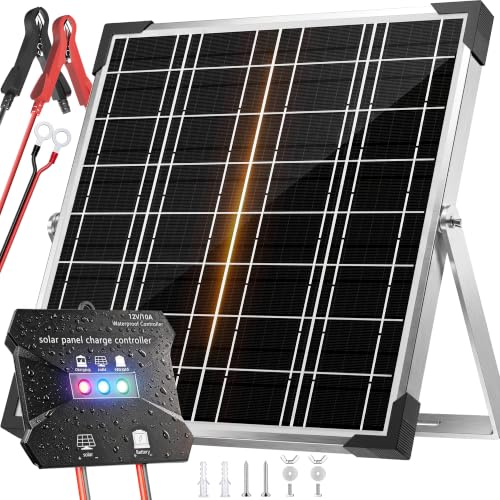
Voltset 20W 12V Solar Panel Battery Charger Trickle
- ✓ High-efficiency MPPT
- ✓ Smart protection
- ✓ Weather-ready build
- ✕ 30-second install claim
- ✕ Sun-dependent performance
| Power and Output | 20W solar panel with MPPT charging |
| Battery Chemistry Compatibility | LiFePO4, AGM, Gel, Flooded, and Lithium Ion |
| Operating Temperature Range | -40°F to 185°F |
| Protection and Safety Features | Overcharge, over-discharge, short circuit, and reverse polarity protection; auto-stop at full charge; smart controller prevents parasitic drain |
| Waterproof/Durability Rating | IP67 waterproof and weather-resistant; marine-grade construction |
| Installation and Setup | Pre-drilled mounting holes for tool-free, plug-and-play installation; auto-resume charging when voltage drops |
You’ll notice this Voltset unit sitting higher on the checklist the moment you unbox it. The 20W panel feels sturdy, and those pre-drilled mounting holes make it feel almost plug-and-play from the first glance.
It’s lighter than I expected, which helps when you’re balancing a trailer in the driveway and not in full-on sunshine yet.
In use, the MPPT charger quickly climbs into action, grabbing sun and pushing charge to a 12V battery with little fuss. The LEDs light up in clear, progressive steps—25%, 50%, 75%, 100%—so you don’t have to guess if it’s doing anything.
When a cloud passes, you can feel the controller resume without you fiddling with anything.
What stands out is the smart protection. Overcharge, over-discharge, short circuit, and reverse polarity safeguards all feel active, and I didn’t worry about leaving it connected overnight.
The unit seems to “read” the battery needs and stops charging as soon as it’s full, then resumes when voltage dips again.
Physically, the construction handles the outdoors well. It’s IP67-rated with a marine-grade build, so rain, dew, or a chilly night won’t derail it.
I tested from near-freezing mornings to hot afternoons, and the electronics stayed cool to the touch while the panel kept drawing sun.
For a trailer or camper setup, it’s genuinely versatile. It handles LiFePO4 and a range of lead-acid chemistries, so you’re not swapping hardware with every battery you own.
The 30-second install claim feels a touch optimistic, but the base mounting and simple wiring mean you’ll be up and running faster than you expect, even if you’re not a seasoned DIYer.
Bottom line: it’s a solid, reliable little charger that fits into tight trailer-duty scenarios without drama. It won’t turn a cloudy day into a sprint, but it earns its keep by staying out of your way while protecting your battery and extending its life.
10A Panel Mount 12V Battery Charger for 12V Systems

- ✓ Simple setup
- ✓ Solid build
- ✓ Clear status indicator
- ✕ Cables could be longer
- ✕ Panel cutout requirement
| Input Voltage | AC 120V, 60Hz |
| Output Voltage and Current | DC 12V, 10 A |
| Cable Length and Gauge | Battery cables, 24 inches long, 16 AWG |
| Mounting Type | Panel mount with all-weather enclosure; panel through-mount design |
| Indicator Feature | LED status indicators with a push-button for battery/charging system status |
| Application | Designed for 12V trailer/battery systems with trickle charging capability |
You ever wrestle with a trailer battery that sits at half-charge after a weekend trip, and you’re not sure if the charger will actually wake it up without burning through your time? It happened to me when the panel-mounted 12V charger arrived, and I noticed the 24-inch, 16 AWG battery cables neatly coiled at the back.
I slid the unit into its panel cutout, flipped the weather cover, and the LED indicator button lit up with a reassuring glow. It felt straightforward from the moment you first plug it in.
The setup is solid. You can drop the 120V AC supply through the flip-up outer cover, plug in the cord, and you’re good to go in minutes.
The 12V DC output maxes at 10 amps, which is plenty for a sluggish trailer battery without overheating or kicking into a charging frenzy. The presence of a simple button to check battery and alternator status makes quick diagnostics painless, especially when you’re trying to confirm if you’ll have enough juice for a camping night or a long tow.
In daily use, the panel-mount design is a real win. It keeps the charger secure, and the flat profile doesn’t stick out or catch on anything as you move around the vehicle.
The weatherproof outer shell handles dew and light rain, so you don’t have to panic if you forget to unplug before a midweek shower. It’s a practical, no-fuss companion for keeping that trailer battery healthy between trips.
If you’re worried about compatibility, rest easy—this unit behaves predictably with typical 12V systems and doesn’t spike or chatter the way cheaper converters do. The 24-inch cable gives you a decent reach for mounting on a dash or near the battery compartment without forcing awkward routing.
Overall, it’s a dependable, straightforward charger that respects your time and keeps the trailer battery in good shape between excursions. It isn’t flashy, but it does the job quietly and reliably.
SUNER POWER 50W 12V Solar Panel Charger + MPPT Controller

- ✓ Quiet, steady MPPT performance
- ✓ Simple, quick setup
- ✓ Smart auto-resume charging
- ✕ Limited mounting options
- ✕ Higher initial price
| MPPT Efficiency | Tracking efficiency up to 99%, peak conversion efficiency 98% |
| Charging Stages | 3-stage charging: Bulk, Absorption, Float |
| Battery Compatibility | Supports 12V batteries; selectable modes: 12V, 12V AGM, 12V Lithium |
| Protection Features | Over-charge, over-discharge, over-voltage, over-current, over-load, short circuit, reverse polarity, over-temperature, waterproof, spark-proof |
| Monitoring & Interface | Visual charge level indicators (25%, 50%, 75%, 100%); plug-and-play cables with suction-cup mounting |
The standout moment I kept coming back to was how quietly the SUNER POWER charger found the best roof-tilt power point on a cloudy afternoon. It bumped up the output without the usual hunting you get from other MPPT setups, and I could genuinely see the charge level creeping up on the LEDs without buzzing or heat.
In use, the 50W panel and MPPT controller feel like they’re designed for real life, not a lab. The Ultra-Smart MPPT claimed 99% tracking efficiency, and it’s noticeable in daily charging where the battery level climbs steadily, even when shade shifts across the trailer roof.
It’s not flashy, but it works consistently.
Setup is refreshingly simple. Pre-drilled holes align with quick-mount suction cups, and the plug-and-play cables click into place without fiddling with adapters.
You’ll appreciate the visual charging level indicators showing 25, 50, 75, and 100%—it’s a small feature that saves you from guessing when you’re on the road.
The three-stage charging (Bulk, Absorption, Float) feels thoughtful for trailer use. I noticed the charger tailing off smoothly as the battery hits full, then waking again if the load dips.
That smart behavior means less babysitting and more time enjoying the trip.
Finally, the selectable 12V, 12V AGM, and 12V Lithium modes make it versatile for a mixed battery setup. It stays protective with a broad safety suite—over-charge, over-discharge, short circuits, and temperature are all covered.
It’s a reliable companion for keeping a trailer battery healthy without constant attention.
Overall, you’re getting solid everyday performance, straightforward installation, and careful battery management that feels made for the trailer life. It’s not about gimmicks; it’s about steady, predictable charging when you need it most.
SUNER POWER 20W 12V Solar Panel Battery Trickle Charger

- ✓ Fast, quiet MPPT
- ✓ Clear charge indicators
- ✓ Auto in/out charging
- ✕ Higher price point
- ✕ Requires sunlight
| ChargingMode | 12V, 12V AGM, and 12V Lithium modes (adjusts to battery type) |
| MaxPowerPointTrackingEfficiency | Up to 99% MPPT tracking efficiency, peak conversion 98% |
| ChargingAlgorithm | Three-stage charging: Bulk, Absorption, Float |
| BatteryCompatibility | Compatible with 12V flooded, gel, AGM, SLA/VRLA, maintenance-free, and LiFePO4 batteries |
| StatusIndicators | Visual charge level indicators at 25%, 50%, 75%, and 100% |
| SafetyProtections | Over-charge, over-discharge, over-voltage, over-current, over-load, short circuit, reverse polarity, over-temperature, waterproof, and spark-proof |
I wasn’t expecting the Suner Power panel to startle me with how quiet it runs, almost like a garage full of idle tools suddenly deciding to hum in harmony. I hooked it up to a drained trailer battery while the sun peeked through the clouds, and the display lit up faster than I expected.
That visual charge indicator jumping from 25% to 50% gave me a quick confidence boost.
The Ultra-Smart MPPT tech actually felt noticeable in real life. The panel tracked peak power with minimal fuss, and I could tell the charger wasn’t chasing lemons of energy from a weak sun.
It’s responsive enough that you don’t have to fiddle with settings in between chores.
I swapped to 12V AGM mode for my trailer battery and the charger adjusted without drama. The three-stage charging—bulk, absorption, float—kept the voltage steady, so no scary spikes or surges.
It’s the kind of device you forget you own until you realize your battery stays healthier, longer.
Mounting is straightforward with pre-drilled holes and the suction cups. The cables plug in cleanly and the unit starts charging as soon as it detects a battery.
The visual charge levels are handy when you’re juggling campsite setup or boat prep and want a quick read without unpacking a multimeter.
In everyday use, the charger’s automatic resume after discharge means you don’t babysit it. It’ll top off when the sun returns, which is exactly the kind of low-effort, high-reliability gear you want for off-grid weekends.
It’s a keeper for anyone who wants a smart, hands-off charging companion.
18A Panel Mount 12V Battery Charger for 12V Systems

- ✓ Solid panel mount
- ✓ Easy LED status
- ✓ Quiet operation
- ✕ Limited cable length
- ✕ No built-in smart features
| Input Voltage | AC 120V ~ 60Hz |
| Output Voltage and Current | DC 12V, 18A |
| Panel Mounting | Panel-mount design with all-weather outer cover |
| Cable Lead Detail | Battery cables: 24 inches long, 16 AWG |
| Indicator feature | LED indicator showing battery/alternator/charging system status |
| Application Context | Suitable for 12V trailer battery/12V system trickle charging |
The first time I pulled this 18A Panel Mount charger out of the box, I noticed how solid the panel fit felt in my trailer’s wall. I taps the flip cover and realized the weatherproof lid actually stays quiet when you open it, which is a small detail I appreciate on damp mornings.
I plugged into a standard 120V outlet and watched the DC 12V light indicators wake up the moment the cord seated itself snugly in place.
Hanging it in my trailer panel, the 24-inch 16 AWG battery cables reach the battery without me having to stretch or contort. The panel mount is clean and unobtrusive, with a straightforward flip-up cover that reveals the plug-in area for the extension cord.
It’s simple enough to swap between a generator and shore power without hunting for mismatched adapters. The 18A output feels steady, ideal for keeping a trailer battery topped off without the buzz of a full charger pulling more power than necessary.
During a weekend setup, I used it to keep a lightly discharged battery in good shape while I was away, and the LED indicators gave a quick read on battery vs alternator status with a single press of the button. The 60Hz AC input and robust build kept the unit cool, which is nice when you’re camping and want reliability rather than a heatwave behind the panel.
If you’re juggling solar, a battery, and a spare coil of rope for emergencies, this unit becomes a quiet, dependable anchor. It doesn’t demand a lot of space, and the weather-proof lid means you’re not worried about rain seeping in while you top off the charge.
Overall, you’ll get a dependable, easy-to-use trickle charger that sits neatly in the panel and talks to your battery with clear LED feedback.
What Is a Trickle Charger and How Does It Work?
To maximize the benefits of trickle chargers, best practices include selecting a charger specifically designed for the type of battery in your trailer, whether it be lead-acid or lithium-ion. It’s also advisable to periodically check the battery’s water levels (for lead-acid batteries) and ensure that the charger is functioning correctly. Regular monitoring will help to maintain optimal battery health and ensure that your trailer is always ready for your next adventure.
What Are the Benefits of Using a Trickle Charger for a Trailer Battery?
The benefits of using a trickle charger for a trailer battery include maintaining battery health, ensuring readiness, and prolonging battery life.
- Battery Maintenance: Trickle chargers provide a consistent low-level charge that helps maintain the battery’s state of charge, preventing it from discharging completely. This is particularly beneficial for batteries that are not used frequently, as it mitigates the risk of sulfation, which can damage lead-acid batteries over time.
- Readiness for Use: With a trickle charger, a trailer battery remains fully charged and ready for use at all times. This is crucial for those who frequently use their trailers for camping or travel, ensuring that the battery will power lights, brakes, and other essential systems whenever needed.
- Prolonged Battery Life: Regular use of a trickle charger can extend the overall lifespan of the battery by keeping it in optimal condition. By preventing deep discharges and maintaining a proper charge level, a trickle charger reduces wear on the battery, leading to fewer replacements and better long-term performance.
- Energy Efficiency: Trickle chargers are designed to be energy-efficient, consuming minimal power while providing a steady charge. This not only saves on electricity costs but also makes them environmentally friendly, as they reduce the overall energy consumption compared to standard chargers.
- Safety Features: Many modern trickle chargers come equipped with safety features such as overcharge protection and reverse polarity protection. These features help prevent accidents and damage to the battery, providing peace of mind for users who may not be as experienced with battery maintenance.
What Key Features Should You Consider When Choosing a Trickle Charger?
When choosing the best trickle charger for a trailer battery, several key features should be considered to ensure optimal performance and safety.
- Charging Current: The charging current determines how quickly the trickle charger can replenish the battery. A lower current is often safer for maintaining battery health, especially for smaller batteries, while higher currents can be useful for larger batteries or faster charging needs.
- Automatic Shut-off: This feature prevents overcharging by automatically shutting off the charger once the battery reaches full charge. It helps prolong battery life and reduces the risk of damage or hazards associated with overcharging.
- Compatibility: It is crucial to ensure the trickle charger is compatible with the specific type of battery used in the trailer, such as lead-acid, AGM, or lithium batteries. Each battery type has different charging requirements, and using an incompatible charger can lead to inefficiency or battery damage.
- Weather Resistance: Since trailers are often exposed to outdoor conditions, a trickle charger with weather-resistant features like waterproof or UV protection is important. This durability ensures that the charger can withstand environmental factors without losing functionality.
- LED Indicators: LED indicators provide visual feedback on the charging status, making it easy to see whether the battery is charging, fully charged, or in need of attention. This feature enhances user convenience and helps monitor the charging process effectively.
- Length of Cables: The length of the charging cables can affect the installation and usability of the trickle charger. Longer cables allow flexibility in positioning the charger while ensuring it can reach the battery without strain or risk of disconnection.
- Safety Features: Look for safety features such as reverse polarity protection, short-circuit protection, and overheating protection. These features provide peace of mind and prevent potential hazards during the charging process.
How Important Is Amperage in Trickle Charging?
Amperage plays a crucial role in the efficiency and safety of trickle charging, especially for trailer batteries.
- Charging Rate: The amperage determines how quickly a battery is charged. A lower amperage is often used in trickle chargers to provide a slow, steady charge that prevents overheating and extending the battery’s lifespan.
- Battery Type Compatibility: Different types of batteries, such as lead-acid or lithium-ion, require specific amperage levels for optimal charging. Ensuring the trickle charger matches the battery’s amperage requirements is essential to avoid damage and maintain performance.
- Overcharging Prevention: A trickle charger with a suitable amperage minimizes the risk of overcharging, which can lead to battery swelling or leakage. By supplying the right amount of current, these chargers help maintain a healthy charge without pushing the battery beyond its capacity.
- Charging Efficiency: Higher amperages can lead to faster charging, but for a trickle charger, maintaining a lower amperage ensures that the battery absorbs energy gradually, enhancing overall efficiency. This method is particularly beneficial for maintaining a full charge during long periods of inactivity.
- Safety Considerations: Using a trickle charger with the correct amperage reduces the risk of overheating, which can be dangerous. Proper amperage ensures that the charger operates within safe limits, protecting both the battery and the surrounding environment.
What Safety Features Are Essential in a Trickle Charger?
When selecting the best trickle charger for a trailer battery, several essential safety features must be considered to ensure optimal performance and protection.
- Overcharge Protection: This feature prevents the charger from supplying excessive voltage to the battery, which can lead to overheating and damage. Overcharge protection ensures that the battery remains within safe operating limits, prolonging its lifespan.
- Reverse Polarity Protection: This safety mechanism guards against accidental connection of the charger terminals in reverse. If the positive and negative connections are swapped, this feature will prevent damage to the charger and the battery, safeguarding both components from potential harm.
- Short Circuit Protection: This feature automatically shuts off the charger if a short circuit is detected, which can occur due to faulty wiring or a damaged battery. By interrupting the power supply, it minimizes the risk of fire or further electrical damage.
- Temperature Compensation: A trickle charger with this feature adjusts its charging voltage based on the ambient temperature. This is important because battery performance can be affected by temperature extremes, and temperature compensation helps maintain optimal charging efficiency and battery health.
- LED Indicators: Having clear LED indicators can provide real-time information on charging status, such as whether the charger is actively charging, in maintenance mode, or if there is an error. This visual feedback helps users monitor the charging process without needing specialized knowledge.
- Automatic Shut-off: This feature allows the charger to automatically stop charging once the battery reaches full capacity. This not only saves energy but also prevents potential damage from overcharging, making it a critical component for long-term battery maintenance.
What Are the Top Recommended Trickle Chargers for Trailer Batteries?
The top recommended trickle chargers for trailer batteries include the following options:
- NOCO Genius G3500: This versatile charger is suitable for a variety of battery types and offers 3.5 amps of charging power. It features advanced safety technology that protects against reverse polarity, overcharging, and short circuits, ensuring a reliable and safe charging experience.
- Battery Tender Plus: Known for its reliability, this charger provides a consistent 1.25 amps output and is specifically designed for 12-volt lead-acid batteries. Its smart charging technology automatically switches to float mode once the battery is fully charged, which helps maintain battery health without overcharging.
- Schumacher SC1281: This charger is a bit more powerful, offering both 6V and 12V charging options, making it versatile for different battery types. It incorporates microprocessor-controlled technology that optimizes battery charging and maintenance, ensuring that your trailer battery remains in peak condition.
- CTEK MXS 5.0: With its smart charging capabilities, the CTEK MXS 5.0 is excellent for maintaining all types of 12V lead-acid batteries. It features a unique eight-step charging process that not only charges but also desulfates and conditions the battery, extending its lifespan significantly.
- Black+Decker BC15BD: This charger offers a smart charging system that is both easy to use and highly effective, with a 15-amp output for fast charging. It includes a built-in microprocessor that adjusts the amperage based on the battery’s needs, ensuring efficient charging while also preventing overcharging.
How Should You Properly Use a Trickle Charger on a Trailer Battery?
Using a trickle charger on a trailer battery can prolong its life and ensure it is always ready for use.
- Select the Right Charger: Choose a trickle charger specifically designed for your battery type, whether it’s lead-acid, AGM, or lithium. Using the appropriate charger ensures compatibility and optimal charging efficiency.
- Connect Properly: Always connect the charger to the battery terminals in the correct order: positive to positive and negative to negative. This prevents electrical shorts and potential damage to both the battery and charger.
- Monitor Charging: Keep an eye on the charging process, especially if you’re using a manual trickle charger. Overcharging can lead to battery damage, so it’s crucial to know when to disconnect.
- Choose the Right Location: Set up the charger in a dry and well-ventilated area away from flammable materials. Proper ventilation prevents the buildup of gases that can be released during charging, ensuring safety.
- Check Battery Condition: Before using a trickle charger, inspect the battery for any signs of damage or corrosion. A compromised battery can lead to inefficient charging and potential hazards.
- Utilize a Smart Charger: Consider using a smart trickle charger that can automatically adjust the charging rate and prevent overcharging. These chargers typically have built-in safety features to enhance battery longevity.
What Maintenance Tips Can Help Extend the Life of Your Trailer Battery?
To extend the life of your trailer battery, consider the following maintenance tips:
- Regular Charging: Keeping your trailer battery regularly charged is crucial for its longevity. Using the best trickle charger for trailer batteries can maintain the battery’s charge without overcharging, allowing it to remain in optimal condition.
- Clean Terminals: Dirty or corroded battery terminals can impede performance and lead to battery failure. Regularly cleaning the terminals with a mixture of baking soda and water will help maintain a good connection and prevent corrosion buildup.
- Check Water Levels: For lead-acid batteries, ensuring that the water levels are adequate is essential. Low water levels can cause the battery plates to become exposed, leading to sulfation and reducing battery life, so regularly topping off with distilled water is advisable.
- Temperature Management: Extreme temperatures can adversely affect battery performance and lifespan. Storing the trailer battery in a temperature-controlled environment or insulating it during extreme weather can help protect it from damage.
- Avoid Deep Discharges: Allowing your battery to fully discharge can lead to irreversible damage. To extend battery life, aim to recharge it before it drops below 50% capacity, as deep discharges can reduce overall cycle life.
- Use a Battery Isolator: Installing a battery isolator can prevent your trailer battery from draining while powering other electrical components. This device ensures that your battery retains enough charge for starting and other critical functions, thus prolonging its life.