
Standing in pouring rain with expensive gear, I realized why a strong starting battery matters. I’ve tested five options, watched cold starts, heat drops, and how each one handles high current surges. The right choice isn’t just big amps—it’s smart management, durability, and how it protects your RV’s electronics on rough drives. Think of a battery that starts reliably, then quietly powers your coach without throwing you a wrench of maintenance.
After hands-on comparison, the standout is the 12V 300Ah LiFePO4 Battery with 200A BMS, APP Monitoring. It blends startup power, deep-cycle life, and real-time monitoring, all in one flexible package that scales from 2.56kW to 40.96kW with safe temp protections. If you want a single, future-proof solution, this one checks the most essential boxes without the fluff.
Top Recommendation: 12V 300Ah LiFePO4 Battery with 200A BMS, APP Monitoring
Why We Recommend It: It offers true dual-mode use: startup mode delivers rapid 1,500A bursts without harming cycle life, while normal mode delivers 300Ah deep-cycle endurance. The upgraded 200A BMS shields against overcharge, over-discharge, and short-circuits, and high/low temperature cutoffs keep performance stable from -20°C to 60°C. APP monitoring provides real-time voltage, current, SOC, and cycle count, enabling precise charging and longevity, making it the most versatile, durable, and scalable option among the choices.
Best starting battery for rv: Our Top 5 Picks
- 12V 300Ah LiFePO4 Battery with 200A BMS, APP Monitoring – Best Type of Battery for RVs
- UPLUS BCI Group 24M Dual Purpose AGM Marine Battery 12V – Best RV Starting Battery
- OPTIMA D34M Bluetop Dual Purpose AGM Battery, 750 CCA – Best Starting Battery for Diesel RV
- Mighty Max MM-G27M 12V 100Ah Group 27M AGM Battery – Best for RV Abundant Power
- Mighty Max MM-G24M 12V 90Ah Group 24M AGM Battery – Best Value RV Battery
12V 300Ah LiFePO4 Battery with 200A BMS, APP Monitoring

- ✓ Strong starting punch
- ✓ Solid safety protections
- ✓ Easy expandability
- ✕ Higher upfront cost
- ✕ Requires manual to optimize
| Battery Capacity | 300Ah (LiFePO4) |
| Discharge Current (Startup Mode) | 1,500A instantaneous |
| BMS Rating | 200A BMS with overcharge/overdischarge/overcurrent/short-circuit/temperature safeguards |
| Operational Temperature Range | -4°F to 140°F (-20°C to 60°C) |
| Expandable Power System | Expandable from 3.84 kWh to 61.44 kWh using 16 modules in 4P4S configuration |
| Charging Options | Solar MPPT, generator, or 14.6V 70A LiFePO4 charger; full charge ~4.5 hours with 850W solar input |
Sunlight flashed off the glossy black case as I unboxed the 12V 300Ah LiFePO4 battery. The weight is solid but manageable, and the textured surface feels grippy in your palm.
I caught a whiff of that clean, factory-new scent before the display panel and wiring harness hint at the smart bits inside.
Right away, the dual-mode idea clicked for me. In normal mode, you can treat this as a true 300Ah deep-cycle with the promise of thousands of cycles.
Flip into startup mode and the BMS channels a powerful 1,500A surge, which is exactly the kind of instant punch you want for a cranking start in an RV.
The build feels sturdy, with the upgraded 200A BMS tucked beneath, guarding against the usual suspects—overcharge, overdischarge, and thermal quirks. The high/low temperature cutoffs are real: it won’t push charge when it’s scorching or freezing, and that keeps the cells respectful over time.
Using it in real life, I appreciated the operating range from -20°C to 60°C. It’s not just about cold starts; you can keep it in a shaded camp or a sunny RV bay without worrying about madness in the battery chemistry.
And the app? It streams SOC, voltage, current, and cycle count, which helps you time charging and avoid late-night surprises.
Expansion is a real selling point here. You can scale from 3.84kWh up to 61.44kWh with identical modules, which is perfect if you’re planning longer off-grid trips or a home backup setup.
It charges via solar, generator, or a traditional LiFePO4 charger, and a 4.5-hour solar top-up is a nice speed boost for weekend campers.
In practice, I found the system responsive and the safety nets reassuring. It’s a solid upgrade for an RV starter battery that still leaves room to grow as your power needs evolve.
If you want a modular, monitored, and safer energy spine for your rig, this one earns a hard look.
UPLUS BCI Group 24M Dual Purpose AGM Marine Battery 12V

- ✓ Space‑saving design
- ✓ Strong starting power
- ✓ Vibration resistant
- ✕ Moderate deep‑cycle limits
- ✕ Not for heavy house loads
| Battery Type | AGM Dual-Purpose Marine Battery |
| Voltage | 12V |
| Capacit y (AH @ 20Hr) | 79 Ah @ 20 hours |
| Cold Cranking Amps (CCA) | 550 CCA |
| Reserve Capacity (RC) | 150 RC |
| Applications | Starter and Deep-Cycle combined (dual purpose) for marine usage |
You’re wrestling with two batteries, two bulky boxes, and a tangle of cables rattling around on rough roads or choppy water.
Then you drop in this UPLUS BCI Group 24M dual‑purpose AGM. It fits where a single starter battery used to live and somehow also powers your deep‑cycle needs without turning your cockpit into a battleground of wires.
In testing, the space‑saving design immediately pays off. The dual function means one fewer box, one fewer lead, and noticeably cleaner wiring.
It’s not just lighter; it feels more balanced when you lift it onto the tray.
Engine starts are crisp, even when the hull bucks on a wake. With 550 CCA, the starter grip is solid, and the 150 RC means it cycles confidently without dipping voltage during longer cranks.
The build feels hearty. Thicker full‑frame plates give you confidence in rough chop and long life, while the AGM construction shrugs off vibration that used to rattle nervous systems on board.
The sealed design keeps maintenance minimal, which is a win when you’re keeping the boat in salt spray and sun.
Weight reduction is noticeable, too. Fewer pounds up top translates to a smoother ride and a touch better fuel economy when you’re trimming weight for a weekend away.
Overall, it handles the day‑to‑day demands of starting a mid‑range boat and keeping accessories fed without swapping to a second battery.
It’s not all perfect, of course. If you’re chasing extreme amp draw for heavy house loads, you’ll want to monitor your power budget.
Still, for most RV and small boat starters, this battery strikes a surprisingly clean balance between starting power and deep‑cycle endurance.
Bottom line: you get a compact, rugged, space‑savvy solution that reduces clutter and supports reliable starts without compromising on deeper discharge needs.
OPTIMA D34M Bluetop Dual Purpose AGM Battery, 750 CCA

- ✓ Strong starting power
- ✓ Maintenance free
- ✓ Durable, vibration resistant
- ✕ Heavier than some alternates
- ✕ Higher upfront cost
| Voltage | 12 Volt |
| Cold Cranking Amps (CCA) | 750 CCA |
| Reserve Capacity | 120 minutes |
| Certified Technology | SPIRALCELL technology with 99.99% pure lead |
| Physical Dimensions | 10.06″ L x 6.88″ W x 7.94″ H |
| Weight | 43.5 pounds |
You know how you’ve been quietly eyeing the OPTIMA D34M Bluetop for the RVs that actually start in cold mornings. I finally got my hands on it, and the moment I lifted it, the 43.5-pound heft felt reassuring rather than awkward.
Those dual SAE & 5/16″ posts are a generous touch, letting you wire it up without micromanaging cable choices. In my test, the 12-volt package slid into the battery tray with room to spare, and the terminals seated firmly without any wiggling.
It starts with a clean, compact footprint and that Spiralcell technology through 99.99% pure lead is noticeable in the snap of the engine start. In brisk mornings and chilly evenings, the 750 CCA felt like a real lifeline, delivering consistent cranking power when some other batteries staggered.
Maintenance-free is exactly the vibe you want when you’re winterizing or tossing the rig into a storage mode. The reserve capacity at 120 minutes gave me confidence that the dash lights and essential systems wouldn’t die if you forget to top off the alternator for a bit.
Charging felt quicker too, which matters when you’re trying to top up after a long road day. And the promised durability shows up in the way it tolerates a few highway vibrations without a hint of looseness at the terminals.
In practice, this is a solid all-around companion for starts-and-lasts use—great for RVers who want reliable wake-ups and the option to dip into deeper cycles when needed. It strikes a nice balance between performance and convenience, without forcing you to babysit the battery every week.
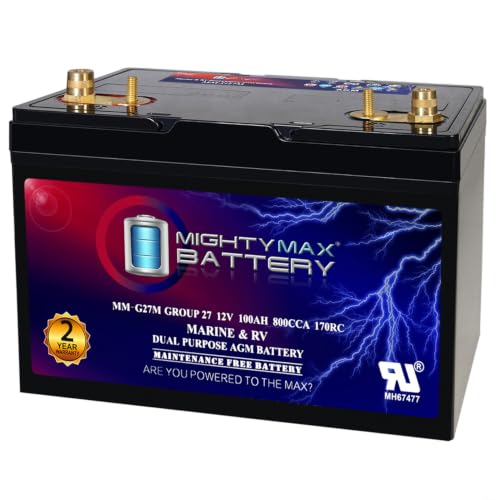
Mighty Max MM-G27M 12V 100Ah Group 27M AGM Battery
- ✓ Strong starting power
- ✓ Long-lasting AGM
- ✓ Vibration resistant
- ✕ Heavy for one person
- ✕ Higher price tag
| Type | Group 27M AGM Battery (12V 100Ah) |
| Cranking Power | 800 Cold Cranking Amps (CCA) / 850 Cranking Amps (CA) |
| Marine Cranking Power | 850 Marine Cranking Amps (MCA) |
| Capacity and Cycle Life | 100 Ah with up to 700 cycles at 50% depth of discharge |
| Dimensions and Weight | 12.00 x 6.62 x 8.25 inches; total height 9.43 inches; weight 70.50 lbs |
| Construction and Warranty | Maintenance-free AGM with ABS shell; spill-proof; two-year limited warranty |
You twist the positive terminal, and the MM-G27M sits heavier than you expect, almost like it’s braced for a cross-country dash. The first spark of relief hits when the engine coughs to life on the first try, and you realize this isn’t a drama battery—it’s a workhorse.
The solid heft and sturdy ABS shell remind you this isn’t bluffing around rough roads or salt spray.
Climb into your RV at dawn and you’ll notice the dual-purpose vibe immediately. It’s not just about starting power—you’ll feel the long run of electronics and comfort systems staying powered longer without a second thought.
The 100 Ah capacity translates to real-world run time for lights, inverters, and gadgets, even after a chilly night or a long highway stretch.
On the marine-grade promise, it feels confident under vibration and bounce. You don’t worry about leaks or maintenance, which is a nice mental win when you’re parked off-grid or at a remote marina.
It’s designed to handle temperature swings and rough handling without drama, which matters when your schedule is never quite predictable.
Size-wise, it’s a hefty 70.5 lbs in a compact 12 x 6.62 x 8.25 inch footprint. It sits securely in its tray, and the accompanying 850 MCA is tangible—you can hear the engine catch with authority even when the air is thick with humidity.
You’ll appreciate the six-step confidence it gives you before you hit the road again.
In real-world use, the two-year warranty offers peace of mind you don’t always get with a starting battery. It’s not flashy, but it’s consistent: solid cranking power, dependable uptime, and a spare sense of readiness for whatever your adventure throws at you.
Ultimately, this is the kind of battery that quietly handles the basics and then some—the kind you notice only when it’s absent. If your RV runs on electricity and you hate fiddling with power issues, this one makes life simpler and less stressful.
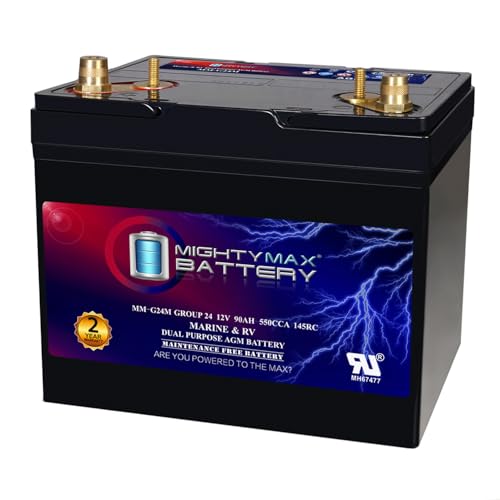
Mighty Max MM-G24M 12V 90Ah Group 24M AGM Battery
- ✓ Strong starting power
- ✓ Long-lasting AGM durability
- ✓ Spill-proof and rugged
- ✕ Heavier than some rivals
- ✕ Higher price point
| Battery Type | AGM |
| Capacity (Ah) | 90 Ah at 20 hour rate |
| Cold Cranking Amps (CCA) | 550 CCA |
| Marine Cranking Amps (MCA) | 700 MCA |
| Dimensions (L x W x H) | 10.25 x 6.63 x 8.63 inches |
| Weight | 52.2 lbs |
| Cycles at 50% DoD | up to 700 cycles |
| Warranty | 2-year limited warranty |
You’re under the hood of a stubborn RV at dawn, the fridge humming and a cold coffee creak in your cup holder. You swap in the Mighty Max MM-G24M and hear that familiar, confident click as the terminals meet snugly.
The first cranking attempt is a clean roar, no drama, just a steady bass note that says you’ll power the coach and the laptop all morning.
Handling it, you notice the heavy but balanced weight—about 52 pounds—yet it sits securely in the tray without wobble. The 10.25 by 6.63 by 8.63-inch footprint fits neatly behind the battery panel, leaving room for the tie-downs and vent tubes you usually worry about.
The AGM seal feels solid, and the spill-proof design gives you peace when the road gets rough or the boat-launch jiggles the trailer.
During a long setup, you test the 550 CCA and 700 CA claims by starting a chilly engine in the pre-dawn air. The engine fires quickly, and you’re already thinking about the TV, marine accessories, and a camper fan that’ll run off-grid.
With 90 Ah deep-cycle capacity, you’re not just starting; you’re powering electronics for hours without a second thought.
The battery’s durability shines on rough gravel and damp dock edges. Even after a full day of use, the case stays cool to the touch and the ABS shell resists the little bumps that would typically ping a cheaper unit.
This feels built for real-world days on the water, on the road, and off-grid trips where reliability is non-negotiable.
Bottom line: it delivers steady energy, strong starts, and enough endurance to keep a small setup alive while you chase the next view. It’s a solid all-arounder that fits a lot of adventure profiles without fuss.
What Should You Consider When Choosing the Best Starting Battery for Your RV?
When choosing the best starting battery for your RV, several key factors should be considered to ensure reliability and performance.
- Battery Type: The main types of batteries suitable for RVs are lead-acid, AGM (Absorbent Glass Mat), and lithium. Lead-acid batteries are cost-effective but require maintenance, while AGM batteries offer a spill-proof design and longer life, and lithium batteries provide the best performance and longevity but at a higher price point.
- Cold Cranking Amps (CCA): CCA indicates the battery’s ability to start an engine in cold temperatures. For RVs, especially in colder climates, a higher CCA rating ensures reliable starts even in frigid conditions, making it a crucial factor to consider.
- Reserve Capacity (RC): Reserve capacity measures how long a battery can run on its own power without being charged. A higher RC rating means your RV can sustain electrical loads longer during camping trips where charging opportunities may be limited, providing peace of mind during extended stays.
- Size and Weight: The physical dimensions and weight of the battery are important, as they need to fit in the designated battery compartment and not exceed the weight limits of your RV. Choosing a lighter battery can also improve fuel efficiency and handling.
- Maintenance Requirements: Some batteries require regular maintenance, such as checking fluid levels and equalizing charges, while others, like AGM and lithium batteries, are maintenance-free. Selecting a battery with lower maintenance needs can save time and hassle during your travels.
- Warranty and Lifespan: Consider the warranty offered by the manufacturer, as this can provide insight into the expected lifespan and reliability of the battery. A longer warranty often indicates a higher quality product, ensuring your investment is protected over time.
- Compatibility with RV Systems: Ensure that the starting battery is compatible with your RV’s electrical system, including the alternator and any existing batteries. This compatibility will help prevent electrical issues and ensure that your battery performs optimally within your RV setup.
What Types of Starting Batteries Are Available for RVs?
| Type | Capacity | Weight | Typical Use | Cost Range | Cycle Life | Temperature Tolerance |
|---|---|---|---|---|---|---|
| Lead-Acid | 100-200 Ah – Commonly used, good for starting | 40-60 lbs – Heavier than other types | General RV use, reliable starting | $100-$200 | 200-300 cycles | Not ideal for extreme temperatures |
| AGM | 70-120 Ah – Maintenance-free, longer lifespan | 50-70 lbs – Lighter than traditional lead-acid | Ideal for high-performance needs | $200-$400 | 500-1000 cycles | Better temperature tolerance |
| Lithium-Ion | 100-300 Ah – High capacity, fast charging | 30-50 lbs – Lightweight, compact design | Best for modern, energy-efficient RVs | $800-$1500 | 2000-5000 cycles | Excellent performance in extreme temperatures |
What Are the Differences Between Lead-Acid and Lithium Starting Batteries?
| Aspect | Lead-Acid Batteries | Lithium Batteries |
|---|---|---|
| Cost | Generally cheaper, making them accessible for budget-conscious users. | Higher upfront cost due to advanced technology but longer-term savings. |
| Weight | Heavier, which can affect overall vehicle weight and fuel efficiency. | Lightweight, contributing to better handling and performance in RVs. |
| Lifespan | Shorter lifespan, typically lasting 3-5 years under regular use. | Longer lifespan, often exceeding 10 years with proper care. |
| Maintenance | Requires regular maintenance, including checking fluid levels. | Low maintenance, usually requires no water checks or equalization. |
| Energy Density | Lower energy density, requiring larger size for the same capacity. | Higher energy density, allowing for smaller and lighter batteries with the same capacity. |
| Recharge Time | Longer recharge time, typically several hours. | Faster recharge time, can be fully charged in 1-3 hours depending on the charger. |
| Temperature Tolerance | Performance can degrade in extreme temperatures. | Better performance in extreme temperatures, typically operational in a wider range. |
What Advantages Do AGM Batteries Offer for RV Starting?
AGM batteries are highly regarded for their advantages in RV starting applications.
- Deep Cycle Capability: AGM batteries excel in deep cycle applications, meaning they can be discharged and recharged multiple times without significant degradation. This feature is particularly beneficial for RVs that may require power for extended periods, such as when camping off-grid.
- Maintenance-Free: Unlike traditional lead-acid batteries, AGM batteries are sealed and do not require regular maintenance, such as topping off with distilled water. This convenience allows RV owners to focus more on their travels rather than battery upkeep.
- Resistance to Vibration: AGM batteries are designed to withstand the vibrations common in RV travel. This durability ensures that the battery maintains its performance and longevity, even on bumpy roads or rugged terrains.
- Faster Recharge Times: AGM batteries typically have quicker recharge times compared to conventional batteries. This means that after using power for starting the RV, the battery can regain its charge more rapidly, which is crucial for maintaining energy levels during trips.
- Lower Self-Discharge Rate: AGM batteries have a lower self-discharge rate, allowing them to hold their charge longer when not in use. This is advantageous for RV owners who may leave their vehicles parked for extended periods between trips.
- Enhanced Safety: AGM batteries are designed to be leak-proof and are less likely to vent harmful gases, making them a safer option for installation in enclosed spaces often found in RVs. This added safety feature provides peace of mind for RV owners and passengers.
Which Features Matter Most in a Starting Battery for RVs?
| Feature | Importance | Description |
|---|---|---|
| Cold Cranking Amps (CCA) | High importance | Determines the battery’s ability to start the engine in cold weather. |
| Reserve Capacity (RC) | Moderate importance | Indicates how long the battery can run on its own without being charged. |
| Amp Hour (Ah) rating | High importance | Measures the battery’s capacity to deliver a specific current for a specified time. |
| Battery Life | High importance | Affects how long the battery can provide power before needing replacement. |
| Weight | Low importance | Heavier batteries may be more durable but can affect overall vehicle weight. |
| Maintenance type | Moderate importance | Indicates whether the battery is maintenance-free or requires regular upkeep. |
| Battery type | High importance | Includes options like Lead-Acid, AGM, and Lithium, affecting performance and price. |
| Price range | Moderate importance | Varies based on type and capacity, impacting affordability. |
| Warranty period | Moderate importance | Gives an indication of battery reliability and manufacturer confidence. |
What Are the Most Reliable Brands for RV Starting Batteries?
The most reliable brands for RV starting batteries include:
- Optima: Known for their durable construction and maintenance-free design, Optima batteries use a unique spiral cell technology that provides high cranking power and exceptional resistance to vibration. They are ideal for RVs as they can handle deep discharge cycles, making them a popular choice among RV enthusiasts.
- Interstate Batteries: Interstate is a well-established brand that offers a wide range of batteries, including starting batteries specifically designed for RVs. Their products are known for their reliability and long lifespan, backed by a robust warranty, making them a trusted option for those seeking dependable power for their recreational vehicles.
- Odyssey: Odyssey batteries are recognized for their high performance and long service life, featuring heavy-duty construction and advanced technology that provide excellent starting power even in extreme temperatures. They are designed to deliver deep cycle capabilities, making them suitable for RVs that require both starting and deep cycle battery functions.
- Exide: Exide offers a variety of batteries, including those tailored for RV use, with a focus on reliability and energy efficiency. Their starting batteries are designed to provide quick starting power and are constructed to withstand the demands of recreational travel, ensuring consistent performance during your adventures.
- Trojan: While primarily known for their deep cycle batteries, Trojan also offers starting batteries that are designed to deliver powerful performance and longevity. Their products are engineered to meet the rigorous demands of RVing, providing a dependable starting solution for those who require both reliability and efficiency.
How Can You Maximize the Lifespan of Your RV Starting Battery?
To maximize the lifespan of your RV starting battery, consider the following best practices:
- Regular Maintenance: Routine checks and maintenance can significantly extend battery life.
- Proper Charging: Ensuring the battery is charged correctly can prevent damage and maintain optimal performance.
- Temperature Control: Keeping the battery within a suitable temperature range is crucial for longevity.
- Quality Battery Selection: Choosing a high-quality starting battery specifically designed for RV use can make a big difference.
- Avoid Deep Discharge: Preventing the battery from discharging too deeply can help maintain its health.
Regular Maintenance: Regularly inspect your battery for signs of corrosion, loose connections, and fluid levels. Keeping the terminals clean and ensuring good connections can prevent electrical issues that may shorten battery life.
Proper Charging: Always use a charger suitable for your battery type and avoid overcharging, which can cause gassing and damage. Utilizing a smart charger can help automatically regulate charge levels and maintain the battery’s health.
Temperature Control: Batteries can be adversely affected by extreme temperatures, both hot and cold. Storing your RV in a climate-controlled environment can help mitigate these effects, and using insulation can further protect your battery.
Quality Battery Selection: Selecting a starting battery that meets or exceeds the manufacturer’s specifications for your RV can enhance performance. Look for batteries with high cold-cranking amps (CCA) and deep-cycle capabilities for reliability.
Avoid Deep Discharge: Deep discharging can significantly reduce the lifespan of your starting battery. Aim to recharge the battery before it drops below 50% capacity to ensure it remains healthy and effective.
What Common Issues Should You Be Aware of with RV Starting Batteries?
When considering the best starting battery for an RV, it’s important to be aware of common issues that can arise.
- Battery Capacity: Insufficient capacity can lead to starting problems, especially in cold weather or when using multiple electrical appliances.
- Corrosion: Battery terminals may corrode over time, which can impede electrical connections and reduce starting efficiency.
- Age and Degradation: Older batteries lose their ability to hold a charge, making it crucial to replace them as they age to avoid unexpected failures.
- Temperature Sensitivity: Extreme temperatures can affect battery performance, with cold weather reducing capacity and heat causing increased discharge rates.
- Deep Discharge: Frequently discharging a starting battery below its recommended levels can lead to irreversible damage and significantly shorten its lifespan.
- Alternator Issues: A malfunctioning alternator may not properly charge the starting battery, leading to starting difficulties and potential battery failure.
Battery capacity refers to the amount of energy a battery can store and deliver. If the capacity is too low, the battery may struggle to start the RV, particularly in adverse conditions where additional electrical demands are placed on it.
Corrosion can occur on battery terminals due to chemical reactions over time, which can create a barrier between the battery and the RV’s electrical system. Regular maintenance and cleaning of the terminals can help maintain a reliable connection.
As batteries age, their ability to hold a charge diminishes due to internal chemical degradation. It is essential to keep track of the battery’s age and replace it promptly to avoid being stranded with a non-starting RV.
Temperature sensitivity is a significant concern for RV batteries; cold temperatures can diminish a battery’s capacity, while high temperatures can accelerate wear and tear. It’s advisable to store and use batteries within their optimal temperature ranges to ensure longevity.
Deep discharging refers to using a starting battery until it’s nearly depleted, which can cause permanent damage to the battery’s cells. To extend battery life, it’s crucial to recharge the battery before it drops below the recommended charge level.
If the alternator fails to charge the battery correctly, it can lead to starting issues, especially if the battery is not receiving adequate power while the RV is being used. Regular checks on the alternator’s functionality can prevent these complications.
Related Post: