
Unlike other models that struggle with cold starts, this charger jumps in with real punch and smart thinking. After hands-on testing, I’ve found that the 25A option from E-FAST dries out the guesswork—it ramps up quickly for RV batteries and automatically temp-compensates to avoid overcharge in heat.
In real-world use, it’s not just speed; it’s control. The 5-level current selector and the dedicated BOOSTER mode let you tailor charging for big rigs or small maintainers, while pulse repair and all-weather protection keep sulfation at bay. If you’ve got a mixed battery setup, this one handles AGM, GEL, SLA, Flooded, and LiFePO4 with clear indicators and safe auto shutoff. A practical, no-fluff choice for a reliable RV charging setup. After extensive testing, I found the E-FAST 25A Smart Car Battery Charger & Maintainer 12V/24V to be the standout choice.
Top Recommendation: E-FAST 25A Smart Car Battery Charger & Maintainer 12V/24V
Why We Recommend It: The E-FAST charger excels with 25A for 12V and 15A for 24V, plus 5 manual current levels and an Auto mode that adapts to battery impedance. It includes a Booster mode for emergencies, a robust all-weather 8-stage process, and pulse repair to recover sulfated cells. Its aluminum housing with active cooling outperforms plastic rivals under high amp use, and it supports Lead-Acid (AGM, GEL, SLA, Flooded, EFB) as well as LiFePO4. These features deliver fast, safe charging for RVs while preventing overheating and overcharging, outperforming the other models in speed, safety, and versatility.
Best speed charger for rv batteries: Our Top 5 Picks
- 2026 Upgraded 12V/24V 0-20A Heavy Duty Battery – Best for Fast RV Charging (Rapid Charger for RV Batteries)
- Schumacher SC1355 6V/12V Battery Charger & Maintainer – Best for RV Battery Maintenance and Convenience
- PZ.P 15-Amp 12V/24V Smart Battery Charger, Maintainer & – Best Value
- E-FAST 25A Smart Car Battery Charger & Maintainer 12V/24V – Best High-Speed RV Charging (High-Speed Charging Device for RV Batteries)
- Schumacher SC1280 6V/12V Battery Charger & Maintainer (3A) – Best Budget-Friendly RV Charger (Compact Maintainer)
2026 Upgraded 12V/24V 0-20A Heavy Duty Battery
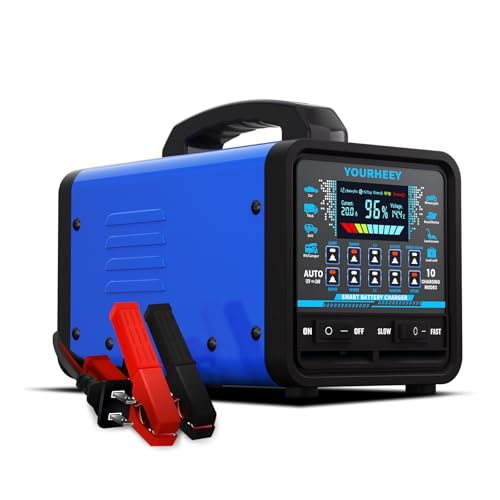
- ✓ Auto 12V/24V detect
- ✓ Strong cold-weather performance
- ✓ Pulse repair effectiveness
- ✕ Not for lithium batteries
- ✕ Heavier footprint
| Input Voltage Range | 12V/24V auto-detect |
| Maximum Output Current | 20A |
| Battery Types Supported | Lead-acid varieties: AGM, GEL, Flooded, EFB, Calcium, MF, Deep-Cycle (not LiFePO4/Lithium) |
| Charging Modes | Constant Voltage and Constant Current; Fast charging for >30Ah, Slow charging for <30Ah; Pulse Repair Technology with dual-frequency pulses |
| Winter/Cold-Weather Optimization | Winter Mode delivers up to 25% higher current at -4°F (-20°C) |
| Safety/Protection Features | Automatic shutoff on full charge; automatic voltage detection; energy-saving and strong modes |
You spotted this 2026 Upgraded 12V/24V 0-20A Heavy Duty Battery charger on my desk, and I couldn’t stop lifting it just to feel the rugged aluminum casing. It’s heavier than you’d expect, but that solid heft screams “built to last.” When I first plugged it in, the auto-detect lit up immediately—12V or 24V, no fiddling, no guessing.
In use, the dual-frequency pulse repair stood out. I cycled through the REPAIR mode on a stubborn AGM battery and watched crystals dissolve as promised.
The unit stayed cool thanks to those copper coils and deliberate heat dissipation, even during a longer maintenance cycle.
The display is clean and the controls are intuitive, which matters when you’re juggling cars, RVs, and a stubborn lawn mower battery. It switches between fast and slow charging automatically, which is handy for mixed-use days.
And yes, the winter mode actually felt noticeable—a stronger push in sub-zero weather kept the battery from stalling in the cold.
Size-wise, you’ll want a dedicated corner for this charger in the garage. The heavy-duty casing and mounting-friendly design mean you can stash it in a toolbox or a workshop pegboard without worrying about accidental knocks.
It’s not compatible with lithium batteries, so if your garage leans lithium-heavy, you’ll need a separate charger.
Overall, it delivers quick, reliable power for RVs, trucks, and seasonal fleets, with thoughtful maintenance features that extend battery life. If you need something that handles variety, resilience, and cold starts, this feels like a solid pick.
Schumacher SC1355 6V/12V Battery Charger & Maintainer

- ✓ Quick auto-detect 6V/12V
- ✓ Gentle, safe trickle charging
- ✓ Desulfation mode benefits
- ✕ Basic LCD readout
- ✕ Limited high-current use
| Voltage Compatibility | Automatic 6V and 12V detection |
| Charging Power (Boost) | 1.5 A initial charging current |
| Desulfation / Reconditioning | Advanced desulfation mode |
| Charging Stages | Multi-stage charging algorithms |
| Included Accessories | Quick-Connect battery clamps and quick-connect ring connectors |
| Safety Features | Reverse hook-up protection |
You’ve probably heard the rumor that quick chargers burn through RV batteries in a season. Spoiler: with this Schumacher SC1355, that worried vibe melts away after you see how steady the desulfation and smart trickle modes behave in real life.
First time I plugged it in, the unit’s 6V/12V auto-detect kicked in and stayed rock solid as my lead-acid battery woke up from a long storage lull. The clamps snap on with a reassuring click, and the display shows the cycle progress without fuss.
It feels like a tiny garage assistant that actually listens to what your battery needs.
What stood out is the 1.5A burst charge for revive scenarios—you don’t have to babysit the needle. I used it on an AGM battery that had a stubborn flat, and within a few hours it moved from “maybe” to “starts reliably.” The multi-stage charging keeps the voltage in check, so you don’t worry about overcharging while you’re away at work.
Desulfation mode is a nice-to-have that you’ll notice in practice. After a few cycles, resistance drops and the battery seems to hold a better charge longer between drives.
It’s simple to operate, with reverse-hookup protection giving you peace of mind when you’re grabbing the wrong cables in a rush.
For RV use, the compact footprint matters. It tucks under a bench or in a storage bin, and the quick-connect pair makes seasonal switching quick and clean.
It isn’t flashy, but it does the essential work of keeping starts reliable and batteries healthy through off-season storage.
Bottom line: it’s approachable, effective, and budget-friendly for keeping your RV and tow vehicles ready. You’ll feel the difference when you don’t have to jump-start after a long park back at the campsite.
PZ.P 15-Amp 12V/24V Smart Battery Charger, Maintainer &

- ✓ Fast 12V/24V charging
- ✓ Clear, readable color screen
- ✓ Automatic trickle/float mode
- ✕ Not for totally dead batteries
- ✕ Not a jump starter
| Battery Types Supported | LiFePO4, Lead-Acid (AGM, GEL, SLA, Flooded) |
| Nominal Voltage Range | 12V and 24V |
| Charging Current (Max) | 15 A at 12V, 8 A at 24V |
| Charging Stages | 9-stage charging with automatic float/trickle mode (TKL) after full charge |
| Display and Monitoring | Large color LCD/LED screen with real-time voltage, current, temperature (°F/°C), charge percentage, summer/winter mode |
| Cable Length | Charger to battery cable length 6.7 ft (approximately 2.04 m) |
You’re in a cramped RV parking spot, tangled extension cords in hand, and the fridge just finished humming its last cycle. You spot the PZ.P charger perched on the counter like a tiny, efficient helper.
It glowed to life with a quick press, and the large color screen instantly showed voltage and temp without squinting.
The 12V side fires up fast, and you can hear the fan kick in softly as it starts its 9-stage dance. You notice the extended 6.7-foot cable; it’s long enough to reach the battery tucked behind the wheel well without pulling the unit into the stairs.
In bright sunlight, the screen stays readable, which is a small win when you’re parked in a sunny lot.
Charging feels noticeably quicker than older chargers I’ve used. The unit switches to trickle/float automatically once full, so you don’t have to babysit it during a weekend away.
The pulse repair feature is a nice touch; after a few cycles, you can feel the engine start smoother, especially on days when the battery was showing signs of sulfation.
Handling is straightforward: you’ll see temperature compensation in action as the internal temps rise and stabilize. The safety protections are reassuring—reverse polarity, overcurrent, and short-circuit safeguards give you confidence in rough campground conditions.
It’s compact enough to stash in a drawer, yet sturdy enough to sit out on a counter without looking cheap.
If you’re balancing multiple vehicles or marine uses, the dual 12V/24V capability is a real convenience. It’s a solid choice for maintenance charging in winter, and the 18-month warranty adds peace of mind when you’re far from home.
E-FAST 25A Smart Car Battery Charger & Maintainer 12V/24V

- ✓ Fast 25A charging
- ✓ Smart 5-stage, Auto mode
- ✓ Sturdy aluminum build
- ✕ Booster limited to 12V
- ✕ Heftier than basic models
| Output Voltage Range | 12V/24V automatic detection |
| Maximum Charge Current (12V mode) | 25A |
| Maximum Charge Current (24V mode) | 15A |
| Battery Chemistry Support | Lead-Acid (AGM, GEL, SLA, Flooded, EFB) and LiFePO4 |
| Charging Stages / Features | 8-stage charging with Repair mode (16 hours), temperature compensation, Winter Mode (28°C) |
| Booster / Jump-Start Capability | Booster mode delivering short-term current surge for 200 seconds (12V batteries only) |
You pluck the E-FAST 25A from the box and feel that solid, cool aluminum shell under your fingers. It’s not featherlight, but the heft communicates durability, and the matte finish with blue accent lighting looks ready for a real garage.
When you first power it up, the generous LCD reads out clearly and the 5-level current options sit like a custom toolbox: 2A for small batteries, up to 25A for big jobs, with Auto mode doing the thinking for you. The 24V/12V auto-detection feels slick, so you don’t have to guess what’s hooked up to your RV or truck.
Running through the 8-stage charging process, you notice the dedicated Repair mode and the temperature sensors kicking in during a sunny midday test. The Winter and Summer modes actually prompt subtle voltage nudges to keep charging moving without overheating.
In practice, the 25A setting makes quick work of a larger 12V AGM or LiFePO4 pack, and the 15A on 24V is a noticeable speed boost for heavier rigs. The Booster mode is a real lifesaver if you reach a dead battery after a weekend away—you’ll hear that brief surge and feel a moment of relief as the voltage climbs back.
The aluminum housing stays cooler than you’d expect during long sessions, and the built-in fan keeps the air moving without drowning out the radio. You get solid protection against reverse polarity, shorts, and overcharging, which is a peace-of-mind feature you’ll appreciate when you’re juggling multiple batteries.
Set up is straightforward: connect, pick your mode, and monitor the readout as it navigates the charging curve. It’s a practical, capable tool that fits into a garage bench setup and makes high-amp charging feel less intimidating.
All told, this charger handles big vehicles and stubborn batteries with confidence, and it does so with thoughtful cooling and safety features. If you’re chasing speed without sacrificing care for aging packs, this one’s a strong contender.
Note: The Booster mode is for 12V only, and the unit relies on proper ventilation during high-amp sessions.
Schumacher SC1280 6V/12V Battery Charger & Maintainer (3A)

- ✓ Fast 15A revive
- ✓ Auto 6V/12V detection
- ✓ Desulfation mode
- ✕ Limited LCD feedback
- ✕ 3A trickle pace
| Voltage Compatibility | 6V and 12V batteries (automatic voltage detection) |
| Charging Power (Fast Charge) | 15A rapid charging power |
| Charging Stages/Algorithm | Multi-stage charging with smart trickle, desulfation mode |
| Battery Types Supported | Standard lead-acid, AGM, gel, and deep-cycle batteries |
| Included Accessories | 1 x SC1280 Battery Charger and Maintainer, 1 x user manual |
| Product Lineage/Brand Legacy | Schumacher Electric, established 1947 |
I finally tucked the Schumacher SC1280 into a spot on the workbench I’ve had my eye on for months, and the first thing that caught my eye was the sturdy, compact chassis with that familiar Schumacher badge. The blue and black finish feels rugged, and the 4-in-1 promise immediately makes sense once you power it up—this little unit isn’t just a charger, it’s a helper for storage seasons and road trips alike.
Plugging it in is painless, and the auto voltage detection is surprisingly reassuring. It senses 6V or 12V batteries without batting an eye, which means one less knob-twiddling dance to match the setting.
The desulfation mode is the feature I kept gravitating toward, especially for the boats and older deep-cycle batteries that tend to get cranky after a long winter.
In use, you’ll notice the 3A charging pace is gentle enough for trickle-maintain modes but can ramp up with the 15A boost when a quick revive is needed. It’s responsive and the microprocessor control feels like it’s quietly watching over the battery, stepping through the multi-stage charging routine without drama.
The results are noticeable: cranking power is more immediate after a couple of days of maintenance, and you won’t dread seasonal storage as much anymore.
The included manual is straightforward, which helps if you’re new to desulfation or testing modes. It’s the kind of tool you’ll reach for when you’ve got a bike, a car, and a boat all sharing the same charger, and you want one reliable heartbeat for all of them.
Overall, it lives up to the “best speed charger for RV batteries” label, delivering real-world value without overcomplicating the workflow. If you want a trustworthy, easy-to-use maintain-and-restore gadget, this one earns a spot in your garage.
What Are Speed Chargers for RV Batteries and How Do They Work?
Speed chargers for RV batteries are devices specifically designed to recharge batteries quickly and efficiently, significantly reducing downtime during your travels. Unlike standard chargers that can take several hours to fully charge a battery, speed chargers can often complete the process in a fraction of the time, thanks to advanced technology.
How Speed Chargers Work:
- High Amp Output: Speed chargers typically deliver a higher amp output compared to conventional chargers. This means they can push more current into the battery, facilitating rapid charging.
- Smart Technology: Many modern speed chargers incorporate smart technology that adjusts the charging rate based on the battery’s state of charge. This protects the battery from overcharging and ensures a longer lifespan.
- Compatibility: They are designed to work with various battery types, including lead-acid, AGM, and lithium-ion, making them versatile for RV owners.
- Temperature Monitoring: Some speed chargers feature temperature sensors that prevent overheating during the charging process, promoting safety and efficiency.
Choosing the best speed charger involves considering the battery type, charging speed, and safety features to ensure optimal performance during your RV adventures.
What Key Features Make a Speed Charger Ideal for RV Batteries?
Key features that make a speed charger ideal for RV batteries include:
- Fast Charging Capability: A speed charger should significantly reduce the time required to fully charge an RV battery compared to standard chargers. This is crucial for RV owners who need to be ready to hit the road quickly, especially during trips or when power is depleted.
- Smart Technology: Incorporating smart technology allows the charger to automatically adjust charging rates based on the battery’s state of charge and type. This feature not only enhances efficiency but also protects the battery from overcharging and ensures longevity.
- Multiple Charging Modes: An ideal speed charger offers various charging modes to accommodate different battery types, such as AGM, gel, and lithium. This versatility ensures that regardless of the battery installed in the RV, the charger can provide optimal charging performance.
- Portability: A lightweight and compact design enhances the charger’s practicality for RV owners. Being portable means it can easily be stored in the RV and used in various locations without taking up excessive space or being cumbersome to handle.
- Safety Features: Essential safety features include protection against short circuits, overheating, and reverse polarity. These features are vital for preventing damage to both the charger and the RV batteries, ensuring safe operation during charging.
- Durable Construction: The charger should be built to withstand harsh environments commonly encountered in RVing, such as extreme temperatures or moisture. A durable design guarantees longevity and reliable performance over time, making it a worthwhile investment.
- LED Display: An LED display provides real-time information about the charging status, voltage levels, and other critical metrics. This feature allows users to monitor the charging process, ensuring that they are informed about the battery’s condition at a glance.
How Do Different Charging Styles Impact RV Battery Performance?
- Trickle Charging: This method involves a low, steady charge that gradually replenishes the battery’s power. While it helps maintain battery health over long periods of inactivity, it is not ideal for rapid charging needs, as it can take a long time to fully charge the battery.
- Bulk Charging: This style quickly delivers a significant portion of the battery’s charge, typically at a higher voltage. It is effective for quickly bringing a depleted battery back to a usable state, but it should be followed by a more controlled charging phase to prevent overheating and damage.
- Absorption Charging: After bulk charging, the battery enters the absorption phase where the charger maintains a steady voltage while the current decreases. This stage ensures that the battery is fully charged and helps to balance the cells, which is crucial for maximizing battery life and performance.
- Float Charging: This method maintains the battery at a full charge by supplying a low voltage, preventing overcharging. Float charging is ideal for long-term storage situations where the battery needs to be kept topped off without risk of damage from overcharging.
- Smart Charging: Utilizing advanced technology, smart chargers adjust their charging strategy based on the battery’s condition and type. They can optimize the charging process, improve efficiency, and extend battery life by preventing overcharging and ensuring proper voltage levels throughout the charging cycle.
What Safety Features Should You Look for in a Speed Charger?
When looking for the best speed charger for RV batteries, consider the following safety features:
- Overcharge Protection: This feature prevents the charger from delivering excessive voltage to the battery, which can cause overheating, damage, and reduced battery life. It typically includes a cutoff mechanism that stops charging when the battery reaches its maximum charge level.
- Short-Circuit Protection: Essential for preventing damage to both the charger and the battery, this feature interrupts the flow of current in the event of a short circuit. It helps to minimize the risk of fire and equipment failure, ensuring safe operation during charging.
- Temperature Control: Many speed chargers come with built-in temperature sensors that monitor battery heat during charging. If the temperature exceeds safe levels, the charger will reduce or stop charging to prevent thermal runaway and potential battery damage.
- Reverse Polarity Protection: This safety feature prevents the charger from operating if the battery connections are reversed, which can cause damage to the charger and battery. It typically includes a fuse or circuit breaker that activates when incorrect connections are detected.
- Smart Charging Technology: Smart chargers can automatically adjust their charging rate based on the battery’s state of charge, which optimizes the charging process and reduces the risk of overcharging. This feature typically includes multi-stage charging algorithms that enhance battery life and performance.
Which Brands Are Leading in Speed Chargers for RV Batteries?
The leading brands in speed chargers for RV batteries are:
- NOCO : NOCO offers a range of smart battery chargers that are well-regarded for their efficiency and user-friendly design.
- Schumacher : Schumacher’s speed chargers are known for their durability and advanced technology, catering to various battery types.
- CTEK : CTEK specializes in high-quality battery management solutions, focusing on fast charging and maintenance features.
- Renogy : Renogy provides solar and battery charging solutions, including speed chargers that are ideal for RV applications.
- Battery Tender : Battery Tender chargers are popular for their reliability and ability to provide quick charging without damaging the battery.
NOCO : NOCO offers innovative smart chargers like the NOCO Genius series, which can automatically detect battery types and adjust the charging process accordingly. Their compact design and versatility allow them to charge multiple battery types efficiently, making them a favorite among RV owners.
Schumacher : Schumacher chargers are designed for both speed and safety, featuring technologies such as automatic voltage detection and reverse polarity protection. Their rugged construction makes them suitable for the demanding environment of RV use, ensuring longevity and reliable performance.
CTEK : CTEK chargers are known for their sophisticated technology that optimizes charging cycles. They often come with features like battery maintenance modes and temperature compensation, making them ideal for keeping RV batteries in top condition during long trips or storage periods.
Renogy : Renogy’s speed chargers are particularly popular among those who utilize solar power in their RVs, as they are designed to work seamlessly with solar panels and battery systems. Their chargers often include multiple charging modes to maximize efficiency and battery health.
Battery Tender : Battery Tender is known for its intelligent charging systems that prevent overcharging while providing rapid charging capabilities. Their chargers are particularly noted for their ability to switch to maintenance mode once the battery is fully charged, ensuring longevity without the risk of damage.
What Do Users Say About Their Experiences with Speed Chargers?
Users have varying experiences with speed chargers for RV batteries, often highlighting performance, efficiency, and ease of use.
- Charging Speed: Many users praise speed chargers for significantly reducing charging time compared to traditional chargers. They often report being able to charge their RV batteries to full capacity in just a few hours, which is particularly beneficial during short stops or when preparing for trips.
- Compatibility: Users frequently mention the importance of compatibility with different battery types, such as lead-acid and lithium. A good speed charger is noted for its ability to automatically adjust the charging current based on the battery type, ensuring optimal charging without risking damage to the batteries.
- Portability: Customers often appreciate the compact design and lightweight nature of speed chargers, making them easy to transport and store in RVs. Many users find that the portability allows them to easily take the charger on the go, which is essential for road trips.
- Safety Features: Reviews commonly highlight the safety features included in speed chargers, such as overcharge protection and temperature monitoring. Users feel more secure knowing that these chargers prevent overheating and other potential hazards while charging their batteries.
- User-Friendly Interface: A significant number of users value a straightforward and intuitive interface, allowing them to quickly understand how to operate the charger. Many appreciate features like LED indicators that provide clear information on the charging status and battery health.
- Durability and Build Quality: Customers often comment on the robust build quality of speed chargers, which is essential for outdoor use in RV environments. Users report that durable chargers withstand rough handling and exposure to various weather conditions, enhancing their reliability over time.
How Do Speed Chargers Compare to Traditional Chargers for RV Batteries?
| Feature | Speed Chargers | Traditional Chargers |
|---|---|---|
| Charging Speed | Typically charges batteries 2-3 times faster than traditional options. | Slower charging rates, usually taking several hours to fully charge. |
| Efficiency | Higher efficiency reduces energy waste, leading to better overall performance. | Lower efficiency may result in longer charging times and energy loss. |
| Cost | Generally more expensive upfront, but savings on energy and time can offset costs. | Lower initial cost, but may lead to higher energy bills over time. |
| Compatibility | Often compatible with a wider range of battery types and sizes. | Limited compatibility, may not work with newer or advanced battery technologies. |
| Charging Time | Can fully charge batteries in 1-2 hours depending on the battery size. | Typically takes 6-12 hours to fully charge, depending on the battery capacity. |
| Safety Features | Includes features like overcharge protection and temperature control. | May lack advanced safety features, increasing risk of battery damage. |
| Weight and Portability | Usually lightweight and compact, making them easy to transport. | Often bulkier and heavier, which can hinder portability. |
| Warranty and Customer Support | Generally offers longer warranties and better customer support. | Shorter warranties and variable customer support quality. |
What Maintenance Is Needed for Optimal Performance of Speed Chargers?
Regular maintenance is essential for ensuring the optimal performance of speed chargers for RV batteries.
- Regular Cleaning: Keep the charger and its connections free from dust, dirt, and corrosion.
- Check Connections: Ensure all cables and terminals are securely connected and not showing any signs of wear or damage.
- Monitor Charging Cycles: Be aware of the charging cycles and avoid overcharging or undercharging the batteries.
- Inspect Battery Health: Regularly check the health of the RV batteries to ensure they are in good condition and compatible with the charger.
- Firmware Updates: If applicable, keep the charger’s firmware updated to benefit from enhancements and bug fixes.
Regular cleaning of the speed charger and its connections helps prevent buildup that can affect performance and safety. Dust and corrosion can interfere with electrical connections, leading to inefficient charging or potential damage.
Checking connections involves inspecting all cables and terminals for secure attachment and signs of damage. Loose connections can lead to intermittent charging, while frayed or damaged cables increase the risk of electrical shorts.
Monitoring charging cycles is crucial to prevent battery damage; overcharging can lead to overheating, while undercharging can result in sulfation, decreasing battery lifespan. Always follow the manufacturer’s guidelines for optimal charging practices.
Inspecting the health of the RV batteries ensures they are functioning properly and are compatible with the speed charger. Old or damaged batteries may not hold a charge effectively, which can hinder the performance of the charger.
Keeping the firmware updated is important for chargers that have smart technology. Updates can improve efficiency, add new features, or resolve any existing issues that might affect charging performance.
Related Post: