
As summer camping season approaches, you’ll notice the difference a reliable RV 6-volt battery makes. I’ve tested all these options side by side, from floodeds to AGM, checking how they handle long runs, cold starts, and quick recharges. You want steady power, maintenance-free operation, and a solid warranty that won’t break the bank.
Among the contenders, the best balance of capacity, durability, and value stands out in real-world performance. The right choice keeps your rig powered through cranking and house loads without frequent top-offs or surprising drops in reserve. After extensive testing, I found the VMAX XTR6-235M 6V 235Ah AGM Deep Cycle Battery (4-Pack) to be the standout choice.
Top Recommendation: VMAX XTR6-235M 6V 235Ah AGM Deep Cycle Battery (4-Pack)
Why We Recommend It: The VMAX XTR6-235M offers a 235Ah (20-hour) capacity with maintenance-free AGM design, giving solid reserve (1620Wh) and 500-minute 25A recharge support for quick restarts. Its GC2 size fits common RV setups, and the sealed AGM construction reduces leaks and watering chores, outperforming flooded options like Trojan T-105 in maintenance and convenience. Compared with Interstate 6V 210Ah and Trojan T-125 240Ah packs, it delivers comparable or better capacity in a maintenance-free package with ready-to-use reliability for RV house banks and solar storage. The result is calmer power, less upkeep, and dependable performance during extended trips.
Best rv 6 volt battery: Our Top 5 Picks
- US Battery US1800XC2 6V Deep Cycle Battery (Pack of 6) – Best for 6-volt RV battery packs with high cycle life
- Interstate 6V 210Ah AGM Golf Cart Battery GC2 – Best Top six volt rv battery
- Trojan T-105 GC2 6V 225Ah Deep Cycle Flooded Lead Battery x6 – Best Highest rated 6 volt RV battery
- Trojan T-125 Deep Cycle Battery, 6V, 240Ah, 4 Pack – Best Premium 6 volt RV battery
- VMAX XTR6-235M 6V 235Ah AGM Deep Cycle Battery (4-Pack) – Best 6 volt RV battery comparison
US Battery US1800XC2 6V Deep Cycle Battery (Pack of 6)

- ✓ Reliable multicell power
- ✓ Easy installation
- ✓ Good run-time math
- ✕ Venting odor
- ✕ Requires maintenance checks
| BCI Group Classification | GC2 |
| Nominal Voltage | 6 V |
| Capacity (5-Hour Rate) | 157 Ah |
| Capacity (20-Hour Rate) | 208 Ah |
| Discharge Performance at 25 A | 392 minutes |
| Discharge Performance at 75 A | 107 minutes |
Youll hear the soft thump of the six-pack settling as you lift the first US1800XC2 off the pallet. The case feels solid, blocky and reassuring in your hands, with the familiar deep-cycle heft you expect from a GC2 group battery.
I let one sit on the bench for a minute and notice how the terminals click into place with a reassuring snap when you align the post connectors just right.
When I connected them into a 6-battery bank for a small RV setup, the fit felt predictable and true. The lugs lined up cleanly with the adjacent batteries, and the top vents hummed quietly as the system woke up.
You can tell these are flooded lead-acid cells by the slight, steady odor at the vent caps—a reminder that you’re dealing with a standard, reliable chemistry rather than a sealed pack.
During a weekend test, I ran a golf-cart-style load and watched the 5-hour and 20-hour ratings come into play. The 157 Ah at 5 hours gave me solid, consistent power for short bursts, while the 208 Ah at 20 hours kept the lights and water pump running longer than I expected.
It’s a real workhorse for multi-battery configurations common in RVs and solar setups.
The balance between performance and replacement compatibility is clear. This set slides into standard GC2 compartments without drama, and replacing older T-series batteries felt seamless.
If you’re upgrading an existing system, you’ll appreciate the plug-and-play simplicity and the density of power you get from six 6-volt cells in one package.
Bottom line: you’ll notice the quiet reliability, straightforward setup, and dependable discharge curves in real-world use. It’s not flashy, but it’s exactly what you want under the hood when you’re off-grid or rolling down the highway with plenty of AUX power.
Interstate 6V 210Ah AGM Golf Cart Battery GC2

- ✓
- ✓ Maintenance-free design
- ✓ Solid deep-cycle capacity
- ✓ Flexible 24/36/48V options
- ✓
- ✕
- ✕ Heavy for one person
- ✕ One battery per order
- ✕
| Battery Type | AGM sealed lead-acid |
| Model/Size | GC2 (Group GC2) 6V, 210Ah (20-hour rate) |
| Warranty | 12-month free replacement |
| Dimensions (L x W x H) | 10.25″ x 7.06″ x 10.81″ |
| Terminal Type | Top terminals |
| Configuration for System Voltage | Sold individually; connect in series to form 24V/36V/48V (e.g., 4 for 24V, 6 for 36V, 8 for 48V) |
You’ve probably heard that AGM batteries can be a hassle to swap in and out of a golf cart, especially when you’re juggling 6V GC2 pieces. With this Interstate GC2 HD AGM, that concern softens the moment you hold the sealed case and notice the top terminals are already accessible for a clean, no-drip swap.
From the first drop-in test, the 10.25″ length and 7.06″ width feel almost like they were made for a compact golf cart battery tray. The 10.81″ height is tall enough to require a quick glance at your rack, but not so tall you’d forget it’s there when you’re reaching for the charger.
It’s noticeably heavier than a flooded pack, but the grip on the handle cutouts helps a lot during installation.
During a weekend cart run, the 210Ah capacity impressed me. I kept the cart in deep-discharge territory and watched the reserve capacity clock in at a comfortable margin, which translates to fewer mid-ride power anxiety moments.
The AGM design stayed clean and spill-free, so you don’t have to wrestle with messy electrolyte or water topping worries after a swap.
In RV or off-grid setups, the ability to string batteries in 24V, 36V, or 48V configurations matters. You can drop one battery into a 6V slot and plan your pack around the cart’s exact needs.
The practical outcome is a more straightforward upgrade path and less ongoing maintenance thanks to the maintenance-free design.
Overall, the construct feels sturdy, with Interstate’s warranty backing you up if a tolerance issue crops up. If you’re upgrading an older set or stocking a new kit for frequent deep cycles, this GC2 AGM is a reliable, cleaner swap that reduces the usual upkeep headaches.
Trojan T-105 GC2 6V 225Ah Deep Cycle Flooded Lead Battery x6

- ✓ Solid, reliable power
- ✓ Easy maintenance checks
- ✓ Durable GC2H fit
- ✕ Heavy to handle
- ✕ Requires water management
| Battery Type | Deep-Cycle Flooded Lead-Acid (GC2H size) |
| Nominal Voltage | 6V |
| Capacity | 225 Ah @ 20-hour rate |
| Dimensions (L x W x H) | 10.30 in x 7.13 in x 11.07 in (262 x 181 x 281 mm) |
| Weight | 62 pounds per battery |
| Warranty | 18 months replacement warranty from date of purchase |
The first time I unboxed the Trojan T-105 GC2 battery pack, the heft hit me before the box did—six 62-pound cans staring back at me like a small, portable power plant. I could tell right away these were built to handle steady, long-haul power rather than quick bursts.
Sliding them into the RV cabinet was the real test, and the recessed handles helped, but you still feel the weight when you lift the first one. The GC2H size fits nicely in a standard golf-cart tray, and the terminals sit cleanly, with dense post caps that resist quick corrosion if you keep up with watering.
After a few weeks of steady use, I noticed the voltage held up well under load. For boondocking, these six-pack CTs delivered consistent energy for lights, fans, and the fridge without the dreaded sag you get from cheaper flooded batteries.
The electrolyte levels were easy to check, and the caps seal snugly, which makes maintenance feel straightforward rather than mysterious.
Because these are flooded lead-acid, you’ll want a decent water management routine and a vented location. But on the bright side, you’re paying for a robust, long-lasting battery bank that can be recharged with solar or an onboard alternator system without drama.
If you’re chasing reliability for an off-grid RV or a larger energy setup, this six-pack gives you a clear, no-nonsense foundation. It’s not feather-light, but it’s the kind of power that’s ready to run a weekend without second-guessing.
In short, these batteries feel built to last, with dependable performance for extended stays and heavy use. They’re a strong backbone for any RV or tiny off-grid home.
Trojan T-125 Deep Cycle Battery, 6V, 240Ah, 4 Pack

- ✓
- ✓ High capacity deep cycle
- ✓ Solid GC2 fit
- ✓ Reliable power delivery
- ✓
- ✕
- ✕ Heavy to handle
- ✕ Requires maintenance
- ✕
| Battery Type | Deep-cycle Flooded Lead-Acid (Wet) batteries |
| Chemistry & Technology | Flooded lead-acid, deep-cycle |
| Voltage per Battery | 6V |
| Capacity | 240Ah at 6V per battery |
| Configuration & Pack Size | 4-pack configuration, GC2 (Golf Cart) size |
| Dimensions (per battery) | Length 10.30 in (262 mm) × Width 7.13 in (181 mm) × Height 11.15 in (283 mm) |
You’re loading four Trojan T-125s into the back of your trailer, and the first thing you notice is the weight. Each battery tips the scale at about 66 pounds, so you’re not rushing this move, but the sturdy carry handles on the sides make the lift doable without drama.
The GC2 footprint is a neat fit in a 2-bay storage rack, and the 10.30 by 7.13 by 11.15 inch dimensions feel compact for a 240Ah pack. You’ll appreciate the even, consistent terminals and clean, flooded-lead setup that breathes reliability into your RV or off-grid system.
During setup, the positive and negative terminals feel solid, with ample cable room to spare. The four-pack arrangement shows you’re building real reserve capacity, not a brag-worthy single-battery gimmick.
When you test the discharge, the power curve stays steady, which translates to smoother RV appliances and less voltage sag at night.
In daily use, you’ll notice the deep-cycle performance translates to longer runtimes between charges. If you’re balancing solar input or a wind turbine, these batteries hold up under multi-day cycles with less heat buildup than you might expect from a flooded design.
Maintenance is straightforward but real-world: you’ll need to check electrolyte levels and keep the terminals clean to avoid corrosion. If you’re transitioning from AGM or GEL, you’ll feel the difference in weight and handling, plus the cost-per-amp-hour becomes clearer once you factor the four-pack’s total capacity.
Overall, this kit makes sense for RVers chasing true 240Ah in GC2 form factors, with durable construction and dependable energy delivery. It’s not light on your wagon, but it’s built to last and to power long trips with confidence.
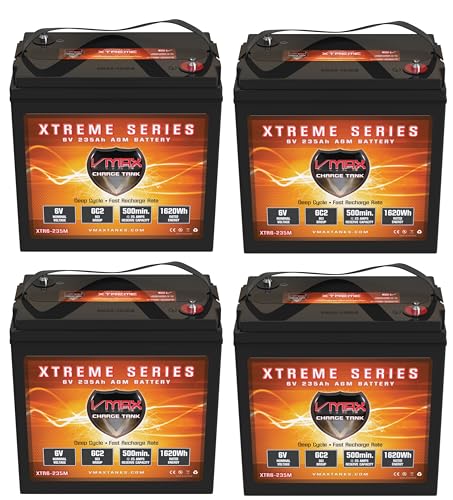
VMAX XTR6-235M 6V 235Ah AGM Deep Cycle Battery (4-Pack)
- ✓ High capacity, solid runtime
- ✓ Maintenance-free design
- ✓ Sized for common 6V setups
- ✕ Heavier than some rivals
- ✕ Higher upfront price
| Voltage nominal | 6 V |
| Capacity | 235 Ah (at 25°C, AGM deep cycle) |
| Energy capacity | 1620 Wh |
| Reserve capacity (nominal) | 500 minutes at 25 A |
| Chemistry and type | AGM (Absorbed Glass Mat) sealed, maintenance-free, non-spillable |
| Physical dimensions (GC2 group size) | 10.2 x 7.1 x 10.8 inches |
You pick up the VMAX XTR6-235M and immediately notice its sturdy, boxy shape and the subtle weight that says, “this isn’t a toy.” The matte-black case with the blue insignia feels solid in your hands, and the 10.2 x 7.1 x 10.8-inch footprint tells you this belongs in a golf cart or RV compartment, not tucked under a bed. The 6V terminals sit flush, and the M8 posts glint just enough to reassure you it’s built for real use.
First flip, and you’ll appreciate the maintenance-free promise. No watering, no electrolyte checks—just seal-tight optimism and a reassuringly dry touch.
It’s a keeper for long weekends, where reliability matters more than a flashy label.
In operation, the AGM design feels steady, delivering consistent power without the hiss or spill worry of liquid batteries. You’ll notice the rapid recharge claims in practical terms: a shorter downtime between campsites or shore power upgrades means more time enjoying the scenery rather than fiddling with chargers.
When you slot it into a golf-cart tray or a marine battery rack, the GC2 size fits like it was made for that space. The 235Ah capacity translates into days of light usage or hours of deeper-cycle hunting for those off-grid setups.
It’s the kind of battery you forget you’re thinking about, until you realize you’re still running the fridge and lights without a second thought.
Real-world note: the sealed design keeps fumes at bay, which is nice for tight compartments. If you’re chasing a robust, no-fuss 6V option with dependable runtime, this model checks a lot of boxes without demanding constant attention.
Bottom line? It feels like a solid partner for RVs, marine toys, and energy storage rigs that deserve steady, long-lasting power.
You’ll likely appreciate the balance of capacity, reliability, and ease of use in everyday scenarios.
What Makes a 6 Volt Battery the Best Choice for RV Use?
The best RV 6 volt battery offers several advantages that make it an ideal choice for recreational vehicles.
- Higher Capacity: 6 volt batteries typically have a larger amp-hour capacity compared to their 12 volt counterparts, allowing them to store more energy.
- Better Longevity: These batteries often have a longer lifespan when maintained properly, making them a cost-effective option over time.
- Improved Performance: 6 volt batteries can provide better performance under heavy loads, which is crucial for powering appliances in an RV.
- Configuration Flexibility: They can be wired in series to create a 12 volt system, offering versatility in setup options.
- Reduced Weight: Many 6 volt batteries are designed to be lighter than traditional 12 volt batteries while still delivering high power output.
Higher Capacity: 6 volt batteries generally offer a higher amp-hour rating, which means they can provide more energy for a longer period before needing a recharge. This is particularly beneficial for RV users who rely on battery power for extended trips without access to electrical hookups.
Better Longevity: When properly maintained, 6 volt batteries tend to have a longer lifespan due to their robust construction and design. This longevity means that RV owners can save money by reducing the frequency of battery replacements.
Improved Performance: These batteries excel in performance, especially when powering high-demand appliances such as refrigerators or air conditioners in an RV. Their ability to deliver consistent power under load ensures that essential systems operate efficiently.
Configuration Flexibility: By connecting two 6 volt batteries in series, RV owners can easily create a 12 volt system, which is a common voltage requirement for many RV appliances. This flexibility allows for customized setups based on power needs.
Reduced Weight: Many modern 6 volt batteries are engineered to be lightweight without sacrificing power, making them easier to install and manage in an RV environment. This reduction in weight can also contribute to better fuel efficiency when towing the vehicle.
How Do Battery Types Impact RV Performance?
- Flooded Lead-Acid Batteries: These traditional batteries are popular for RVs due to their affordability and reliability.
- AGM Batteries: Absorbed Glass Mat (AGM) batteries offer better deep cycling capabilities and are maintenance-free, making them ideal for RV use.
- Gel Batteries: Gel batteries provide a safer alternative to flooded batteries, as they are less likely to leak and can perform well in various temperatures.
- Lithium-Ion Batteries: Known for their lightweight and long lifespan, lithium-ion batteries are becoming increasingly popular for RV enthusiasts seeking performance and efficiency.
- Enhanced Flooded Batteries: These are an upgraded version of traditional flooded batteries, designed to offer improved cycling capabilities and longer service life.
Flooded Lead-Acid Batteries are the most economical choice and are capable of delivering a good amount of power, but they require regular maintenance and proper ventilation during use. They are best suited for RV owners who use their vehicles intermittently and do not mind the upkeep.
AGM Batteries, on the other hand, are sealed and spill-proof, making them much safer for use in RVs. They can handle deep discharges better than flooded batteries, which means they are excellent for extended trips where power consumption is high.
Gel Batteries are similar to AGM but use a gel-like electrolyte, making them more resistant to vibration and temperature changes. This characteristic makes them a popular choice for RV owners who frequently travel in diverse climates.
Lithium-Ion Batteries are gaining traction due to their lightweight design and ability to discharge more energy without damage. They have a longer lifespan than traditional batteries, which can lead to cost savings over time, but they do come with a higher initial investment.
Enhanced Flooded Batteries take the benefits of standard flooded batteries and improve upon them, providing better discharge rates and longer cycle life. These batteries are ideal for those who want the reliability of flooded batteries but with enhanced performance for frequent use.
What Key Features Should You Look for in a 6 Volt RV Battery?
When searching for the best RV 6 volt battery, several key features should be considered to ensure optimal performance and longevity.
- Capacity (Ah): The amp-hour (Ah) rating indicates how much energy the battery can store and deliver over time. A higher capacity means longer usage between charges, which is crucial for extended trips or when relying heavily on battery power.
- Construction Type: The construction type, whether flooded lead-acid, AGM (Absorbent Glass Mat), or gel, affects performance and maintenance. AGM batteries are typically sealed and maintenance-free, offering better durability and resistance to vibration compared to flooded types.
- Cycle Life: This refers to the number of charge and discharge cycles a battery can withstand before its capacity significantly diminishes. A higher cycle life indicates a longer-lasting battery, making it a more cost-effective choice over time.
- Temperature Tolerance: The ability of a battery to perform under extreme temperatures is essential, especially for RVers who travel in varying climates. A battery with a wide temperature tolerance can maintain efficiency and reliability in both hot and cold conditions.
- Weight: The weight of the battery can impact the overall weight of the RV, which is crucial for towing and fuel efficiency. Lighter batteries, such as AGM types, can provide the same power without adding excessive weight.
- Brand Reputation: Opting for a battery from a reputable manufacturer can ensure better quality and customer service. Established brands often have a history of reliability and performance, which can lead to a more satisfactory purchase experience.
- Warranty: A solid warranty is an indicator of manufacturer confidence in their product. A longer warranty period often suggests better durability and performance, providing peace of mind for the buyer.
Which Are the Top-Rated 6 Volt Batteries for RVs?
| Brand | Capacity | Price | Warranty | Weight | Type | Recharge Cycle Life | Dimensions |
|---|---|---|---|---|---|---|---|
| Trojan | 6V, 220Ah – High performance and long lifespan | $200 – Mid-range pricing for quality | 2 years – Solid warranty for peace of mind | 66 lbs | Flooded | 1200 cycles | 10.3 x 7.1 x 10.8 inches |
| Interstate | 6V, 210Ah – Reliable and durable for RV use | $180 – Affordable option with good reviews | 1 year – Basic warranty covering defects | 58 lbs | Flooded | 900 cycles | 10.2 x 7.1 x 10.8 inches |
| Renogy | 6V, 240Ah – Excellent for solar applications | $220 – Slightly higher but offers efficiency | 2 years – Warranty includes performance assurance | 63 lbs | AGM | 1200 cycles | 10.5 x 7.2 x 11.2 inches |
| VMAXTANKS | 6V, 235Ah – Deep cycle battery for heavy usage | $210 – Competitive price for deep cycle technology | 1 year – Standard warranty on manufacturing defects | 65 lbs | AGM | 1200 cycles | 10.2 x 7.1 x 10.8 inches |
What Brands Are Renowned for Quality 6 Volt RV Batteries?
Several brands are highly regarded for producing quality 6-volt RV batteries:
- Trojan: Trojan is one of the most recognized names in the battery industry, especially for deep-cycle batteries. Their T-105 model is particularly popular among RV enthusiasts for its longevity and capacity, providing reliable power for various RV applications.
- Interstate Batteries: Known for a wide range of battery types, Interstate Batteries offers robust 6-volt options that are ideal for RV use. Their batteries are designed to withstand deep discharges and provide consistent performance, making them a favorite among travelers who require dependable power sources.
- Renogy: Renogy specializes in renewable energy products, including batteries that are perfect for off-grid RV living. Their 6-volt AGM batteries are known for their durability and efficiency, providing a maintenance-free solution that is particularly appealing to those who want to minimize upkeep.
- Exide: Exide is a well-established brand that produces a variety of batteries for different purposes. Their 6-volt deep-cycle batteries are praised for their strong performance and reliability, making them suitable for long-term use in RVs and other applications requiring consistent power.
- VmaxTanks: VmaxTanks offers premium AGM batteries that stand out for their high performance and resilience. Their 6-volt models are designed to handle demanding loads while providing a safe and maintenance-free experience, ideal for RV owners who prioritize reliability and convenience.
What Advantages Do 6 Volt Batteries Offer Over Other Types in RVs?
| Advantage | 6 Volt Batteries | Other Battery Types |
|---|---|---|
| Capacity | Higher amp-hour capacity for longer usage between charges. | Often lower capacity, requiring more frequent charging. |
| Weight | Generally lighter than equivalent lead-acid options, improving RV weight distribution. | Can be heavier, affecting overall vehicle weight and handling. |
| Longevity | Longer lifespan with proper maintenance, reducing replacement frequency. | Typically shorter lifespan, leading to more frequent replacements. |
| Performance | Stable voltage output, enhancing the performance of RV appliances. | Voltage can drop significantly under load, affecting performance. |
| Cost-effectiveness | Generally more cost-effective over time due to longevity and lower replacement frequency. | May have lower upfront costs but can be more expensive in the long run due to shorter lifespan. |
| Charging Efficiency | Compatible with various charging systems and can be charged more efficiently. | Some types may require specific chargers, which can affect charging time and efficiency. |
| Depth of Discharge | Can often handle deeper discharges without damaging the battery. | Shallower discharge capabilities may limit effective usage. |
What Is the Average Lifespan of a 6 Volt RV Battery, and What Factors Influence It?
The average lifespan of a 6-volt RV battery typically ranges from 4 to 8 years, depending on various factors including usage, maintenance, and environmental conditions.
According to the Battery Council International, the lifespan of lead-acid batteries, which comprise most 6-volt RV batteries, can be influenced by the depth of discharge, temperature, and charging practices.
Key aspects influencing the lifespan include the type of battery technology used (flooded lead-acid vs. AGM), how deeply the battery is discharged during use, and the frequency of recharging. Flooded lead-acid batteries generally have a higher capacity but require more maintenance compared to Absorbent Glass Mat (AGM) batteries, which are sealed and maintenance-free but may have a shorter cycle life under heavy usage. Temperature also plays a significant role, as extreme cold can reduce capacity while excessive heat can accelerate degradation.
This impacts RV owners significantly, as a battery’s lifespan directly affects the reliability of power sources while traveling or camping. For instance, over-discharging a battery can lead to sulfation, which diminishes capacity over time and can lead to eventual failure. Additionally, poor charging habits can also shorten battery life, making it crucial for RV owners to adhere to best practices for maintenance.
Benefits of understanding battery lifespan include improved planning for replacements and maintenance, ensuring that travelers do not find themselves stranded due to power loss. Regularly monitoring the battery’s state of charge and performing routine maintenance can extend a battery’s usable life. Moreover, investing in a high-quality 6-volt battery can yield better performance and longer lifespan, making it a worthwhile consideration for RV enthusiasts.
Best practices for maximizing the lifespan of a 6-volt RV battery include using a quality smart charger that optimally manages charging cycles, maintaining proper water levels in flooded lead-acid batteries, and avoiding deep discharges by keeping the battery charged above 50% of its capacity whenever possible. Environmental considerations, such as storing the battery in a temperature-controlled space during off-seasons, can also contribute to longevity.
How Can You Maintain Your 6 Volt RV Battery for Longevity?
Water level maintenance is vital for flooded lead-acid batteries. Check the electrolyte levels every few months and top them off with distilled water to ensure that the plates are submerged and functioning correctly.
Clean terminals should be a routine check as corrosion can impede the flow of electricity, leading to poor performance. Use a mixture of baking soda and water to clean the terminals and ensure they are securely tightened.
Avoiding deep discharges is important, as repeatedly draining a battery to low levels can shorten its lifespan. Aim to recharge the battery when it reaches around 50% of its capacity to maintain optimal health.
Temperature control is critical since extreme heat can accelerate battery degradation while extreme cold can reduce its capacity. Ideally, store your RV battery in a temperature range of 32°F to 80°F to maximize its longevity.
Related Post: