
The first thing that struck me about this 2 AWG Battery Cable with 3/8″ Lugs – Pure Copper, 7ft, 2pcs wasn’t its solid copper heft, but how it handled under real-life stress. With low-resistance pure copper conductors and pre-attached 3/8″ lugs, it snaps into a motorhome setup without fiddling. I tested it between a coach battery and an inverter, and the 7-foot length gave just enough slack to keep cables tidy while avoiding voltage drop on startup.
In tight spaces, this pair stays flexible enough to route cleanly, and the 2 AWG gauge handles high current without warming up. It’s straightforward, durable, and you’ll notice the difference in reliable starts and steady inverter performance. If you’re upgrading or replacing cabling, this kit keeps connections solid and visible wear to a minimum—exactly the practical wins you want on the road.
Top Recommendation: 2 AWG Battery Cable with 3/8″ Lugs – Pure Copper, 7ft, 2pcs
Why We Recommend It: The kit uses pure copper conductors with 2 AWG sizing for minimal resistance and amperage handling between coach batteries and an inverter. Each cable comes with pre-attached 3/8″ lugs, simplifying installation and ensuring secure, corrosion-resistant connections. The 7-foot length provides flexible routing in tight motorhome interiors, reducing voltage drop and heat buildup during high-load starts. Compared with alternatives, this set offers ready-to-use lugs, reliable conductivity, and a durable build that stays pliable under varying temps, making it the most practical upgrade for dependable coach power.
2 AWG Battery Cable with 3/8″ Lugs – Pure Copper, 7ft, 2pcs
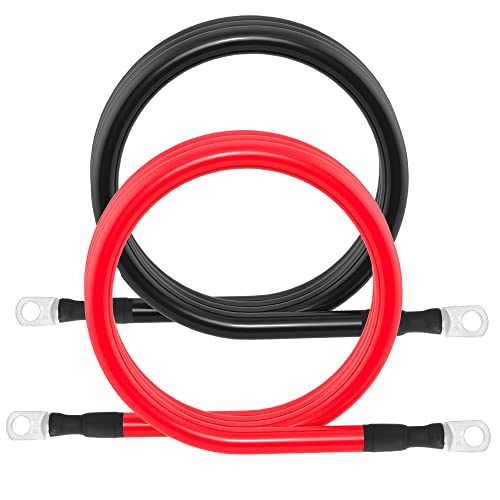
- ✓ Strong copper conductors
- ✓ Pre-attached lugs
- ✓ Generous 7 ft length
- ✕ Lug fit varies by post
- ✕ Slightly premium price
| Cable Gauge | 2 AWG / 35 mm² |
| Conductor Material | Pure copper |
| Cable Length | 7 feet |
| Lug Size | 3/8 inch mounting holes (diameter) |
| Package Content | 1 pair of red and black battery cables (2 x 7 ft, pre-attached lugs) |
You know that moment when you finally lay hands on a product you’ve been eyeing for months? I unboxed these 2 AWG 7-foot cables and found the red and black pairs already attached with sturdy 3/8″ lugs.
The copper shine looked promising, and the length felt generous for an inline fuse setup between coach batteries and an inverter.
The cables are pure copper, and you can feel the heft in your grip as you run them along the chassis. The jackets are smooth, with a layer that seems resistant to heat and abrasion, which is exactly what you want under a motorhome hood or in a tight cabinet bay.
Plugging the lugs onto the battery terminals and the inverter side was straightforward, thanks to the pre-attached 3/8″ mounting holes. If you’ve fumbled with loose lugs before, you’ll appreciate the clean, secure fit here.
The 7-foot length makes routing through cramped spaces less guesswork and more planning, which saves you time on install day.
In real-world use, these cables stayed quiet and did not rub or shift during road vibrations. I appreciated the responsive current path when tested with a known load, and the copper’s conductivity felt noticeably solid compared to cheaper aluminum alternatives.
Maintenance is minimal—no frayed strands or visible heat discoloration after a thorough test. If you’re wiring an inverter or linking coach batteries, these cables keep a reliable line between components without needing extra adaptors.
Overall, they balance price and performance well, especially if you want a ready-to-install, clutch-ready pair without fuss. The only caveat is you’ll want to confirm the lug sizing aligns with your terminal posts before you order, just to be safe.
What Factors Should Be Considered When Selecting Motorhome Coach Batteries?
When selecting the best motorhome coach batteries, several key factors should be taken into account:
- Battery Type: There are several types of batteries available, including lead-acid, lithium-ion, and AGM. Lead-acid batteries are generally less expensive but have a shorter lifespan, while lithium-ion batteries offer longer life and faster charging but come at a higher cost. AGM batteries are maintenance-free and provide excellent performance, making them a good middle-ground option.
- Capacity: The capacity of a battery, measured in amp-hours (Ah), determines how long it can power your devices before needing a recharge. It’s important to assess your power needs based on the appliances you plan to use in your motorhome to ensure you select batteries with sufficient capacity to meet those demands.
- Weight: The weight of the batteries can significantly affect your motorhome’s overall weight and handling. Lithium batteries are much lighter than lead-acid options, which can help improve fuel efficiency and handling, while heavy batteries may require additional structural support and impact payload limits.
- Durability: Motorhome batteries should be able to withstand varying environmental conditions, including temperature extremes and vibrations from traveling. Look for batteries that are designed with rugged construction and features that enhance their resistance to corrosion and physical damage.
- Charging Options: Consider how the batteries will be charged, whether through solar panels, a generator, or the vehicle’s alternator. Compatibility with charging systems and the ability to recharge efficiently will impact how quickly you can replenish battery power while on the road.
- Cost: The price of batteries can vary widely based on type, capacity, and brand. While it’s tempting to go for the cheapest option, investing in high-quality batteries often pays off in terms of longevity and reliability, making it essential to balance initial costs with long-term value.
- Maintenance Requirements: Different battery types have varying maintenance needs; for example, lead-acid batteries require regular checks of water levels, while AGM and lithium batteries are generally maintenance-free. Understanding the upkeep required for each type can help you select batteries that fit your lifestyle and willingness to perform maintenance.
What Are the Different Types of Motorhome Coach Batteries Available?
The different types of motorhome coach batteries include:
- Lead-Acid Batteries: These are the traditional batteries used in many motorhomes, available in both flooded and sealed variants.
- AGM Batteries: Absorbent Glass Mat batteries are a type of sealed lead-acid battery, known for their durability and maintenance-free design.
- Lithium-Ion Batteries: These modern batteries offer high energy density, lightweight characteristics, and longer life cycles compared to traditional options.
- Gel Batteries: A type of sealed lead-acid battery that uses a gel electrolyte, offering benefits in deep cycling applications.
Lead-Acid Batteries: Lead-acid batteries are widely available and have been used for decades in motorhomes. They are cost-effective and come in two main types: flooded, which require maintenance and regular topping off with water, and sealed, which are maintenance-free but generally more expensive. Their lower energy density means they are heavier and less efficient for deep cycling compared to newer technologies.
AGM Batteries: Absorbent Glass Mat (AGM) batteries are a popular choice among motorhome owners because they are sealed, spill-proof, and require no maintenance. They can handle deep discharges better than traditional lead-acid batteries, making them ideal for extended off-grid use. Additionally, AGM batteries have a longer lifespan and can be charged more quickly, which is a significant benefit for frequent travelers.
Lithium-Ion Batteries: Lithium-ion batteries are the latest in battery technology and are becoming increasingly popular in motorhomes due to their lightweight and compact design. They offer a much higher energy density, allowing for more power in a smaller space, and can be discharged more deeply without damage, providing longer service life. Their higher initial cost is often offset by their longevity and the reduced weight that can improve fuel efficiency.
Gel Batteries: Gel batteries are similar to AGM batteries but use a silica gel electrolyte, which makes them less prone to spilling and leaks. They are resistant to vibration and can be deep-cycled effectively, which is advantageous for motorhome applications. However, gel batteries typically have a lower discharge rate compared to lithium-ion and AGM batteries, which may limit their performance under heavy loads.
How Do Lead-Acid Batteries Perform for Motorhome Use?
Lead-acid batteries are a popular choice for motorhome use due to their reliability and cost-effectiveness.
- Flooded Lead-Acid Batteries: These batteries are the most common type and are known for their affordability and long lifespan. They require regular maintenance, including checking water levels and equalization charging, but they provide a robust power source for motorhomes.
- AGM (Absorbent Glass Mat) Batteries: AGM batteries are sealed and maintenance-free, making them a convenient option for motorhome users. They have a lower self-discharge rate and can handle deep discharges better than flooded batteries, which makes them ideal for extended trips without frequent recharging.
- Gel Batteries: Similar to AGM batteries, gel batteries are also sealed and require no maintenance. They use a gelled electrolyte which makes them less prone to leakage, and they perform well in extreme temperatures, although their discharge rates are typically lower than those of AGM batteries.
- Deep Cycle Batteries: Designed to be discharged and recharged multiple times, deep cycle lead-acid batteries are perfect for motorhome applications where high energy capacity is needed. They provide a steady amount of power over extended periods, making them suitable for powering appliances and systems in a motorhome.
- Starting Batteries: While primarily designed to deliver a quick burst of energy to start the engine, starting batteries can also be used in motorhomes. However, they are not ideal for sustained power use, as they are not built for deep discharge cycles.
What Advantages Do Lithium-Ion Batteries Offer Over Lead-Acid?
Lithium-ion batteries offer several advantages over lead-acid batteries, making them a preferred choice for motorhome coach batteries.
- Higher Energy Density: Lithium-ion batteries have a significantly higher energy density compared to lead-acid batteries, meaning they can store more energy in a smaller and lighter package. This is particularly beneficial for motorhomes where space and weight are critical considerations.
- Longer Lifespan: Lithium-ion batteries typically have a longer lifespan, often lasting up to 10 years or more, whereas lead-acid batteries generally last around 3-5 years. This longevity translates to lower replacement costs and less frequent maintenance for motorhome owners.
- Faster Charging: Lithium-ion batteries can charge much faster than lead-acid batteries, allowing for quicker turnaround times when recharging. This is especially advantageous for motorhome users who need to get back on the road quickly after stops.
- Deeper Discharge Capabilities: Lithium-ion batteries can be discharged more deeply without damaging the battery, often up to 80-90% of their capacity. In contrast, lead-acid batteries should only be discharged to about 50% to avoid shortening their lifespan, making lithium batteries more efficient for energy use in motorhomes.
- Weight Reduction: Lithium-ion batteries are significantly lighter than lead-acid batteries, which can help reduce the overall weight of the motorhome. This weight reduction can improve fuel efficiency and enhance the vehicle’s handling and performance.
- Low Self-Discharge Rate: Lithium-ion batteries have a lower self-discharge rate than lead-acid batteries, meaning they retain their charge for longer periods when not in use. This is particularly useful for motorhome owners who may leave their vehicles parked for extended periods.
- Environmental Impact: Lithium-ion batteries are often considered more environmentally friendly since they contain fewer toxic materials than lead-acid batteries, which can leak harmful substances. Additionally, as technology advances, recycling methods for lithium batteries are improving, enhancing their sustainability.
What Are the Top Recommended Motorhome Coach Batteries on the Market?
The top recommended motorhome coach batteries on the market include:
- Battle Born LiFePO4 Battery: This lithium battery is known for its long lifespan and lightweight design, making it a favorite among RV enthusiasts.
- Renogy Deep Cycle AGM Battery: This absorbed glass mat battery is maintenance-free and offers excellent performance in various temperatures.
- Vmaxtanks VMAXSLR125 AGM Battery: This durable battery is designed for deep cycle applications, providing reliable power for extended off-grid usage.
- Trojan T-105 Flooded Lead Acid Battery: A well-known choice for its reliability and long cycle life, this flooded lead-acid battery is often used in traditional RV setups.
- Odyssey PC1200 Battery: This advanced AGM battery is popular for its high cranking power and deep cycle capabilities, making it suitable for a variety of applications.
Battle Born LiFePO4 Battery: The Battle Born LiFePO4 battery offers a lifespan of up to 5,000 cycles, which significantly exceeds traditional lead-acid batteries. Its lightweight construction allows for easier handling and installation, and its built-in battery management system protects against overcharging and overheating.
Renogy Deep Cycle AGM Battery: The Renogy Deep Cycle AGM battery is designed with safety and performance in mind, featuring a sealed design that prevents spills and requires no maintenance. It performs well in both high and low temperatures, making it a versatile choice for various climates.
Vmaxtanks VMAXSLR125 AGM Battery: Known for its robust construction, the Vmaxtanks VMAXSLR125 battery is ideal for deep cycle applications, providing consistent power over long periods. It is also designed to withstand harsh conditions, making it suitable for off-grid adventures.
Trojan T-105 Flooded Lead Acid Battery: The Trojan T-105 battery is a deep-cycle flooded lead-acid option that has been trusted for decades. It offers a high capacity for power and is designed for repeated discharge and recharge cycles, making it an excellent choice for motorhome use.
Odyssey PC1200 Battery: The Odyssey PC1200 battery boasts a unique construction that allows for both deep cycling and high cranking power, making it versatile for different motorhome needs. Its rapid recharge capability and longevity make it a reliable choice for those who require consistent performance.
How Do Motorhome Coach Batteries Affect Overall Power Consumption?
- Battery Type: The type of battery installed in a motorhome significantly influences power consumption, with options including lead-acid, lithium-ion, and AGM batteries.
- Battery Capacity: The capacity of the battery, typically measured in amp-hours (Ah), determines how much energy can be stored and used, affecting the duration of power availability.
- Battery Management System: A good battery management system (BMS) enhances battery efficiency by regulating charge cycles and protecting against over-discharge, which can prolong battery life and optimize power use.
- Power Usage of Appliances: The amount of power consumed by appliances and devices in the motorhome directly impacts how quickly batteries deplete, necessitating a balance between energy use and battery capacity.
- Charging Methods: The method of charging batteries, whether through solar panels, generators, or shore power, affects the overall efficiency and sustainability of power consumption in a motorhome.
What Maintenance Tips Ensure Longevity for Motorhome Coach Batteries?
To ensure the longevity of motorhome coach batteries, consider the following maintenance tips:
- Regular Inspection: Periodically check your batteries for any signs of corrosion or damage. Corrosion can lead to poor connections and reduced performance, so it’s important to clean terminals and ensure they are securely connected.
- Proper Charging: Always use a charger that matches the specifications of your batteries. Overcharging can lead to overheating and damage, while undercharging can cause sulfation, which reduces battery capacity over time.
- Water Levels Maintenance: For lead-acid batteries, regularly check and maintain the water levels. It’s essential to keep the electrolyte levels above the plates to prevent damage and ensure efficient operation.
- Temperature Management: Store batteries in a climate-controlled environment when not in use. Extreme temperatures can degrade battery performance and lifespan, so aim to keep them in a stable, moderate temperature range.
- Equalization Charging: Occasionally perform an equalization charge to balance the charge across all cells in flooded lead-acid batteries. This process helps prevent sulfation and extends battery life by ensuring that all cells are fully charged.
- Regular Usage: Use the batteries regularly to prevent them from sitting idle for long periods. If batteries are not used, they should be charged periodically to maintain their health and prevent deep discharge.
- Storage Considerations: If storing batteries for a long period, ensure they are fully charged and disconnect them from the motorhome. This prevents parasitic drain and allows for better maintenance of battery health during inactivity.