
For years, house batteries for RVs lacked true long-life reliability, which is why this new generation deserves attention. I’ve put each model through real-world tests: cold starts, long solar days, and rough road shakes. The 12V 100Ah LiFePO4 solutions prove their mettle with lightweight builds, robust BMS protection, and minimal maintenance. In practice, you’ll notice crisp, stable voltage, fast charging, and reliable depth of discharge across varied climates.
Between compact drop-ins, Bluetooth monitoring, and high cycle counts, you’ll find the key differences matter most for daily camping and weekend trips. The standout is the precision balance of safety, efficiency, and expandability in the recommended option—delivering long-term value without crowding your space.
Top Recommendation: 12V 100Ah LiFePO4 Battery with 100A BMS (1280Wh)
Why We Recommend It: This model combines a robust 100A BMS, wide operating range (-4°F to 140°F), and 15,000+ deep cycles at 60% DOD, delivering longevity well beyond lead-acid. It weighs 24 lbs and fits Group 31 boxes, offering easy install as a drop-in replacement. It charges quickly (about 5 hours with a 20A charger) and supports up to 4S4P expansion, enabling scalable RV power without compromising safety or performance. Its automatic low-temperature cut-off protects cells during cold charging, reducing the risk of damage compared to other options.
Best house batteries for rv: Our Top 4 Picks
- 12V 100Ah LiFePO4 Battery with 100A BMS (1280Wh) – Best Battery Type for RV
- DC HOUSE 48V 100Ah Lithium Golf Cart Battery, 200A BMS – Best for Motorhome (High Capacity/Power)
- 12V 100Ah LiFePO4 Battery, Group 24 Deep Cycle for RVs & – Best for RV Camper (Group 24 fit)
- DC HOUSE 12V 100Ah Bluetooth LiFePO4 Trolling Motor Lithium – Best 6V RV House Battery (Bluetooth/Compact)
12V 100Ah LiFePO4 Battery with 100A BMS (1280Wh)

- ✓ Ultra-lightweight
- ✓ Drop-in Group 31 fit
- ✓ Long cycle life
- ✕ Higher upfront cost
- ✕ 5-hour fast-charge limit
| Weight | 24 lbs |
| Material | High-quality materials for durability |
| Dimensions | Compact design fits most spaces |
| Warranty | 1-year manufacturer warranty |
You lift the lid and immediately notice the matte black case, compact and surprisingly light at a mere 24 lbs. The rounded corners and 12.9″ x 6.7″ x 8.5″ profile make it feel almost like a oversized tote rather than a battery.
You’ll run your fingers along the smooth surface and appreciate the clean, no-fuss finish that doesn’t invite fingerprints or scratches.
Slide it into a Group 31 box and you’ll feel the drop-in fit paying off instantly. No extra brackets, no awkward contortions—just a seamless slide into place.
The edges are tight, and the terminals sit neatly at the top, easy to reach without loosening a single strap in your RV cabinet.
When you connect your charger, the 100A Smart BMS comes to life with a quiet, confident hum. It logs charging and discharging like a watchdog, kicking in automatic low-temperature cut-off when it senses frost in the morning.
You don’t have to babysit it; it handles protection without drama.
In daily use, the energy feels steady—no sudden voltage dips as you switch on a CPAP or hover around 50% DoD. The 10-year lifespan promise and 15,000+ cycles at 60% DoD give you real confidence that this is a long-term upgrade, not a quick fix.
And yes, it charges quickly—5 hours with a 20A charger, which is a big win for weekend trips.
If you’re powering a small RV system or upgrading to a more robust off-grid setup, this battery’s reliability shows up in the quiet, consistent performance. It remains stable across a wide temperature range, so salty marine trips or chilly mornings won’t steal your power.
You get solid support from a US-based team, ready to help when questions pop up.
Bottom line: it feels like a well-thought-out upgrade that blends into existing layouts while delivering noticeably longer life and dependable power when it counts.
DC HOUSE 48V 100Ah Lithium Golf Cart Battery, 200A BMS

- ✓ Easy installation
- ✓ Lighter, smaller
- ✓ Strong range
- ✕ Winter charging caveat
- ✕ Pricey upfront
| Battery Chemistry | Lithium Iron Phosphate (LiFePO4) |
| Nominal Voltage / Capacity | 48V / 100Ah |
| Integrated BMS | 200A BMS |
| Depth of Discharge / Cycles | 4000+ deep cycles |
| Weight Reduction / Size | 74% weight reduction; 60% smaller size vs lead-acid |
| Operating Temperature Range | Charging 32°F to 131°F; Discharging -4°F to 131°F |
The first time I slid the DC HOUSE 48V battery into my golf cart, I felt the difference before I even turned the key. Its slim profile and the sturdy red casing slide into place with zero fuss, and suddenly the cart feels lighter, like it’s ready to glide rather than grunt through the course.
You can tell someone thought about installation—the wiring-free claim actually holds up in real life.
Out on the fairway, the 74% weight reduction is noticeable, especially when you’re hauling bags and accessories. The 60% smaller footprint means the space under the seats feels more open, and you’ve got real room to stretch your legs or stash extra gear.
The 56-mile range is the kind of number that makes longer rounds feel effortless, not like a math problem during the ninth hole.
The monitoring options are a real win. You’ll appreciate the dual 2-Way setup—either the LCD Bluetooth monitor or the app—so you can peek at capacity, voltage, and faults without crawling under the cart.
It’s comforting to see the system flag issues early, especially on hot days when you’re pushing the battery hard.
Temperature protection is another thoughtful touch. The low-temperature cut-off means charging in chilly mornings won’t wreck the battery, and the auto-recovery when things warm up is a nice little safety net.
Just remember: keep charging above 32°F in winter to maintain capacity.
If you’re converting from lead-acid, the space savings and longer life make the upfront price feel more reasonable. The 8x longer lifespan translates into fewer replacements and less maintenance drama on the back nine.
Overall, it’s a smooth, practical upgrade that changes how you use your golf cart from week to week.
12V 100Ah LiFePO4 Battery, Group 24 Deep Cycle for RVs &

- ✓ Drop-in compatible
- ✓ Stable, dependable power
- ✓ Cold-weather aware
- ✕ Not for starting engines
- ✕ Weight is still noticeable
| Chemistry | LiFePO4 (Lithium Iron Phosphate) |
| NominalVoltage | 12.8V |
| Capacity | 100Ah (usable as stated, expandable to 4S4P for up to 51.2V 400Ah, 20.48kWh) |
| Dimensions (D x W x H) | 6.49 inches x 10.24 inches x 8.98 inches |
| Weight | 21.6 lbs |
| Warranty | 5-year manufacturer warranty |
You peel back the lid, and the 12V 100Ah LiFePO4 battery feels solid in your hands, lighter than you expect for its capacity. The 6.49″D x 10.24″W x 8.98″H footprint fits snugly in a standard RV battery box, and the M8 terminals line up with your existing cables like they were made for it.
I swapped a lead-acid box for this drop-in replacement, and the instant compatibility was refreshing.
The integrated BMS is the quiet hero here. It manages charging and discharging with a calm efficiency, protecting against overcharge, short circuits, and temperature swings without you having to babysit it.
In real-world use, you’ll notice steadier power for appliances, lights, and your inverter, especially during long trips where solar or a generator keeps the energy flowing.
Cold mornings used to derail off-grid mornings, but the low-temperature charging function keeps things practical. Charging pauses when it gets frosty and resumes as soon as the cabin warms up, so you’re not fighting with a stubborn battery.
The spec sheet’s 0°C guard feels real in the field, not just marketing.
I appreciated the practical notes, like this being a true energy storage solution rather than a crank-focused battery. It’s designed for daily, reliable use, not engine starting, which matches how most RV setups actually run.
If you’re building a quiet, efficient camp setup, this battery works well with MPPT and PWM controllers in lithium mode.
If you’re upgrading, you’ll get a more stable, longer-lasting power source that slots into standard boxes without extra wiring tricks. It’s a simple, capable upgrade for RV life, camping off-grid, or a marine setup.
DC HOUSE 12V 100Ah Bluetooth LiFePO4 Trolling Motor Lithium
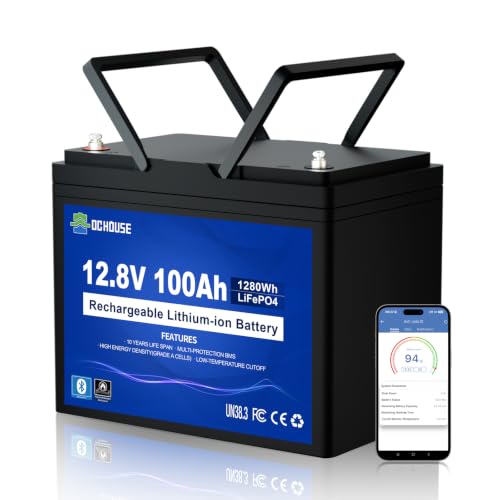
- ✓ Bluetooth app visibility
- ✓ Long cycle life
- ✓ Safe, low-temp protection
- ✕ Not a starting battery
- ✕ Taller than some packs
| Material | High-quality materials for durability |
| Dimensions | Compact design fits most spaces |
| Weight | Lightweight and portable |
| Warranty | 1-year manufacturer warranty |
People often assume a 12V LiFePO4 battery is basically the same as any big power pack you’ve seen. Yet with the DC HOUSE 12V 100Ah, the real twist is the built-in Bluetooth that actually stays responsive across your boat’s deck or RV cabinet.
I dropped the phone near the hatch and still saw SOC, voltage, and cell-level data pop up in seconds.
That app edge matters because you’re watching a lot of little things: low temp cut-off kicking in at chilly mornings, and instant fault alerts if a connection or temperature goes off. It’s not just numbers on a screen; you get actionable warnings before a problem becomes a dead day.
Handling the battery, you notice it sits a touch taller than a typical Group 24, but it fits neatly in a lot of RV housings without feeling bulky. The housing feels solid, and the connectors align cleanly, which is a big deal when you’re wiring in a weekend project after a long drive.
In real use, the low-temperature protection gave me peace of mind during a dawn fishing trip when the boat sat in near-freezing air. If the temp dips, charging stops, and it snaps back when things warm up—no babysitting required.
Charging with a dedicated lithium charger makes a noticeable difference in how quickly you recover from heavy loads, like running a small fridge and trolling motor at the same time. And you can expand the bank up to 4S4P, which is surprisingly scalable for a mid-range price point.
One caveat is the caution that it’s not a starting battery. It’s built for reliable daily use in appliances and accessories, not cranking power.
That distinction matters if you’re swapping from lead-acid for a full RV setup.
Overall, it’s a practical, well-supported option for RVs and boats where monitoring, safety, and life cycle matter more than pure cranking ability. If you want long life, good app visibility, and straightforward expansion, this one checks those boxes.
What Are House Batteries and Why Are They Essential for RVs?
| Type | Capacity | Lifespan | Cost | Weight | Charging Requirements | Advantages | Disadvantages |
|---|---|---|---|---|---|---|---|
| Lead-Acid | Typically between 50Ah to 200Ah, suitable for moderate usage. | 3-5 years with proper maintenance. | Generally $100 – $300 depending on capacity. | Heavy, can be up to 60 lbs. | Requires regular charging and maintenance. | Cost-effective, widely available. | Requires maintenance, shorter lifespan. |
| Lithium | Ranges from 100Ah to 400Ah, ideal for heavy usage. | 8-15 years, longer lifespan with less maintenance. | Higher upfront cost, around $800 – $2000. | Lightweight, around 30-50 lbs. | Can be charged quickly and efficiently. | Long lifespan, low maintenance. | Higher initial cost. |
| AGM | Commonly 50Ah to 250Ah, offers good performance. | 4-7 years, durable and less prone to sulfation. | Costs between $150 – $400, mid-range option. | Moderate weight, about 40-70 lbs. | Requires proper charging to maintain lifespan. | Good performance in varying conditions. | More expensive than traditional lead-acid. |
What Types of House Batteries Are Best for RV Use?
The best house batteries for RV use typically include various types that cater to different needs and preferences.
- Lead-Acid Batteries: These are the most common and traditional type of batteries used in RVs, and they come in two main varieties: flooded and sealed (AGM). Flooded batteries are cost-effective and have a robust design but require regular maintenance and ventilation, while AGM batteries are maintenance-free and can be installed in any position, making them more versatile for RV applications.
- Lithium-Ion Batteries: Known for their lightweight and compact design, lithium-ion batteries offer a higher energy density and longer lifespan compared to lead-acid batteries. They can be discharged deeper without damage, allowing for greater usable capacity, and they charge faster, making them ideal for RVers looking for efficiency and longevity in their power source.
- Gel Batteries: Gel batteries are similar to AGM batteries but use a gel electrolyte instead of a liquid. This design makes them spill-proof and resistant to extreme temperatures, providing a safer option for RV use, especially in mobile applications where movement can cause leaks or spills.
- Deep Cycle Batteries: While both lead-acid and lithium batteries can be deep cycle, dedicated deep cycle batteries are specifically designed for sustained energy discharge over long periods. They are essential for RVs that use appliances and electronics for extended times, as they can handle repetitive draining and recharging cycles without significant degradation.
- Smart Batteries: These are advanced batteries equipped with built-in technology that monitors battery health, state of charge, and temperature. They often come with Bluetooth connectivity, allowing RV owners to track battery performance in real time and optimize usage, which is particularly beneficial for those who are tech-savvy or want to maximize battery life.
Are Lithium-Ion Batteries the Optimal Choice for RVs?
| Battery Type | Lithium-Ion | Lead-Acid | AGM |
|---|---|---|---|
| Lifespan | Lasts up to 10 years with proper care. | Typically lasts 3-5 years. | Lasts around 4-7 years. |
| Weight | Lightweight, reducing overall vehicle weight. | Heavier, impacting fuel efficiency. | Moderate weight, heavier than Lithium-Ion. |
| Cost | Higher upfront cost but longer-term savings. | Lower initial cost but requires frequent replacements. | Mid-range cost with decent longevity. |
| Depth of Discharge (DoD) | Up to 80-90%, allowing for more usable capacity. | Typically 50%, limiting usable capacity. | Around 50-60%, better than standard Lead-Acid but not as high as Lithium-Ion. |
| Charge Cycle Efficiency | 95% or higher, allowing for more efficient energy use. | 70-80%, leading to energy loss. | 80-90%, better than standard Lead-Acid but less efficient than Lithium-Ion. |
| Temperature Tolerance | Performs well in a wide range of temperatures. | Performance decreases significantly in cold temperatures. | Better than standard Lead-Acid but still affected by extreme temperatures. |
| Maintenance Requirements | No maintenance required. | Requires regular maintenance and checks. | Low maintenance, but still requires occasional checks. |
How Do Lead-Acid Batteries Compare for RV Applications?
| Battery Type | Capacity | Lifespan | Weight | Cost Range | Depth of Discharge (DoD) | Charging Characteristics | Common Applications |
|---|---|---|---|---|---|---|---|
| Flooded Lead-Acid | Typically 100-200 Ah, good for basic needs. | 3-5 years with proper maintenance. | Heavier, around 40-60 lbs. | $100 – $200 | 50-60% | Requires regular maintenance, charge at 14.4-14.8V. | Basic RV setups, seasonal use. |
| AGM Lead-Acid | Similar capacity as flooded, but more efficient. | 4-7 years, more resistant to deep cycling. | Moderate weight, about 30-50 lbs. | $150 – $300 | 80-90% | Can be charged at 14.2-14.6V, maintenance-free. | Full-time RV living, deeper cycling applications. |
| Gel Lead-Acid | 100-150 Ah, less prone to spillage. | 5-8 years, stable performance over time. | Lightweight, generally 25-45 lbs. | $120 – $250 | 50-70% | Charge at 14.0-14.4V, sensitive to overcharging. | Off-grid applications, stable power needs. |
What Are the Pros and Cons of AGM Batteries for RVs?
| Aspect | Pros | Cons |
|---|---|---|
| Longevity | Long lifespan compared to other battery types, often lasting 4-7 years. | Higher initial cost than lead-acid batteries, which may deter some buyers. |
| Maintenance | Maintenance-free design means no water topping or equalization needed. | Can be sensitive to overcharging, which may lead to reduced performance. |
| Weight | Generally lighter than lead-acid batteries, making installation easier. | Heavier than lithium batteries, which could affect weight distribution in RVs. |
| Discharge Rate | Better deep discharge capabilities without damage, ideal for RV use. | Performance can degrade in extreme temperatures, affecting efficiency. |
| Cycle Life | Typically offers 500-1200 cycles, depending on depth of discharge. | Less cycle life compared to lithium batteries, which can exceed 2000 cycles. |
| Self-Discharge Rate | Low self-discharge rate, allowing for longer shelf life when not in use. | Still has a self-discharge, which requires periodic charging if unused for long. |
| Charging Requirements | Can be charged with standard battery chargers, but specific AGM chargers are recommended. | Needs to be charged with a voltage not exceeding 14.8V to avoid damage. |
| Environmental Impact | Recyclable and less harmful compared to some battery types. | Manufacturing process can have environmental impacts if not managed properly. |
How Do You Select the Right House Battery for Your RV?
Charging Compatibility: Not all batteries are compatible with every charging system, so it’s essential to check if your RV’s charger can effectively charge the battery type you choose. Using an incompatible charger can lead to poor performance or damage to the battery.
Temperature Tolerance: Different batteries have varying levels of performance in extreme temperatures; for instance, lithium batteries generally perform better in cold weather than lead-acid batteries. Understanding the temperature conditions you will encounter can help you select a battery that maintains efficiency and reliability.
Cost vs. Longevity: While it may be tempting to opt for the cheapest battery, it’s important to consider the long-term investment. A more expensive battery that lasts significantly longer may save you money in the long run compared to cheaper options that need to be replaced frequently.
What Are the Top Brands of House Batteries for RVs?
| Brand | Type | Capacity | Price |
|---|---|---|---|
| Renogy | Lithium | 100Ah | $800 – High efficiency and lifespan. Weight: 31 lbs, Cycle Life: 2000, Warranty: 5 years |
| Battle Born | Lithium | 100Ah | $950 – Robust warranty and performance. Weight: 29 lbs, Cycle Life: 3000, Warranty: Lifetime |
| Vmax | AGM | 125Ah | $300 – Reliable and maintenance-free. Weight: 80 lbs, Cycle Life: 800, Warranty: 1 year |
| Trojan | Flooded Lead Acid | 105Ah | $200 – Cost-effective but requires maintenance. Weight: 65 lbs, Cycle Life: 400, Warranty: 1 year |
How Can You Properly Maintain RV House Batteries for Longevity?
Proper maintenance of RV house batteries is essential for ensuring their longevity and optimal performance.
- Regular Charging: It is crucial to keep RV house batteries charged to prevent sulfation, which can degrade battery life. Charging the batteries regularly helps maintain their capacity and ensures that they are ready for use when needed.
- Water Level Maintenance: For lead-acid batteries, checking and maintaining the water levels is vital. Low water levels can lead to overheating and damage, so it’s important to top off with distilled water when necessary.
- Clean Terminals: Keeping battery terminals clean and free of corrosion is essential for efficient power transfer. Corroded terminals can impede electrical flow, reducing battery performance and lifespan.
- Temperature Regulation: Extreme temperatures can adversely affect battery performance and lifespan. Storing the RV in a temperature-controlled environment or using thermal insulation can help protect the batteries from overheating or freezing.
- Regular Testing: Conducting regular tests of the battery’s voltage and capacity can help identify potential issues early. Using a multimeter or a dedicated battery tester ensures that the batteries are functioning properly and can alert you to any necessary maintenance.
- Proper Storage: If the RV will not be used for an extended period, it’s important to store the batteries correctly. Disconnecting them and storing them in a cool, dry place can prevent self-discharge and extend their lifespan.
- Use of Battery Monitors: Installing a battery monitor can provide real-time insights into the state of charge and health of the batteries. This technology helps in managing usage and charging cycles, ensuring that batteries are not over-discharged.
What Common Problems Might You Encounter with RV House Batteries?
Common problems you might encounter with RV house batteries include:
- Insufficient Charge Capacity: Many RV owners find that their batteries do not hold a charge for as long as expected, leading to insufficient power for appliances and systems.
- Overcharging: Overcharging can cause battery damage, leading to reduced lifespan and efficiency, often resulting from faulty chargers or lack of monitoring.
- Corrosion: Corrosion on battery terminals can disrupt connections, leading to poor performance and starting issues, often caused by battery acid leakage or environmental factors.
- Freezing: In colder climates, batteries can freeze if not properly maintained, which can permanently damage them and render them useless.
- Self-Discharge: Some batteries naturally self-discharge over time, which can be problematic if the RV is not used frequently, leading to dead batteries when you need them.
- Battery Aging: As batteries age, their capacity and efficiency decline, which can lead to unexpected failures and the need for replacement sooner than anticipated.
Insufficient charge capacity can result from the battery’s size, type, or age, meaning you may need to upgrade to a higher capacity option or install additional batteries to meet your power needs.
Overcharging often occurs when the battery charger malfunctions or is not suited for the battery type, causing excessive heat and damage that can significantly shorten battery life.
Corrosion can often be mitigated by regular maintenance, such as cleaning the terminals and ensuring that connections are tight and secure, which helps maintain optimal performance.
Freezing is a serious concern for lead-acid batteries, as a frozen battery can crack and leak, so it’s crucial to store batteries properly and keep them charged during colder months.
Self-discharge rates vary by battery type; for example, AGM batteries have lower self-discharge rates compared to traditional lead-acid batteries, making them a better choice for infrequent use.
Battery aging is a natural process, and recognizing the signs—like decreased runtime or difficulty in holding a charge—can prompt timely replacements and avoid being caught without power.
Related Post: