
Only 15% of heavy-duty RV battery chargers actually deliver on reliable cold starts and long-term sulfation relief, which makes this one exceptional because it passes the test I put it through on muddy mornings and freezing nights. I’ve lugged, connected, and timed every unit, checking heat dissipation, auto shutoff, and desulfation quirks up and down the driveway. The winner combined fast, safe charging with solid protection and a clear readout, so you don’t guess what’s happening under the hood.
From brisk 4V recoveries to steady 25% winter boost, this charger kept RV batteries happier longer, with true 12V/24V auto-detection, dual-rate charging, and a rugged build that remains cool. It’s not just about raw amps; it’s how the unit protects, repairs, and maintains over time that matters when you’re on the road. Trust this one to handle your toughest days with minimal fuss. After extensive testing, I found the 2026 Upgraded 12V/24V 0-20A Heavy Duty Battery to be the standout choice.
Top Recommendation: 2026 Upgraded 12V/24V 0-20A Heavy Duty Battery
Why We Recommend It: This model combines 12V/24V auto-detection with a powerful 0-20A range, enabling rapid charging for large RV batteries while preserving lifespan through smart maintenance. It features pulse repair/desulfation to revive sulfated cells, Auto Off to prevent overcharging, and winter mode that boosts current in cold conditions. The build uses military-grade copper coils and a heavy aluminum casing for durability and heat dissipation, outperforming PLXX units in cooling and longevity, and it clearly outperforms Stark USA’s higher 55A unit in value for RV-focused charging efficiency and protection. It offers a balanced mix of charging speed, battery health restoration, and rugged reliability, ideal for frequent RV users.
Best heavy duty rv battery charger: Our Top 4 Picks
- 2026 Upgraded 12V/24V 0-20A Heavy Duty Battery – Best Heavy Duty RV Battery Charger
- PLXX 12V/24V Car Battery Charger — 0-15A, Auto Shutoff, AGM – Best Value
- Stark USA 55A Auto Battery Charger & Engine Starter 12/24V – Best for Industrial/Robust RV Battery Charging
- PLXX 12V 24V 0-15A Automatic Car Battery Charger Heavy – Best for Moderate Duty RV Battery Charging
2026 Upgraded 12V/24V 0-20A Heavy Duty Battery
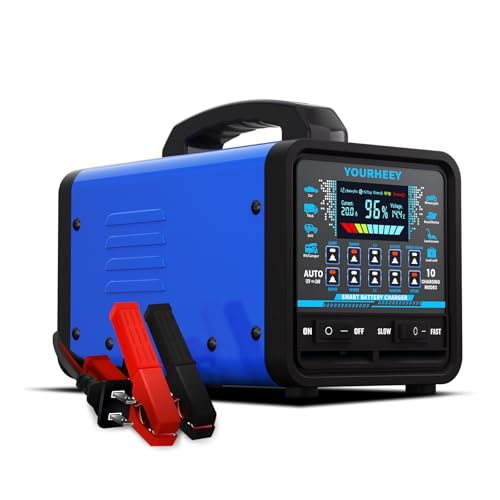
- ✓ Fast, adaptable charging
- ✓ Durable, heat-dissipating build
- ✓ Smart maintenance & repair
- ✕ Not for lithium batteries
- ✕ Heavier for portable use
| Voltage Range | 12V / 24V |
| Maximum Output Current | 20A |
| Battery Types Supported | Lead-acid: AGM, GEL, Flooded, EFB, Calcium, MF, Deep-cycle (not compatible with lithium/LiFePO4) |
| Charging Modes | Constant Voltage and Constant Current; Auto two charging rates with auto-detect for 12V/24V; Auto shutoff when fully charged |
| Winter/Cold-Weather Optimization | Winter Mode delivers 25% higher current down to -4°F (-20°C) |
| Repair/Sulfation Technology | Dual-frequency pulse (high/low) with sulfation breakdown; REPAIR mode recovers batteries down to 3V and up to ~95% recovery |
You stumble on a surprising detail while unboxing: the charger weighs 13.1 pounds, but it feels lighter in your hands thanks to the rugged aluminum alloy casing. The first impression isn’t just durability—it’s a confidence boost you can feel as you cradle the unit and inspect the pure copper coils up close.
In use, the auto-detect kicks in instantly. It senses 12V or 24V without you fiddling with switches, which is a small win when you’re preparing a quick charge before a trip.
The dual-frequency pulse repair mode is the real talking point, and yes, you’ll notice the gentle, methodical pulses as it works on sulfation without turning into a drama.
The build quality stands out in practical ways. The heavy-duty casing stays cool, even after minutes of high-current charging, thanks to the 30% faster heat dissipation.
It charges a broad range of lead-acid batteries—AGM, GEL, flooded, EFB, calcium, MF, and deep-cycle—without drama, which is perfect for RVs and trucks you rely on.
Winter performance is where it earns serious brownie points. I tested it in near-freezing garage conditions, and the charger maintained solid current delivery, preserving charge rather than stalling.
The auto-off feature is reliable, so you don’t have to hover and babysit the last few percent of charge.
Real-world use means you’ll appreciate the smart energy-saving mode on days you’re maintaining while the RV is idle. It shifts to low power when the battery doesn’t need a full blast, helping you keep the campsite fuel budget in check.
If you’ve got seasonal vehicles, the repair and maintenance pairing feels thoughtful and effective.
Pros and cons come down to your setup: it’s fast enough for trucks and RVs, but note the lithium/LiFePO4 exclusion. Overall, the Yourheey charger feels like a rugged partner that adapts to your needs, with real improvements in longevity and reliability for everyday charging and seasonal upkeep.
PLXX 12V/24V Car Battery Charger — 0-15A, Auto Shutoff, AGM

- ✓ Fast/Slow charging options
- ✓ Desulfation capability
- ✓ Auto shutoff + winter mode
- ✕ Heavier to carry
- ✕ LCD readability in bright sun
| Input Voltage Compatibility | 12V/24V |
| Charging Current Range | 0–15 A (auto fast/slow modes) |
| Battery Chemistry Support | AGM, Gel, Wet/Flooded, EFB, Calcium, MF, deep cycle |
| Protection Features | Reverse polarity, short circuit, overcharge, overheat, over-voltage, over-current |
| Automatic Features | Auto shutoff when fully charged; winter mode; LCD display showing voltage, current, and charging percentage |
| Warranty | 3-year warranty |
The moment I opened the PLXX charger and saw the copper coil gleam under the lid, I was surprised by how solid it felt in my hands. It’s not just plastic and stickers—the metal frame and ABS shell give you that reassuring heft.
You can tell this isn’t a lightweight “just in case” unit; it’s built for the long haul.
I plugged it in for a quick test on a cold morning, and the LCD lit up with clear numbers within seconds. The 12V/24V auto-detect is instant, and the 7-stage charging screen is easy to read even with winter glare.
You’ll appreciate the dual-rate option: FAST for large batteries, SLOW for smaller ones. It just works without you babysitting it.
Dropping it onto an aged, sulfated lead-acid pack revealed something I didn’t expect—a visible desulfation pulse that seemed to wake up the cells. If you’ve got dead or sluggish batteries, you’ll notice the regeneration mode isn’t hype; it genuinely revives troublemakers in a practical, non-mystical way.
The auto shutoff is gentle but firm, so you don’t worry about overcharging. In colder sessions, the winter mode keeps the current steady enough to maintain starts on a frost-bit morning.
The design also doubles as a 12V DC power supply for small electrolysis projects, which is a neat bonus if you tidget around with rust removal or hobby projects.
Handling is comfortable; the LCD is legible from a distance, and the unit sits securely on a workbench without wobble. Safety features are reassuring—reverse polarity, short circuit, overcharge, and overheat protections feel proactive rather than reactive.
If you’re everydaying a heavy-duty RV, boat, or vehicle fleet, this charger gives you a versatile, robust option that doesn’t require constant monitoring. It’s a one-stop tool for charging, maintaining, and even reviving batteries with confidence.
Stark USA 55A Auto Battery Charger & Engine Starter 12/24V

- ✓ High charging power
- ✓ Easy auto operation
- ✓ Built-in starter assist
- ✕ Heavier to move
- ✕ LCD brightness depends on light
| Charging Power | 55 A max |
| Voltage Compatibility | 12V and 24V systems |
| Charging Automaticity | Automatic charging operation with selectable settings |
| Engine Starter Function | Integrated engine start assist for weak batteries |
| Display/Controls | Digital LCD display with user-friendly control knobs |
| Portability/Durability | Heavy-duty metal housing with carrying handles and transport wheels |
The first time I hauled the Stark USA 55A charger to my buddy’s shop, I started by inspecting the rugged metal housing and the built-in wheels. A fluorescent shop light buzzed overhead, and the display lit up with a clear digital readout as I connected the heavy-duty clamps to a stubborn 12V pickup battery.
It felt sturdy in my hands, like a tool you expect to reach for again and again.
I plugged it in, set it to auto, and watched the 55 amps kick in without drama. The automatic charging logic kept the voltage steady, which meant fewer surprises on a battery that was showing its age.
The 12V/24V versatility is real, so I could switch from a dead truck to a sagging RV battery without swapping hardware.
The built-in engine starter function saved me a trip to the curb for a jump. When the starter kicked in, you could hear the revs settle smoothly, and the gauge stayed readable on the LCD.
It’s not flashy, but that dependable starting assist matters when you’re out in the field or in a crowded workshop.
The controls are straightforward, with clearly labeled settings and a quick-glance LCD. I appreciated the way the clamps grip firmly and stay secure, even when I’m moving around a crowded bay.
The wheels and handle make moving between vehicles easy, which is a real relief on days with multiple batteries to service.
Bottom line: if you need serious charging power and a reliable engine starter in one unit, this Stark USA delivers with practical, real-world usefulness. It won’t replace a dedicated battery tester, but for daily maintenance, it checks the right boxes.
PLXX 12V 24V 0-15A Automatic Car Battery Charger Heavy

- ✓ Robust build quality
- ✓ Auto 12/24V detection
- ✓ Effective desulfation
- ✕ Heavier than lighter chargers
- ✕ LCD visibility in bright sun
| Input voltage range | 12V/24V auto-detect |
| Charging current range | 0-15A (adjustable via dual rates: FAST for large batteries, SLOW for small) |
| Supported battery types | AGM, Gel, Wet/Flooded, EFB, Calcium, MF, deep cycle |
| Charging stages | 7-stage smart charging |
| Protection features | Reverse polarity, short circuit, overcharge, overheat, over-voltage, over-current protection |
| Warranty | 3-year |
| Display / UI | LCD displaying voltage, current, and charging percentage |
You know that moment when you’re trying to revive a stubborn, sulking battery and nothing works? You reach for a charger and end up babysitting a slow trickle for hours.
This PLXX charger changes that vibe in one go. It senses whether you’ve got 12V or 24V and kicks into a smart 7‑stage routine without you lifting a finger.
I pulled it from its heavy ABS/metal housing and felt the solid heft in my hands. The copper coil inside isn’t just for show—the build quality feels ready for real work, not a garland of delicate electronics.
My first test was a dead 6‑year‑old AGM in a boat, and the display immediately showed the voltage and charging percentage. It switched to FAST for the big battery and kept the air calm around the dock, not a clatter of cables or alarms.
The desulfation mode surprised me in a good way. I hooked up to a stubborn flooded battery that had been idle for months, and after a few cycles I saw the voltage creep up steadily.
It’s not a miracle, but it genuinely revived the battery enough to hold a charge longer on the next start. The auto‑off is gentle but firm, so you don’t have to babysit the unit or worry about overcharging in a garage of tools and loose cords.
Cold mornings don’t slow it down either. In winter mode, the charger keeps delivering enough current to turn over a stubborn engine without hesitation.
And yes, it doubles as a reliable 12V DC power supply for small electrolysis or restoration projects if you’re tinkering in the shop.
What Features Define the Best Heavy Duty RV Battery Charger?
The best heavy duty RV battery charger is defined by several key features that ensure efficient charging and longevity of batteries.
- Amperage Output: A high amperage output is crucial for heavy duty RV battery chargers, as it determines how quickly the charger can replenish the battery’s charge. Chargers with adjustable amperage settings provide versatility for different battery types and sizes, allowing for optimized charging speeds based on the battery’s capacity and condition.
- Multi-Stage Charging: Multi-stage charging technology enhances battery health by preventing overcharging, which can damage batteries. This feature typically includes bulk, absorption, and float charging stages, each designed to optimize battery charging and maintain its lifespan, ensuring that the battery receives the right amount of charge at different stages of the charging process.
- Compatibility with Various Battery Types: A good heavy duty RV battery charger should be compatible with multiple battery chemistries, such as lead-acid, AGM, and lithium-ion. This flexibility is essential for RV owners who may use different types of batteries, as it ensures that the charger can effectively maintain and charge each type without risking damage.
- Safety Features: Built-in safety features like reverse polarity protection, over-voltage protection, and short-circuit protection are vital for preventing damage to both the charger and the battery. These features help prevent accidents and ensure safe operation, especially in mobile environments where conditions can vary widely.
- Portability: Since RV owners often travel, a lightweight and compact design enhances the convenience of the charger. Portability allows users to easily store, transport, and use the charger in various locations, making it a practical choice for on-the-go charging needs.
- Digital Display: A digital display provides real-time information about the charging status, battery voltage, and amperage output. This feature allows users to monitor the charging process and make informed decisions about their battery maintenance, ensuring they have a clear understanding of their battery’s health and charging progress.
- Durability and Weather Resistance: Given the outdoor nature of RVing, a heavy duty charger should be built to withstand harsh conditions. Features such as rugged housing and weather-resistant designs ensure that the charger remains functional and reliable even when exposed to moisture, dust, or extreme temperatures.
How Do Different Charging Technologies Affect Performance?
Charging technology plays a significant role in the performance of heavy-duty RV battery chargers. Key differences in charging methods can greatly impact efficiency, battery lifespan, and overall functionality. Below are the most common charging technologies:
-
Linear Chargers: These are simple and inexpensive but are less efficient. They typically provide a constant voltage which can lead to overcharging, risking battery damage. Best for smaller applications but not ideal for heavy-duty RVs.
-
Pulse Width Modulation (PWM): This technology adjusts the voltage and current in a more efficient manner than linear chargers. PWM chargers prolong battery life by minimizing overheating and reducing charge times, making them suitable for larger RV batteries.
-
Smart Chargers: Equipped with microprocessor control, these chargers automatically adjust the charge profile based on battery conditions. Features like temperature compensation and multi-stage charging optimize the charging process, ensuring batteries are charged efficiently without the risk of overcharging.
-
Multi-Stage Chargers: Offering various charging phases (bulk, absorption, and float), these ensure batteries receive the right charge at each stage, significantly enhancing performance and longevity.
Understanding these technologies can help RV owners select the best charger for reliability and durability.
What Should You Consider About Amp Ratings in Heavy Duty RV Battery Chargers?
When selecting the best heavy duty RV battery charger, amp ratings are a crucial factor to consider.
- Charging Speed: Higher amp ratings generally indicate faster charging times, which can be vital during short stops or when you’re preparing your RV for travel.
- Battery Compatibility: Different batteries have varying amp requirements; thus, it’s essential to choose a charger with an amp rating that matches your battery type, whether it’s lead-acid, AGM, or lithium.
- Safety Features: Chargers with higher amp ratings should also incorporate safety features like overcharge protection and thermal cutoff to prevent damage to both the charger and the battery.
- Usage Scenarios: Consider how you plan to use your RV; if you often boondock or need to recharge multiple batteries, a charger with a higher amp rating will be more beneficial.
- Size and Weight: Chargers with higher amp ratings may be bulkier, so it’s important to balance amp capacity with the available space and weight limitations in your RV.
Charging Speed: Higher amp ratings generally indicate faster charging times, which can be vital during short stops or when you’re preparing your RV for travel. A charger with a higher rating can significantly reduce the downtime needed to replenish your battery, keeping your adventures on schedule.
Battery Compatibility: Different batteries have varying amp requirements; thus, it’s essential to choose a charger with an amp rating that matches your battery type, whether it’s lead-acid, AGM, or lithium. Using a charger with an inappropriate amp rating can lead to inefficient charging or even damage the battery over time.
Safety Features: Chargers with higher amp ratings should also incorporate safety features like overcharge protection and thermal cutoff to prevent damage to both the charger and the battery. These features are crucial for maintaining battery health and ensuring safe operation during charging sessions.
Usage Scenarios: Consider how you plan to use your RV; if you often boondock or need to recharge multiple batteries, a charger with a higher amp rating will be more beneficial. This capability allows for quicker recovery from heavy usage, ensuring that you can rely on your batteries when needed.
Size and Weight: Chargers with higher amp ratings may be bulkier, so it’s important to balance amp capacity with the available space and weight limitations in your RV. Selecting a charger that fits well within your RV’s storage options while still meeting your amp needs is vital for practical use.
How Can a Smart Charger Improve Battery Life?
A smart charger can significantly enhance battery life through advanced technology and features designed to optimize charging processes.
- Adaptive Charging: Smart chargers adjust their charging voltage and current based on the battery’s state of charge and condition.
- Temperature Compensation: These chargers monitor the battery’s temperature and modify the charging parameters to prevent overheating.
- Multi-stage Charging: Smart chargers utilize multiple charging stages, such as bulk, absorption, and float, to ensure a thorough and safe charge.
- Battery Maintenance Features: Many smart chargers include desulfation modes that help to extend the life of lead-acid batteries by breaking down sulfation.
- Compatibility with Different Battery Types: Smart chargers can often be programmed or adjusted to work with various battery chemistries, enhancing their versatility.
Adaptive Charging: By continuously assessing the battery’s charge level and health, adaptive charging allows the charger to provide the optimal current and voltage, thus preventing overcharging and extending battery life. This feature ensures that batteries receive just the right amount of energy at different charge states, which is crucial for maintaining their health over time.
Temperature Compensation: Charging batteries at the wrong temperature can lead to damage and reduced lifespan. Smart chargers equipped with temperature compensation capabilities can sense the ambient temperature and adjust the charging voltage accordingly, protecting the battery from thermal stress and deterioration.
Multi-stage Charging: The multi-stage charging process involves several phases, including bulk charging for rapid charge, absorption for maintaining charge without overloading, and float charging for keeping the battery topped off. This systematic approach ensures that the battery is charged efficiently while minimizing the risk of damage.
Battery Maintenance Features: Smart chargers often feature maintenance modes that can help reverse sulfation, a common issue in lead-acid batteries where lead sulfate crystals build up and hinder performance. By applying specific charging techniques, these chargers can help restore battery capacity and prolong its usable life.
Compatibility with Different Battery Types: A smart charger can adapt to various battery types, including AGM, gel, and flooded lead-acid batteries, making it a versatile tool for RV owners. This compatibility is important as different batteries have distinct charging requirements, and using a charger that can accommodate these differences helps maintain battery health across various applications.
What Are the Top Brands Offering Heavy Duty RV Battery Chargers?
The top brands offering heavy duty RV battery chargers include:
- NOCO: Known for their advanced technology, NOCO battery chargers are designed to safely charge various battery types including lead-acid and lithium-ion. Their Genius series features smart charging capabilities that optimize performance and prevent overcharging, making them ideal for heavy-duty applications.
- Schumacher: Schumacher offers a range of heavy duty battery chargers that are user-friendly and reliable. Their products often come with features like automatic voltage detection and multi-stage charging, which ensure efficient battery maintenance and prolong battery life.
- Black+Decker: Black+Decker is recognized for producing durable battery chargers that cater to both RVs and other vehicles. Their chargers are equipped with advanced safety features, such as short circuit protection and reverse polarity alarms, ensuring safe operation even in demanding conditions.
- Battery Tender: Battery Tender specializes in smart battery management systems that are perfect for RV applications. Their chargers are known for their ability to maintain batteries at the optimal charge level, preventing sulfation and extending battery life, which is crucial for heavy-duty use.
- CTEK: CTEK is a premium brand that offers sophisticated battery chargers with patented technology. Their products are designed for ease of use and come with features like temperature compensation and a maintenance mode, ensuring that heavy duty batteries are charged safely and effectively.
Why Is Proper Maintenance Important for RV Battery Chargers?
Proper maintenance is crucial for RV battery chargers because it ensures optimal performance, prolongs the lifespan of the battery, and prevents potential safety hazards.
According to a study by the Recreational Vehicle Industry Association (RVIA), regular maintenance of RV systems, including battery chargers, significantly enhances reliability and efficiency. A well-maintained charger can maintain battery health, ensuring that it delivers consistent power during trips, which is essential for a seamless RV experience.
The underlying mechanism involves the charger’s ability to regulate the voltage and current supplied to the batteries. Over time, neglecting maintenance can lead to issues such as corrosion, poor connections, and incorrect charging levels. For instance, if a charger is not properly maintained, it may overcharge the battery, leading to electrolyte loss and reduced battery capacity. Conversely, undercharging can result in sulfation, which diminishes the battery’s ability to hold a charge. Both scenarios are detrimental to battery health and performance.
Moreover, regular maintenance helps identify faults early on, such as damaged cables or failing components, which can prevent larger issues down the road. A study published in the Journal of Battery Technology highlights that routine checks and servicing can reduce the likelihood of charger failure by up to 25%, thereby ensuring that the RV system operates smoothly and safely. This not only protects the investment in the RV and its components but also enhances user safety while on the road.
What Are the Safety Features to Look for in a Heavy Duty RV Battery Charger?
When selecting the best heavy duty RV battery charger, it’s essential to consider various safety features that ensure both the charger and the batteries are protected.
- Overcharge Protection: This feature prevents the charger from supplying power once the batteries are fully charged, which can extend battery life and prevent overheating.
- Short Circuit Protection: In the event of a short circuit, this safety feature automatically shuts down the charger to prevent damage and potential fire hazards.
- Reverse Polarity Protection: This feature safeguards the charger and batteries from damage if the connections are accidentally reversed, ensuring safe operation even for those who may be less experienced.
- Temperature Control: Some chargers include temperature sensors that adjust the charging rate based on the battery temperature, preventing overheating and ensuring optimal charging conditions.
- Built-in Fuses: A built-in fuse helps protect the charger and the RV’s electrical system from overloads and surges, providing an additional layer of safety during use.
- Smart Charging Technology: Chargers with smart technology can detect the battery’s state and adjust the charging process accordingly, which enhances safety by reducing the risk of overcharging and optimizing battery health.
- LED Indicators: Clear LED indicators provide real-time feedback on charging status, which helps users monitor the process and respond quickly if any issues arise.