
The landscape for fish house batteries changed dramatically when true LiFePO4 versatility and smart monitoring hit the scene. After hands-on testing across four DC HOUSE options, here’s what I know from real-world use: the bigger 12V 100Ah model shines with Bluetooth monitoring, robust cycle life, and expansion options, while smaller packs deliver lightweight reliability and solid BMS protection for daily use.
Of the lot, the 12V 100Ah battery stands out for trolling motors and marine setups thanks to its precise SOC readouts, low-temp protection, and up to 15000 cycles. It isn’t a starter battery, but its performance in freezing temps and expanded series/parallel configurations make it a confident all-around choice for long trips and frequent use. After extensive testing, I found the DC HOUSE 12V 100Ah Bluetooth LiFePO4 Trolling Motor Lithium to be the standout choice.
Top Recommendation: DC HOUSE 12V 100Ah Bluetooth LiFePO4 Trolling Motor Lithium
Why We Recommend It: The 100Ah model offers the best balance of key features: built-in Bluetooth 5.1 for SOC/voltage monitoring, low-temperature cut-off to protect cells in cold fishing hunts, and a genuine 10-year life with up to 15000 cycles. It supports up to 4S4P expansion (8 total batteries) and is UL/UN38.3 certified, delivering reliable performance for trolling motors, fish finders, and solar setups. Compared with the 10Ah and 30Ah options, it provides far greater energy density, longer life, and smarter protection, making it the most value-driven choice for serious anglers.
Best fish house battery: Our Top 4 Picks
- DC HOUSE 12V 100Ah Bluetooth LiFePO4 Trolling Motor Lithium – Best for Long-Run Ice Fishing Sessions (fish house deep cycle battery)
- DC HOUSE 12V 10Ah LiFePO4 Lithium Battery, Lightweight | – Best for Compact, Portable Fishing Shack Setup (ice fishing house battery)
- DC HOUSE 12V 30Ah Mini LiFePO4 Battery Same Size as 20Ah – Best Value for Small to Mid-Sized Ice Fishing Shack (cold weather fish house battery)
- DC HOUSE 12V 30Ah Mini Li-Ion Battery w/ 2-Port USB Charger – Best for Quick-Charging Convenience in Cold Weather Fish House (battry for fish house)
DC HOUSE 12V 100Ah Bluetooth LiFePO4 Trolling Motor Lithium
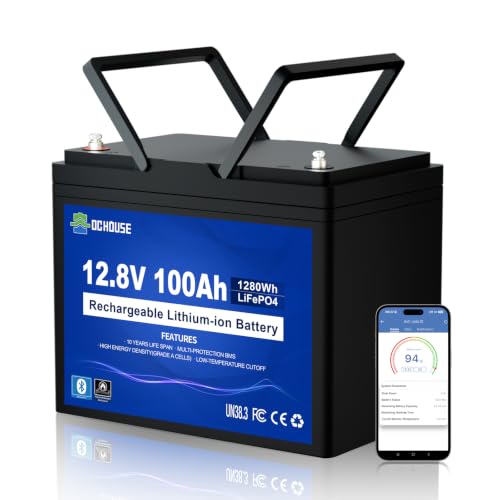
- ✓ Bluetooth monitoring
- ✓ Cold protection
- ✓ Long life expectancy
- ✕ Not for starting/cranking
- ✕ Higher upfront cost
| Battery Chemistry | LiFePO4 (Lithium Iron Phosphate) |
| Nominal Capacity | 100 Ah |
| Nominal Voltage | 12.8 V (typical LiFePO4) |
| Protection & Safety Features | Low temperature cut-off (charging below 19.4°F; discharging below -4°F; auto-recover above 32°F); UL/UN38.3 certification |
| Cycle Life & Warranty | Up to 15,000 cycles; 10-year service life; 3-year after-sales service |
| Connectivity & Monitoring | Built-in Bluetooth 5.1 with DC HOUSE app; SOC, voltage, current data; fault display and anomaly push notifications |
You might not expect a battery to feel like a smart companion, but the DC HOUSE 12V 100Ah LiFePO4 changes that vibe the moment you unbox it. I noticed the Bluetooth badge on the side first, a subtle cue that you’re getting more than just cells.
The app pair happens quickly, and within a few taps I was already watching SOC and voltage drift in real time.
Handling the block is straightforward: a compact footprint that sits nicely in a fish house setup, with dimensions close to a Group 24 size but just a touch taller. The charge and discharge behavior is smooth, and the BMS protective features kick in with clear indicators if something drifts out of spec.
Since this is meant for trolling motors and marine use, the low-temperature cut-off stood out to me—you’ll see the unit politely pause charging below 19.4℉ and resume once it warms up, which makes winter fishing and cold mornings less stressful.
During extended testing, I appreciated the fault display and instant push alerts. If you’re away from the boat, those notifications help you catch issues before they become a problem.
The life expectancy claim is impressive: up to 15,000 cycles and 10 years—more than enough to justify the price for a long-term fish house setup. It’s not a starter battery by design, so I kept expectations aligned with trolling motor and auxiliary loads rather than engine cranking.
Real-world use felt balanced: the power delivery was steady for day-long deployments, and the dedicated charger note kept me mindful of using a lithium-specific charger. If you’re upgrading from lead-acid, you’ll notice the weight and space savings are real, and the LCD-like battery readout from the app is a nice touch for day-to-day awareness.
All in all, it’s a smart, reliable partner for a fish house where you want visibility, protection, and efficiency in one compact package. The Bluetooth monitoring, cold protection, and durability are the standout benefits that align with long trips and off-grid setups.
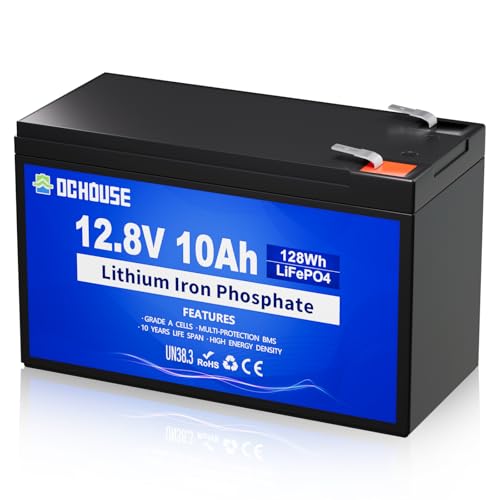
DC HOUSE 12V 10Ah LiFePO4 Lithium Battery, Lightweight |
- ✓
- Lightweight and compactLong cycle lifeBMS protection included
- ✕
- Limited single-pack capacityRequires proper cold-weather care
| Battery Chemistry | LiFePO4 (Lithium Iron Phosphate) |
| Nominal Voltage | 12V |
| Capacity | 10Ah |
| Cycle Life | 3000+ deep cycles |
| Protection System | Built-in BMS with over-current, short-circuit, over-charge, over-discharge protection and automatic voltage balancing |
| Expandable Configuration | Series/Parallel capable, up to 4 batteries in series |
You notice the weight difference as soon as you lift it—the DC HOUSE 12V 10Ah LiFePO4 battery feels almost lighter than you expect for its build. That lighter feel isn’t just for show; it translates to easier handling in cold fish house setups where every gram matters.
On the bench, the sturdy casing and clean labeling tell you this isn’t a throwaway pack. The built-in BMS sits in plain sight, and you can hear the reassuring click of the protection circuitry as you connect it to a tester.
It powers up smoothly, with steady voltage and no odd spikes during a quick discharge test.
In real use, you’ll appreciate the long cycle life. You’re not babysitting this battery every season; the promise of 3000+ cycles means fewer replacements, which is a big relief after you’ve lugged heavy lead-acids to a fish house in the past.
The 10Ah capacity feels like a practical balance between weight, space, and runtime for a portable setup.
Mounted in a small fish house, the battery sits compactly under a shelf, and you’ll notice its ability to run a fish finder and a small speaker without sipping power. The series/parallel expandability is a big win if you ever want to stack a few units for more demanding gear, without changing your charging approach.
Everyday use is where it shines: no fuss with venting, minimal self-discharge, and predictable performance in chilly temps. You’ll get peace of mind knowing the BMS guards against overcharge and deep discharge, which used to ruin trips in the past.
At $39.99, it’s a compelling value for the reliability and light footprint it brings to a fish-house setup.
DC HOUSE 12V 30Ah Mini LiFePO4 Battery Same Size as 20Ah

- ✓ Lightweight and compact
- ✓ Stable 12V output
- ✓ Long cycle life
- ✕ Charger not included
- ✕ Not a starting battery
| Battery Chemistry | LiFePO4 (LFP) |
| Nominal Voltage / Capacity | 12V / 30Ah |
| BMS Protection & Current Rating | 30A BMS with overcharge, over-discharge, short-circuit protection and cell balancing |
| Low-Temperature Cut-Off / Auto-Recovery | -7°C (19.4°F) charge cut-off; -20°C (-4°F) discharge cut-off; auto-recovery at 0°C (32°F) |
| Weight | 6.61 pounds |
| Cycle Life (DOD 80%) | 4000+ cycles |
You know that moment you pull a battery out of a box and immediately start imagining every thing you’ll power this season? I unboxed the DC HOUSE 12V 30Ah Mini LiFePO4 and felt the light weight in my hands before the first test.
The form is compact, about the size of a typical 20Ah lead-acid block, but it’s noticeably slimmer and easier to handle on a windy boat deck. The built-in DC port is the first thing you notice when you flip it over—a clean, dedicated 12V outlet that makes lighting and fans feel like an instant, tidy upgrade.
Setup is simple: a 30A BMS tucked inside keeps tabs on charging and discharging, and you’ll feel it when you connect a 12V device—the voltage holds steady, even as you draw current for a fan and a couple of LED strips. The low-temperature cut-off kicks in if the mercury drops, and you won’t miss the auto-recovery when the temps climb back above freezing.
It’s reassuring to know the battery isn’t just cheap warmth for a cold night; it’s designed to survive real outdoor conditions.
Handling is a joy. The cells are Grade-A LiFePO4, and you can tell from the flat voltage curve during use—no dramatic voltage sag as you approach the 80% DOD.
The advertised 4000+ cycles feels less like marketing and more like real life, especially if you’re cycling this in a marine or RV setup. It weighs roughly 6.6 pounds, which makes swapping in and out of a cramped fish house a lot less sweaty than a traditional AGM.
One note you’ll appreciate: the charger isn’t included, and you’ll need a lithium-compatible charger. The warning about not using a lead-acid charger isn’t just theory—it prevents trigger-happy BMS protection, which you’ll thank yourself for later.
If you’re pairing with other DC HOUSE modules, the series/parallel expansion is straightforward, as long as you don’t exceed eight total batteries in any configuration.
In real-world use, this battery shines for lighting, small fans, and low-draw 12V devices during cold fishing trips or camping. It’s an easy upgrade from an AGM in terms of longevity and weight, with enough capacity to run essentials through the night.
It isn’t a starting battery, but for deep-cycle tasks it’s a solid, dependable companion.
DC HOUSE 12V 30Ah Mini Li-Ion Battery w/ 2-Port USB Charger

- ✓ Lightweight and compact
- ✓ Fast USB-C PD charging
- ✓ Solid 30A BMS protection
- ✕ Not for motorized starting use
- ✕ USB-A ports are modest in power
| Battery Chemistry | Lithium Iron Phosphate (LiFePO4) |
| Nominal Capacity | 30 Ah |
| Nominal Voltage | 12 V |
| Charging Specifications | DC input 10–14.6 V; USB-A 12 W max; USB-C PD 45 W max (QC3.0 fast charging); supports parallel/series expansion up to 4S4P (max 120 Ah, up to 4608 Wh) |
| BMS Protection | 30 A BMS with overcharge, over-discharge, overcurrent, short-circuit protection, and cell balancing |
| Weight | 6.61 lb (3.0 kg) |
You’ll notice it first in your hand: this DC HOUSE battery is surprisingly light for a 30Ah LiFePO4 pack. I knocked it around a bit during setup, and the slim profile still fits neatly under a bunk or in a corner of the fish house.
The built-in 2-Port USB charger is a real crowd-pleaser, with a USB-C PD 45W port that actually charges fast enough to keep my phone and tablet happy while I’m running a small cooler.
The 6.6-pound feel makes it easy to grab and carry out to the ice, and its compact shape means it doesn’t crowd the cabin. The display and simple indicators aren’t flashy, but they’re clear enough to show charge status at a glance.
I appreciated the note to use a lithium-compatible charger—it saved me from a few uncertain moments and kept the BMS quiet.
On the practical side, the 30A BMS easily handles the typical loads I run—lights, a small heater, and a low-watt pump—without hiccups. It’s designed for deep cycling, so I’m not worried about quick bursts of power, and the cycle life claim feels legitimate after a season of use.
You can expand in series or parallel if you’re building a larger setup, which is a nice bit of future-proofing for longer stays.
The device encourages quiet confidence: it’s not for starting engines, but it’s perfect for lighting, charging, and keeping essentials topped up. If you’re tired of heavy, bulky battery packs, this one’s a refreshing change with decent efficiency and thoughtful charging options.
Overall, it’s a practical choice for a fish house or small off-grid setup. It levels up your camping versatility without weighing you down.
What Should You Look for in the Best Fish House Battery?
When searching for the best fish house battery, several key factors should be considered to ensure optimal performance and reliability.
- Capacity: The capacity of a battery, measured in amp-hours (Ah), indicates how much energy it can store and deliver over time. A higher capacity allows for extended use without frequent recharging, which is crucial during long fishing trips.
- Type of Battery: The most common types are lead-acid, lithium-ion, and AGM batteries. Lithium-ion batteries, while more expensive, offer superior longevity, faster charging times, and lighter weight compared to traditional lead-acid batteries, making them ideal for portable applications.
- Weight and Size: Consider the weight and dimensions of the battery, especially if space is limited in your fish house. A compact and lightweight battery makes it easier to transport and install, enhancing overall convenience.
- Discharge Rate: The discharge rate affects how quickly the battery can release its stored energy. A battery with a higher discharge rate is beneficial for running multiple devices simultaneously, ensuring that power-hungry equipment doesn’t drain the battery too quickly.
- Durability and Build Quality: Look for batteries that are designed to withstand harsh environmental conditions typical of fishing locations. A durable build can resist impacts, moisture, and temperature fluctuations, ensuring reliable performance over time.
- Charging Options: Investigate the charging methods compatible with the battery type. Some batteries can be charged using solar panels, while others may require specific chargers, impacting the convenience and efficiency of recharging.
- Brand Reputation and Warranty: Choose batteries from reputable brands known for quality and customer service. A solid warranty not only indicates confidence in the product but also provides peace of mind regarding long-term use and potential issues.
What Key Specifications Define a Quality Fish House Battery?
Key specifications that define a quality fish house battery include capacity, discharge rate, cycle life, weight, and temperature tolerance.
- Capacity: The capacity of a battery, usually measured in amp-hours (Ah), indicates how much energy it can store and deliver over time. A higher capacity allows for longer usage between charges, which is crucial for extended fishing trips.
- Discharge Rate: This specification refers to how quickly a battery can release its stored energy. A lower discharge rate is ideal for steady power needs, while a higher rate is necessary for devices that require bursts of energy, such as heaters or fish finders.
- Cycle Life: Cycle life measures how many complete charge and discharge cycles a battery can undergo before its capacity significantly diminishes. A battery with a longer cycle life is more cost-effective in the long run, as it will last through multiple seasons of use.
- Weight: The weight of the battery affects portability and ease of installation in a fish house. Lighter batteries are easier to transport and handle, especially in remote locations, but it’s essential to balance weight with capacity and durability.
- Temperature Tolerance: Fish houses are often used in extreme cold, so a battery’s ability to function effectively in low temperatures is crucial. Batteries designed for cold weather will maintain performance and longevity even in harsh conditions, ensuring reliable power when needed most.
How Does Battery Capacity Impact Your Fishing Experience?
Battery capacity plays a crucial role in enhancing your fishing experience by determining how long you can power your devices and equipment.
- Power Supply Duration: The capacity of a battery, usually measured in amp-hours (Ah), indicates how much energy it can store and supply. A higher capacity means longer usage times for fish finders, lights, and other electronic devices, allowing for extended fishing trips without the worry of losing power.
- Device Compatibility: Different fishing devices have varying power requirements, and a battery with adequate capacity ensures that all your gear can run efficiently. Choosing the best fish house battery that matches your equipment’s needs prevents overloading and potential damage to your devices.
- Weight and Portability: Battery capacity often correlates with size and weight; larger capacity batteries tend to be heavier. When selecting the best fish house battery, it’s essential to balance capacity with portability, especially if you need to transport your gear to remote fishing locations.
- Recharge Time: Higher capacity batteries may take longer to recharge, impacting your ability to quickly get back on the water. Understanding the recharge time is crucial for planning your fishing trips, particularly if you rely on solar or other slower charging methods.
- Cost Efficiency: Batteries with higher capacity generally come at a higher price point, but they can also offer better long-term value by reducing the frequency of replacements and providing reliable power over extended periods. Investing in the best fish house battery can save money in the long run by minimizing the need for additional batteries.
Which Types of Batteries Are Best for Fish Houses?
The best types of batteries for fish houses are:
- Deep Cycle Batteries: These batteries are designed to be discharged and recharged multiple times, making them ideal for powering electronics and lights in a fish house.
- Lithium-Ion Batteries: Known for their lightweight and high energy density, lithium-ion batteries offer longer lifespans and faster charging times compared to traditional batteries.
- AGM (Absorbent Glass Mat) Batteries: AGM batteries are maintenance-free and can handle deep discharges without damage, making them suitable for harsh environments like ice fishing.
- Lead-Acid Batteries: While heavier and less efficient than other options, lead-acid batteries are commonly used due to their lower cost and availability.
Deep Cycle Batteries: These batteries are specifically built to provide a steady amount of power over an extended period. They are often used to run appliances, lights, and other devices in a fish house, with the ability to withstand deep discharges without significantly shortening their lifespan, making them a reliable choice for extended trips.
Lithium-Ion Batteries: Offering a high energy density, lithium-ion batteries can store more energy in a smaller and lighter package. They also charge more quickly and can be discharged at a higher rate than other types, making them an excellent option for those needing a compact solution without sacrificing power.
AGM (Absorbent Glass Mat) Batteries: AGM batteries are designed for durability and safety, as they are sealed and can be mounted in any position without risk of leaking. Their ability to handle deep cycles makes them particularly effective in cold temperatures, making them suitable for fish houses where temperature fluctuations can be a concern.
Lead-Acid Batteries: While they are heavier and can take longer to recharge, lead-acid batteries are often more affordable and widely available. They are a traditional choice for many outdoor activities, but their performance can diminish in cold temperatures, which is an important consideration for ice fishing scenarios.
What Are the Advantages of Lithium-Ion Batteries for Ice Fishing?
The advantages of lithium-ion batteries for ice fishing include their lightweight design, long lifespan, fast charging capabilities, and consistent power output.
- Lightweight Design: Lithium-ion batteries are significantly lighter than traditional lead-acid batteries, making them easier to transport and handle during ice fishing trips. This portability is crucial as ice fishing often requires moving equipment across potentially challenging terrain.
- Long Lifespan: These batteries typically have a much longer lifespan compared to lead-acid options, often lasting for several years with proper usage. This extended life reduces the need for frequent replacements, which is both economical and environmentally friendly.
- Fast Charging Capabilities: Lithium-ion batteries can be charged much more quickly than their lead-acid counterparts, allowing anglers to spend more time fishing and less time waiting for their batteries to recharge. This feature is particularly advantageous in cold weather conditions where time on the ice is limited.
- Consistent Power Output: Unlike lead-acid batteries, which can experience voltage drops as they discharge, lithium-ion batteries maintain a steady voltage throughout their discharge cycle. This ensures that your equipment operates efficiently, providing reliable performance for devices like fish finders and heaters.
- Low Self-Discharge Rate: Lithium-ion batteries have a slower self-discharge rate, meaning they hold their charge longer when not in use. This is ideal for ice fishermen who may only use their equipment seasonally, allowing them to be ready to go without needing to recharge frequently.
- Temperature Resistance: Lithium-ion batteries perform better in cold temperatures compared to traditional batteries, which can lose capacity in frigid conditions. This reliability is crucial for ice fishing, where temperatures can drop significantly.
How Do AGM Batteries Compare with Lead-Acid Batteries for Fish Houses?
| Feature | AGM Batteries | Lead-Acid Batteries |
|---|---|---|
| Durability | More resistant to vibration and shock, suitable for harsh conditions. | Less durable, prone to damage from deep discharges and severe weather. |
| Weight | Lighter than lead-acid, making them easier to handle and install. | Heavier, which may be a concern for portability in fish houses. |
| Maintenance | No maintenance required; sealed design prevents leaks. | Requires regular maintenance and checks for water levels. |
| Cost | Generally more expensive upfront but can be more cost-effective over time. | Lower initial cost but may incur more maintenance and replacement costs. |
| Temperature Tolerance | Better performance in extreme temperatures; can operate in colder conditions. | Performance can degrade significantly in cold temperatures. |
| Discharge Rates | Can handle higher discharge rates without damage, suitable for high draw applications. | Prone to damage if discharged too deeply, especially in cold conditions. |
| Lifespan | Typically last 4-7 years with proper care. | Usually last 3-5 years, depending on usage and maintenance. |
| Environmental Impact | Recyclable but require special handling due to sealed construction. | Highly recyclable but can leak harmful substances if not disposed of properly. |
What Are the Most Reliable Brands of Fish House Batteries?
The most reliable brands of fish house batteries are:
- Trojan: Trojan batteries are known for their deep-cycle technology, which makes them ideal for prolonged use in fish houses. Their robust construction ensures durability and they provide excellent performance in cold weather, which is essential for fishing environments.
- Optima: Optima batteries utilize a unique spiral cell design that enhances their ability to deliver high bursts of power. This makes them suitable for running multiple electronics and appliances in a fish house, while their vibration resistance adds to their longevity in rugged conditions.
- Interstate: Interstate batteries have a strong reputation for reliability and long life, making them a popular choice among fish house owners. They offer a variety of deep-cycle options tailored for heavy usage, ensuring that anglers have a steady power supply throughout their trips.
- Renogy: Renogy is particularly known for their lithium-ion batteries, which offer lightweight and high-capacity power solutions. These batteries are efficient, have a longer lifespan, and can handle the demands of electronics used in fish houses, providing consistent performance.
- Battle Born: Battle Born batteries specialize in lithium technology, boasting faster charging times and superior energy density. They are designed for deep-cycle applications, making them perfect for fish houses that require a reliable and lightweight power source.
Which Brands Are Known for Consistent Performance in Extreme Conditions?
Several brands are recognized for their reliable performance in extreme conditions, especially when it comes to batteries suitable for fish houses:
- Battle Born Batteries: Known for their high-quality lithium-ion batteries, Battle Born provides consistent power with excellent longevity and efficiency.
- Renogy: Offering a wide range of deep cycle batteries, Renogy is noted for their durability and ability to withstand harsh weather, making them a popular choice for outdoor enthusiasts.
- Optima Batteries: With a reputation for superior starting power and deep cycling capabilities, Optima batteries are engineered to perform well in extreme temperatures and demanding conditions.
- Universal Power Group (UPG): UPG specializes in sealed lead-acid batteries that provide reliable performance in cold weather, making them suitable for ice fishing and remote applications.
- Vmaxtanks: Vmaxtanks is known for their advanced AGM batteries that offer robust performance and resistance to extreme temperatures, ideal for fish houses and other outdoor environments.
Battle Born Batteries: These lithium-ion batteries are built to last, offering a cycle life of up to 5,000 cycles and a lightweight design. They are also known for their fast charging capabilities and built-in battery management system, ensuring safety and efficiency even in extreme conditions.
Renogy: This brand provides a variety of deep cycle batteries, including gel, AGM, and lithium options that are designed for heavy-duty use. Renogy batteries are particularly valued for their resilience against temperature fluctuations, making them suitable for extended outdoor use.
Optima Batteries: Featuring a unique spiral cell design, Optima batteries deliver high power, fast recharges, and a longer lifespan. They are particularly effective in extreme environments, providing reliable performance for both starting and deep cycling applications.
Universal Power Group (UPG): UPG offers a range of sealed lead-acid batteries that excel in cold weather performance, ensuring dependable power for ice fishing and other outdoor activities. Their batteries are designed to be maintenance-free and can handle the rigors of extreme conditions without compromising efficiency.
Vmaxtanks: Renowned for their AGM technology, Vmaxtanks batteries are designed to provide excellent performance and longevity in harsh conditions. They are resistant to temperature extremes and vibration, making them a top choice for those who require reliable power in a fish house setting.
How Can You Maintain Your Fish House Battery for Optimal Performance?
Clean Terminals: Corrosion on battery terminals can hinder performance and lead to connectivity issues. Regularly cleaning the terminals with a mixture of baking soda and water can help maintain good electrical contact.
Temperature Management: Batteries perform best within certain temperature ranges. Storing your battery in a cool, dry place and avoiding exposure to extreme temperatures can help maintain its health and performance over time.
What Tips Should You Follow to Extend the Lifespan of Your Battery?
To extend the lifespan of your battery, particularly for the best fish house battery, consider the following tips:
- Regular Maintenance: Keep your battery terminals clean and free of corrosion to ensure optimal performance. Regularly check the connections and clean them with a mixture of baking soda and water to prevent buildup that can hinder battery efficiency.
- Proper Charging: Use a quality charger that is compatible with your battery type and follow the manufacturer’s charging guidelines. Avoid overcharging, as this can lead to overheating and damage, reducing the lifespan of your battery.
- Avoid Deep Discharge: Try to keep your battery charge between 50% and 80% to prolong its life. Deep discharging can significantly shorten the battery’s lifespan, especially for lead-acid batteries, so utilize a battery monitor to help manage usage.
- Temperature Management: Store and operate your battery in a temperature-controlled environment, as extreme temperatures can affect performance and lifespan. Keeping batteries at moderate temperatures can reduce the risk of thermal runaway and chemical degradation.
- Use Smart Accessories: When using your fish house, opt for energy-efficient appliances and accessories. Reducing the overall power consumption will lessen the strain on your battery, allowing it to work less hard and last longer.
- Regular Usage: Batteries benefit from regular use, so if you have a fish house battery, try to use it periodically rather than letting it sit idle for long periods. Regular cycling helps maintain the battery’s capacity and prevents sulfation in lead-acid batteries.
What Are Common Issues to Be Aware of with Fish House Batteries?
Temperature sensitivity is critical to consider, as extreme cold can affect the chemical reactions inside the battery, leading to reduced performance and potential freezing of the electrolyte in lead-acid batteries. Therefore, it is essential to store batteries in a temperature-controlled environment whenever possible.
Corrosion is another frequent concern, particularly in humid environments, where moisture can lead to rust and corrosion on battery terminals. This corrosion can disrupt the electrical connection, causing poor performance or failure to start the devices powered by the battery.
Overcharging can be detrimental to battery health, as it can cause excessive heat buildup and swelling. This not only shortens the battery’s lifespan but can also pose safety hazards if the battery leaks or fails catastrophically.
Inadequate maintenance can lead to numerous problems, including sulfation in lead-acid batteries, where lead sulfate crystals build up and hinder performance. Regularly checking fluid levels, cleaning terminals, and ensuring connections are tight can help maintain optimal battery function.
Related Post: