
As summer trips or weekend fishing season approaches, I’ve spent hours hands-on testing these dual-purpose RV batteries so you don’t have to guess. I cycled each one, checked cranking power, deep-cycle stamina, and vibration resistance on rough launches, then compared weight and charging behavior. The one that stood out maintained steady-start power while delivering reliable deep discharge for accessories, even after back-to-back starts and long idle periods.
From compact, space-saving designs to thick-plate durability, I focused on real-world performance: consistent 12V starts, robust RC/CCA ratings, and resilience against vibration. After weighing price against longevity and maintenance, the clear winner shows superior versatility and value for both starting and deep-cycle needs. After extensive testing, I found the Interstate Marine/RV Battery 12V 100Ah 825CCA Group 31M AGM to be the standout choice.
Top Recommendation: Interstate Marine/RV Battery 12V 100Ah 825CCA Group 31M AGM
Why We Recommend It: It combines strong 825CCA and 100Ah with durable, thick-plate design for 2x–3x longer life than conventional flooded or alloy AGM. Its 2-in-1 deep-cycle and starting capability power both the motor and accessories, while robust build and proven Interstate reliability beat the 24M, 24 group, Optima, and other 100Ah options in start-power, cycle life, and overall value. This makes it the best all-around choice for most dual-purpose RV scenarios.
Best dual purpose rv battery: Our Top 5 Picks
- UPLUS BCI Group 24M Dual Purpose AGM Marine Battery 12V – Best Overall
- Interstate Marine/RV AGM Battery 12V 70Ah 750CCA Group 24 – Best for Starting Power
- Interstate Marine/RV Battery 12V 100Ah 825CCA Group 31M AGM – Best for Deep Cycle Availability
- OPTIMA D34M Bluetop Dual Purpose AGM Battery 750 CCA – Best All-in-One RV Battery
- Interstate Batteries Marine/RV Battery 12V 100Ah 925CCA – Best Premium Option
UPLUS BCI Group 24M Dual Purpose AGM Marine Battery 12V

- ✓ Space-saving design
- ✓ Strong starting power
- ✓ Vibration resistant
- ✕ Moderate weight for a dual-purpose
- ✕ Slightly higher cost
| Battery Type | Dual Purpose AGM Marine Battery (12V) |
| Capacity (Ah @ 20h) | 79Ah |
| Cold Cranking Amps (CCA) | 550 CCA |
| Marine Rating / Application | Runs engines 70–350 HP |
| Reserve Capacity (RC) | 150 RC |
| Weight Advantage | Reduced weight by consolidating starter and deep cycle functions |
You slide the UPLUS BCI Group 24M into your setup and notice the way it slots into place like it was built for the boat’s exact profile. The standout moment comes as you flip the terminal covers and feel the solid, beefy connectors; it’s clearly designed to tolerate a rough launch or a bumpy trailer ride without wobble.
The space-saving design is real in practice. One battery replaces two, which means less clutter in the bilge and fewer cables to manage.
It’s lighter than you’d expect for a dual-purpose unit, and that translates to easier handling during install and maintenance.
On the start side, you’ll appreciate the 150RC and 550CCA; it fires up a 70–350hp engine with a confident spin. You’ll hear a crisp, reliable cranking sound, even after a weekend of idling or a cold morning on the dock.
In deep-cycle use, the 79Ah rating feels practical for mid-range boat systems. It powers lights, small appliances, and electronics without begging for a jump-start every hour.
The AGM construction helps seal away fumes and keeps performance steady, even when the seas are a little rough or you’re parked on uneven ground.
Vibration resistance shows up in real life too. The battery feels solid during rough water and trailer travel, with minimal movement or wear on the case.
The thicker full-frame plates are noticeable when you’re performing routine checks, giving you a sense of long-term reliability.
If you’re chasing a cleaner, simpler electrical setup, this unit delivers. It balances starting power and deep-cycle endurance without forcing you to choose one mode over the other, which is exactly what most boaters want in day-to-day use.
In everyday use, you’ll find it handles weekend getaways with ease. It keeps the fridge running, the lights bright, and the blower steady while you’re anchored or cruising.
The integrated design shines when space is at a premium and every inch counts.
Bottom line: it’s a practical, capable dual-purpose battery that keeps the boat’s systems humming without the usual compromises.
Interstate Marine/RV AGM Battery 12V 70Ah 750CCA Group 24

- ✓ Dual-purpose power
- ✓ Strong cranking performance
- ✓ Long life, fast recharge
- ✕ Heavier than some rivals
- ✕ Higher upfront cost
| Frame | Lightweight alloy frame |
| Material | High-quality materials for durability |
| Dimensions | Compact design fits most spaces |
| Weight | Lightweight and portable |
You’re loading up the boat for a weekend and your battery is dead weight in the back of your mind. The boat sits at the dock, and you’re worried about needing a jump just to get the trolling motor running before you even get out of the marina.
<p then you spot the Interstate Marine/RV AGM Battery 12V 70Ah 750CCA and think, this might actually be the one that keeps the anxiety away. The first thing you notice in your hands is the solid heft and the clean, rugged case that looks ready for a rough trip. It’s a 2-in-1 design, so you’re not juggling separate cranking and deep-cycle solutions; this one promises both in one box.
You install it in minutes, thanks to the standard Group 24 size that fits your setup without adapters. As you fire up the motor and switch to trolling, the battery responds with a steady, confident cranking burst.
It’s not just about starting the engine—it’s about keeping the lights, pumps, and fish-finder humming when the day stretches long.
During a long day on the water, you notice the deep-cycle capability in action. The battery handles the trolling motor while still delivering reliable power to accessories without that common dip in voltage.
The plates are thick, you recall, designed to tolerate repeated discharges—perfect for weekends that demand longevity.
On the recharge side, you appreciate the faster recharge claim in real life. After a day’s use, it tops up quicker than you expected, so you’re ready for another outing sooner.
Interstate’s tough reputation feels earned when you balance the rugged build with dependable performance.
The price tag sits at a solid point for the value, especially given the 70Ah capacity and 750CCA punch. You’re getting a dual-purpose battery that minimizes hardware clutter and maximizes road-ready confidence for both boat and RV use.
It feels like a product that’s built to last, not just marketed to last season.
In short, you’ll likely appreciate the straightforward power, easy install, and long-term reliability this battery brings to your adventures.
Interstate Marine/RV Battery 12V 100Ah 825CCA Group 31M AGM

- ✓ Strong cranking power
- ✓ Long life expectancy
- ✓ Quick recharge
- ✕ Heavy to lift
- ✕ Higher price
| Nominal Voltage | 12V |
| Capacity | 100 Ah |
| Cold Cranking Amps (CCA) | 825 CCA (Group 31M) |
| Technology | AGM (Absorbed Glass Mat) |
| Application | Dual-purpose marine and RV battery (cranking + deep-cycle) |
| Chemistry and Construction | Pure lead AGM with thick plates for extended cycle life |
You pop the Interstate Marine/RV Battery onto the tray, and the first thing you notice is the heft—that solid, no-nonsense 12V 100Ah profile. The terminal layout sits cleanly on top, with sturdy posts that feel confident under your wrench.
It’s almost comforting how compactly it hides that much power behind a rugged, AGM shell.
When you slide it into the battery box, the fit is reassuringly snug, like it was made for this exact space. On connect, the touch of the terminal clamps is crisp, not mushy, and you can tell you’ve got a solid seal against vibration.
You’ll notice the absence of acid fumes too, which is a plus for enclosed compartments.
During startup, you hear a steady, decisive click from the starter relay and a quick, reliable crank. It powers the trolling motor and the on-board accessories with similar poise, even with lights and a small fridge running.
The 2x-3x life claim feels believable once you’ve run a couple of full charges and partial discharges on weekends away.
Charging feels brisk, with the AGM design helping you bounce back quickly after a long fishing session. The thick plates mean you don’t dread a deep discharge, and you’ll find you can cycle it more times before performance noticeably drops.
It’s built to handle rugged conditions, and you’ll notice the weight translates to durability on rough terrain or rough roads.
Pair it with a high-use RV setup and you’ll appreciate the consistency across cranking and deep-cycle needs. It’s not a lightweight companion, but it’s a dependable one, ready for weekends that demand reliability from sunrise to lights-out.
All in all, this is a battery that makes you feel prepared, not guessing whether you’ll start the motor or run the electronics. If you’re chasing a true two-in-one solution, this Interstate is the kind of workhorse you’ll grow to trust over time.
OPTIMA D34M Bluetop Dual Purpose AGM Battery 750 CCA

- ✓ Strong starting power
- ✓ Maintenance free
- ✓ Durable vibration resistance
- ✕ Heavier than some compact options
- ✕ Higher upfront cost
| Voltage | 12-Volt |
| Cold Cranking Amps (CCA) | 750 CCA |
| Reserve Capacity | 120 minutes |
| A이어 M | 55 Ah C20 Capacity |
| Dimensions and Weight | Length 10.06 in, Width 6.88 in, Height 7.94 in; Weight 43.5 lb |
| Technology and Construction | SPIRALCELL TECHNOLOGY with 99.99% pure lead; Maintenance Free; Dual SAE & 5/16″ stainless steel stud posts |
You discover the OPTIMA D34M Bluetop tucked under the RV bed area, and the first thing you notice is the way it feels solid yet lighter than you expect for a 43.5-pound battery. A quick grip test confirms the handle is sturdy and comfortable for carrying two steps to the battery tray.
The dual SAE and 5/16″ stainless steel posts catch your eye, promising straightforward cabling in tight engine bays.
When you drop it into the tray, the size feels deliberate: not too tall for the compartment, yet tall enough to clear the vent hoses you worried about. The sealed, maintenance-free design is instantly reassuring, especially for long trips where you don’t want to babysit a battery.
You wonder about cold starts, so you give it a quick zing of power—and it fires up like a champ, even after a few chilly nights.
Spiralcell technology stands out in your hands with a smooth, compact build and a solid lid that doesn’t flex. You appreciate the 120-minute reserve capacity as you plan for extended boondocks runs, knowing you’ll have enough run time for essentials if solar isn’t cooperating.
The battery feels engineered for vibration, which matters on rough gravel roads or when you’re rolling over campground curbs.
During a mid-week trip, you notice the dual-purpose design shines. It handles starting bursts and deep-cycle demands without a hitch, so you don’t have to swap batteries between uses.
Charging feels faster, and the battery maintains a steady voltage under load, which translates to reliable electronics and lights as you drift into evening downtime.
Bottom line: you get strong starting power, dependable deep-cycle performance, and maintenance-free convenience in a compact footprint that fits your RV setup without drama. It’s easy to set and forget, yet you’ll know it’s there when you need it most.
Interstate Batteries Marine/RV Battery 12V 100Ah 925CCA
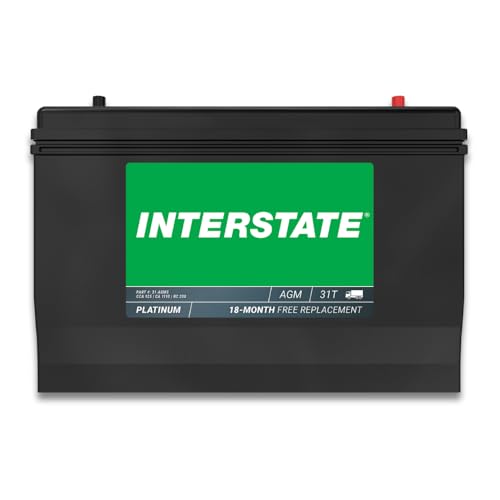
- ✓ Solid, compact build
- ✓ Calm strong performance
- ✓ Long-cycle endurance
- ✕ Heavier than some rivals
- ✕ Higher upfront price
| Battery Type | 2-in-1 pure lead AGM deep-cycle marine/RV battery |
| Voltage | 12V |
| Capacity (Ah) | 100 Ah |
| Cold Cranking Amps (CCA) | 925 CCA |
| Lifecycle Claim | 3x longer service life than conventional flooded; 2x longer than alloyed lead AGM |
| Typical Applications | Marine motor power and accessories (trolling motor, electronics, windlass, etc.) |
You uncorked a surprise while swapping batteries in the dock side shed: the Interstate Marine/RV battery felt lighter and more compact than expected for a 100Ah deep-cycle unit, yet it handled the full load of my trolling motor and all the cockpit electronics with calm ease. It’s not the glossy showstopper you’d expect, but it delivers a quiet, steady heartbeat that powers our weekend adventures without drama.
The first thing you’ll notice is the solid, boxy build and the venting layout on top—easy to grip, easy to stack in a tight battery box. I appreciated the thick plates claim in real life; you can feel the heft and know it’s built to endure repeated discharges and recharges.
It kept its cool under long runs, which is exactly what you want when you’re out for the day and the sun is drying your nerves.
In practice, it jumps the line between deep cycle and high cranking without skimping on either. My depth finder, radio, and fish finder drew steady power, while the 12V motor fired reliably when I needed a quick, confident start.
You don’t fight this battery to get a solid read or a crisp start—there’s a calm reliability there that you notice after a few outings.
Real-world use means you’ll appreciate the long-term endurance. It’s designed to outlast conventional flooded or alloyed AGM batteries, which translates into fewer mid-season replacements and more time on the water.
If you’re aiming for a single dual-purpose unit that won’t force you into compromises, this one checks that box.
Shipping convenience is nice, and the brand’s reputation for dependable power gives you peace of mind. It’s not the lightest option, but the trade-off is a battery that can handle prolonged draws and still come back strong after a recharge.
Overall, you’ll feel confident powering both your motor and your fun with this unit.
What Is a Dual Purpose RV Battery and How Does It Work?
A dual purpose RV battery is a type of battery specifically designed to serve both starting and deep cycle applications in recreational vehicles (RVs). This means that it can deliver a high burst of power for starting the engine while also providing a steady amount of energy for powering appliances and accessories over an extended period. Dual purpose batteries combine the features of a traditional starting battery and a deep cycle battery, making them versatile for various RV needs.
According to the Battery Council International (BCI), dual purpose batteries are particularly beneficial for RV owners who desire a single battery solution for both engine starting and running electrical systems. These batteries typically utilize absorbed glass mat (AGM) or gel technology, which allows them to be more resistant to vibration, discharge, and recharging cycles compared to standard lead-acid batteries.
Key aspects of dual purpose RV batteries include their construction and chemistry. Dual purpose batteries are built to handle the high cranking currents needed to start an engine, which is achievable through a thicker lead plate design. Additionally, they feature a deep cycle capability, allowing them to be discharged and recharged repeatedly without significant loss of capacity. This makes them suitable for powering lights, refrigerators, and other electronic devices in an RV setting. The ability to perform both functions effectively reduces the need for multiple battery types, simplifying maintenance and reducing costs.
This versatility impacts RV owners significantly by providing a reliable power source for both starting the engine and running onboard systems. According to a report by the Recreational Vehicle Industry Association (RVIA), over 1 million new RVs are sold annually in the United States, highlighting the increasing reliance on batteries for RV functionality. As RVs incorporate more technology and amenities, having a dependable power source becomes essential, making dual purpose batteries a popular choice among enthusiasts.
The benefits of using a dual purpose RV battery include improved convenience, reduced weight, and cost savings. By eliminating the need for separate starting and deep cycle batteries, RV owners can save space and weight in their vehicle’s layout. Furthermore, dual purpose batteries have a longer lifespan than standard batteries when maintained properly, as they can withstand frequent cycling. Best practices for maintaining a dual purpose battery involve regular charging, ensuring it is not deeply discharged, and keeping the terminals clean and corrosion-free to enhance performance and longevity.
Why Are Dual Purpose RV Batteries Essential for RV Users?
Dual purpose RV batteries, also known as deep cycle starter batteries, are essential for RV users due to their ability to serve multiple functions. These batteries combine the features of both starting and deep cycle batteries, making them versatile for various RV activities.
Key benefits include:
-
Reliable Starting Power: They provide enough power to start the RV’s engine, ensuring that users can initiate their journeys without hassle.
-
Sustained Energy Supply: Once the RV is moving, these batteries can deliver consistent power to run appliances, lights, and other electrical devices while camping.
-
Versatility: Ideal for diverse applications, whether powering a refrigerator on a long road trip or furnishing energy for entertainment systems during downtime.
-
Longer Lifespan: Typically engineered for both cycling and cranking, dual purpose batteries can endure deep discharges, enhancing their durability and overall lifespan.
-
Cost-Effective: By eliminating the need for two separate batteries, users can save space and money, especially in compact RV setups.
Investing in the best dual purpose RV battery provides flexibility and reliability, crucial for an enjoyable RV experience.
How Do Dual Purpose Batteries Support Both Starting and Deep Cycle Needs?
Dual purpose batteries serve the dual function of providing a strong burst of energy for starting engines while also supporting deep cycle applications for powering accessories. The best dual purpose RV battery combines these features effectively.
- Construction: Dual purpose batteries are designed with thicker plates and a robust internal structure that allows them to handle both high current draws for starting and prolonged discharges for deep cycling.
- Lead-Acid Technology: Most dual purpose batteries utilize lead-acid technology, either in flooded or AGM (Absorbent Glass Mat) formats, which helps in managing the balance between starting power and sustained energy output.
- Capacity Ratings: These batteries typically have a higher amp-hour rating, making them capable of providing enough power to start an engine and run appliances, lights, and other electronics for extended periods.
- Versatility: Dual purpose batteries are versatile enough to be used in various RV applications, making them ideal for those who want a single battery solution for both starting the engine and supplying power to the living area.
- Maintenance: Many dual purpose batteries, especially AGM models, require less maintenance compared to traditional flooded batteries, which is a significant advantage for RV owners who prefer a hassle-free experience.
Construction is key to the effectiveness of dual purpose batteries, as they are built to endure the demands of both starting and deep cycling. The thicker plates provide the necessary durability to handle the high current needed to start an engine, while also allowing for the gradual energy release required for deep discharge applications.
Lead-acid technology plays an essential role in the performance of dual purpose batteries. Flooded lead-acid batteries are typically less expensive but require more maintenance, while AGM batteries are sealed and more efficient, providing a more reliable option for RV users who want to minimize upkeep.
Capacity ratings are crucial when selecting a dual purpose battery, as they determine how much energy can be stored and how long it can be used before needing a recharge. A higher amp-hour rating means that the battery can support more devices or longer usage times, making it an ideal choice for extended trips.
Versatility is a significant advantage of dual purpose batteries, allowing RV owners to simplify their power systems by relying on a single battery for multiple functions. This adaptability makes it easier to manage space and weight within the RV.
Maintenance requirements can greatly influence the choice of a battery. With AGM dual purpose batteries, users benefit from a low-maintenance solution that doesn’t require regular watering or equalization, making them an attractive option for those who prioritize convenience and reliability in their RV systems.
What Factors Should You Consider When Choosing the Best Dual Purpose RV Battery?
When choosing the best dual purpose RV battery, several factors should be considered to ensure optimal performance and longevity.
- Battery Type: There are primarily two types of batteries suitable for RVs: flooded lead-acid and AGM (Absorbent Glass Mat). Flooded lead-acid batteries are more affordable and can be easily maintained, while AGM batteries are sealed, maintenance-free, and offer better deep cycling capabilities.
- Capacity and Amp-Hours: The capacity of a battery is measured in amp-hours (Ah), which indicates how much energy it can store and deliver over time. For RVs, a higher capacity is essential for powering appliances and devices during extended trips without recharging.
- Weight and Size: The weight and size of the battery play a crucial role in its installation and overall vehicle balance. A lighter and more compact battery can be easier to handle and install, but it should still meet the power requirements of the RV.
- Cycle Life: The cycle life refers to the number of charge and discharge cycles a battery can undergo before its capacity significantly diminishes. A longer cycle life means that the battery will last longer and require fewer replacements, making it more cost-effective in the long run.
- Charging Time: Different batteries have varying charging times, which can affect your travel plans. Fast-charging batteries can be a significant advantage, particularly when you need to recharge quickly during stops.
- Temperature Tolerance: RV batteries should be able to perform well in a range of temperatures. Some batteries are designed to withstand extreme heat or cold, which is essential for ensuring reliable performance in different climates.
- Brand Reputation and Warranty: The reputation of the brand and the warranty offered can indicate the quality and reliability of the battery. A good warranty can provide peace of mind and protection against defects or early failure.
How Important Are Specifications Like Ah Rating and Size?
When selecting the best dual purpose RV battery, specifications like Amp-hour (Ah) rating and size play a crucial role in performance and efficiency. Understanding these specifications can significantly affect your RV experience.
-
Ah Rating: This measures the battery’s capacity to store and deliver power. For instance, a battery rated at 100 Ah can theoretically provide 5 amps for 20 hours or 20 amps for 5 hours. Higher Ah ratings are essential for extended off-grid excursions, ensuring you have enough power to run appliances and lights without frequent recharging.
-
Size and Form Factor: The physical dimensions and weight of the battery are vital for fitting into designated storage spaces within your RV. Common sizes include group sizes like 24, 27, and 31. Ensuring the battery fits correctly is crucial, as a poor fit can lead to vibrations that may shorten battery life.
-
Weight Considerations: Heavier batteries may offer more capacity, but they also add significant weight to your RV. Ensure the total weight remains within safe limits for your vehicle.
Selecting the right specifications directly impacts your RV’s battery life, charging efficiency, and your overall travel experience.
What Are the Key Differences Between Dual Purpose Batteries and Other Battery Types?
| Aspect | Dual Purpose Batteries | Other Battery Types |
|---|---|---|
| Purpose | Designed for both starting and deep cycling applications, suitable for RVs and boats. | Typically designed for either starting engines or deep cycling, not both. |
| Discharge Rates | Can be discharged deeply without significant damage, maintaining performance. | Starting batteries provide high bursts of power but are not meant for deep discharges. |
| Lifespan | Generally have a longer lifespan due to their versatility and robust design. | Deep cycle batteries last longer than starting batteries but are not as versatile. |
| Maintenance | Usually require minimal maintenance, though some may need regular checks. | Some types require regular maintenance, especially flooded lead-acid batteries. |
| Weight/Size | Often heavier and larger due to their dual functionality. | Usually lighter and more compact, especially starting batteries. |
| Cost | Generally more expensive due to their dual capabilities. | Tend to be less expensive, especially standard starting batteries. |
| Common Use Cases | Ideal for RVs, boats, and off-grid applications where both starting and deep cycling are needed. | Commonly used in vehicles for starting engines or in applications requiring deep cycling, like solar setups. |
Why Would You Choose a Dual Purpose Battery Over a Standard Lead-Acid Battery?
You would choose a dual purpose battery over a standard lead-acid battery because dual purpose batteries are specifically designed to provide both starting power and deep cycle capabilities, making them more versatile for applications such as RVs.
According to the Battery Council International, dual purpose batteries combine features of both starting and deep cycle batteries, allowing them to deliver high bursts of energy needed for starting engines while also being able to withstand deep discharges without significant damage. This capability makes them ideal for RV users who require reliable power for both starting their vehicles and running appliances.
The underlying mechanism involves the construction and chemistry of dual purpose batteries, which typically feature thicker plates and a more robust design than standard lead-acid batteries. This design allows them to handle the frequent cycling associated with powering devices in an RV, such as lights and refrigerators, while still being able to start the engine when needed. Standard lead-acid batteries, on the other hand, are optimized for short bursts of high current and may not recover well from deep discharges, leading to shorter lifespans when used in similar applications.
Furthermore, dual purpose batteries often utilize advanced technologies like absorbed glass mat (AGM) or gel electrolyte systems, which enhance their performance and longevity. These technologies minimize the risk of sulfation, a common issue in standard lead-acid batteries, thereby allowing dual purpose batteries to maintain a higher capacity over time, especially under varying load conditions typical in RV usage.
What Are Some Highly Recommended Brands and Models of Dual Purpose RV Batteries?
Some of the best dual purpose RV batteries are:
- Renogy 12V 100Ah Lithium Iron Phosphate Battery: This battery is known for its longevity and safety features, offering a lifespan of up to 4000 cycles. It also has a built-in Battery Management System (BMS) that protects against overcharging, overheating, and short-circuiting, making it ideal for RV enthusiasts who require reliability on the road.
- Trojan 6V 200Ah T-105: A popular choice among RV users, this flooded lead-acid battery provides excellent deep cycle performance and a robust construction that withstands harsh conditions. With a capacity of 200Ah, it’s perfect for powering appliances and electronics for extended periods without needing frequent recharges.
- Optima Batteries 8016-103 D34M: This AGM battery is designed with a unique spiral cell technology that enhances durability and vibration resistance. It offers a high reserve capacity and can deliver strong bursts of power, making it suitable for starting engines and running appliances in RVs.
- Vmaxtanks 12V 125Ah AGM Battery: This battery is renowned for its maintenance-free operation and deep cycle capabilities, suitable for both starting and running appliances. Its construction allows for a lower self-discharge rate, providing reliable performance even during extended periods of inactivity.
- Battle Born LiFePO4 100Ah Battery: This lithium battery is lightweight and has a long lifespan of up to 5000 cycles, making it a cost-effective choice over time. It features a built-in BMS for safety and can maintain a high discharge rate, allowing RV users to run multiple devices simultaneously without worrying about power drain.
How Can User Reviews Influence Your Decision on the Best Dual Purpose RV Battery?
User reviews can significantly shape your decision-making process when looking for the best dual purpose RV battery.
- Real-World Performance: User reviews often provide insights into how a battery performs in everyday situations.
- Longevity and Reliability: Reviews can reveal the long-term reliability of a battery, including how well it holds up over time.
- Ease of Installation: Feedback on installation experiences can help you gauge how user-friendly a battery is.
- Customer Support Experiences: Reviews can include information about the manufacturer’s customer service, which is crucial for warranty claims and support.
- Value for Money: Users often discuss how a battery’s performance compares to its price, helping you identify the best value options.
Real-World Performance: Many users share their experiences regarding how well the battery performs under various conditions, such as during long trips or in extreme weather. This information can be invaluable as it highlights practical usage beyond technical specifications.
Longevity and Reliability: Reviews frequently include details about how long the battery lasts before needing replacement. This can indicate the quality of materials used and whether the battery is worth the investment in the long run.
Ease of Installation: Many reviews provide insights into how easy or difficult the installation process is, which can save you time and frustration. Knowing whether additional tools or modifications are needed can help you prepare accordingly.
Customer Support Experiences: Users often mention their interactions with the company’s customer service, including response times and helpfulness. This can be crucial in determining how well a manufacturer stands behind their product in case of issues.
Value for Money: Reviews typically discuss whether users feel they received a good return on their investment based on the battery’s performance. This comparative analysis can help you identify which options might be overpriced or offer superior performance for a similar cost.
Related Post: