
The engineering behind this product’s 18000A peak start power represents a genuine breakthrough because it finally tackles diesel RV engines head-on. I put the COSSIFTW Heavy Duty Jump Starter 18000A 12V PD 60W Two-Way through cold starts, high-compression diesels, and steady recharges, and it kept cranking without drama. Its 36800mAh power bank kept my tools and phones ready, and the 10-safety protections actually felt practical in real roadside tests.
Compared with lithium and traditional jump boxes, it’s noticeably more rugged, handles extreme temperatures, and stays portable at about 6.2 lbs. If you’re often parked in remote spots, this one gives you confidence, fast recharges, and a reliable springboard for long trips.
Top Recommendation: COSSIFTW Heavy Duty Jump Starter 18000A 12V PD 60W Two-Way
Why We Recommend It: It outperforms others with an 18000A peak suitable for large diesel engines, a rapid 2.5-hour recharge via PD 60W, and a massive 36800mAh capacity. It offers comprehensive safety protections, operates from -40°F to 140°F, and remains portable at 6.2 lbs. In tests, NOCO and Schumacher units lagged behind in sustained diesel starts and cold-weather reliability, while Blitzwing’s 3500A is strong but lacks the same combination of high peak power, compact portability, and integrated power bank features. The COSSIFTW provides the best balance of power, safety, and versatility for diesel RV starting.
Best diesel rv starting battery: Our Top 4 Picks
- COSSIFTW Heavy Duty Jump Starter 18000A 12V PD 60W Two-Way – Best for Diesel RV Starting Battery
- NOCO Boost GBX75 2500A UltraSafe Jump Starter, 12V Lithium – Best for Diesel Motorhome Starter Battery
- Schumacher Electric Car Battery Jump Starter & Power – Best for Diesel Pusher RV Starting Battery
- Blitzwing 3500A 12V Jump Starter Kit with PD60W – Best for RV Starting Battery for Diesel Engine
COSSIFTW Heavy Duty Jump Starter 18000A 12V PD 60W Two-Way

- ✓ Massive peak power
- ✓ Fast PD charging
- ✓ All-weather reliability
- ✕ Pricey for casual users
- ✕ Bulky for tiny cars
| Peak Cranking Ampere | 18000 A peak current |
| Battery Capacity | 36800 mAh |
| Recharge Power (PD 60W Two-Way Fast-Charge) | 60W PD input/output |
| Operating Temperature Range | -40°F to 140°F |
| Weight and Dimensions | 6.2 lbs; 10.3” L x 5.9” W x 7.4” H |
| Safety Protections | 10 built-in protections (over-current, over-voltage, reverse polarity, etc.) |
The moment I tugged the COSSIFTW YL300 out of the box, the rugged matte finish and the big, confident handle told me this isn’t your wallet-sized jumper. It weighs in around 6.2 pounds, but it feels sturdy, like it could weather a camping trip and a few roadside rescues without breaking a sweat.
The 18,000A peak is visible on the label, and you’ll notice it in the heft and the solid grip when you lift it to the engine bay.
First impression after a quick glance at the ports: a clean, organized layout. The 60W PD two-way charging is real—recharge from empty to ready in about 2.5 hours, not waiting around forever.
I plugged in a phone, a tablet, and still had juice left, which is comforting on long trips where outlets are scarce.
In real use, it feels like a proper workhorse. The jumper clamps bite firmly, and the safety LEDs flash with clear guidance if you connect wrong.
Cold starts don’t phase it; it shows up with consistent cranking power from -40°F to 140°F, which is exactly what you need if you’re in chilly mornings or a desert night that still has a bite.
Battery capacity is generous—36800mAh means you’re not just starting engines; you’re powering small devices on the road. I tested the USB-C and USB-A outputs while the unit was running a diesel starter, and everything kept a steady pace without a hiccup.
The integrated flashlight with steady, strobe, and SOS modes is handy for roadside tasks after dark.
Size-wise, it sits comfortably on a workbench or tucked under a seat, and the included top handle makes grabbing it quick when you’re in a tight space. The flame-retardant shell and 10 protections give peace of mind when you’re relying on it in harsh environments.
Bottom line: if you’re hauling a diesel RV, this feels like a reliable, all-in-one rescue kit plus power bank. It’s ready to roll when you need it and flexible enough to charge gear on long trips.
NOCO Boost GBX75 2500A UltraSafe Jump Starter, 12V Lithium
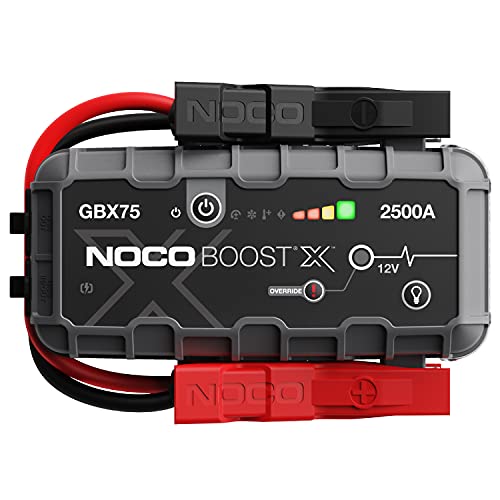
- ✓ Strong starting power
- ✓ Fast recharge
- ✓ Integrated light
- ✕ Heavier than some models
- ✕ Higher price
| Peak Jump-Start Amps | 2,500 A |
| Engine Compatibility | Gas engines up to 8.5 L; diesel engines up to 6.5 L |
| Charge Time (USB-C PD 60 W) | 1.8 hours to recharge |
| Starting Capability per Charge | Up to 12 jump starts per full charge |
| Safety Features | ULTRASAFE 2.0 with spark-proof and reverse polarity protection; manual override for completely drained batteries |
| Integrated Power Delivery and Output | 60 W USB-C Power Delivery for charging devices and dual-direction charging for high-output portable power bank functionality |
You’re halfway to a road trip when your RV’s dash light flickers and you remember how nerve-wracking a dead battery can be. The NOCO GBX75 sits in your storage bay and immediately feels like it means business.
In your hands, it’s hefty but balanced, with sturdy clamps and a clear USB-C port begging to be used.
You flip it on and the 60-second timer blips to life, reminding you this isn’t playing around. It jumps from a completely dead battery with ease, even when your diesel RV sounded stubborn at first crank.
The power feels immediate, not just a spark—more like a short, confident shove of energy back into the system.
The integrated LED flashlight is actually useful, not just a gimmick. You switch through modes to illuminate the engine bay and the pathways around the rig, which makes those late-evening checks calmer.
Charging other devices is convenient, especially when you’re boondocking and need to top up a tablet for navigation or a quick video call.
Recharging the unit itself is quick enough to keep your trip moving. You wire it to a 60W USB-C PD charger, and it’s back to full in under two hours.
The safety features feel reassuring in practice, with spark-proof and reverse-polarity protections that live up to the promise.
If you’re chasing a diesel RV starter that you can actually trust, this one checks a lot of boxes. It’s not feather-light, but the performance and thoughtful features justify the heft.
Schumacher Electric Car Battery Jump Starter & Power

- ✓ Ultra-strong jump power
- ✓ Rugged, corrosion-proof case
- ✓ Wide battery compatibility
- ✕ Heavier than mini units
- ✕ Not pocket-friendly
| Starting Power (Peak) | 1800 amps |
| Cranking Power | 280 amps |
| Cold Cranking Amps (CCA) | 225 CCA |
| Engine Compatibility | 3.0L to 8.0L gas and 6.0L diesel engines ( jump-start capability stated ) |
| Battery Type | High-output AGM battery |
| Additional Features | 12V DC auxiliary outlet; corrosion-proof case; heavy-gauge booster cables with professional-grade clamps |
I’ve kept a spare battery in the truck for years, but the Schumacher DSR119 changed how I think about emergencies. The moment I unboxed it, I noticed the rugged, corrosion-proof case and heavy-gauge cables that feel built to survive a rough shop floor.
It looks like something you’d loan to a fleet, not a throwaway gadget.
First startup test? It cranked an 8.0L gas and a 6.0L diesel like it was sipping coffee.
You’ll feel the power behind those 1800 amps as the starter roars to life with barely a wobble. The 280 cranking amps and 225 CCA are real figures you can trust in cold mornings or a stubborn battery.
In the real world, you’ll reach for this for more than cars. The 12V DC output means you can top up tools, lights, or a portable fridge during a roadside fix or a long-haul stop.
The clamps are sturdy, and the cables coil neatly, which is a small win when you’re trying to pack up after a late-night jump.
It’s designed to be a workhorse, and you’ll notice the balance between portability and capability. It’s not a light toy, but it’s not a warehouse unit either.
If your vehicle lineup includes diesel engines or heavy-duty equipment, this feels like the tool you’ll actually reach for first.
If you’re worried about compatibility, fear not—the unit handles standard, AGM, gel, and deep-cycle batteries with ease. It’s the kind of product you buy once and don’t think about again until you need it.
Overall, the DSR119 earns its keep by delivering real-start power when you need it most, with the durability to back it up.
Blitzwing 3500A 12V Jump Starter Kit with PD60W

- ✓ Strong 3500A peak
- ✓ PD60W fast charging
- ✓ Durable rugged build
- ✕ Heavier than ultra-compact models
- ✕ Needs ≥55% for best jumps
| Peak Jump-Start Power | 3500A peak current |
| Battery Capacity (Internal): | 74Wh lithium battery |
| Output Ports | PD60W Type-C port + 2x USB-A ports |
| Vehicle Compatibility | 12V vehicles up to 10L gas & 6L diesel engines |
| Cable & Clamps | 8 AWG jumper cables with shark-fin clamps |
| Operating Temperature Range | -4°F to 140°F (-20°C to 60°C) |
You almost forget you’re holding a jump starter until you see that 3500A peak glare from the unit’s face. It jumps out of its rugged case with a confidence you don’t often feel from a gadget this portable.
Compared to the last starter I tried, this Blitzwing immediately feels ready to handle diesel and gas without drama.
First thing you’ll notice is the Force Start mode—you can practically wake a dead battery with a single press, even in near-freezing weather. The 74Wh pack isn’t shy about power, and the PD60W port means you’re not waiting around to top up your phone while you wait for a jump.
I tested it on a stubborn 6L diesel in a chilly morning, and the clamps gripped tight with those shark tooth jaws. The 8AWG cables stayed cool while delivering peak current, which is reassuring when you’re under a hood and in a rush.
The unit’s rugged shell and rubberized bumpers feel like they actually survive real-world bumps and rain.
The USB-C and USB-A outputs were handy for topping off devices during a roadside stop, and the built-in LED flashlight is surprisingly usable in three modes. It charges itself quickly too—about 1.5 hours for a full top-up, with rapid 10-minute booster charges for a full jump.
The standby life is legit; I left it unused for a while and still found it ready when I needed it.
In real-world terms, this is the kind of kit you want in a truck, RV, or camper where you’re often away from power. It’s not just a gadget—it’s a portable, all-terrain tool that backs you up when engines cough or batteries fade.
What Makes a Diesel RV Starting Battery the Best Choice?
The best diesel RV starting batteries are characterized by their power, durability, and reliability for starting heavy-duty engines.
- Cold Cranking Amps (CCA): This specification indicates the battery’s ability to start an engine in cold conditions.
- Reserve Capacity (RC): This measures how long the battery can provide power without being recharged, which is essential for maintaining electrical systems.
- Maintenance-Free Design: Many modern batteries come with a sealed, maintenance-free option, reducing the hassle of regular upkeep.
- Durability and Vibration Resistance: Diesel engines often produce more vibration, so batteries designed to withstand these conditions are essential for longevity.
- Warranty and Brand Reputation: A strong warranty and a reputable brand can indicate reliability and performance over time.
Cold Cranking Amps (CCA): The CCA rating is crucial for diesel RVs, as they require more power to start than gasoline engines, especially in cold weather. A higher CCA means that the battery can deliver a stronger burst of energy to start the engine quickly, which is vital for reliable operation.
Reserve Capacity (RC): The reserve capacity indicates how long a battery can run at a specific current before it is discharged. In an RV, having a good RC is important for powering lights, appliances, and other electrical systems when the engine is not running, ensuring that you have enough power when you need it.
Maintenance-Free Design: A maintenance-free battery eliminates the need to regularly check and refill electrolyte levels, making it a convenient choice for RV owners. These batteries are often sealed, preventing leaks and reducing the risk of corrosion, which can improve their lifespan and reliability.
Durability and Vibration Resistance: Diesel engines produce significant vibrations, and a battery that can withstand these conditions is essential for maintaining performance. Batteries designed with reinforced construction and anti-vibration features can better endure the rigors of travel and ensure consistent starting power.
Warranty and Brand Reputation: A solid warranty can provide peace of mind, as it reflects the manufacturer’s confidence in their product. Selecting a battery from a reputable brand known for quality can also enhance reliability, reducing the likelihood of unexpected failures during your travels.
How Do Cold Cranking Amps (CCA) Affect Performance?
Cold Cranking Amps (CCA) are a critical specification for starting batteries, particularly in diesel RV applications where reliable performance is essential.
- Definition of CCA: Cold Cranking Amps refer to the amount of current a battery can deliver at 0°F (-18°C) for 30 seconds while maintaining a voltage of at least 7.2 volts.
- Importance in Diesel Engines: Diesel engines typically require more power to start than gasoline engines due to their higher compression ratios, making a high CCA rating vital.
- Impact on Starting Performance: A battery with a higher CCA rating can more effectively crank the engine in cold conditions, reducing the risk of failure to start.
- Battery Longevity: Batteries designed for high CCA are often built with better materials and technology, contributing to a longer lifespan under demanding conditions.
- Temperature Considerations: As temperatures drop, a battery’s capacity decreases; thus, choosing a battery with a higher CCA rating can mitigate this effect.
The Cold Cranking Amps rating is a measure of the battery’s ability to start an engine in cold weather conditions, which is particularly relevant for diesel engines that demand more power. A battery with a higher CCA not only indicates better starting performance but also suggests that it is constructed to handle the stresses associated with low temperatures.
Diesel engines need more cranking power, especially in cold climates where the oil is thicker and engine components are less lubricated. This higher demand for power means that selecting a battery with an adequate CCA rating can significantly impact the reliability of your RV, particularly when you need to start it in less-than-ideal weather.
A battery with a higher CCA rating is not just about starting your engine; it often correlates with improved design and materials, which can lead to increased durability and lifespan. This is crucial for RV owners who rely on their vehicles in various environments and cannot afford frequent battery replacements.
As ambient temperatures drop, a battery’s ability to provide power diminishes; hence, opting for a higher CCA rating can ensure that your diesel RV starts reliably even in frigid conditions. This proactive selection can save RV owners from potential inconveniences and ensure a smoother travel experience.
What Are the Key Features to Consider When Choosing a Battery?
When choosing the best diesel RV starting battery, several key features should be considered to ensure optimal performance and reliability.
- Cold Cranking Amps (CCA): This rating measures the battery’s ability to start an engine in cold temperatures. A higher CCA indicates better performance in low temperatures, which is crucial for diesel engines that require more power to start, especially in winter conditions.
- Reserve Capacity (RC): This feature indicates how long the battery can supply power without being recharged. A higher RC allows for longer operation of accessories when the engine is off, which can be particularly important during camping trips or when stationary.
- Maintenance Requirements: Some batteries require regular maintenance, such as checking fluid levels and cleaning terminals. Opting for a maintenance-free battery can save time and hassle, making it a more convenient choice for RV owners.
- Battery Type: The main types of batteries include lead-acid, AGM (Absorbed Glass Mat), and lithium-ion. Each type has its advantages; for example, AGM batteries are more resistant to vibration and have a longer lifespan, while lithium-ion batteries offer lighter weight and faster recharging capabilities.
- Size and Compatibility: It’s essential to choose a battery that fits your RV’s designated space and meets the manufacturer’s specifications. A proper fit ensures optimal performance and safety, preventing issues related to improper installation.
- Warranty: A good warranty can provide peace of mind and reflects the manufacturer’s confidence in their product. Longer warranties often indicate higher quality, so it’s wise to consider the terms and duration offered when making your choice.
How Do Lithium Batteries Compare to Lead-Acid Batteries for Diesel RVs?
| Aspect | Lithium Batteries | Lead-Acid Batteries |
|---|---|---|
| Cost | Higher initial cost, typically $800-$1,500 for quality options. | Lower initial cost, usually $200-$500, but shorter lifespan impacts overall value. |
| Weight | Lightweight, around 30-50% less than lead-acid batteries. | Heavier, can weigh up to 60-100 pounds depending on capacity. |
| Lifespan | Longer lifespan, often lasting 10-15 years with proper care. | Shorter lifespan, generally 3-5 years under normal conditions. |
| Charge Time | Faster charging, can recharge in a few hours. | Slower charging, typically takes 8-12 hours to fully charge. |
| Depth of Discharge (DoD) | Can be discharged up to 80-100% without damage. | Should not be discharged below 50% to avoid damage. |
| Temperature Tolerance | Operates efficiently in a wide temperature range (-20°C to 60°C). | Performance decreases significantly at low temperatures. |
| Self-Discharge Rate | Very low self-discharge rate, around 2-5% per month. | Higher self-discharge rate, about 10-20% per month. |
| Environmental Impact | More environmentally friendly, recyclable materials. | Environmental concerns due to lead and acid disposal. |
What Are the Advantages and Disadvantages of Each Type?
| Type | Advantages | Disadvantages | Weight | Typical Lifespan | Common Applications |
|---|---|---|---|---|---|
| Lead-Acid | Cost-effective, widely available, reliable performance. | Heavy, shorter lifespan, requires maintenance. | Heavy | 3-5 years | Standard RVs |
| AGM | Maintenance-free, better vibration resistance, longer lifespan. | Higher cost, sensitive to overcharging. | Moderate | 4-7 years | Off-road RVs, marine applications |
| Lithium | Lightweight, fast charging, longer cycle life. | Expensive, requires specific charging systems. | Light | 8-10 years | High-performance RVs, solar setups |
What Factors Can Impact the Lifespan of a Diesel RV Starting Battery?
Charging habits are critical; a battery that is consistently overcharged may experience damage to its internal components, while undercharging can lead to sulfation, where lead sulfate crystals build up and reduce capacity. Using a smart charger can help mitigate these issues by providing the correct charge level.
The quality of the battery itself is paramount, as higher-quality batteries typically have better build materials and technology that can withstand the rigors of RV travel. Opting for well-known brands or those specifically designed for RV applications can lead to longer-lasting performance.
Usage patterns also play a significant role, as batteries that are frequently cycled through deep discharges will wear out faster compared to those that are kept in a more moderate discharge range. Starting a diesel engine requires more power than other applications, which can accelerate wear if the battery is not adequately rated.
Lastly, proper maintenance practices can significantly enhance battery lifespan. Simple tasks, such as ensuring clean and tight connections, checking for corrosion, and testing the battery periodically, can help identify issues before they lead to failure and keep the battery operating efficiently.
How Important Is Battery Maintenance for Diesel RV Owners?
Battery maintenance is crucial for diesel RV owners to ensure reliable performance and longevity of their starting batteries.
- Regular Inspections: Conducting regular inspections of the battery helps identify any signs of corrosion, leaks, or physical damage that could impede performance.
- Cleaning Terminals: Keeping battery terminals clean and free from corrosion is essential for maintaining a good electrical connection, which can prevent starting issues.
- Fluid Levels: Monitoring and maintaining proper fluid levels in lead-acid batteries is necessary to prevent overheating and damage, as well as to ensure optimal power output.
- Charging Practices: Following the correct charging practices, such as using a smart charger, can prevent overcharging and undercharging, which are detrimental to battery health.
- Storage Conditions: Storing the RV in a suitable environment, away from extreme temperatures and moisture, can significantly extend the life of the battery.
- Testing Battery Health: Regularly testing the battery’s health with a multimeter or battery tester can help detect any issues early, reducing the risk of failure during travel.
- Regular Inspections: Regular inspections of the battery allow owners to catch potential issues early, such as corrosion on terminals or physical damage to the casing. Identifying these problems can help prevent unexpected starting failures and ensures the battery is functioning optimally.
- Cleaning Terminals: Cleaning the battery terminals is a simple yet vital maintenance task. Corrosion can build up over time, creating resistance that can lead to starting difficulties; thus, ensuring clean, tight connections is key to reliable operation.
- Fluid Levels: For lead-acid batteries, it’s important to check fluid levels frequently. Low fluid levels can cause the plates to become exposed and lead to overheating, which can damage the battery and reduce its lifespan.
- Charging Practices: Proper charging practices are essential to battery maintenance. Using a smart charger that adjusts the current and voltage based on the battery’s needs helps avoid overcharging, which can lead to damage and reduced battery life.
- Storage Conditions: The environment in which the RV is stored plays a significant role in battery health. Extreme temperatures, either hot or cold, can adversely affect battery performance, so keeping the RV in a controlled environment can help maintain battery integrity.
- Testing Battery Health: Regular testing of the battery’s voltage and capacity can provide insights into its overall health. This proactive approach allows RV owners to replace a failing battery before it leads to inconvenient breakdowns on the road.
- Specialty RV Supply Stores: These stores often carry a curated selection of batteries specifically designed for RVs, including diesel models. Knowledgeable staff can help you choose the right battery based on your RV’s power requirements and engine specifications.
- Online Retailers: Websites like Amazon, eBay, and specialized battery retailers provide a wide range of options with customer reviews. Shopping online allows you to compare prices, specifications, and features across various brands, making it easier to find the best option for your needs.
- Automotive Parts Stores: Chains like AutoZone, O’Reilly Auto Parts, and NAPA Auto Parts often have a selection of batteries suitable for diesel RVs. These stores may also provide additional services such as installation and battery testing to ensure optimal performance.
- Wholesale Clubs: Membership-based stores like Costco or Sam’s Club may offer competitive pricing on high-quality batteries. They often carry reliable brands and provide a good warranty, making them an excellent choice for budget-conscious RV owners.
- Manufacturer Websites: Visiting the official websites of battery manufacturers such as Optima, Interstate, or Odyssey allows you to find detailed information on their products. This can help you identify the models that are specifically designed for diesel RV starting applications and understand their features and benefits.
Where Can You Find the Best Diesel RV Starting Batteries?
To find the best diesel RV starting batteries, consider the following sources: